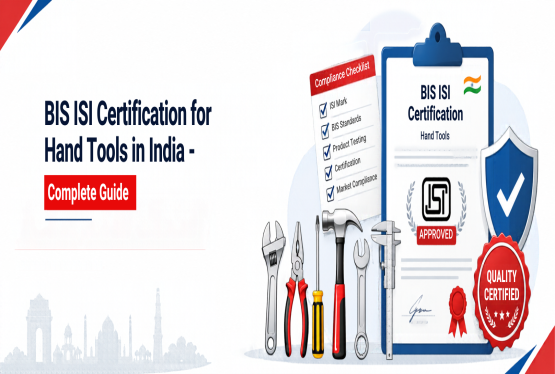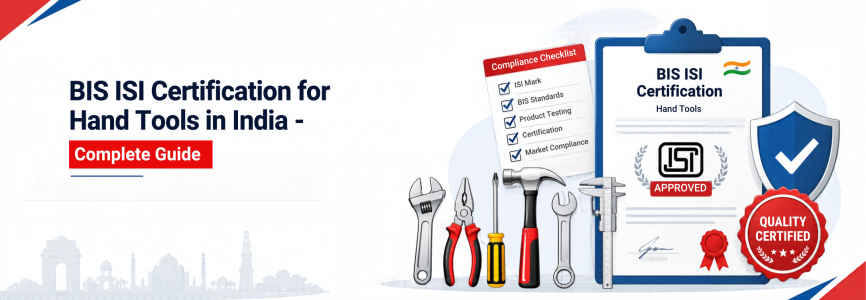



Hand tools such as spanners, wrenches and pliers are commonly used in workshops, factories, construction sites and repair centres. Although these tools may appear simple, their strength, durability and quality are important for ensuring safety during everyday work. A poorly manufactured wrench can slip while tightening a bolt, while weak pliers may break under pressure.
To improve product quality and reduce such risks, the Government of India has introduced mandatory quality requirements for specified hand tools through the Bureau of Indian Standards (BIS). Under the Hand Tools (Quality Control) Order, 2026, certain hand tools must comply with applicable Indian Standards and carry the ISI Mark under a valid BIS licence from their respective implementation dates.
What is BIS ISI Certification for Hand Tools?
BIS ISI Certification is a product certification process through which the Bureau of Indian Standards verifies that a manufacturer's products meet the applicable Indian Standard. For hand tools, certification helps establish whether the product meets specified requirements relating to material quality, dimensions, workmanship, strength and performance. Once BIS grants a licence under Scheme-I of the BIS (Conformity Assessment) Regulations, 2018, the manufacturer can use the ISI Mark on products covered by that licence. It is important to understand that BIS certification is granted to the manufacturer for specific products and standards. A manufacturer cannot use one BIS licence for every type of hand tool.
Latest BIS Updates and Amendments for Hand Tools in 2026
The most important recent development is the Hand Tools (Quality Control) Order, 2026, notified by the Department for Promotion of Industry and Internal Trade (DPIIT) on 9 October 2026 through S.O. 5561(E). This order supersedes the Hand Tools (Quality Control) Order, 2025, while preserving matters relating to actions or omissions before supersession.
The regulatory changes have developed as follows:
| 2024 | The government introduced the Hand Tools (Quality Control) Order, 2024. |
| July 2025 | A revised order introduced implementation dates for general, small and micro enterprises. |
| December 2025 | Another order shifted the implementation schedule to 2026. |
| October 2026 | The new Hand Tools (Quality Control) Order, 2026 replaced the previous order, updated the referenced standards and established new compliance deadlines in 2027. |
These changes give manufacturers additional time to prepare their products, testing facilities and documentation for certification.
Revised BIS Certification Deadlines
|
Enterprise category |
Mandatory compliance date |
|
General enterprises (other than micro and small) |
1 April 2027 |
|
Small enterprises |
1 July 2027 |
|
Micro enterprises |
1 October 2027 |
The 2026 order itself took effect on 9 October 2026, but the mandatory product-compliance dates are scheduled for 2027. Manufacturers should use these revised dates rather than relying on older 2025 or 2026 implementation schedules.
Which Hand Tools Require BIS ISI Certification?
The Hand Tools (Quality Control) Order, 2026 covers nine Indian Standards relating to specified wrenches, spanners and pliers.
|
Indian Standard |
Product |
|
IS 4003 (Part 1):2026 |
General-purpose pipe wrenches |
|
IS 4003 (Part 2):2026 |
Pipe wrenches – Part 2 |
|
IS 2028:2026 |
Open-jaw wrenches (spanners) |
|
IS 2029:2026 |
Ring wrenches (spanners) |
|
IS 6149:2025 |
Single-ended open-jaw adjustable wrenches |
|
IS 4123:2024 |
Chain pipe wrenches |
|
IS 4508:2024 |
Open-ended slugging wrenches |
|
IS 4509:2024 |
Ring slugging wrenches |
|
IS 3650:2026 |
Combination side-cutting pliers |
These are the standards referenced in the latest 2026 notification. The order also specifies that the latest versions of these Indian Standards, including amendments notified by BIS from time to time, will apply. Not every hand tool is automatically covered. For example, a manufacturer producing hammers or screwdrivers should check the applicable Indian Standards and separate regulatory notifications rather than assuming the same order applies.
Who Needs BIS Certification for Hand Tools?
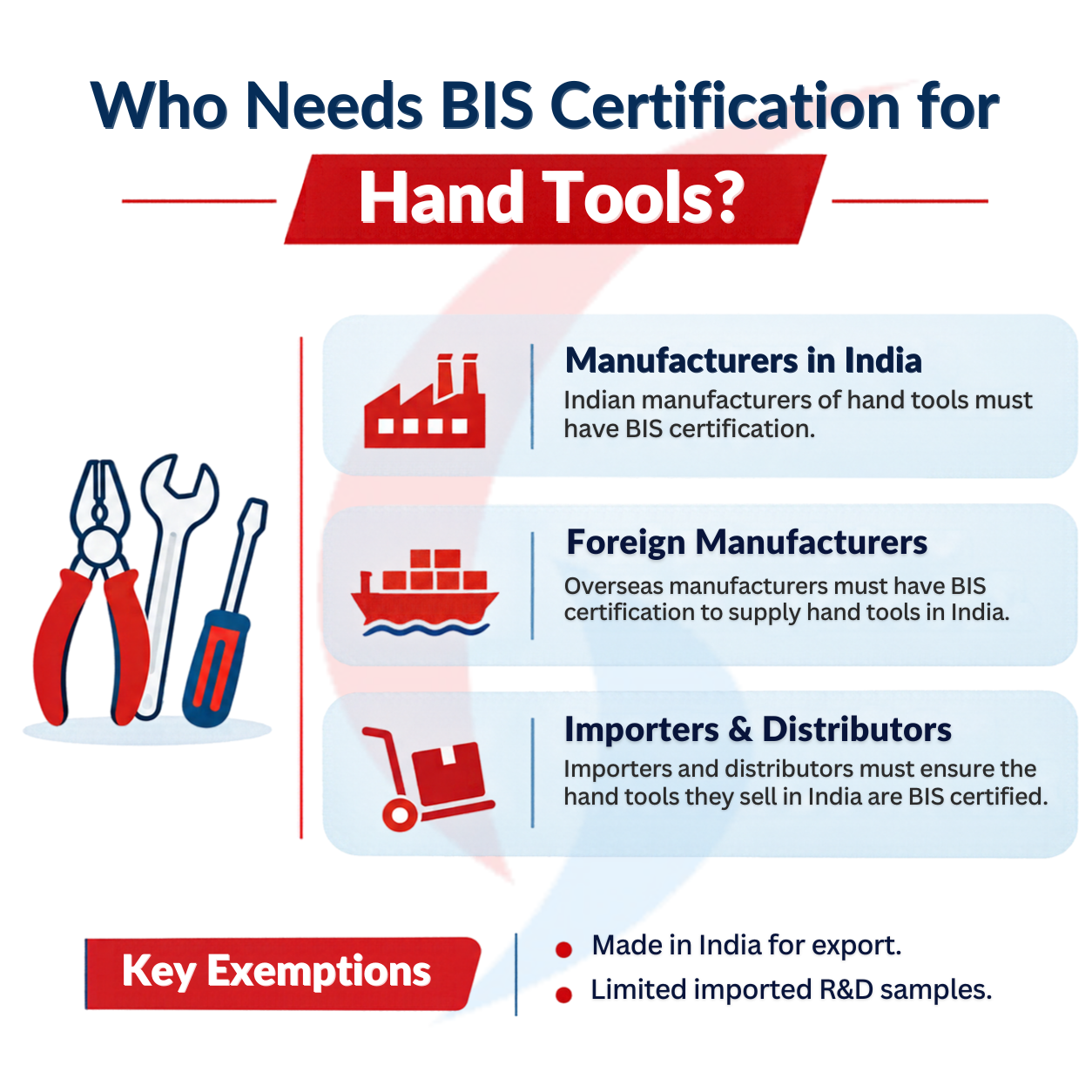
BIS ISI Certification primarily applies to manufacturers producing the hand tools covered under the Quality Control Order. Indian manufacturers must obtain the appropriate BIS licence before producing and marking covered products for the regulated domestic market once their mandatory compliance date applies. Foreign manufacturers supplying covered hand tools to India must also ensure that the applicable BIS certification requirements are satisfied. Importers and distributors should verify that the products they handle meet the relevant requirements. The order provides specific exemptions for domestically manufactured products intended for export and for a limited quantity of imported research-and-development samples, subject to prescribed conditions.
BIS ISI Certification Process for Hand Tools
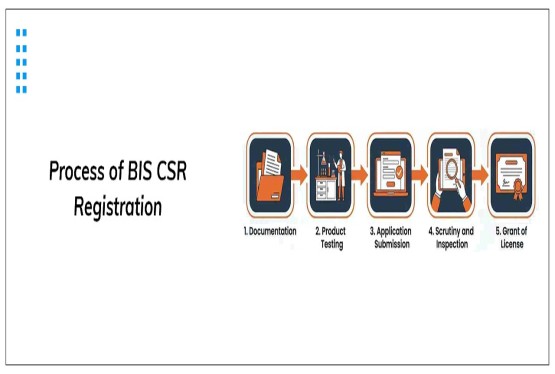
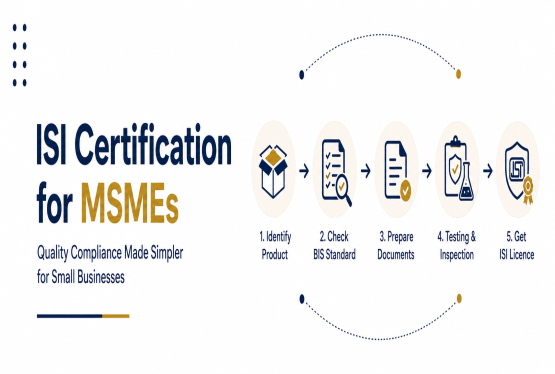
Manufacturers can follow these steps to obtain BIS certification:
Step 1: Identify the applicable Indian Standard
The manufacturer must first determine which Indian Standard applies to the hand tool. Different types of wrenches and pliers have separate standards.
Step 2: Prepare the manufacturing facility
The factory must have suitable machinery, quality-control arrangements and testing capabilities to meet the relevant BIS requirements.
Step 3: Submit the BIS application
The manufacturer submits the application through the official BIS Manak Online portal with the required details and documents.
Step 4: Product testing and factory inspection
BIS evaluates the manufacturing arrangements and verifies product conformity through factory testing, laboratory testing or both, depending on the applicable procedure.
Step 5: Grant of BIS licence
If the manufacturer meets the applicable requirements, BIS grants the licence. The ISI Mark can then be applied to products within the approved scope.
Step 6: Maintain compliance
After certification, the manufacturer must maintain product quality, inspection records, testing arrangements and licence validity. BIS may conduct factory and market surveillance.
Documents Required for BIS ISI Certification
Manufacturers should generally prepare the following documents:
- Business registration and manufacturing-unit details.
- Factory address and proof of premises.
- Manufacturing process flow chart.
- List of manufacturing machinery and equipment.
- Details of testing equipment and laboratory facilities.
- Product specifications and applicable Indian Standard.
- Raw material details and quality-control records.
- Details of technical and quality-control personnel.
- Product test reports, where applicable.
- Authorisation documents and other declarations required by BIS.
The exact documents may vary depending on the product, certification option and latest BIS guidelines.
BIS Certification Fees and Timeline for Hand Tools
The cost of BIS ISI Certification depends on the product standard, testing requirements, factory inspection and applicable marking fees.
According to BIS's published certification FAQ, the general fee components include:
|
Fee component |
Published amount |
|
Application fee |
Rs 1,000 |
|
Inspection fee |
Rs 7,000 per man-day |
|
Annual licence fee |
Rs 1,000 |
|
Marking fee |
Product-specific |
|
Testing charges |
As applicable |
These are published general fee figures, not a fixed quotation for hand tools. Manufacturers should verify the current rates, taxes, concessions and applicable charges before submitting an application. BIS indicates that certification may generally take around one month under Option 2 and four months under Option 1, although actual timelines depend on inspections, testing and application completeness.
Important BIS Compliance Requirements for Hand Tool Manufacturers
Obtaining BIS certification is not the end of a manufacturer's responsibility. The factory must continue manufacturing products that meet the relevant Indian Standard throughout the licence period. Manufacturers must also maintain appropriate production and testing records, cooperate during BIS inspections and ensure that the Standard Mark is used only on products covered by the licence.
The 2026 order includes an exemption for up to 200 imported hand-tool articles per year for manufacturers' research and development, subject to conditions. Such products cannot be commercially sold, must be disposed of as scrap and require year-wise records. Violations of the mandatory certification requirements may attract action under the Bureau of Indian Standards Act, 2016.
How Compliance Calendar LLP Can Help
Compliance Calendar LLP assists hand tool manufacturers with understanding BIS certification requirements and preparing for the application process. Our assistance includes identifying applicable Indian Standards, reviewing documents, coordinating product testing, preparing BIS applications, addressing inspection observations and supporting licence-related compliance. Manufacturers planning certification under the revised 2027 deadlines can use this period to review their product specifications and prepare the necessary documentation.
Frequently Asked Questions (FAQs)
Q1. Is BIS ISI Certification mandatory for hand tools in India?Ans. Yes. Specified hand tools covered under the Hand Tools (Quality Control) Order, 2026 require BIS certification from their applicable implementation dates.
Q2. What is the latest BIS notification for hand tools?Ans. The latest identified notification is S.O. 5561(E), dated 9 October 2026, introducing the Hand Tools (Quality Control) Order, 2026.
Q3. When does BIS certification become mandatory for hand tools?Ans. The deadlines are 1 April 2027 for general enterprises, 1 July 2027 for small enterprises and 1 October 2027 for micro enterprises.
Q4. Which hand tools are covered under the BIS Quality Control Order?Ans. The order covers specified pipe wrenches, open-jaw wrenches, ring wrenches, adjustable wrenches, slugging wrenches and combination side-cutting pliers.
Q5. How can I apply for BIS Certification for Hand Tools?Ans. Manufacturers can apply through the BIS Manak Online portal after identifying the applicable Indian Standard and preparing their documentation.
Q6. What is the cost of BIS ISI Certification for Hand Tools?Ans. The total cost depends on application fees, inspection charges, testing fees, marking fees and the applicable product standard.
Q7. How long does BIS Certification take?Ans. BIS publishes general timelines of approximately one to four months depending on the certification option, subject to successful assessment and testing.
Q8. Is BIS Certification required for imported hand tools?Ans. Covered imported hand tools must satisfy the applicable mandatory BIS requirements. Limited research-and-development exemptions are available under specified conditions.
Q9. Can one BIS licence cover all types of hand tools?Ans. No. BIS generally requires separate certification applications for different products and Indian Standards, even when manufactured at the same factory.
Q10. What happens if a manufacturer sells covered hand tools without BIS Certification?Ans. Once the applicable mandatory date takes effect, non-compliance can result in enforcement action and penalties under the BIS Act, 2016.
Article last updated on : 05 Nov 2026.