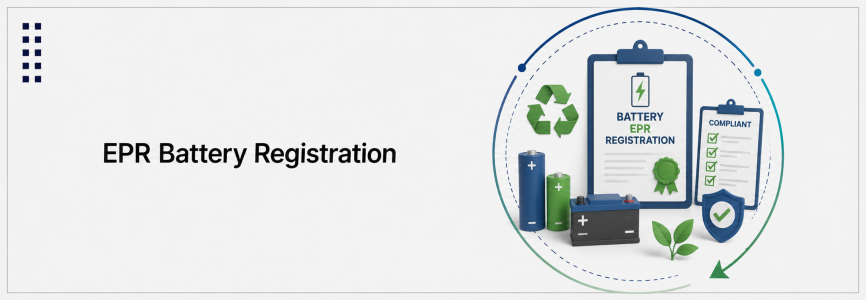



India’s battery market has expanded rapidly with the growth of electric vehicles, consumer electronics, energy-storage systems, automotive products, inverters and industrial equipment. With this growth comes an equally important responsibility—ensuring that batteries are collected and recycled properly after reaching the end of their useful life.
To regulate this responsibility, the Government introduced the Battery Waste Management Rules, 2022 under the Environment (Protection) Act, 1986. These Rules establish an Extended Producer Responsibility or EPR requirements, under which producers are responsible for batteries that they introduce into the Indian market. CPCB’s current Battery EPR Portal confirms that the framework covers all types of batteries irrespective of chemistry, shape, volume, weight, material composition or use, subject to the specific exclusions under the Rules.
For businesses planning to obtain EPR Battery Registration, documentation is one of the most important stages of the application. Incorrect GST details, missing IEC documents, improper sales data or incomplete pollution-control approvals can result in queries or rejection.
This article explains the documents needed for EPR Battery Registration, along with the legal provision, application requirements, producer obligations and the latest regulatory developments.
What Is EPR Battery Registration?
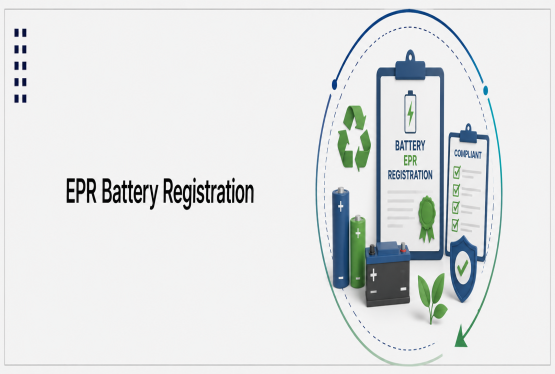
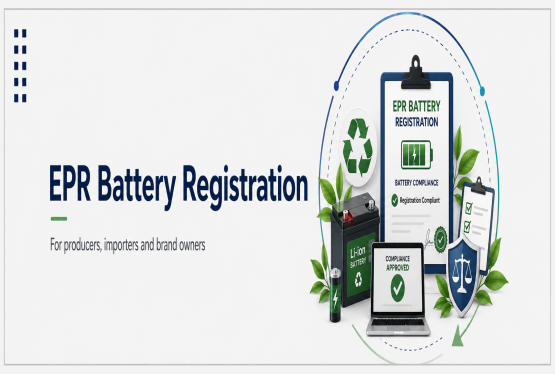
EPR Battery Registration (Extended Producer Responsibility) means that the producer remains responsible for environmentally sound management of batteries even after they are sold and eventually become waste.
Under the Battery Waste Management Rules, producers must fulfil prescribed collection and recycling obligations and register through the centralized online system developed by the Central Pollution Control Board. CPCB states that producers, recyclers and refurbishers must register through the online portal, while recyclers and refurbishers are additionally dealt with through the concerned State Pollution Control Board or Pollution Control Committee.
EPR Registration should therefore not be viewed simply as a licence to sell batteries. It is the starting point of an ongoing compliance framework covering sales reporting, waste-battery management, EPR targets, annual returns, EPR certificates and other post-registration obligations.
Legal Requirements for EPR Battery Registration
The principal legislation is the Environment (Protection) Act, 1986. The Battery Waste Management Rules, 2022 were issued using powers including those under Sections 3, 6, 8 and 25 of that Act. The Rules subsequently went through amendments in 2023, multiple amendments during 2024 and an amendment in February 2025.
As of 11 August 2026, the Ministry of Environment, Forest and Climate Change’s official rules page lists the Battery Waste Management Rules, 2022 together with amendments dated 25 October 2023, 14 March 2024, 20 June 2024, 3 December 2024 and 24 February 2025. The 2025 amendment is currently the latest Battery Waste Management amendment listed there.
Rule 4 – Responsibilities of Producers
Rule 4 is particularly important for businesses applying for EPR Registration because it deals with the responsibilities of producers.
The EPR framework requires producers to meet the applicable collection and recycling requirements prescribed in Schedule II. The CPCB portal also confirms that manufacturers and importers have EPR obligations in respect of batteries introduced by them into the market and that targets are determined under Schedule II.
Registration therefore connects directly with the quantity and category of batteries placed in the Indian market.
Who Is Considered a Producer?
A common misconception is that only a factory manufacturing battery cells requires EPR registration. The definition is considerably broader. The Rules bring within the producer framework businesses involved in the manufacture and sale of batteries, businesses selling batteries—including batteries incorporated in equipment—under their own brand even where those batteries are produced by another manufacturer or supplier, and businesses importing batteries or battery-containing products.
Therefore, an Indian company importing electronic equipment containing lithium-ion batteries may have EPR obligations even though it does not manufacture the battery itself. Similarly, a brand owner procuring batteries from a third-party manufacturer and selling them under its own brand should carefully examine whether it falls within the producer definition.
Batteries Covered Under EPR Rules
The Battery Waste Management Rules, 2022 have a wide scope and are designed to regulate almost every major category of battery placed in the Indian market. The Rules apply irrespective of the battery’s chemistry, size, shape, weight, volume, material composition or intended use. As a result, businesses dealing with portable batteries, automotive batteries, electric vehicle batteries and industrial batteries may fall within the EPR compliance requirements.
The coverage is also not limited to any particular battery technology. Batteries based on lead-acid, lithium-ion, nickel-cadmium, zinc-based and other chemical compositions can come within the scope of the Rules. This means manufacturers, importers and brand owners should carefully identify the category and chemistry of the batteries they place in the market while determining their EPR obligations.
However, certain specific exclusions are provided under Rule 2 of the Battery Waste Management Rules, 2022. These include batteries used in equipment connected with the protection of essential security interests and certain equipment designed to be sent into space. Therefore, businesses operating in specialised sectors should examine the applicability of the Rules to their products before proceeding with EPR Battery Registration.
Documents Required for EPR Battery Registration
CPCB’s Standard Operating Procedure provides the clearest practical checklist for producer applications. Before beginning the online filing process, applicants should ensure that the necessary documents are available in PDF format and that the information appearing across them is consistent.
1. GST Registration Certificate
The GST Registration is one of the principal documents required for a producer registration application. The CPCB SOP requires the producer to enter its GST number and upload the GST certificate. The registered address and trade name entered on the EPR portal should also correspond with the GST information because the SOP specifically requires these details to align.
A mismatch between the company name, trade name or address stated in the application and the GST certificate can create unnecessary verification queries. Businesses should therefore update their GST records first if the legal name or registered address has changed.
2. PAN Card of the Business Entity
A copy of the PAN card of the company or entity is required. According to CPCB’s SOP, a company must upload its company PAN. In the case of a proprietorship, the PAN of the authorised person/proprietor is dealt with in accordance with the applicable portal requirement. The PAN number should correspond with the legal entity applying for registration. Using a director’s or employee’s PAN where the applicant is actually a company can lead to inconsistency in the application.
3. Corporate Identification Number Document
Companies incorporated under the Companies Act should keep their Corporate Identification Number or CIN details/documentation ready. The SOP requires CIN information where the business is registered with the Ministry of Corporate Affairs and includes the CIN document among the documents to be available for the producer application.
The company name appearing against the CIN should correspond with the PAN, GST and EPR application. Any name change should therefore be reflected in the relevant statutory records before applying. For LLPs, proprietorships or other entity structures, the portal requirements should be followed according to the legal constitution of the applicant rather than attempting to provide an irrelevant CIN.
4. Authorised Person Details
The applicant must nominate an authorised person who will interact with the EPR portal and regulatory authority. CPCB’s current SOP requires information including the authorised person’s name, designation, mobile number, PAN and Aadhaar number. Importantly, CPCB’s current portal also expressly advises applicants to provide the dedicated email ID and mobile number of the authorised person and states that the contact details of consultants, agents or other agencies working on behalf of producers should not be provided. This is an important practical point. Businesses should ensure that portal credentials are controlled internally and not tied solely to a consultant’s contact information.
5. Consent Under the Air and Water Acts
Where the applicant operates a production facility, environmental consents issued by the relevant State Pollution Control Board or Pollution Control Committee can become important documents. The CPCB producer SOP requires the uploading of consent issued under the applicable Air and Water pollution-control laws where the unit is involved in production. The relevant consent documents are generally uploaded together as prescribed by the portal. A manufacturer should therefore check whether its Consent to Establish and/or Consent to Operate records, as applicable to the particular unit and state regulatory framework, are current.
6. Hazardous Waste Authorization
Where applicable, the producer may also be required to provide authorization under the Hazardous and Other Wastes (Management and Transboundary Movement) Rules, 2016. The CPCB SOP places this alongside the Air and Water Act consent documentation for entities operating production facilities.
Whether such authorization is required will depend on the manufacturing processes and waste generated at the facility. Therefore, an importer without a manufacturing unit and a domestic battery manufacturer should not automatically assume that their supporting documents will be identical.
7. Import Export Code for Importers
For importers, the Import Export Code (IEC) is a critical document. The CPCB SOP specifically requires an Import Export Certificate/IEC in the case of an entity importing batteries. This requirement becomes particularly important for companies importing finished batteries, battery packs or products containing batteries.
For example, an importer of rechargeable lamps, electronics, power banks or other equipment containing batteries should not assume that EPR obligations disappear merely because the battery forms part of another product. The producer definition specifically covers relevant battery-containing equipment within the statutory framework.
8. DIC Registration Certificate, Where Applicable
The CPCB SOP also refers to the District Industries Centre (DIC) Registration Certificate where the unit is registered with the DIC. This means it is not a universal document for every applicant, but businesses possessing such registration should keep it available when making the application. Applicants should distinguish between mandatory documents applicable to their business category and conditional documents triggered by their nature of operations.
9. GSTR-9 or Previous Financial Year Balance Sheet
Application fees for producer registration are linked to the annual turnover or revenue of the applicant. For this reason, the CPCB SOP requires the applicant to upload the GSTR-9 or balance sheet of the previous financial year while completing the declaration and fee-payment stage.
The current SOP specifies producer-registration application fees of ?10,000 where annual turnover/revenue is below ?5 crore, ?20,000 for the ?5–50 crore bracket and ?40,000 where turnover/revenue exceeds ?50 crore. The fee for renewal is stated to be the same as the registration fee. Businesses should check the amount generated on the live portal at the time of filing because operational fee systems can be updated.
10. Historical Battery Sales Data
One of the most important pieces of information in EPR registration is the applicant’s battery sales data. The CPCB SOP requires producers to enter battery type, composition, sales year and quantity sold in dry weight. Producers must also upload year-wise self-declared sales information for each relevant battery type and composition in the format provided by the portal.
This information is not merely statistical. It is used for calculating the producer’s EPR obligations. Submitting inaccurate historical sales data can therefore affect future recycling targets and compliance calculations.
11. Battery Type, Chemistry and Brand Information
An EPR application is not completed merely by uploading incorporation documents. Producers must provide detailed information regarding the batteries introduced into the market. The portal requires information such as the producer category, type of battery, battery composition, brand name and HSN code. CPCB’s SOP specifically identifies compositions including lead-acid, lithium-ion, nickel-cadmium, zinc-based and others. For businesses selling multiple brands or battery chemistries, careful product mapping should therefore be completed before starting the application.
12. Material Composition of the Battery
Producers are also required to provide information on the percentage composition of materials contained in the battery. CPCB’s SOP explains that where a producer markets different chemistries within a battery composition category, an average percentage composition of the relevant constituents may need to be entered in accordance with the portal guidance. This requirement is particularly relevant because the regulatory framework increasingly links EPR compliance with material recovery and the use of recycled materials.
13. Sales Invoices and Supporting Records
The EPR portal framework also requires producers to maintain and provide sales information after registration. CPCB’s SOP provides for sales entries containing details such as the date of sale, producer type, battery brand, equipment containing the battery where relevant, battery composition, battery category, quantity sold in numbers and kilograms, and the relevant sales invoice. Businesses should therefore establish an internal system capable of tracking batteries by weight and category rather than relying only on ordinary product-level accounting.
EPR Battery Registration Process
The EPR Battery Registration process is completed online through the CPCB Battery EPR Portal. Before starting the application, the producer should keep all required business documents, battery-related information, sales data and authorised person details ready to avoid unnecessary delays or queries during verification.
1. Create an Account on the CPCB Portal
The producer must first create an account on the centralized CPCB Battery EPR Portal. Basic details such as the legal name of the entity, registered address, PAN, CIN where applicable and authorised person information are entered during registration.
2. Complete OTP Verification
After submitting the initial details, OTP verification is completed using the registered mobile number and email address. Producers should preferably use the contact details of their own authorised representative rather than those of an external consultant or agent.
3. Fill in Business and Battery Details
Once the account is activated, the applicant must provide general business information along with details of the batteries placed in the market. This may include battery category, chemistry, brand name, HSN code and other product-specific information required on the portal.
4. Provide Historical Sales Data
The producer is required to submit historical sales data for the relevant battery categories. Information relating to the quantity of batteries sold, year of sale, battery composition and prescribed weight details is used for determining EPR obligations.
5. Upload Supporting Documents
Required documents such as GST Certificate, PAN, CIN details, IEC for importers, applicable pollution-control approvals and other supporting records must be uploaded. All documents should be valid, clear and consistent with the details entered in the application.
6. Submit Declaration and Pay the Fee
After completing all sections, the producer must verify the information, submit the prescribed declaration and pay the applicable registration fee. The fee may vary depending on the annual turnover or revenue category of the applicant.
7. CPCB Verification and Registration
After submission, CPCB examines the application and supporting documents. As per the prescribed SOP, producer-registration applications are generally intended to be processed within 15 working days, subject to completeness and verification. If incorrect, misleading or irrelevant information is submitted, CPCB may raise queries or reject the application. Therefore, businesses should carefully review every detail before final submission to reduce the risk of delay or rejection.
Validity and Renewal of EPR Battery Registration
Fresh producer registration under the CPCB SOP is valid for five years from the date of grant. The Rules require the producer to apply for renewal before expiry; the statutory framework specifies filing for renewal in Form 1(A) before sixty days of expiry. Businesses should therefore treat the EPR certificate as part of a continuing compliance calendar rather than a one-time approval.
Compliance After Registration
Obtaining EPR Registration does not complete the producer’s legal obligations. A producer must continue fulfilling applicable EPR targets, maintain sales and waste-management information, transact eligible EPR certificates under the prescribed framework and submit statutory returns.
The Battery Waste Management Rules require producers to file annual returns in Form 3 containing information regarding waste batteries collected and recycled or refurbished toward their EPR obligations. The statutory date is generally linked to 30 June of the following financial year, although authorities may issue specific extensions. For example, MoEFCC extended the deadline for filing producer annual returns for FY 2024–25 to 30 September 2025.
Environmental Compensation and Consequences of Non-Compliance
Rule 13 deals with action for violations and the imposition of Environmental Compensation. The framework allows environmental compensation to be imposed for non-compliance with EPR obligations and other violations. Registration may also be suspended or cancelled where the Rules are violated. CPCB’s SOP expressly notes that the authority can suspend or cancel producer registration and impose environmental compensation for violations. This is why businesses should avoid treating EPR compliance as a documentation exercise carried out only at the registration stage.
Important Recent Update: Battery Labelling Requirements
A significant amendment was notified on 24 February 2025. Under the amended Schedule I, producers can, subject to informing CPCB as prescribed, meet relevant registration-number labelling requirements by using a barcode or QR code containing the EPR registration number on the battery or battery pack, equipment containing the battery, relevant packaging or specified bulk packaging. The amendment also permits the EPR registration number to be printed on the product information brochure in the prescribed circumstances.
The amendment further provides that CPCB will publish a consolidated list of producers opting for the relevant mechanism and update the details quarterly. It also introduced an exemption from the Cd or Pb marking requirement where cadmium concentration does not exceed 0.002% by weight or lead concentration does not exceed 0.004% by weight. Therefore, manufacturers and importers should review not only their EPR certificate but also their product artwork, packaging, QR-code implementation and labelling records.
Recycled Material Requirements
Another important compliance development concerns the mandatory use of recycled materials in new batteries. The Second Amendment Rules of 20 June 2024 prescribe phased minimum recycled-material requirements. From FY 2027–28 onward, the prescribed percentage begins at 5% for portable and electric-vehicle batteries and 35% for automotive and industrial batteries, with percentages increasing in subsequent years according to the statutory table.
Although these requirements may not constitute initial registration documents, producers should already begin maintaining reliable battery-composition, procurement and recycled-material records because those records will become increasingly important for future compliance.
Common Documentation Mistakes to Avoid
The most common EPR filing problems arise not because an applicant has no documents, but because the documents do not match one another. A producer may have one address on GST records, another on the MCA master data and a third address on its portal application. Similarly, sales quantities may be available in units but not in dry weight, or an importer may provide an IEC but fail to correctly map products containing batteries.
Another common mistake is allowing a consultant’s personal email or phone number to become the primary portal contact. CPCB currently advises businesses to use the dedicated contact details of their own authorised person rather than those of external consultants or agents. Good documentation should therefore be consistent, traceable and capable of supporting future annual returns and EPR-target calculations.
Conclusion
The documents needed for EPR Battery Registration go far beyond basic company incorporation papers.
A typical producer should keep ready its GST certificate, PAN, CIN documentation where applicable, authorised-person information, IEC for imports, applicable pollution-control consents and hazardous-waste authorization, DIC registration where relevant, previous-year turnover evidence, historical battery sales data, battery type and chemistry details, brand and HSN information, material-composition data and relevant sales records. CPCB’s current SOP makes these details central to producer registration and target generation.
More importantly, businesses should understand that EPR registration is only the beginning. Producers remain responsible for EPR targets, recycling compliance, annual reporting, appropriate labelling, record maintenance and other obligations under the Battery Waste Management Rules.
As India moves towards electric mobility and greater reliance on battery-powered products, regulatory scrutiny of battery traceability and recycling is likely to remain significant. Businesses that create a proper compliance system from the registration stage will therefore be in a much stronger position than those that treat EPR merely as another certificate to obtain.
Frequently Asked Questions (FAQs)
Q1. What documents are required for EPR Battery Registration?
Ans: The main documents generally include GST Certificate, PAN, CIN or entity registration proof, authorised person details, turnover proof and battery-related sales data. Importers may also need IEC, while manufacturers may require applicable pollution-control consents. Exact documents depend on the applicant’s business category.
Q2. Who needs EPR Battery Registration in India?
Ans: Producers covered under the Battery Waste Management Rules, 2022 are required to obtain EPR registration. This can include manufacturers, importers and businesses selling batteries or battery-containing products under their own brand. Applicability should be checked based on the statutory definition of “producer.”
Q3. Is IEC mandatory for EPR Battery Registration?
Ans: IEC is particularly relevant where the applicant imports batteries, battery packs or products containing batteries into India. Domestic manufacturers that do not undertake imports may not require IEC for that reason. Importers should ensure that IEC details match their other business records.
Q4. Is GST Registration required for Battery EPR?
Ans: GST registration details form an important part of the CPCB producer-registration process. The applicant’s trade name and registered address should be consistent with the GST Certificate and information submitted on the EPR portal. Mismatched records can result in clarification or processing delays.
Q5. How long does EPR Battery Registration take?
Ans: According to CPCB’s SOP, producer-registration applications are intended to be processed within approximately 15 working days, subject to complete documentation and verification. Applications containing discrepancies or incomplete information may take longer. Correct documentation therefore plays an important role in timely approval.
Q6. How long is EPR Battery Registration valid?
Ans: A fresh producer registration is generally valid for five years from the date of grant, subject to continued compliance with the applicable Rules. Producers must apply for renewal before the certificate expires. Renewal should therefore be tracked as part of the company’s compliance calendar.
Q7. Are battery sales details required for EPR Registration?
Ans: Yes. Producers are required to provide historical sales information relating to the batteries they place in the market. Details may include battery category, chemistry, year of sale and quantity in prescribed units or dry weight. This information is important for determining EPR obligations and recycling targets.
Q8. What happens after obtaining EPR Battery Registration?
Ans: Registration is only the beginning of the producer’s compliance obligations. Producers must fulfil applicable EPR targets, maintain prescribed records, file returns and comply with recycling and reporting requirements. Relevant labelling and EPR certificate requirements must also be followed.
Q9. Can EPR Battery Registration be cancelled?
Ans: Yes. Registration may be suspended or cancelled where the producer violates applicable provisions of the Battery Waste Management Rules or registration conditions. Environmental Compensation may also be imposed for specified non-compliances. Businesses should therefore maintain ongoing compliance after receiving registration.
Q10. Is EPR required for products containing batteries?
Ans: Yes, depending on the facts, EPR obligations can also apply where batteries are incorporated into equipment or products. Importers and brand owners of electronics, rechargeable devices and similar products should examine whether they fall within the definition of a producer. The obligation is not restricted only to standalone battery sellers.


_crop10_thumb.jpg)


_crop10_thumb.jpg)


-Form_crop10_thumb.jpg)

_crop10_thumb.jpg)


_learn_crop10_thumb.jpeg)


_crop10_thumb.jpg)

_crop10_thumb.jpg)


_crop10_thumb.jpg)





_for_Foreign_Directors_learn_crop10_thumb.jpeg)


_Act,_2015_learn_crop10_thumb.jpg)










_learn_crop10_thumb.jpg)


































_crop10_thumb.jpg)

_crop10_thumb.jpg)

_(1)_crop10_thumb.jpg)







_crop10_thumb.png)






_crop10_thumb.jpg)

_crop10_thumb.jpg)






_crop10_thumb.png)
_crop10_thumb.jpg)





_crop10_thumb.png)