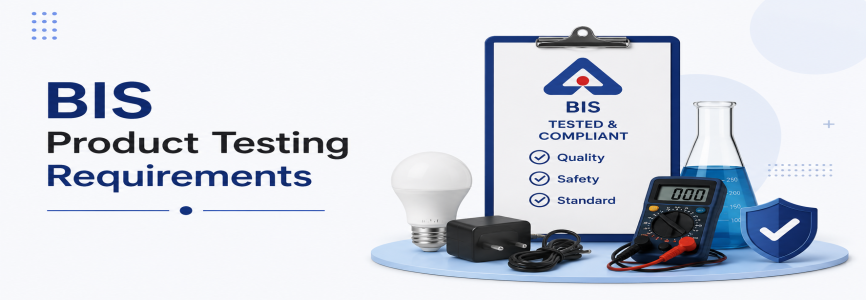



BIS Product Testing Requirements are an important part of product certification in India. BIS stands for Bureau of Indian Standards. It is the national standards body of India and works on Indian Standards, product certification, laboratory recognition, hallmarking, and quality assurance activities.
Product testing under BIS helps confirm that a product is safe, reliable, and made according to the applicable Indian Standard. For many products, BIS certification is voluntary. However, for several products, the Central Government has made BIS certification compulsory through Quality Control Orders or other notifications. BIS states that compulsory certification is introduced for reasons such as public interest, safety, health protection, environmental safety, prevention of unfair trade practices, and national security. For manufacturers, importers, and businesses, BIS testing is not just a formal step. It is the technical base of the certification process. Without proper testing, a product may not qualify for BIS approval, ISI Mark, CRS registration, or other applicable certification schemes.
What is BIS Product Testing?
BIS product testing means testing a product against the requirements of the relevant Indian Standard. Every product covered under BIS certification has a specific IS number. This standard defines the quality, safety, performance, marking, packing, raw material, design, construction, and testing requirements for that product.
For example, a steel product, electrical appliance, cement product, toy, pressure cooker, footwear item, electronic product, or chemical product may have different testing parameters. The testing depends on the nature of the product and the standard applicable to it. The main purpose of BIS product testing is to check whether the product meets the required quality and safety level before it is sold in the Indian market.
Why BIS Product Testing is Important
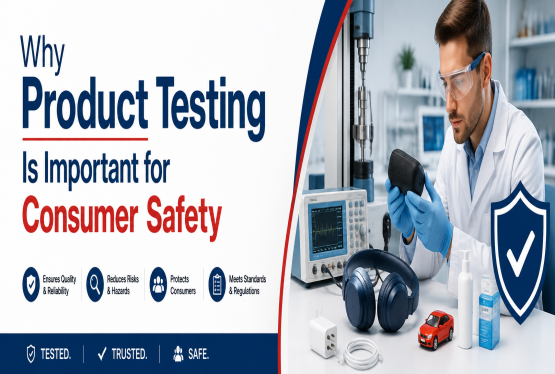
BIS product testing is important because it gives confidence that the product is fit for use and meets the required Indian Standard. It protects consumers from unsafe or poor-quality products and helps manufacturers build trust in the market.
For businesses, BIS testing is also important because non-compliance can lead to rejection of application, delay in license grant, seizure of goods, market restriction, penalties, or cancellation of license. In regulated product categories, a manufacturer cannot legally sell or import the product in India without meeting the BIS requirements. Product testing also helps businesses identify defects before the product reaches the market. This can reduce customer complaints, product recalls, legal issues, and brand damage.
Products Covered Under BIS Testing
BIS testing applies to many product categories. Some common categories include:
- Electrical and electronic goods
- Steel and iron products
- Cement and building materials
- Chemicals and fertilizers
- Toys and children’s products
- Footwear and leather products
- Household appliances
- Medical and safety-related products
- Automotive components
- Food-related packaging and containers
BIS maintains product certification information, certification process details, product-specific guidelines, fee details, and testing facility information on its official product certification section.
BIS Certification and Product Testing Connection
Product testing is directly connected with BIS certification. Before BIS grants a license or registration, it usually checks whether the product meets the applicable Indian Standard. This is done through testing, inspection, documentation, and factory assessment, depending on the certification scheme. Under the BIS Product Certification Scheme, the manufacturer may need to submit product samples for testing. BIS may also draw samples during factory inspection or market surveillance. These samples are tested in BIS laboratories or BIS-recognised laboratories. If the product passes the required tests and other compliance conditions are met, BIS may grant the license or certificate. If the product fails, the applicant may need to take corrective action and go for retesting.
Main Types of BIS Product Testing
1. Initial Product Testing
Initial product testing is done before the grant of BIS license or registration. This test confirms whether the product meets the applicable Indian Standard. The manufacturer must submit samples as per BIS instructions. Testing may include safety tests, performance tests, durability tests, chemical tests, electrical tests, mechanical tests, physical tests, or other product-specific tests.
2. Factory Sample Testing
In many certification cases, BIS officers may visit the manufacturing premises and draw samples from the factory. These samples are then sent to a BIS laboratory or BIS-recognised laboratory. This helps BIS confirm that the products manufactured at the factory are actually meeting the required standard.
3. Market Sample Testing
BIS may also collect samples from the market after the license is granted. This is part of surveillance. It ensures that the licensed manufacturer continues to maintain product quality after certification. If market samples fail, BIS may issue notice, ask for corrective action, suspend the license, or take other action depending on the case.
4. Retesting
Retesting is required when a sample fails or when BIS asks for additional confirmation. BIS has separate guidelines for retesting of samples under the product certification process section. Retesting gives the manufacturer an opportunity to correct defects and prove conformity again.
5. Surveillance Testing
Surveillance testing is done after certification to check continued compliance. BIS may conduct inspection, draw samples, check records, and verify production quality from time to time. This is important because BIS certification is not a one-time approval. The manufacturer must continue to maintain the same standard during the validity of the license.
Testing in BIS Recognised Laboratories
Testing is usually done in BIS laboratories or BIS-recognised/empanelled laboratories. BIS publishes the list of recognised and empanelled laboratories and also provides IS-wise testing facility information. The BIS recognised lab list was last updated on June 24, 2026. A laboratory must meet specific requirements to get BIS recognition. BIS recognition is generally based on technical competence, testing infrastructure, equipment, calibration, qualified personnel, and quality management system. BIS Laboratory Recognition Scheme mentions that laboratories are recognised for carrying out testing of samples related to conformity assessment.
Laboratory Quality Requirements
A BIS-recognised laboratory should have proper testing equipment, trained technical staff, calibration records, testing procedures, and quality control systems. As per BIS laboratory recognition information, laboratories applying for recognition are required to submit documents such as a valid laboratory quality manual as per IS/ISO/IEC 17025 or ISO/IEC 17025, along with other required documents. This ensures that the test reports issued by recognised laboratories are reliable and technically acceptable.
Documents Required for BIS Product Testing
The documents may vary depending on the product and certification scheme. However, the following documents are commonly required:
- Application form
- Manufacturing process flow chart
- Factory address proof
- Business registration documents
- Product details
- Applicable Indian Standard details
- Raw material details
- Test request form
- Sample details
- Manufacturing machinery list
- Testing equipment list
- Calibration certificates
- Quality control records
- Label and marking details
- Previous test reports, if any
For foreign manufacturers, additional documents may be required under the Foreign Manufacturers Certification Scheme. BIS states that manufacturers located outside India can apply under FMCS, and they must ensure conformity of their products to applicable requirements.
Product Sample Requirements
Sample requirements depend on the applicable Indian Standard. BIS may specify the number of samples, sample size, batch details, grade, variety, model, rating, capacity, or type.
For example, in electrical products, different models or ratings may require separate testing. In steel products, different grades and sizes may require different test samples. In chemical products, composition and purity may be tested. In toys, mechanical safety, chemical safety, and flammability may be checked. The sample must be representative of actual production. A specially prepared sample that does not match regular production may create compliance issues later.
Common Testing Parameters Under BIS
Testing parameters differ product to product. However, some common areas include:
1. Safety Testing
Safety testing checks whether the product can be used without causing harm. This is common in electrical appliances, toys, gas appliances, pressure equipment, and consumer goods.
2. Performance Testing
Performance testing checks whether the product works as expected. For example, an appliance may be tested for efficiency, output, load capacity, or operating performance.
3. Mechanical Testing
Mechanical testing may include strength, hardness, impact, load, pressure, bending, tensile strength, or durability tests.
4. Chemical Testing
Chemical testing checks the composition of raw materials or finished products. It is common in chemicals, metals, paints, plastics, fertilizers, food contact materials, and similar products.
5. Electrical Testing
Electrical testing may include insulation resistance, leakage current, earthing, voltage withstand, power consumption, and protection from electric shock.
6. Marking and Labelling Check
BIS also checks whether the product carries proper marking, label information, manufacturer details, standard mark details, rating, batch number, safety warning, and other required declarations.
7. Packaging Test
Some products require packaging checks to ensure safe storage, transport, and handling.
Role of Indian Standards in Product Testing
Indian Standards are the base of BIS testing. A product cannot be tested randomly. It must be tested according to the relevant IS number.
The Indian Standard defines:
- Product scope
- Technical requirements
- Test methods
- Sampling method
- Acceptance criteria
- Marking requirements
- Packaging requirements
- Quality control requirements
Before applying for BIS certification, the manufacturer should identify the correct Indian Standard. Choosing the wrong standard can lead to wrong testing, application rejection, and loss of time.
Factory Testing Facility Requirement
In many BIS certification cases, the manufacturer is expected to maintain in-house testing facilities. These facilities help the manufacturer check product quality during regular production. The required in-house testing equipment depends on the product standard. BIS may inspect the factory to verify whether the manufacturer has proper testing equipment, trained staff, calibration records, and quality control procedures. If full in-house testing facility is not available, BIS may allow some tests through outside laboratories depending on the product and applicable guidelines. However, the manufacturer must still maintain proper quality control at the factory.
Calibration Requirement
Testing equipment must be calibrated to give accurate results. Calibration means checking whether the equipment is giving correct measurements. For BIS compliance, calibration records are very important. If equipment is not calibrated, the test results may not be reliable. BIS officers may check calibration certificates during factory inspection. Manufacturers should maintain calibration records for weighing machines, gauges, meters, ovens, testing machines, electrical testing equipment, measuring instruments, and other equipment used in quality testing.
Test Report Requirement
A test report is one of the most important documents in BIS product testing. It records the test results and confirms whether the product has passed or failed the applicable parameters.
A proper test report generally includes:
- Name and address of laboratory
- Product name
- Sample description
- Indian Standard number
- Test methods used
- Test results
- Pass or fail status
- Date of testing
- Signature of authorised laboratory person
- Laboratory accreditation or recognition details
Timeline for BIS Product Testing
The testing timeline depends on the product type, number of tests, sample complexity, laboratory workload, and whether retesting is required. Some products may be tested quickly, while others may take more time due to long-duration tests. For example, durability, ageing, weather resistance, chemical stability, or safety endurance tests may take longer. Businesses should plan the BIS application timeline carefully. Waiting until the last date of a Quality Control Order can create problems because testing slots may not be easily available.
BIS Testing for Imported Products
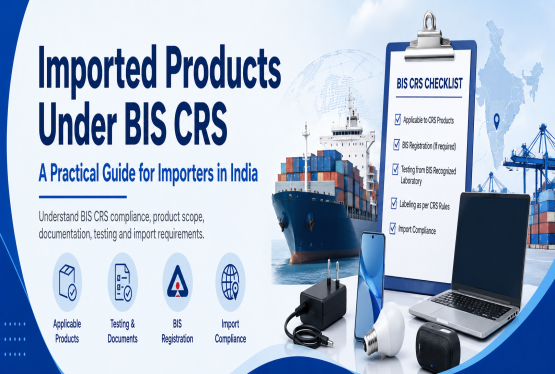
Imported products covered under compulsory BIS certification must also meet Indian Standards. Importers should check whether the product falls under BIS mandatory certification before importing. For foreign manufacturers, BIS certification is generally obtained through the Foreign Manufacturers Certification Scheme. The foreign manufacturer may need to appoint an Authorized Indian Representative, submit documents, provide samples, undergo factory inspection, and meet testing requirements. Importing regulated goods without BIS approval can lead to customs issues, shipment hold, rejection, or legal action.
BIS Testing Under CRS
Some electronic and IT products are covered under the Compulsory Registration Scheme, commonly known as CRS. Under CRS, products are tested as per applicable Indian Standards in BIS-recognised laboratories, and registration is granted after submission of required documents and test reports. CRS is common for many electronic and IT goods. The exact requirement depends on the product category and applicable notification.
Common Reasons for Test Failure
Product testing may fail due to many reasons. Some common reasons are:
- Use of poor-quality raw material
- Incorrect product design
- Lack of in-house quality checks
- Wrong sample selection
- Difference between sample and regular production
- Non-calibrated testing equipment
- Missing safety features
- Incorrect marking or labelling
- Non-compliance with updated Indian Standard
- Poor packaging or finishing
A failed test does not always mean the product can never be certified. However, the manufacturer must identify the issue, take corrective action, and submit the product for retesting where allowed.
How Businesses Can Prepare for BIS Testing
Businesses should prepare before sending the product for BIS testing. Proper preparation saves time and cost. First, identify the correct Indian Standard. Then review the technical requirements of that standard. After that, check whether the product design, raw materials, manufacturing process, testing equipment, and marking details meet the standard. The manufacturer should also conduct internal testing before submitting samples to BIS or a recognised laboratory. This reduces the risk of failure. It is also helpful to maintain a quality control file containing raw material records, batch records, inspection reports, calibration certificates, test reports, and corrective action records.
BIS Testing and Quality Control Orders
Quality Control Orders make BIS compliance mandatory for specific products. Once a QCO becomes applicable, the product cannot usually be manufactured, imported, sold, distributed, or stored for sale without the required BIS certification. BIS maintains a section for upcoming Quality Control Orders notified and due for implementation, which helps stakeholders track upcoming compliance requirements. Businesses should regularly check whether their product is covered under any QCO. This is especially important for manufacturers, importers, traders, e-commerce sellers, and brand owners.
Consequences of Non-Compliance
Non-compliance with BIS product testing and certification requirements can create serious problems. These may include:
- Rejection of BIS application
- Delay in product launch
- Inability to sell regulated products
- Customs clearance issues for imports
- Market seizure of goods
- Penalty or legal action
- Suspension or cancellation of license
- Loss of customer trust
For regulated products, BIS compliance should be planned before manufacturing, importing, or selling the product in India.
Best Practices for BIS Product Testing
Businesses can follow these best practices:
- Check the applicable Indian Standard at the planning stage
- Confirm whether BIS certification is mandatory
- Test raw materials before production
- Maintain proper in-house quality control
- Use calibrated testing equipment
- Keep updated with BIS and QCO changes
- Use BIS-recognised laboratories where required
- Maintain complete technical documents
- Avoid changing product design without checking compliance
- Keep test reports and inspection records safely
Conclusion
BIS Product Testing Requirements are an essential part of product compliance in India. They help ensure that products meet Indian Standards and are safe for consumers. For businesses, product testing is not only a regulatory requirement but also a quality control tool.
Whether a business is manufacturing in India or importing from another country, it should first check the applicable Indian Standard, certification scheme, laboratory requirement, sample requirement, and testing parameters. Proper planning can save time, reduce rejection risk, and help the product enter the market smoothly. BIS certification is built on trust, testing, and continued compliance. A manufacturer that maintains proper quality control from the beginning is more likely to complete BIS testing and certification without unnecessary delay.
FAQs
Q1. What is BIS product testing?
Ans. BIS product testing is the process of testing a product according to the relevant Indian Standard. It checks whether the product meets safety, quality, performance, marking, and other required requirements.
Q2. Is BIS product testing mandatory for every product?
Ans. No, BIS product testing is not mandatory for every product. It becomes mandatory when the product is covered under compulsory BIS certification, Quality Control Orders, or any government notification.
Q3. Why is BIS product testing important for manufacturers?
Ans. BIS product testing helps manufacturers prove that their products meet Indian quality and safety standards. It also helps avoid rejection, market restrictions, penalties, and customer complaints.
Q4. Where is BIS product testing done?
Ans. BIS product testing is usually done in BIS laboratories or BIS-recognised laboratories. The laboratory must have proper testing facilities for the applicable Indian Standard.
Q5. What documents are required for BIS product testing?
Ans. Common documents include product details, application form, manufacturing process, raw material details, sample details, factory documents, testing equipment list, calibration certificates, and previous test reports, if available.
Q6. What is a BIS test report?
Ans. A BIS test report is a document issued by the testing laboratory after product testing. It includes sample details, test methods, test results, and whether the product has passed or failed the required standard.
Q7. Can a product fail BIS testing?
Ans. Yes, a product can fail BIS testing if it does not meet the required Indian Standard. In such cases, the manufacturer may need to correct the defects and apply for retesting, if allowed.
Q8. Is in-house testing facility required for BIS certification?
Ans. In many cases, manufacturers are required to maintain in-house testing facilities. These facilities help ensure regular quality checks during production and continued compliance with BIS requirements.
Q9. Is BIS testing required for imported products?
Ans. Yes, imported products covered under compulsory BIS certification must also meet Indian Standards. Foreign manufacturers may need BIS approval before selling such products in India.
Q10. Why should businesses plan BIS product testing early?
Ans. Businesses should plan BIS product testing early because testing can take time depending on the product, standard, laboratory workload, and retesting requirements. Early planning helps avoid delays in certification and product launch.


_crop10_thumb.jpg)


_crop10_thumb.jpg)


-Form_crop10_thumb.jpg)

_crop10_thumb.jpg)


_learn_crop10_thumb.jpeg)


_crop10_thumb.jpg)

_crop10_thumb.jpg)


_crop10_thumb.jpg)




_for_Foreign_Directors_learn_crop10_thumb.jpeg)


_Act,_2015_learn_crop10_thumb.jpg)










_learn_crop10_thumb.jpg)






























_crop10_thumb.jpg)
_crop10_thumb.jpg)
_(1)_crop10_thumb.jpg)






_crop10_thumb.png)





_crop10_thumb.jpg)

_crop10_thumb.jpg)




_crop10_thumb.png)
_crop10_thumb.jpg)






_crop10_thumb.png)