
_crop6_thumb.jpg)



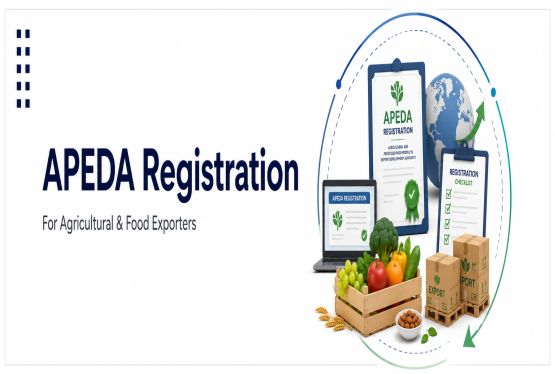
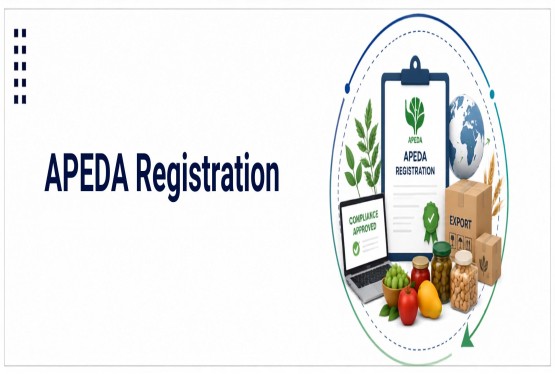
APEDA Registration is an important legal requirement for exporters dealing in scheduled agricultural and processed food products from India. APEDA stands for Agricultural and Processed Food Products Export Development Authority. It is a statutory authority established under the Agricultural and Processed Food Products Export Development Authority Act, 1985, and functions under the Ministry of Commerce and Industry, Government of India. The purpose of APEDA is to promote, develop, regulate, and support the export of specified agricultural and processed food products from India.
For agricultural exporters, APEDA Registration works as a formal recognition that the business is registered with the concerned export promotion authority. It helps exporters establish credibility before foreign buyers, banks, customs authorities, freight forwarders, logistics partners, government departments, and export-related agencies. Any exporter dealing in APEDA scheduled products should obtain APEDA Registration before starting export operations so that the export business remains legally compliant and professionally structured.
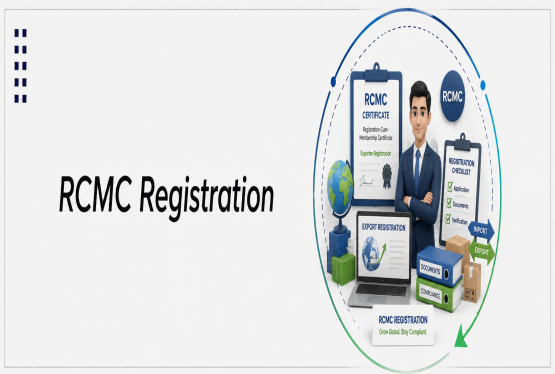
APEDA Registration is generally issued in the form of RCMC, which means Registration-Cum-Membership Certificate. RCMC validates that an exporter is dealing with products covered by an authorized export promotion council, commodity board, development authority, or other competent authority in India. DGFT states that RCMC is issued for five financial years by the concerned registering authority. For APEDA scheduled products, APEDA is the registering authority.
Legal Provisions for APEDA Registration
The main law governing APEDA Registration is the Agricultural and Processed Food Products Export Development Authority Act, 1985. This Act created APEDA as a statutory body for the development and promotion of exports of agricultural and processed food products. The Act gives APEDA authority to register exporters of scheduled products, fix standards and specifications, improve packaging, promote marketing outside India, inspect specified products, and support export-oriented development of scheduled products.
APEDA’s functions include development of industries relating to scheduled products for export, registration of exporters on payment of prescribed fees, fixing standards and specifications for scheduled products, improving packaging, improving marketing of scheduled products outside India, and promoting export-oriented production and development. These functions are important because agricultural exports often require proper quality control, food safety, documentation, packaging, labelling, traceability, and compliance with international buyer requirements.
APEDA Registration is linked with the export of scheduled products. Scheduled products are those products that are specifically covered under the APEDA Provisions. Exporters dealing in products outside APEDA’s scheduled list may need registration with another export promotion council or commodity board depending on the product. Therefore, before applying, exporters should first identify whether their product falls under APEDA or another registering authority.
Meaning of APEDA Registration for Agricultural Exporters
APEDA Registration means that the exporter has registered itself with APEDA for export of scheduled agricultural and processed food products. It is not merely a certificate; it is an important compliance document for export business. It helps the exporter access APEDA support, participate in export promotion programmes, comply with product-related requirements, and maintain proper records for international trade.
For agricultural exporters, this registration becomes particularly important because food and agri products are sensitive in international trade. Foreign countries often impose strict standards related to quality, safety, hygiene, pesticides, residues, packaging, labelling, traceability, certification, and documentation. APEDA helps exporters understand export requirements and promotes quality development for Indian agricultural and processed food products.
APEDA Registration is useful for merchant exporters as well as manufacturer exporters. A merchant exporter purchases goods from manufacturers or suppliers and exports them to foreign buyers. A manufacturer exporter produces, processes, packs, or manufactures the goods and then exports them. Manufacturer exporters may require more documents and compliance support because their manufacturing setup, food safety practices, product standards, and processing details may be reviewed based on the product category.
Recent Update on APEDA RCMC Filing
A key recent update is that APEDA has started using the DGFT portal for issuance of Registration-Cum-Membership Certificate. APEDA’s official notice states that, in compliance with DGFT Trade Notice 35/2021-22 dated 24 February 2022, APEDA started using the DGFT portal for issuance of RCMC with effect from 17 July 2023. Exporters may apply for e-RCMC through the “Services” menu after obtaining IEC from DGFT.
This update is important because exporters should now complete APEDA RCMC filing through the DGFT-linked electronic system rather than relying only on older offline or separate filing practices. The process is intended to make registration more integrated with IEC records and export-related databases. Exporters should ensure that their IEC details, PAN, GST, business address, email ID, mobile number, and authorized signatory details are updated before applying.
Another important update is the fee structure. APEDA’s registration document mentions the Registration-Cum-Membership Certificate fee as Rs. 5,900, which includes registration fee of Rs. 5,000 plus GST at 18% of Rs. 900. It also mentions validity of five years.
Who Needs APEDA Registration?
APEDA Registration is required for exporters dealing in APEDA scheduled products. Any individual, firm, LLP, company, cooperative, food processing unit, agricultural exporter, manufacturer exporter, merchant exporter, or export startup planning to export scheduled agricultural or processed food products should obtain APEDA Registration.
This registration is useful for exporters dealing in fruits, vegetables, cereals, cereal products, processed fruits and vegetables, dairy products, poultry products, meat products, honey, jaggery, bakery products, confectionery, cocoa products, groundnuts, walnuts, pickles, papads, chutneys, beverages, guar gum, herbal products, medicinal plants, floriculture products, and other scheduled products covered under APEDA.
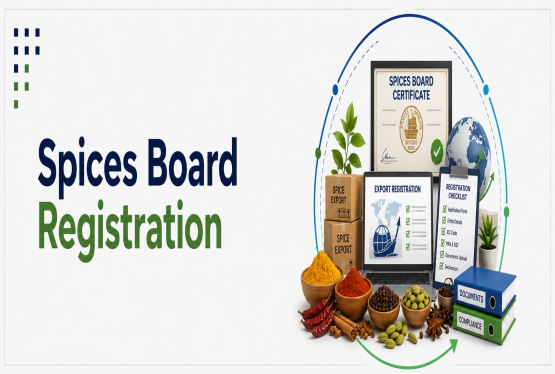
Exporters should not assume that every agriculture-related product automatically falls under APEDA. Some products may fall under other commodity boards or export promotion councils. For example, spices, tea, coffee, marine products, and certain other product categories may be covered by separate authorities. Therefore, product classification is the first practical step before APEDA Registration.
Eligibility for APEDA Registration
Any individual or business entity engaged in the export or proposed export of scheduled products under APEDA can apply for APEDA Registration. The applicant may be a proprietorship firm, partnership firm, limited liability partnership, private limited company, public limited company, cooperative society, producer company, food processing unit, manufacturer exporter, merchant exporter, or export-oriented startup.
The applicant must have a valid Import Export Code issued by DGFT. IEC is one of the most important requirements because APEDA Registration is directly linked with export activity. Without IEC, the APEDA RCMC application cannot be completed properly. Since the updated filing system works through the DGFT portal, correct IEC details are very important.
The applicant should also have valid business documents, bank details, PAN, GST registration if applicable, address proof, and identity proof of the authorized person. The business must ensure that the details given in IEC, PAN, GST, bank records, and business registration documents are consistent. Any mismatch in name, address, constitution, mobile number, email ID, or authorized signatory may result in delay, clarification, or correction.
Products Covered under APEDA
APEDA covers a wide range of scheduled agricultural and processed food products. The major product categories include fruits and vegetables, processed fruits and vegetables, meat and meat products, poultry and poultry products, dairy products, honey, jaggery, sugar products, bakery products, biscuits, confectionery, cocoa products, groundnuts, peanuts, walnuts, cereals, cereal products, pickles, papads, chutneys, alcoholic and non-alcoholic beverages, guar gum, floriculture products, herbal plants, medicinal plants, and other scheduled products.
APEDA also maintains product-related pages and resources through its official website for product categories and export procedures. Exporters should check the official APEDA product list and export procedure section before filing the application, especially where the product is sensitive or subject to specific quality conditions. APEDA’s export procedures section contains product-specific updates and procedures, including recent export procedure documents for certain products such as peanuts, grapes, and rice.
For exporters, product coverage is not only a registration issue but also a compliance issue. Some products require additional certification, testing, labelling, health certificates, phytosanitary certificates, residue testing, traceability, organic certification, halal certification, or destination-country compliance. Therefore, APEDA Registration should be treated as the starting point, not the only requirement.
Documents Required for APEDA Registration
The usual documents required for APEDA Registration include Import Export Code issued by DGFT, PAN card of the business or applicant, GST registration certificate if applicable, bank certificate or cancelled cheque, bank account statement, business address proof, identity proof of proprietor, partner, director or authorized signatory, address proof of authorized person, signed application form, authorization letter or board resolution where applicable, and business constitution documents such as certificate of incorporation, LLP deed, partnership deed, trust deed, society registration certificate, or proprietorship proof.
For companies, documents such as Certificate of Incorporation, PAN, GST, board resolution, details of directors, authorized signatory proof, and bank details may be required. For LLPs, LLP incorporation certificate, LLP agreement, PAN, GST, and partner details may be required. For partnership firms, partnership deed, PAN, GST, and partner details may be needed. For proprietorship firms, PAN, GST if applicable, business address proof, and bank details are generally required.
Manufacturer exporters may require additional documents. These may include FSSAI License if applicable, factory license, manufacturing unit details, MSME registration if available, Pollution Control Board consent or NOC where applicable, product details, processing details, plant layout, food safety documents, quality control certificates, halal certificate where required, organic certification where applicable, and other product-specific certificates.
APEDA Registration Process
The APEDA Registration process is completed online. After obtaining IEC, the exporter can apply for APEDA e-RCMC through the DGFT portal. The applicant should ensure that the IEC profile is active and updated before starting the application. Correct IEC details help in smooth verification and reduce the chances of application mismatch.
The first step is to visit the DGFT portal and access the e-RCMC service. The exporter needs to log in using valid credentials and select the appropriate registering authority based on product category. For APEDA scheduled products, APEDA should be selected as the registering authority.
The applicant then enters business details, IEC details, product information, bank details, contact details, and authorized person details. The product category should be selected carefully because registration is linked with scheduled products. If an exporter deals in multiple products, correct classification should be done before submission.
After entering details, the applicant uploads the required documents in the prescribed format. Documents should be clear, valid, updated, and consistent with IEC, PAN, GST, bank and business records. Incorrect documents, blurred scans, expired records, inconsistent address details, or wrong product category selection may delay approval.
After document upload, the applicant pays the prescribed registration fee online. Once payment is successful, an application reference number is generated. This reference number should be saved for tracking and future communication. APEDA then reviews the application and may approve it or raise queries if any clarification or correction is required.
Once the application is approved, the APEDA RCMC certificate is issued. The exporter can download the certificate from the portal. The certificate should be kept safely in both digital and physical form because it may be required for export documentation, buyer verification, bank procedures, government schemes, and compliance records.
APEDA Registration Fees and Validity
The APEDA registration fee is generally Rs. 5,000 plus applicable GST. APEDA’s registration document currently mentions the total fee as Rs. 5,900, which includes Rs. 5,000 registration fee and Rs. 900 GST at 18%. The certificate validity is stated as five years.
Apart from the government fee, exporters may incur professional charges if they take help from consultants, compliance professionals, or export advisors. Professional charges may cover document review, application preparation, filing support, product category guidance, query handling, correction support, and certificate download assistance.
The total cost may vary depending on business structure, document readiness, product category, and exporter type. Merchant exporters usually have simpler documentation compared to manufacturer exporters. Manufacturer exporters may need additional compliance documents such as FSSAI License, factory information, product details, processing details, quality documents, or pollution control approvals depending on the nature of products.
Benefits of APEDA Registration
APEDA Registration gives legal recognition to exporters of scheduled agricultural and processed food products. It helps the exporter show that the business is registered with the concerned authority and eligible to deal in APEDA scheduled products for export purposes.
It improves business credibility. Foreign buyers, customs agents, freight forwarders, banks, export consultants, and government agencies may prefer dealing with registered exporters. A valid APEDA RCMC can help create confidence in the exporter’s legal status and export readiness.
APEDA Registration also helps exporters access export promotion support. APEDA supports exporters through training programmes, buyer-seller meets, international exhibitions, market development initiatives, financial assistance schemes, packaging support, quality improvement initiatives, and export guidance. APEDA’s official functions include financial assistance, registration of exporters, standard-setting, packaging improvement, marketing improvement, and export-oriented development of scheduled products.
It also helps exporters improve documentation discipline. Export businesses require proper IEC records, GST details, bank records, product records, invoices, shipping bills, certifications, testing reports, and buyer communication records. APEDA Registration encourages exporters to maintain organized records, which can reduce future compliance issues.
Compliance After APEDA Registration
Obtaining APEDA Registration is not the end of compliance. Exporters must continue to follow APEDA rules, product-specific procedures, quality standards, packaging norms, food safety requirements, and destination country requirements. Exporters should regularly monitor APEDA circulars, notices, export procedures, and product-specific updates.
Exporter details should be kept updated. If there is any change in business name, registered office, factory address, authorized signatory, bank details, mobile number, email ID, IEC status, product category, or business constitution, the exporter should update the relevant records. Mismatched records can create difficulty during renewal, amendment, export documentation, or scheme applications.
Exporters should maintain records of export invoices, shipping bills, packing lists, certificates, quality reports, purchase invoices, buyer contracts, and product test reports. Manufacturer exporters should also maintain production records, processing records, FSSAI compliance documents, quality control reports, hygiene records, and traceability information where applicable.
Penalties and Consequences of Non-Compliance
Exporters dealing in scheduled products must comply with APEDA requirements. Non-compliance may lead to legal, financial, and business consequences. Examples include filing incorrect information, submitting false documents, misusing the certificate, violating APEDA guidelines, failing to follow quality standards, exporting without required registration, or ignoring APEDA queries.
In serious cases, regulatory action may be taken against the exporter or responsible persons such as directors, partners, proprietors, managers, or authorized representatives. Non-compliance may also affect business reputation, buyer confidence, export orders, and eligibility for government support.
Exporters should understand that international trade depends heavily on trust and compliance. One compliance failure can affect not only a single shipment but also the exporter’s long-term credibility. Therefore, businesses should treat APEDA Registration and related compliance as a continuing responsibility.
Cancellation of APEDA Registration
APEDA Registration may be cancelled if the exporter fails to comply with the rules, conditions, and regulatory requirements. Cancellation may occur where the exporter submits false information, provides fake or misleading documents, misuses the APEDA certificate, violates APEDA guidelines, fails to respond to APEDA communications, or provides incorrect product details.
Once registration is cancelled, the exporter may lose access to APEDA-related benefits and support. This may include financial assistance, export promotion schemes, market development support, training programmes, trade fair participation, and other support services available to registered exporters.
To avoid cancellation, exporters should maintain updated IEC, PAN, GST, bank details, product records, authorized signatory details, and business information. They should also follow quality standards, maintain export records, respond to departmental communication on time, and comply with APEDA requirements.
APEDA Registration and Other Export Compliances
APEDA Registration is important, but it may not be the only compliance needed for agricultural exports. Exporters may also require IEC from DGFT, GST registration, FSSAI License, customs registration, AD Code registration with bank, LUT under GST for export without payment of tax, product testing certificates, phytosanitary certificate, health certificate, organic certification, halal certificate, and destination-country-specific approvals.
For food products, FSSAI compliance is often important. For organic products, NPOP certification may be required. APEDA also plays a role in the National Programme for Organic Production framework and organic export ecosystem. For meat, dairy, peanuts, rice, fruits, and vegetables, product-specific standards and destination-specific procedures may apply.
Therefore, exporters should build a compliance checklist before accepting foreign orders. The checklist should include product classification, APEDA coverage, IEC status, GST status, product certification, packaging norms, labelling requirements, buyer country rules, shipping documentation, bank formalities, and export incentive eligibility.
Practical Tips for Agricultural Exporters
Exporters should start by identifying their product category and confirming whether it falls under APEDA scheduled products. They should then obtain IEC, update GST and PAN records, maintain a proper bank account, prepare documents, and apply for APEDA RCMC through the correct portal.
Before filing, exporters should ensure that the name and address in IEC, PAN, GST, bank certificate, and business documents match properly. Many applications get delayed because of small mismatches in address, business name, email ID, mobile number, or authorized person details.
Manufacturer exporters should keep product details, FSSAI License, factory details, processing information, quality documents, and other applicable certificates ready. They should also check whether their product requires special testing or certification before export.
Exporters should also maintain proper digital records. Export documentation, APEDA certificate, IEC certificate, GST certificate, bank documents, invoices, product test reports, certificates of origin, and shipping documents should be stored safely for future reference.
Conclusion
APEDA Registration is a key compliance requirement for agricultural exporters dealing in scheduled agricultural and processed food products. It provides legal recognition, improves credibility, supports export readiness, and enables access to APEDA’s export promotion support. For exporters planning to enter global markets, APEDA Registration is one of the first steps toward building a compliant and trusted export business.
The legal framework of APEDA is based on the APEDA Act, 1985, which empowers APEDA to register exporters, promote export-oriented development, fix standards, improve packaging, and support marketing of scheduled products outside India. Recent filing updates have made the process more integrated through the DGFT e-RCMC system, and exporters must ensure that IEC and business records are correct before filing.
For agricultural exporters, APEDA Registration should not be treated as a one-time formality. It is part of a larger export compliance system involving product quality, documentation, food safety, packaging, labelling, destination-country rules, and regular record maintenance. With proper registration and compliance, Indian agricultural exporters can build stronger credibility, reduce regulatory risk, and expand confidently in global markets.
Frequently Asked Questions (FAQs)
Q1. What is APEDA Registration?
Ans: APEDA Registration is required for exporters dealing in scheduled agricultural and processed food products.
It gives legal recognition to exporters under APEDA.
It is generally issued as an RCMC certificate.
This registration helps exporters deal with buyers, banks and export authorities professionally.
Q2. Who needs APEDA Registration?
Ans: Any exporter dealing in APEDA scheduled products should obtain APEDA Registration.
It applies to merchant exporters, manufacturer exporters, food processors and agri startups.
Companies, LLPs, partnership firms and proprietorship firms can apply.
The applicant must have a valid IEC issued by DGFT.
Q3. Is IEC mandatory for APEDA Registration?
Ans: Yes, IEC is mandatory for APEDA Registration.
APEDA Registration is linked with export activity and DGFT records.
Without IEC, the APEDA RCMC application cannot be completed.
Exporters should ensure IEC details are updated before filing.
Q4. Which products are covered under APEDA?
Ans: APEDA covers agricultural and processed food products.
Major products include fruits, vegetables, cereals, dairy products and processed foods.
It also covers honey, jaggery, bakery products, beverages and floriculture products.
Exporters should check whether their product falls under APEDA’s scheduled list.
Q5. What documents are required for APEDA Registration?
Ans: Common documents include IEC, PAN, GST, bank certificate or cancelled cheque.
Business address proof and identity proof of the authorized person are also required.
Companies and LLPs may need incorporation documents or LLP deed.
Manufacturer exporters may need FSSAI, factory details and product-specific documents.
Q6. What is the government fee for APEDA Registration?
Ans: The APEDA Registration fee is generally Rs. 5,000 plus GST.
The total government fee is usually Rs. 5,900 including GST.
The fee is paid online during the application process.
Professional charges may apply separately if expert assistance is taken.
Q7. How long is APEDA Registration valid?
Ans: APEDA RCMC is generally valid for five financial years.
Exporters should keep the certificate safely for export records.
Renewal or update may be required as per APEDA or DGFT requirements.
Business details should be kept updated during the validity period.
Q8. Can a manufacturer exporter apply for APEDA Registration?
Ans: Yes, manufacturer exporters can apply for APEDA Registration.
They may need additional documents related to manufacturing and product quality.
Documents may include FSSAI License, factory details and processing information.
Product-specific certificates may also be required depending on export category.
Q9. Can APEDA Registration be cancelled?
Ans: Yes, APEDA Registration may be cancelled for non-compliance.
False information, fake documents or misuse of certificate may lead to action.
Failure to respond to APEDA queries may also create issues.
Exporters should maintain updated records and follow APEDA norms.
Q10. Is APEDA Registration enough for food export?
Ans: No, APEDA Registration alone may not be enough for food export.
Exporters may also need IEC, GST, FSSAI and customs-related documents.
Some products may require testing, health certificates or buyer-country approvals.
Exporters should check product-wise and country-wise compliance before shipment.


_crop10_thumb.jpg)


_crop10_thumb.jpg)


-Form_crop10_thumb.jpg)

_crop10_thumb.jpg)


_learn_crop10_thumb.jpeg)


_crop10_thumb.jpg)

_crop10_thumb.jpg)


_crop10_thumb.jpg)





_for_Foreign_Directors_learn_crop10_thumb.jpeg)


_Act,_2015_learn_crop10_thumb.jpg)










_learn_crop10_thumb.jpg)












































_crop10_thumb.jpg)


_(1)_crop10_thumb.jpg)











_crop10_thumb.png)












_crop10_thumb.jpg)


_crop10_thumb.jpg)







_crop10_thumb.png)


_crop10_thumb.jpg)










_crop10_thumb.png)









_crop10_thumb.jpg)
