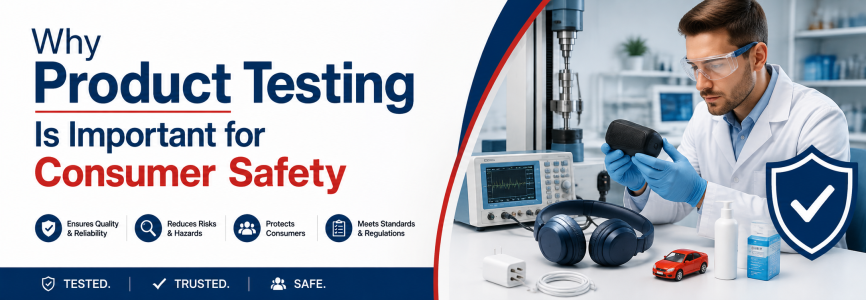



Every product that reaches a consumer carries an expectation of safety. Whether it is an electrical appliance, toy, mobile charger, food-contact material, cosmetic product, household item, industrial component or piece of protective equipment, customers assume that the product has been checked before being placed on the market. That expectation makes product testing one of the most important parts of manufacturing, quality control and regulatory compliance.
Product testing is not simply about proving that a product works. It is about determining whether the product performs safely, consistently and reliably under normal use as well as reasonably foreseeable misuse. Testing helps manufacturers identify defects, reduce risks, meet applicable standards and protect consumers from injuries, electrical hazards, chemical exposure, fire, mechanical failures and other dangers. In competitive markets, product testing also protects the reputation of businesses. A defective product can result in complaints, recalls, regulatory action, financial losses and long-term damage to consumer trust. Proper testing therefore benefits both consumers and manufacturers.
What Is Product Testing?
Product testing is the process of evaluating a product to determine whether it satisfies specified quality, safety, performance and regulatory requirements.
Depending on the type of product, testing may examine factors such as:
- Electrical safety
- Mechanical strength
- Fire resistance
- Chemical composition
- Durability
- Performance
- Temperature resistance
- Material quality
- Electromagnetic compatibility
- Toxicity
- Packaging integrity
- Environmental resistance
- Energy efficiency
- Reliability during prolonged use
The exact testing requirements differ from one product category to another. An electrical appliance, for example, may need tests relating to insulation, electric shock, overheating and fire risk. Toys may require checks for small parts, sharp edges, toxic substances and mechanical hazards. Construction materials may be tested for strength, durability and resistance. The fundamental objective remains the same: to confirm that the product is safe and suitable for its intended purpose.
Why Product Testing Matters for Consumer Safety
Consumers usually cannot independently determine whether the internal components of a product are safe. A charger may look perfectly normal but contain poor-quality wiring. A toy may appear attractive but contain unsafe substances. A household appliance may function properly during the first few days but overheat after prolonged use.
Testing provides a scientific and structured method of detecting such risks before products reach customers.
1. Product Testing Helps Identify Safety Hazards
The most important purpose of testing is to identify potential hazards. Products can create risks because of defective materials, incorrect designs, manufacturing errors or inappropriate components. Testing allows manufacturers to discover these problems under controlled conditions.
Potential hazards may include:
- Electric shock
- Fire
- Burns
- Sharp edges
- Mechanical injury
- Choking hazards
- Excessive temperature
- Toxic chemical exposure
- Structural failure
- Battery explosion
- Leakage
- Excessive pressure
- Radiation or electromagnetic risks
Identifying such problems during the testing stage is significantly safer and less expensive than discovering them after thousands of products have already been sold.
2. Testing Confirms That Products Meet Safety Standards
Many products must comply with technical standards or regulatory requirements before they can legally be manufactured, imported or sold. Standards generally specify minimum requirements relating to construction, performance, materials, testing methods and safety. Testing allows a manufacturer to demonstrate that its product meets the prescribed parameters. In India, certain products may be subject to mandatory conformity assessment, certification or quality control requirements depending on the relevant product category. Businesses dealing with regulated products may therefore need laboratory testing as part of obtaining approvals or demonstrating compliance. Compliance testing helps create consistency in the marketplace because products are assessed against defined technical requirements rather than relying only on the manufacturer's own claims.
3. Product Testing Prevents Defective Products from Reaching Consumers
Manufacturing involves many stages, and defects can arise at almost any point. A manufacturer may have an excellent product design, but a problem in raw materials, assembly, wiring, packaging or component sourcing can still create safety concerns. Testing helps businesses detect such defects before products are released.
For example, testing may identify:
- Weak components
- Incorrect dimensions
- Faulty wiring
- Material contamination
- Poor insulation
- Inadequate structural strength
- Excessive heat generation
- Premature component failure
- Packaging defects
- Unstable performance
When manufacturers identify such issues early, corrective measures can be taken before mass distribution. This creates an important safety barrier between manufacturing errors and consumers.
4. Product Testing Reduces the Risk of Accidents and Injuries
Unsafe products can have serious consequences. Electrical products may cause shock or fires. Poorly designed furniture may collapse. Toys containing detachable small components may create choking risks. Pressure-based equipment may fail when exposed to extreme conditions. Testing attempts to simulate the conditions in which a product is likely to operate.
Products may therefore be tested under:
- Normal operating conditions
- Maximum load
- High temperatures
- Low temperatures
- Moisture
- Repeated use
- Impact
- Vibration
- Pressure
- Voltage fluctuations
- Mechanical stress
These tests help determine whether the product continues to operate safely when exposed to challenging conditions. The more accurately testing reflects real-life usage, the greater the chance of identifying potential risks before an accident occurs.
5. Testing Evaluates Product Durability and Reliability
Consumer safety is closely connected with product durability. A product that works safely when new may become dangerous if components deteriorate quickly. Durability testing examines how a product behaves after repeated or prolonged use.
For example, a switch may be operated thousands of times during testing. A cable may be repeatedly bent. A product may be subjected to vibration, heat or repeated impact.
Such testing can reveal problems including:
- Cracking
- Material fatigue
- Loose connections
- Component deterioration
- Insulation damage
- Structural weakness
By identifying these weaknesses, manufacturers can improve product design and materials. Durable products are generally less likely to fail unexpectedly during use.
6. Product Testing Protects Children and Other Vulnerable Consumers
Certain consumer groups require greater protection because they may not recognize product-related risks. Children are particularly vulnerable. Testing requirements for children's products often focus heavily on physical and chemical safety. Toys, for example, may need to be examined for small detachable parts, sharp points, hazardous substances and mechanical strength. Similarly, products intended for elderly persons, patients or individuals with disabilities may require additional safety considerations. Testing helps manufacturers consider not only whether the product functions correctly but also who will use it and how safely they can use it. This user-focused approach is essential for responsible product development.
7. Product Testing Helps Control Chemical and Material Risks
Many consumer products contain plastics, metals, coatings, adhesives, dyes and other materials. Some substances may create health risks if present beyond permitted limits. Chemical testing can help identify potentially harmful substances and verify the composition of materials used in products.
Depending on the product, laboratories may examine:
- Heavy metals
- Restricted chemicals
- Plasticisers
- Volatile compounds
- Toxic substances
- Allergens
- Material migration
- Chemical stability
Such testing is particularly important for products that come into contact with food, skin or children. Manufacturers should therefore pay careful attention to the safety of raw materials instead of evaluating only the finished product's appearance or functionality.
8. Testing Strengthens Quality Control
Product testing and quality control are closely connected. Testing creates measurable data that manufacturers can use to determine whether production remains consistent. Without testing, quality control may depend excessively on visual inspection. While visual checks are useful, they cannot detect many hidden defects.
A product may look perfect externally while containing:
- Weak internal wiring
- Incorrect chemical composition
- Low-quality components
- Insufficient insulation
- Poor structural strength
Testing provides objective evidence rather than assumptions. Manufacturers can use test results to improve production processes, supplier selection, material procurement and inspection procedures.
9. Product Testing Supports Regulatory Compliance
For businesses, testing is often an important part of demonstrating regulatory compliance. Certain products may require testing from recognized or accredited laboratories before receiving certifications, registrations or approvals. Testing reports can serve as technical evidence that a product satisfies applicable requirements.
Failure to follow mandatory testing or certification requirements can expose businesses to several risks, including:
- Regulatory notices
- Product detention
- Import clearance issues
- Suspension of approvals
- Market withdrawal
- Product recalls
- Financial penalties
- Reputation damage
Businesses should therefore determine regulatory requirements before manufacturing or importing products rather than addressing them only after a shipment has arrived or a product has entered the market.
10. Testing Helps Reduce Product Recalls
Product recalls can be extremely expensive. A recall may involve identifying affected products, notifying distributors and customers, collecting products from the market, replacing or repairing them and investigating the root cause.
There may also be indirect costs such as:
- Loss of consumer confidence
- Negative media coverage
- Legal disputes
- Distributor concerns
- Reduced sales
- Damage to brand reputation
Comprehensive product testing can reduce the likelihood of such situations by identifying defects before commercial distribution. Although testing requires investment, the cost is often substantially lower than the consequences of a major product failure.
11. Product Testing Builds Consumer Trust
Consumers increasingly expect manufacturers to demonstrate responsibility. When products comply with recognised safety requirements and undergo proper testing, customers gain greater confidence in the brand.
Consumers are more likely to trust companies that:
- Follow quality standards
- Provide accurate product information
- Maintain consistent product quality
- Address safety issues transparently
- Obtain necessary certifications
Trust becomes particularly important for products involving health, electricity, children, vehicles, construction or personal safety. For manufacturers, testing therefore becomes not only a compliance activity but also a valuable part of brand credibility.
12. Testing Helps Manufacturers Improve Product Design
Testing is not merely a pass-or-fail exercise. Test results provide valuable information about how a product behaves in real conditions. If a product fails a test, engineers can identify the reason and improve the design.
Changes may involve:
- Selecting better materials
- Increasing insulation
- Strengthening components
- Modifying dimensions
- Improving ventilation
- Changing wiring
- Redesigning protective covers
- Improving manufacturing tolerances
This process of testing, analysing and improving can continue until the product reaches an acceptable level of safety and performance. For this reason, product testing should begin during development rather than only after mass production.
Product Testing During Different Stages of Manufacturing
Effective product safety programmes usually involve testing at several stages.
Prototype TestingPrototype testing is conducted during product development. It helps engineers evaluate whether the design is technically sound and safe before large-scale production begins. Finding problems at this stage allows businesses to make changes relatively easily.
Pre-Production Testing
Once the design is finalised, pre-production testing helps confirm that the product can be manufactured consistently using selected materials and components. This stage may also involve testing samples from suppliers.
Production Testing
During manufacturing, businesses may conduct routine tests to ensure that production remains consistent. This is particularly important where product safety depends on assembly, wiring, material quality or component specifications.
Post-Production or Market Surveillance Testing
Products may also be tested after production or once they are available in the market. Periodic testing helps confirm that products continue to meet the required specifications and that manufacturing changes have not affected safety.
Role of Independent Laboratories
Independent testing laboratories play an important role in product safety. Third-party laboratories can provide objective technical evaluation using specialised equipment and established test methods. Depending on regulatory requirements, manufacturers may need testing from laboratories recognised by the relevant authority or accredited for particular test methods.
A proper laboratory test report generally records details such as:
- Product identification
- Sample information
- Test method
- Testing conditions
- Results
- Applicable standards
- Observations
- Pass/fail conclusions where relevant
Businesses should ensure that the laboratory selected is competent to perform the specific tests required for the product.
Why Manufacturers Should Not Treat Testing as a Formality
One of the biggest mistakes businesses can make is treating testing as paperwork required only for obtaining a certificate. The real objective of testing is safety. Manufacturers should investigate test failures instead of attempting to bypass them. A failed test provides valuable information showing that something in the product may need improvement.
Responsible companies use testing results to strengthen:
- Product design
- Manufacturing processes
- Supplier controls
- Raw material selection
- Inspection procedures
- Consumer instructions
This approach creates safer products and reduces long-term business risks.
Product Testing and Consumer Instructions
Even a properly tested product can become dangerous if consumers use it incorrectly. Testing should therefore be supported by clear instructions, warnings and labels. Manufacturers should identify foreseeable misuse and communicate safety information wherever necessary.
Depending on the product, instructions may include:
- Installation requirements
- Electrical precautions
- Age restrictions
- Maximum load
- Temperature limits
- Maintenance requirements
- Storage conditions
- Disposal instructions
Safe product design and responsible consumer information should work together.
Product Safety Is a Continuous Responsibility
Product safety does not end when a product receives certification or passes its initial testing. Manufacturers should continue monitoring product performance throughout its lifecycle. Consumer complaints, warranty claims and product failures can reveal safety issues that may not have appeared during initial testing.
Businesses should therefore maintain systems for:
- Reviewing customer complaints
- Investigating recurring defects
- Monitoring supplier changes
- Conducting periodic testing
- Maintaining quality records
- Updating risk assessments
- Taking corrective action
This continuous approach is essential because production processes, suppliers and materials may change over time.
Conclusion
Product testing is one of the strongest tools available for protecting consumers from unsafe and defective products. It helps manufacturers identify hazards, verify product performance, assess durability, control material risks and demonstrate compliance with applicable standards. More importantly, product testing creates a preventive safety system. Instead of waiting for an accident, complaint or regulatory action to expose a defect, manufacturers can identify potential problems before products reach consumers.
For businesses, proper testing also brings important commercial advantages. It reduces the likelihood of recalls, improves manufacturing quality, strengthens regulatory compliance and builds long-term consumer confidence. Product safety should therefore never be viewed only as a certification requirement. It should form part of the complete product lifecycle—from design and prototype development to manufacturing, distribution and post-market monitoring. Ultimately, consumers depend on manufacturers to place safe products in the market. Comprehensive testing allows businesses to fulfil that responsibility while protecting both their customers and their reputation.


_crop10_thumb.jpg)


_crop10_thumb.jpg)


-Form_crop10_thumb.jpg)

_crop10_thumb.jpg)


_learn_crop10_thumb.jpeg)


_crop10_thumb.jpg)

_crop10_thumb.jpg)


_crop10_thumb.jpg)




_for_Foreign_Directors_learn_crop10_thumb.jpeg)


_Act,_2015_learn_crop10_thumb.jpg)










_learn_crop10_thumb.jpg)





























_crop10_thumb.jpg)
_crop10_thumb.jpg)

_(1)_crop10_thumb.jpg)







_crop10_thumb.png)





_crop10_thumb.jpg)

_crop10_thumb.jpg)





_crop10_thumb.png)
_crop10_thumb.jpg)






_crop10_thumb.png)