


Furniture is an essential part of everyday life, including office chairs, study tables, beds, wardrobes and storage cabinets, which should always be strong, stable and safe. However, a product that looks attractive may not always meet the required quality and safety standards. This is why the Government of India has introduced mandatory BIS Certification for certain categories of furniture. Under the Furniture (Quality Control) Order, 2025, issued by the Department for Promotion of Industry and Internal Trade (DPIIT), specified furniture products must comply with the applicable Indian Standards and carry the ISI Mark under a valid Bureau of Indian Standards (BIS) licence.
The requirements affect furniture manufacturers, importers, suppliers and businesses selling covered furniture products in India. The government has also introduced important amendments in 2026, covering MSME exemptions, research and development imports, existing stock, export-related imports and transitional import arrangements. Most recently, the Furniture (Quality Control) Third Amendment Order, 2026, dated 2 November 2026, introduced revised conditions for certain imported furniture consignments.
What is BIS ISI Certification for Furniture?
BIS ISI Certification for Furniture is a product certification process through which the Bureau of Indian Standards verifies whether a furniture product meets the applicable Indian Standard. BIS evaluates the manufacturer's production facilities, quality control arrangements and product conformity before granting a licence to use the ISI Mark. The ISI Mark is a recognised product quality mark in India. For furniture covered under a mandatory Quality Control Order, it is not merely a voluntary quality symbol. It becomes a legal requirement for covered products supplied to the Indian market, unless a specific exemption applies.
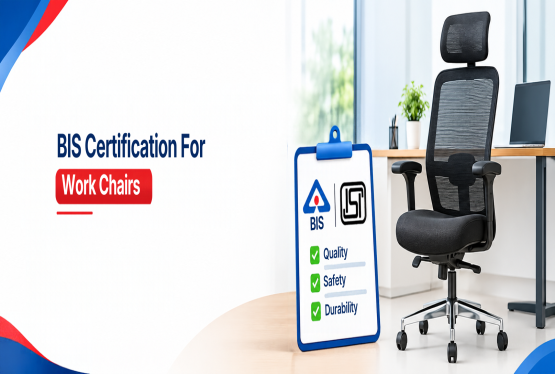
For example, a company manufacturing office work chairs must assess whether its products fall under IS 17631:2022. If covered, the manufacturer needs the appropriate BIS licence and must comply with the standard's requirements before using the ISI Mark. BIS certification is product-standard-specific. A manufacturer producing both office chairs and beds may need to cover different Indian Standards, rather than relying on one general furniture certificate.
Is BIS Certification Mandatory for Furniture in India in 2026?
Yes. BIS certification is mandatory for the six furniture categories specified under the Furniture (Quality Control) Order, 2025, subject to the applicable implementation dates and exemptions. The principal order was notified on 13 February 2025 and published in the Gazette on 14 February 2025. Its mandatory commencement was set for 13 February 2026 for businesses covered by the general implementation provision. Micro and small enterprises were given a longer transition period of 18 months, taking their commencement to August 2026, while qualifying smaller manufacturers may benefit from a separate exemption.
The applicable rules require covered furniture to meet the relevant Indian Standard and bear the Standard Mark under Scheme I (ISI Mark Scheme) of the BIS Conformity Assessment Regulations, 2018.
Furniture products covered under mandatory BIS certification
|
Furniture category |
Applicable Indian Standard |
|
Work chairs |
IS 17631:2022 |
|
General purpose chairs and stools |
IS 17632:2022 |
|
Tables and desks |
IS 17633:2022 |
|
Storage units |
IS 17634:2022 |
|
Beds |
IS 17635:2022 |
|
IS 17636:2022 |
Latest BIS Furniture QCO Amendments and Mandatory Updates 2026
The regulatory position has changed several times since the original Furniture Quality Control Order was issued. Manufacturers and importers should therefore consider the principal order together with subsequent amendments.
|
Notification |
Date |
Key update |
|
Furniture QCO, S.O. 801(E) |
13 February 2025 |
Established mandatory standards for six furniture categories |
|
Furniture Amendment, S.O. 774(E) |
12 February 2026 |
R&D, existing-stock and export-related import exemptions |
|
QCO Amendment, S.O. 777(E) |
12 February 2026 |
Revised exemption limits for qualifying smaller manufacturers |
|
Second Amendment, S.O. 1125(E) |
2 March 2026 |
Transitional relief for certain imports |
|
Transition Facilitation Order, S.O. 3417(E) |
25 June 2026 |
Additional conditional compliance mechanism |
|
Third Amendment, S.O. 5950(E) |
2 November 2026 |
Revised import-related cutoff dates and documentary conditions |
1. February 2026: Revised exemption for smaller furniture manufacturers
One important change was the revision of the exemption for enterprises registered on the Udyam Portal. Under S.O. 777(E), certain domestically manufactured furniture products are exempt where the enterprise meets both prescribed financial limits:
-
Investment in plant and machinery or equipment at original cost does not exceed Rs 1 crore.
-
Turnover for the previous financial year does not exceed Rs 5 crore, as certified by a Chartered Accountant.
The earlier limits were Rs 25 lakh investment and Rs 2 crore turnover. This amendment therefore increased the qualifying limits for the specified exemption. It is important to understand that this is not a blanket exemption for every MSME. Both conditions, Udyam registration and the domestic-manufacturing requirement must be considered.
2. February 2026: R&D imports and existing-stock relief
The Furniture (Quality Control) Amendment Order, 2026 introduced additional relief for certain business situations. Eligible BIS-certified furniture manufacturers, and manufacturers that have applied for relevant certification, can import up to 200 covered goods or articles per financial year for research and development, subject to prescribed conditions. These products cannot be sold commercially, must be disposed of as scrap and require appropriate records.
The amendment also provides a 12-month period for the sale, display or offer for sale of qualifying stock manufactured domestically or imported before implementation, subject to the manufacturer's certification or application status and self-declaration to BIS. It additionally provides conditional relief for non-BIS-marked goods, components and sub-assemblies imported by Indian furniture manufacturers for export production, where the prescribed declaration, undertaking and recordkeeping requirements are satisfied.
3. March 2026: Transitional relief for imported furniture
The Furniture (Quality Control) Second Amendment Order, 2026 introduced limited exemptions for certain imported consignments connected with the QCO implementation period. It addressed imports shipped before implementation and purchases committed before implementation, subject to shipping, customs documentation and prescribed deadlines. Importers could not automatically claim exemption merely because they had ordered furniture earlier; the relevant Bill of Lading, Bill of Entry and supporting evidence had to satisfy the order.
These provisions were subsequently revised by the November 2026 Third Amendment, discussed below.
4. June 2026: Transition Facilitation Order
On 25 June 2026, DPIIT introduced the Transition Facilitation (Quality Control) Order, 2026. It provides a conditional alternative compliance mechanism for specified QCO-covered products, based on technical capability, compliance history and approval under the prescribed procedure. This arrangement should not be interpreted as automatic permission for furniture manufacturers to sell uncertified products. Any business seeking to rely on it must verify whether it qualifies and obtain the necessary approval.
5. November 2026: Third Amendment to Furniture QCO
The most recent amendment identified as of 4 November 2026 is the Furniture (Quality Control) Third Amendment Order, 2026, issued through S.O. 5950(E) on 2 November 2026. This amendment replaces the earlier seventh and eighth provisos relating to certain imports with revised conditions. The exemption applies where all of the following are satisfied:
-
The purchase order was placed on or before 12 August 2026.
-
The Bill of Lading is issued on or before 30 November 2026.
-
The Bill of Entry is issued on or before 31 December 2026.
-
The importer submits the purchase order, Bill of Lading, Bill of Entry and other supporting documents to BIS on its signed letterhead within seven days of clearing the consignment.
The amendment is important for furniture importers managing shipments under previously committed purchase orders. However, it is a conditional exemption for qualifying imports, not a general extension of the mandatory certification deadline.
Who Needs BIS ISI Certification for Furniture in India?
BIS certification requirements apply to businesses dealing with furniture covered under the QCO. However, the responsibility for obtaining the licence mainly rests with the manufacturer, while importers, distributors and sellers must ensure that covered products comply with the law.
-
Furniture manufacturers: Indian manufacturers producing covered furniture must obtain the relevant BIS certification unless they qualify for an exemption. This applies to manufacturers of office chairs, desks, beds, storage units and other notified products.
-
Furniture importers: Businesses importing covered furniture into India must ensure that the products meet the applicable BIS requirements. Generally, the overseas manufacturer must obtain certification through the Foreign Manufacturers Certification Scheme (FMCS), unless a specific exemption applies.
-
Furniture brands and private-label businesses: Businesses selling furniture under their own brand should verify that the actual manufacturing unit holds a valid BIS licence covering the relevant products. Simply changing the brand name does not automatically provide certification.
-
Wholesalers and distributors: Businesses supplying covered furniture to retailers, commercial offices, educational institutions and other customers must ensure that the furniture carries the required Standard Mark.
-
Online furniture sellers: Businesses selling covered furniture through Amazon, Flipkart, their own websites or other online marketplaces must ensure that their products comply with the applicable QCO.
These requirements are particularly important because a QCO affects not only production but also the import, distribution, storage for sale and commercial supply of covered products.
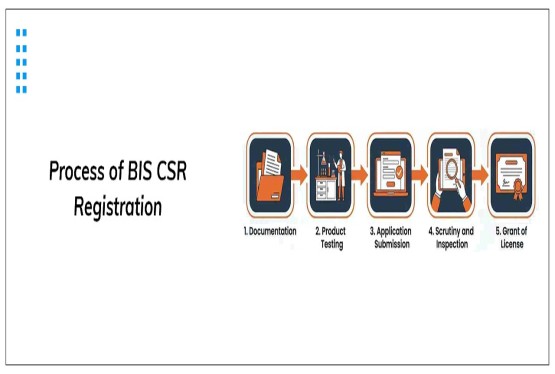
BIS ISI Certification Process for Furniture in India
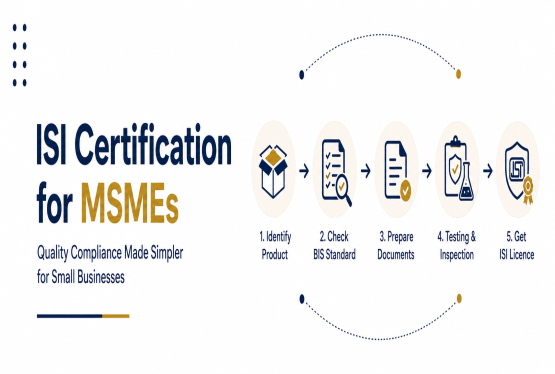
Obtaining a BIS licence involves reviewing the applicable standard, preparing manufacturing and testing arrangements, submitting an application and undergoing BIS assessment. The manufacturer should begin by identifying the furniture products covered under the relevant Indian Standard.
Step 1: Identify the applicable Indian Standard
Check whether the furniture product falls under IS 17631, IS 17632, IS 17633, IS 17634, IS 17635 or IS 17636. Examine the product design, intended use and applicable scope before filing the application.
Step 2: Prepare the manufacturing facility
Ensure that the factory has suitable manufacturing equipment, quality control arrangements, testing facilities and competent technical personnel. BIS may evaluate these facilities during inspection.
Step 3: Prepare documents and apply online
Submit the application with the prescribed details through the BIS Manak Online Portal. The application should correctly identify the manufacturer, factory, Indian Standard and products requiring certification.
Step 4: Factory inspection and product testing
BIS assesses the manufacturing infrastructure, production controls and testing capabilities. Product samples may be tested in an appropriate laboratory, at the manufacturing premises or through a combination of both, depending on the applicable procedure.
Step 5: Address deficiencies and obtain approval
If BIS identifies deficiencies in the application, manufacturing facilities or test results, the manufacturer must resolve them. After satisfactory assessment and payment of applicable fees, BIS may grant the licence.
Step 6: Use the ISI Mark and maintain compliance
After the licence is granted, the manufacturer can use the ISI Mark on products covered by the approved scope. Continued testing, production records, inspections, renewal and proper marking remain important after certification.
Documents Required for BIS ISI Certification of Furniture
The exact documentation may differ depending on the manufacturer, product and applicable BIS certification route. However, furniture manufacturers should generally prepare the following records before applying.
|
Document |
Purpose |
|
Business registration documents |
Establish the legal identity of the manufacturer |
|
Factory address and ownership or lease records |
Verify the manufacturing premises |
|
Manufacturing process flowchart |
Explain how the furniture is produced |
|
Machinery and equipment list |
Show production capability |
|
Testing equipment details |
Demonstrate testing arrangements |
|
Quality control records |
Show product inspection and monitoring procedures |
|
Product drawings and specifications |
Identify product design, dimensions and materials |
|
Raw material information |
Identify important materials used in production |
|
Laboratory test reports, where applicable |
Support conformity with the Indian Standard |
|
Authorised signatory details |
Identify the person authorised to represent the business |
Manufacturers should also maintain product specifications, testing records and other information required under the relevant BIS Product Manual and Scheme of Inspection and Testing.
BIS Certification Cost for Furniture in India
The cost of obtaining BIS certification for furniture depends on the Indian Standard, type of furniture, testing requirements, factory inspection and number of products requiring certification.
According to BIS product certification guidance, common Scheme I charges include:
|
Fee component |
Indicative BIS charge |
|
Application fee |
Rs 1,000 |
|
Preliminary inspection fee |
Rs 7,000 per man-day |
|
Annual licence fee |
Rs 1,000 |
|
Marking fee |
Product-specific |
|
Product testing |
Depends on laboratory and tests |
|
Consultancy or professional fee |
Varies by service provider |
These are BIS-published general Scheme I fee figures, not a complete quotation for furniture certification. Applicable fees and taxes should be checked when filing.
For example, a manufacturer producing work chairs and storage units must assess the certification requirements for both product categories. The overall expenditure may increase where separate applications, additional tests or different manufacturing locations are involved.
How long does BIS certification take?
The certification timeline depends on the application route, document completeness, inspection scheduling and testing results. BIS describes general processing timelines of approximately one month under Option 2 and four months under Option 1 for complete Scheme I applications, although actual timelines vary. Manufacturers should not assume that filing an application automatically permits the sale of uncertified furniture. The applicable statutory requirement or exemption must be satisfied.
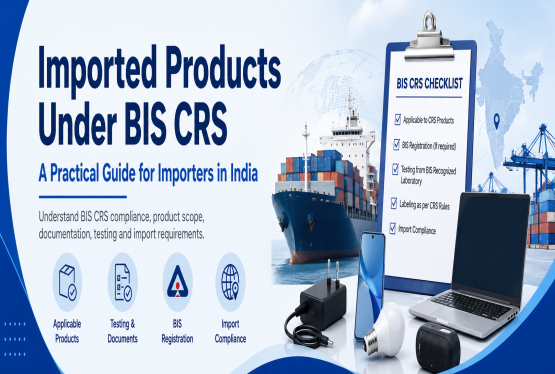
BIS Certification for Imported Furniture
Furniture imports have become an important part of India's residential, commercial, hospitality and office markets. Businesses import chairs, tables, cabinets, workstations and beds from several international manufacturing markets. Where an imported product is covered by the Furniture QCO, it generally needs to comply with the relevant Indian Standard and carry the required BIS Standard Mark. The foreign manufacturer can apply under the BIS Foreign Manufacturers Certification Scheme.
Under FMCS, the overseas manufacturing unit must demonstrate conformity with Indian Standards, maintain required manufacturing and testing arrangements and comply with BIS certification conditions. A separate application is generally needed for each relevant Indian Standard and factory location. For importers, the November 2026 amendment is particularly significant because it introduces specific transitional dates for eligible purchase orders, shipping documents and customs clearance. Importers relying on this exemption should preserve their documents and provide them to BIS within the prescribed period.
Is BIS Certification Mandatory for Small Furniture Manufacturers and MSMEs?
Not every small furniture business is automatically exempt from BIS certification. The Furniture QCO originally provided additional implementation time for micro and small enterprises and a separate exemption for qualifying smaller manufacturers. As amended in February 2026, the exemption for certain Udyam-registered enterprises applies where investment in plant and machinery or equipment at original cost does not exceed Rs 1 crore and turnover for the previous financial year does not exceed Rs 5 crore, as certified by a Chartered Accountant.
For example, a small domestic furniture manufacturer registered under Udyam with qualifying investment and turnover may be eligible for the exemption. However, a manufacturer exceeding the prescribed financial limits cannot claim the same exemption solely because it is registered as an MSME. Businesses should assess their current financial position, Udyam Registration and product eligibility before relying on the exemption.
Benefits of BIS ISI Certification for Furniture Manufacturers
Although BIS certification is mandatory for notified furniture categories, it also offers several business benefits beyond meeting legal requirements.
-
Improved product quality: Certification encourages manufacturers to follow applicable Indian Standards and maintain suitable production and testing controls. This can help identify manufacturing defects and product quality problems.
-
Better customer confidence: Consumers and commercial buyers often prefer products with recognised quality marks. A genuine ISI Mark can help customers identify furniture manufactured under an applicable BIS licence.
-
Stronger business opportunities: BIS certification can support participation in commercial supply arrangements, institutional procurement and other markets where product conformity is important.
-
Reduced regulatory risk: Following QCO requirements helps businesses avoid violations associated with manufacturing, importing or selling covered furniture without the required certification.
-
Consistent manufacturing practices: Regular inspections, testing and documentation encourage furniture manufacturers to maintain quality standards across production batches.
Penalties for Non-Compliance with Furniture BIS QCO
Manufacturing, importing or selling furniture covered by a mandatory QCO without meeting the prescribed requirements may lead to enforcement action under the BIS Act, 2016. Depending on the violation and applicable legal provisions, consequences can include fines, imprisonment, seizure of non-compliant goods and restrictions on unlawful use of the Standard Mark.
Under Section 29 of the BIS Act, certain violations involving mandatory Standard Mark requirements can attract imprisonment of up to two years, or a fine that is generally at least Rs 2 lakh for a first contravention and Rs 5 lakh for subsequent contraventions, or both, subject to the statutory provisions. Furniture manufacturers and sellers should therefore verify their product classification and certification status instead of assuming that the requirements apply only to large factories.
Common Mistakes Furniture Businesses Should Avoid
Many businesses face difficulties with BIS certification because they begin the process without understanding the scope of the applicable Indian Standard. A few mistakes can lead to application deficiencies, unnecessary expenses or non-compliance.
-
Selecting an incorrect Indian Standard for the furniture product.
-
Assuming that one ISI licence covers all types of furniture.
-
Applying without adequate manufacturing or testing arrangements.
-
Relying on an MSME exemption without verifying the prescribed conditions.
-
Importing covered furniture without checking the overseas manufacturer's BIS certification.
-
Using an ISI Mark before obtaining a valid licence.
-
Assuming that a pending BIS application provides a general exemption.
-
Failing to maintain production, testing and marking records.
A proper product classification and compliance review before filing can help furniture manufacturers avoid several of these problems.
Conclusion
BIS ISI Certification for Furniture in India has become an important compliance requirement for manufacturers, importers and sellers dealing with specified furniture products. The Furniture (Quality Control) Order, 2025 introduced mandatory standards for six furniture categories, and subsequent 2026 amendments have provided specific exemptions and transitional arrangements.
The latest Furniture QCO Third Amendment dated 2 November 2026 is especially relevant for importers with qualifying purchase orders and shipments. However, it does not remove the general requirement for BIS certification of covered furniture products. Businesses should identify the correct Indian Standard, review eligibility for exemptions, complete the necessary certification process and maintain compliance with BIS requirements. Timely planning can help avoid product delays, regulatory action and unnecessary business disruption.
Frequently Asked Questions
Q1. Is BIS ISI certification mandatory for furniture in India in 2026?
Ans. Yes. BIS certification is mandatory for the six furniture categories specified under the Furniture (Quality Control) Order, 2025, subject to applicable exemptions and transitional provisions.
Q2. Which furniture products require BIS certification?
Ans. The notified categories are work chairs, general purpose chairs and stools, tables and desks, storage units, beds and bunk beds.
Q3. What is the latest BIS Furniture QCO amendment in 2026?
Ans. The Third Amendment dated 2 November 2026 revised the conditions for certain imported furniture consignments.
Q4. What is the mandatory BIS implementation date for furniture?
Ans. The general implementation date was 13 February 2026. Micro and small enterprises received a longer original implementation period of 18 months from the QCO's publication, while qualifying smaller manufacturers may receive specific exemptions.
Q5. Is BIS certification required for wooden furniture?
Ans. It depends on the furniture category and product specifications. Wooden chairs, tables, beds and storage units may be covered by the applicable standards.
Q6. Can furniture be imported into India without BIS certification?
Ans. Generally, covered furniture imports require BIS compliance. However, specific exemptions may apply, including qualifying transitional imports, R&D goods and certain imports for export-related manufacturing, subject to prescribed conditions.
Q7. Are small furniture manufacturers exempt from BIS certification?
Ans. Certain Udyam-registered enterprises manufacturing goods domestically may qualify where investment in plant and machinery or equipment at original cost does not exceed Rs 1 crore and previous-year turnover does not exceed Rs 5 crore, subject to the prescribed conditions.
Q8. How much does BIS ISI certification cost for furniture?
Ans. The cost depends on the product standard, laboratory testing, factory inspection, marking fees and number of applications.
Q9. Can one BIS licence cover chairs, tables and beds together?
Ans. A licence is granted for a specified Indian Standard and approved product scope. Since chairs, tables and beds are covered by different standards, separate certification requirements generally apply.
Q10. How can furniture manufacturers apply for BIS ISI certification online?
Ans. Manufacturers can identify the applicable Indian Standard, prepare their factory and documentation, and submit their application through the BIS Manakonline portal. BIS then evaluates the application, manufacturing facilities and product conformity before granting the licence.
Article last updated on : 04 Nov 2026.