


What happens when a solar inverter continues supplying electricity even after the main power grid has stopped working? At first, this may appear useful because the solar panels are still generating electricity. However, an inverter that continues energising a disconnected section of the grid can create serious safety risks, particularly for electricity workers carrying out repairs. This situation is known as islanding, and it explains why grid-connected solar inverters require more than ordinary electrical safety checks. These products must be capable of detecting specified abnormal grid conditions and responding according to the applicable technical requirements. A converter may deliver electricity efficiently, but that alone does not establish whether it is suitable for connection to a public electrical network.
In India, BIS Certification for Grid-Connected Solar PV Inverters is an important regulatory requirement for manufacturers supplying utility-interconnected photovoltaic inverters. The Bureau of Indian Standards (BIS), together with the Ministry of New and Renewable Energy (MNRE), regulates these products through the Compulsory Registration Scheme (CRS) and the Solar Systems, Devices and Components Goods Order, 2025.
What Is a Grid-Connected Solar PV Inverter?
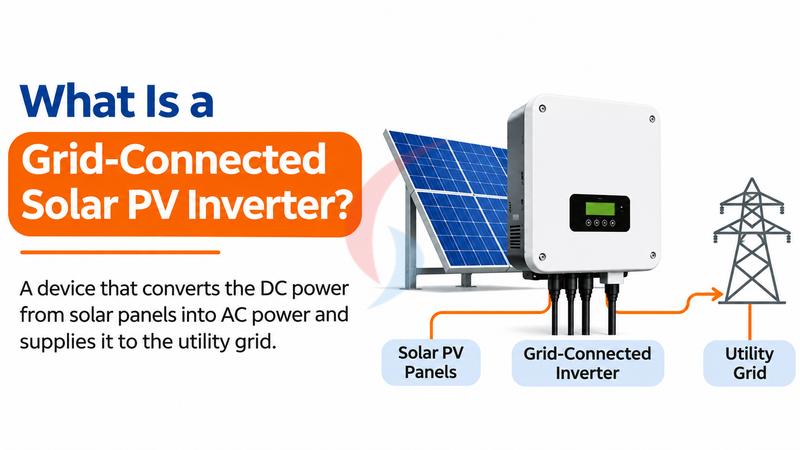
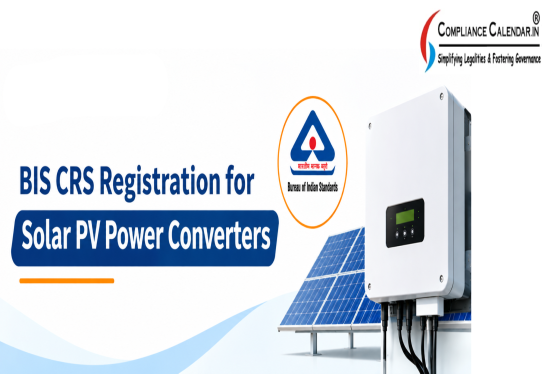
A grid-connected solar PV inverter is electrical equipment that converts direct current generated by solar panels into alternating current suitable for connection to an electricity distribution network. Unlike standalone solar inverters, which operate independently of the utility grid, grid-connected inverters must coordinate with grid voltage, frequency and other electrical conditions. Their protection functions are therefore especially important.
Consider a commercial building with a 75 kW rooftop solar installation. During normal operation, the inverter converts electricity from the solar panels and supplies power to the building's electrical network. Depending on the installation arrangement, surplus electricity may also be exported to the grid. However, when the utility supply is interrupted, the inverter must respond according to the required grid-protection settings. Continuing to energise an isolated network can create unsafe conditions. This is why utility-interconnected photovoltaic inverters are treated as a distinct notified product category under BIS CRS Registration.
Is BIS Certification Mandatory for Grid-Connected Solar PV Inverters?
Yes. BIS CRS Registration is mandatory for utility-interconnected photovoltaic inverters covered by the notified Quality Control Order, subject to applicable exemptions and transitional provisions.
The legal requirement arises from the Bureau of Indian Standards Act, 2016, and the Solar Systems, Devices and Components Goods Order, 2025, notified by MNRE on 27 January 2025 through S.O. 492(E). The order was issued under Sections 16 and 17, read with Section 25(3), of the BIS Act, 2016. It superseded the earlier Solar Photovoltaics, Systems, Devices and Components Goods (Requirements for Compulsory Registration) Order, 2017.
Covered products must meet the notified Indian Standards and carry the prescribed BIS Standard Mark following registration under Scheme II of the BIS (Conformity Assessment) Regulations, 2018. For imported inverters, the Indian importer should verify that the overseas manufacturer and relevant models satisfy the applicable BIS requirements. An international IEC certificate does not ordinarily replace BIS registration, although specified transitional arrangements may permit conditional self-certification.
Read our CRS Compliance for Manufacturers article to understand how mandatory product registration, manufacturing responsibilities and ongoing compliance requirements apply under BIS CRS.
Applicable Indian Standards for Grid-Connected Solar PV Inverters
The revised 2025 Quality Control Order identifies three important Indian Standards for utility-interconnected photovoltaic inverters. Together, these address inverter safety, prevention of unintended islanding and measurement of maximum power point tracking efficiency.
| Indian Standard | Technical Requirement | Main Purpose |
|---|---|---|
| IS 16221 (Part 2):2015 / IEC 62109-2:2011 | Particular safety requirements for photovoltaic inverters | Electrical and inverter-specific safety |
| IS 16169:2019 / IEC 62116:2014 | Testing of islanding prevention measures | Anti-islanding protection |
| IS 17980:2022 / IEC 62891:2020 | MPPT efficiency measurement | Evaluates maximum power point tracking performance |
IS 16221 (Part 2):2015 – Electrical Safety
This standard addresses particular safety requirements for inverters used in photovoltaic power systems. It covers safety-related aspects of inverter construction and operation, including protection against electrical hazards. Manufacturers must demonstrate conformity through the prescribed testing programme. The exact tests depend on the requirements of the standard and the product's construction.
IS 16169:2019 – Anti-Islanding Protection
IS 16169:2019 establishes test procedures for evaluating islanding prevention measures in utility-interconnected photovoltaic inverters. Imagine an electricity distribution line undergoing emergency maintenance. If the utility supply becomes disconnected, solar inverters must not continue energising the isolated section contrary to the applicable protection requirements.
The anti-islanding test evaluates how the inverter detects and responds to these conditions.
IS 17980:2022 – MPPT Efficiency
Solar panels do not generate the same amount of power throughout the day. Their output changes with sunlight, temperature and operating conditions. Maximum Power Point Tracking (MPPT) helps the inverter identify the operating point at which the connected solar panels can provide maximum available power.
IS 17980:2022 specifies procedures for measuring MPPT efficiency in grid-connected photovoltaic inverters. These three standards must be considered together for the notified utility-interconnected inverter category.
Why Anti-Islanding Protection Matters in Real Solar Projects
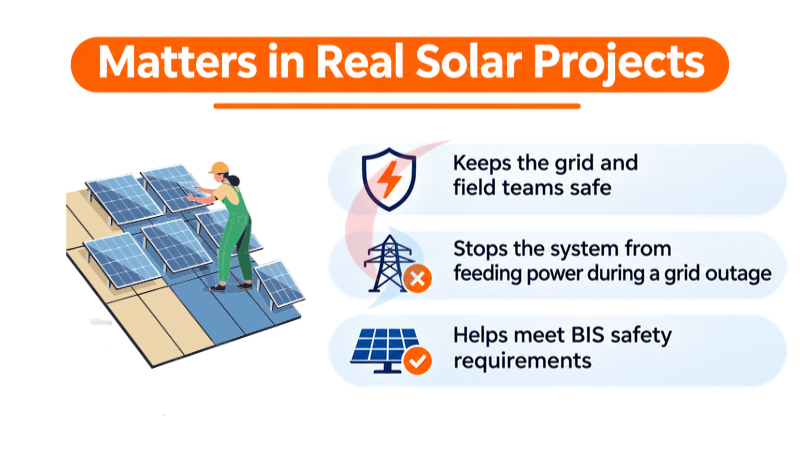
Anti-islanding protection is not simply an additional laboratory formality. It serves an important safety purpose when distributed solar generation is connected to an electricity network. Suppose an industrial facility has a 200 kW solar installation. A fault occurs on the local distribution network, and the utility supply is disconnected. The solar inverter must respond to the loss of grid conditions according to its required protection functions.
If the inverter continues supplying a disconnected network section, electricity workers may encounter unexpected voltage on a line they believe has been isolated. The relevant test procedure checks whether the inverter's islanding prevention arrangement operates under the prescribed conditions. Under the revised IS 16169:2019, BIS's March 2025 implementation guidelines highlighted changes in test conditions and voltage and frequency trip settings. The revised standard refers to trip settings based on relevant national standards and local codes. In India, the applicable Central Electricity Authority requirements must therefore be considered when establishing appropriate test settings.
BIS Testing Requirements for Grid-Connected Solar PV Inverters
Manufacturers must arrange testing through a BIS-recognised laboratory with the appropriate scope for the relevant standards.
Testing can involve evaluating electrical safety, inverter protection functions and technical performance under specified conditions.
| Testing Requirement | What Is Evaluated |
|---|---|
| Electrical insulation | Insulation and protection against electrical hazards |
| Temperature assessment | Heating during prescribed operating conditions |
| Protective functions | Relevant inverter safety protections |
| Anti-islanding tests | Response to specified grid-disconnection conditions |
| Voltage and frequency settings | Applicable grid-protection settings |
| MPPT efficiency testing | Effectiveness of maximum power point tracking |
| Construction examination | Relevant safety-related design requirements |
A laboratory report must correspond to the actual product model, configuration and manufacturing information submitted for registration. Manufacturers should not assume that testing one inverter model automatically qualifies every other model produced at the factory. Applicable model-family and series approval provisions must be reviewed.
Explore our BIS CRS Registration for Solar PV Modules article to understand related certification requirements for the photovoltaic modules connected to solar inverters.
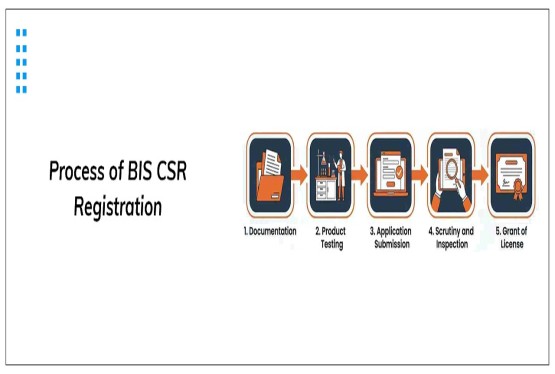
BIS Certification Process for Grid-Connected Solar PV Inverters
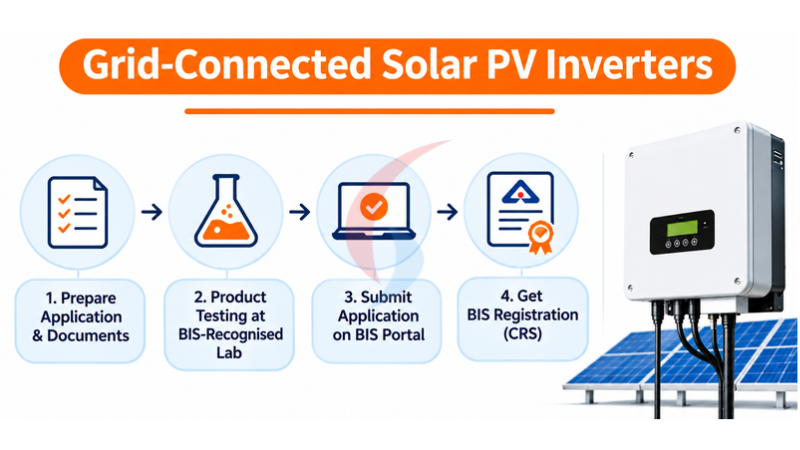
The certification process begins with determining whether the product falls under the utility-interconnected photovoltaic inverter category. This should be established before samples are submitted for testing.
Step 1: Technical classification. Review the inverter's rated capacity, operating functions, grid-interface characteristics and relevant technical documentation. Identify the applicable Indian Standards and any valid transitional provisions.
Step 2: Product documentation. Prepare the technical datasheet, model information, electrical circuit diagrams, manufacturing details and other required supporting records. Verify that all documents identify the same product configuration.
Step 3: Model selection. Identify representative lead models under the applicable MNRE series approval guidelines. This can help manufacturers plan testing when several technically related inverter models are involved.
Step 4: Laboratory testing. Submit representative samples to a BIS-recognised laboratory for the required safety, anti-islanding and MPPT efficiency tests. Any identified non-conformity must be addressed before conformity can be established.
Step 5: Application submission. File the prescribed registration application through the official BIS CRS portal with the relevant reports, manufacturer information and applicable fees.
Step 6: BIS examination. BIS reviews the submitted records and may request clarification concerning the laboratory reports, factory information, models or other details.
Step 7: Registration and marking. After approval, the manufacturer must follow the prescribed Standard Mark and registration-number requirements for the registered products.
Registration is not the end of the compliance process. Manufacturers should also review new models, changes in critical components and continuing BIS obligations.
Read our BIS CRS Registration: Step-by-Step Process for Electronic Products guide for additional information about documentation, laboratory testing and BIS application examination.
Documents Required for BIS Certification
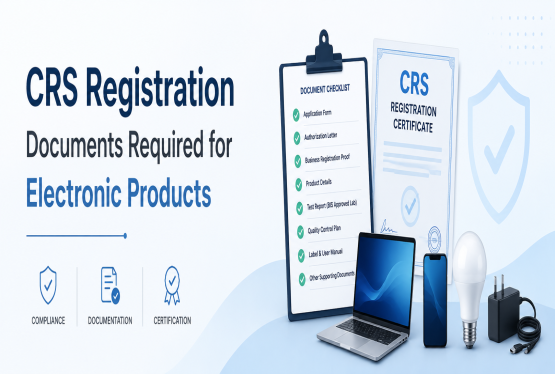
The required documentation helps BIS identify the manufacturing facility, applicant, product category and tested models. Manufacturers should ensure consistency across the application and laboratory reports. Common documents include business incorporation or registration records, manufacturing unit address proof, authorised signatory details, product technical specifications, inverter model numbers, circuit diagrams, construction details, laboratory test reports and brand authorisation documents where applicable. Foreign manufacturers may also need to appoint an eligible Authorised Indian Representative (AIR) and provide the prescribed authorisation.
For example, consider a company manufacturing a 125 kW inverter. Its technical datasheet identifies the product as Model GCI-125, but the laboratory report refers to Model GCI-120. Unless the difference is properly explained and supported, BIS may seek clarification about whether both records concern the same tested product.
Businesses dealing with backup systems can also refer to our BIS Certification for UPS and Inverters Up to 5 kVA guide.
Latest BIS and MNRE Updates for Grid-Connected Solar PV Inverters in 2026
Indian solar inverter compliance has undergone important changes since 2025. The most relevant developments concern revised Indian Standards, testing requirements and the temporary arrangement for high-capacity solar inverters.
1. Revised Solar Quality Control Order – January 2025
MNRE notified the Solar Systems, Devices and Components Goods Order, 2025, through S.O. 492(E), dated 27 January 2025. The order superseded the 2017 order and introduced revised requirements for specified solar products, including utility-interconnected photovoltaic inverters. The order provided a 180-day transition period, with the revised requirements becoming operative on 27 July 2025.
2. BIS Implementation Guidelines – March 2025
On 26 March 2025, BIS issued implementation guidelines for utility-interconnected photovoltaic inverters. These clarified the transition from IS 16169:2014 / IEC 62116:2008 to IS 16169:2019 / IEC 62116:2014. An important change concerned the conditions used during anti-islanding testing. The revised requirements also linked voltage and frequency trip settings to applicable national standards and local codes.
BIS additionally addressed implementation of IS 17980:2022 for MPPT efficiency measurement. Manufacturers with existing registrations were required to follow the applicable revised-standard implementation procedures.
3. August 2025 Extension for Inverters Above 200 kW
MNRE issued S.O. 3597(E) on 5 August 2025, providing additional time for specified solar PV inverters with capacities greater than 200 kW. The arrangement allowed conditional self-certification until 30 June 2026 or further orders, whichever was earlier. This relief was introduced because of the practical challenges associated with obtaining the required testing for certain high-capacity inverters.
4. Major July 2026 Amendment – Extension to December 2026
On 3 July 2026, MNRE issued Notification S.O. 3706(E), published on 8 July 2026. The notification extended the conditional self-certification arrangement for solar PV inverters covered under Items 4 and 5 of the 2025 order, having capacities greater than 200 kW, until 31 December 2026 or further orders, whichever is earlier.
Manufacturers supplying a complete solar installation can also explore our BIS Certification for Crystalline Silicon Solar PV Modules and BIS Certification for Thin-Film Solar PV Modules articles.
BIS Certification Cost and Processing Time
The cost of obtaining BIS Certification for Grid-Connected Solar PV Inverters depends on laboratory testing, model coverage, government charges and documentation requirements. There is no single total cost applicable to all inverter manufacturers. A manufacturer testing one model may have different expenses from a company registering several models with different ratings or technical configurations.
Testing can also require specialised laboratory facilities, particularly for anti-islanding and MPPT efficiency measurements. Manufacturers should obtain a written testing estimate from an appropriately BIS-recognised laboratory and check the latest official BIS registration fee schedule. Processing time depends on laboratory scheduling, satisfactory test completion, document preparation and BIS examination. If an inverter fails a prescribed test or the application contains inconsistencies, additional corrections and testing may be necessary.
Common Compliance Mistakes in Grid-Connected Solar Inverters
A frequent mistake is relying on an international test certificate without checking whether it satisfies the specific Indian registration requirements. International certifications can be useful technical evidence, but they do not ordinarily replace mandatory BIS registration. Another problem arises when manufacturers confuse grid-connected solar inverters with standalone PV power converters or ordinary UPS equipment. These categories may have different standards and testing requirements. Manufacturers should also avoid assuming that an existing registration covers a modified inverter with different protection functions, capacity or important components. Such changes may require further technical assessment, model inclusion or additional testing. Finally, businesses should carefully examine the July 2026 extension before relying on it. The arrangement applies to specified inverters exceeding 200 kW and is conditional on the relevant certificates and reports.
Related BIS Certifications for Solar Installations
A complete solar project may contain several regulated products, including solar panels, inverters, batteries and lighting equipment. Each notified product must be assessed against its own applicable standard.
For example, a supplier offering a solar-powered lighting solution should not assume that certification of the inverter automatically satisfies the requirements for an LED street-light luminaire.
For additional information on this separate product category, read our BIS CRS Certification for LED Street Lights article.
Why Choose Compliance Calendar LLP for BIS Certification?
Imagine a solar inverter manufacturer planning to supply two inverter models, one rated at 150 kW and another at 300 kW. The company already holds IEC certificates but is uncertain whether both products must immediately undergo the same BIS registration procedure. At Compliance Calendar LLP, our approach is to examine the actual product specifications and applicable notifications before recommending the certification route. In this situation, we would review the inverter capacities, relevant IEC certificates and laboratory reports, and determine whether the July 2026 conditional self-certification provision could apply to the 300 kW model.
We can also assist manufacturers in identifying the applicable Indian Standards, preparing product documentation, coordinating with BIS-recognised laboratories and organising registration applications. For manufacturers introducing new grid-connected inverter models, technical classification and documentation are particularly important. Reviewing the relevant standards before arranging testing can help prevent unnecessary expenditure and avoidable application queries.
For enquiries, contact Compliance Calendar LLP by email at info@ccoffice.in or via WhatsApp at +91 9988424211
Frequently Asked Questions (FAQs)
Q1. Is BIS Certification mandatory for Grid-Connected Solar PV Inverters in India?
Ans. Yes. Utility-interconnected photovoltaic inverters covered under the notified Quality Control Order require BIS CRS Registration, subject to applicable exemptions and transitional provisions.
Q2. Which Indian Standards apply to grid-connected solar inverters?
Ans. The notified standards include IS 16221 (Part 2):2015, IS 16169:2019 and IS 17980:2022. They address inverter safety, anti-islanding protection and MPPT efficiency.
Q3. What is anti-islanding testing for solar inverters?
Ans. Anti-islanding testing evaluates whether an inverter responds appropriately when the utility grid supply is disconnected under prescribed test conditions. It is an important electrical safety requirement for grid-connected equipment.
Q4. Is BIS Certification required for imported grid-connected solar inverters?
Ans. Yes. Covered imported inverters must satisfy applicable BIS requirements. Importers should verify the manufacturer's registration, relevant models and any applicable transitional provisions.
Q5. Are grid-connected solar inverters above 200 kW exempt from BIS Certification in 2026?
Ans. A conditional self-certification arrangement applies to specified inverters exceeding 200 kW until 31 December 2026 or further orders, whichever is earlier. Manufacturers must satisfy the notification's conditions.
Q6. Is IEC certification sufficient for selling solar PV inverters in India?
Ans. IEC certification alone does not ordinarily replace BIS registration. However, valid corresponding IEC certificates and accredited laboratory reports are relevant to the specified 2026 conditional self-certification arrangement.
Q7. Can foreign manufacturers obtain BIS CRS Registration?
Ans. Yes. Foreign manufacturers can apply under the applicable BIS procedure. Appointment of an eligible Authorised Indian Representative and submission of prescribed documents may be required.
Q8. What is the cost of BIS Certification for Grid-Connected Solar PV Inverters?
Ans. The total cost depends on laboratory testing fees, applicable BIS charges, product specifications and the number of models being registered. Manufacturers should obtain a product-specific estimate.
Q9. Can multiple solar inverter models be covered under one BIS registration?
Ans. Yes, where permitted by the applicable series approval and registration guidelines. The models must meet the relevant technical and testing requirements.
Q10. What happens if a grid-connected solar inverter fails BIS testing?
Ans. The manufacturer must identify the non-conformity, make the necessary technical corrections and complete the required retesting before compliance can be established.
Article last updated on : 18 Nov 2026.