


Imagine a solar panel manufacturer in Noida that has developed a new 600 W crystalline silicon solar module. The company has completed production, received enquiries from solar project developers and is preparing to supply panels across India. However, before entering the market, the manufacturer must check whether its solar modules meet the mandatory BIS Certification requirements. This is where BIS CRS Certification for Crystalline Silicon Solar PV Modules becomes important. Solar panels operate outdoors for many years, facing high temperatures, rainfall, humidity and changing weather conditions. Proper testing helps establish that the modules meet the prescribed performance and safety requirements.
The Bureau of Indian Standards (BIS) regulates specified solar photovoltaic products under the Compulsory Registration Scheme (CRS). The Ministry of New and Renewable Energy (MNRE) has also introduced revised standards and compliance requirements through the Solar Systems, Devices and Components Goods Order, 2025.
What Is BIS CRS Certification for Crystalline Silicon Solar PV Modules?
BIS CRS Certification is a compulsory product registration process administered by the Bureau of Indian Standards. It applies to notified products that must comply with specified Indian Standards before being manufactured, imported, distributed or sold in India, subject to applicable exemptions. Crystalline silicon solar PV modules convert sunlight into electricity using silicon-based photovoltaic cells. These modules are commonly installed in residential rooftop systems, commercial buildings, industrial facilities and large solar power projects.
The two common types are monocrystalline silicon modules and multicrystalline silicon modules. Modern technologies such as PERC, TOPCon and HJT may also fall within the crystalline silicon category, depending on their design and construction. Under BIS Scheme II, eligible manufacturers obtain registration after completing the prescribed testing and application procedures. Registered products must display the applicable Standard Mark and registration number in accordance with BIS requirements.
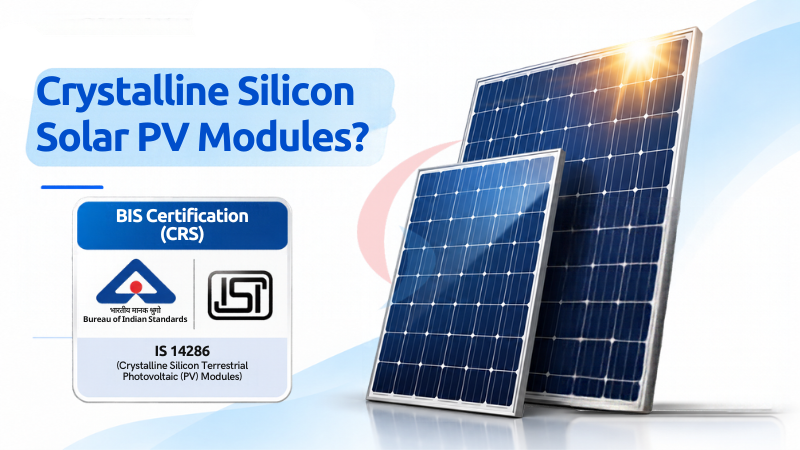
Is BIS CRS Certification Mandatory for Crystalline Silicon Solar PV Modules?
Yes. BIS registration is mandatory for crystalline silicon terrestrial photovoltaic modules covered by the notified Quality Control Order when they are intended for the Indian market.
The requirement originally came under the Solar Photovoltaics, Systems, Devices and Components Goods (Requirements for Compulsory Registration) Order, 2017. On 27 January 2025, MNRE notified the revised Solar Systems, Devices and Components Goods Order, 2025, which superseded the 2017 order and introduced updated technical requirements. The revised order covers notified solar PV modules, solar inverters and storage batteries. Products meant exclusively for export are exempt under the order, while Indian-market products must satisfy the applicable requirements.
For example, an overseas manufacturer supplying crystalline silicon solar modules to an Indian distributor cannot assume that an international IEC certificate alone satisfies the Indian requirement. The relevant manufacturing facility and product models must meet applicable BIS registration conditions.
Read our BIS CRS Certification for Solar PV Modules guide to understand the general registration requirements for different solar panel technologies.
Applicable Indian Standards for Crystalline Silicon Solar PV Modules
Crystalline silicon modules must meet the relevant design qualification and safety requirements. The standards help verify whether the solar modules can withstand environmental stresses, maintain acceptable performance and satisfy specified safety criteria.
|
Indian Standard |
Application |
Main Purpose |
|---|---|---|
|
IS 14286 (Part 1):2023 |
General solar PV module qualification |
Design qualification and testing requirements |
|
IS 14286 (Part 1/Sec 1):2023 |
Crystalline silicon solar modules |
Technology-specific qualification tests |
|
IS 14286 (Part 2):2023 |
PV module testing |
Test procedures |
|
IS/IEC 61730 (Part 1) |
Module construction safety |
Electrical and mechanical safety requirements |
|
IS/IEC 61730 (Part 2) |
Module safety testing |
Safety qualification tests |
The current BIS product listing allows specified combinations of the 2016 or 2023 editions of IS/IEC 61730 Parts 1 and 2. Manufacturers should use the edition accepted for their registration application rather than automatically relying on older test reports.
Difference Between IS 14286 and IS/IEC 61730
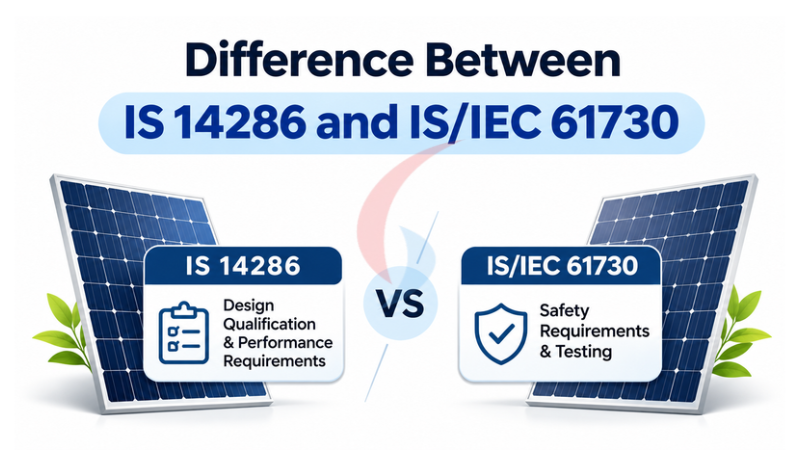
IS 14286 focuses mainly on design qualification and type approval. It establishes whether a solar module can withstand specified environmental and operating conditions.
IS/IEC 61730 concentrates on product safety. It examines construction, insulation and other safety-related characteristics that help reduce potential hazards during installation and operation.
Both are important because a solar module must satisfy the applicable qualification requirements and safety provisions.
Solar panel manufacturers should also understand their obligations under the E-Waste (Management) Rules, 2022. Read our EPR Registration for Solar Panels guide for more information.
Which Crystalline Silicon Solar Modules Require BIS Registration?
The notified category covers crystalline silicon terrestrial photovoltaic modules manufactured using silicon wafers. The applicable registration scope depends on the product design, manufacturing location, relevant standards and BIS-approved models.
Common examples include:
-
Monocrystalline solar PV modules.
-
Multicrystalline or polycrystalline solar panels.
-
PERC solar modules.
-
TOPCon solar modules.
-
HJT solar modules.
-
Bifacial crystalline silicon solar modules.
A particular module technology or construction may require additional testing or separate model inclusion. Manufacturers should examine their bill of materials (BOM), design specifications and applicable series approval guidelines before assuming that different models can share the same registration.
BIS Testing Requirements for Crystalline Silicon Solar PV Modules
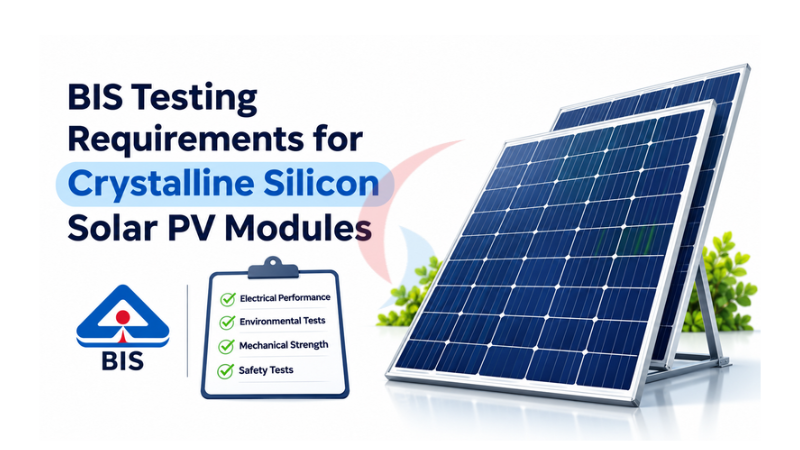
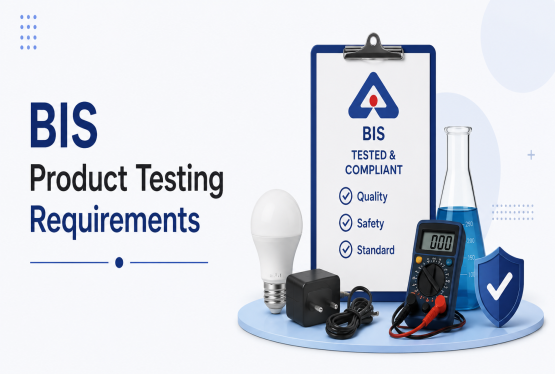
Solar PV module testing is one of the most important stages of registration. A manufacturer must submit representative samples to a laboratory recognised by BIS for the relevant scope of testing.
The laboratory evaluates the modules according to the applicable Indian Standards. Testing covers the module's ability to withstand environmental stresses and satisfy electrical and safety requirements.
|
Testing Requirement |
What It Checks |
|---|---|
|
Visual inspection |
Visible defects and construction quality |
|
Maximum power determination |
Electrical output under specified conditions |
|
Thermal cycling |
Resistance to repeated temperature changes |
|
Damp heat testing |
Performance under prolonged heat and humidity |
|
Mechanical load testing |
Ability to withstand specified physical loads |
|
Hail impact testing |
Resistance to simulated hail impacts |
|
Insulation testing |
Electrical insulation and safety |
|
Wet leakage current testing |
Electrical safety under wet conditions |
|
Bypass diode testing |
Performance and safety of bypass diode arrangements |
The complete test programme depends on the applicable standard, module construction and test sequence. Not every model change automatically requires a complete repetition of every test.
A manufacturer producing a 550 W monocrystalline module, for example, must establish which representative models require testing and whether other models can be included under the applicable series guidelines.
Explore the BIS Certification for Power Adapters for IT Equipment for additional information on design qualification, safety testing and applicable Indian Standards.
Documents Required for BIS CRS Registration
Manufacturers should prepare their documents before beginning the BIS application. Missing information or differences between the factory records, test reports and application details can delay registration.
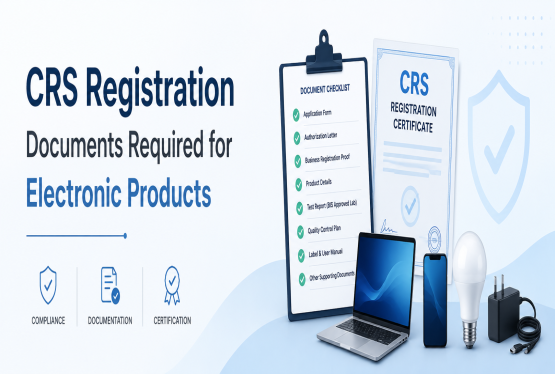
Generally, the documents include the manufacturer's incorporation certificate, factory address proof, business registration details, brand authorisation, product specifications, model numbers, technical datasheets, bill of materials, manufacturing process details and BIS-recognised laboratory test reports. Foreign manufacturers may also need an Authorised Indian Representative (AIR), along with the prescribed authorisation and supporting documents.
For example, if the factory address on the test report differs from the BIS application, the manufacturer may need to provide clarification before registration can proceed.
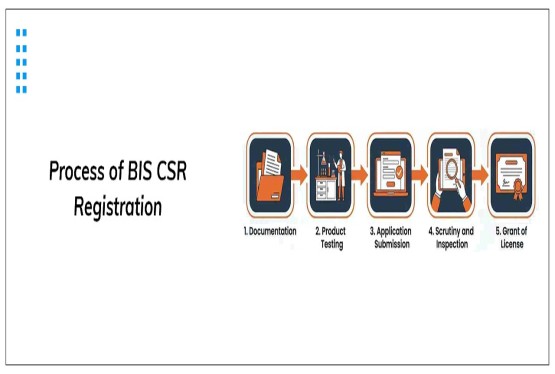
Step-by-Step BIS CRS Registration Process
The registration procedure starts with identifying the correct product category and ends with obtaining BIS approval for the relevant manufacturing facility and models.
Step 1: Identify Applicable Standards
Check whether the product falls under the crystalline silicon solar PV module category. Confirm the applicable editions of IS 14286 and IS/IEC 61730 before arranging product testing.
Step 2: Prepare Samples and Documents
Collect the factory documents, product specifications, brand details and bill of materials. Select representative module models based on the applicable series approval guidelines.
Step 3: Conduct Laboratory Testing
Submit the samples to a BIS-recognised laboratory with the appropriate testing scope. The laboratory performs the required qualification and safety tests and issues reports after successful completion.
Step 4: Submit the BIS Application
File the registration application through the official BIS CRS Portal with the required test reports, manufacturing information and fees.
Step 5: Respond to BIS Queries
BIS examines the application and may request additional documents or clarification regarding model numbers, test results, component details or factory information.
Step 6: Obtain Registration
Once BIS approves the application, the manufacturer can use the prescribed Standard Mark and registration number for approved products, subject to the applicable conditions.
Read our BIS CRS Registration Step-by-Step Guide to understand product testing, document preparation and application examination.
BIS CRS Certification Fees and Processing Time
The total cost of BIS CRS Certification depends on the number of module models, testing requirements, manufacturing locations and applicable government charges. For solar PV modules, laboratory testing may be a major expense because some qualification tests involve prolonged environmental exposure. Manufacturers should obtain an estimate from a BIS-recognised laboratory before beginning the process. There is no guaranteed processing period for every application. Some registrations take longer because of laboratory scheduling, failed tests, documentation discrepancies or additional model requirements.
Latest BIS and MNRE Updates in 2025–2026
1. Revised Solar Quality Control Order, 2025
MNRE notified the Solar Systems, Devices and Components Goods Order, 2025, on 27 January 2025. The revised order replaced the earlier 2017 order and introduced updated product standards and minimum module-efficiency requirements. BIS subsequently issued implementation guidelines on 27 March 2025, explaining the transition to revised standards and the treatment of existing registrations.
2. Revised Series Approval Guidelines – December 2025
MNRE issued revised guidelines for series approval of solar PV modules on 19 December 2025. These guidelines are relevant when manufacturers seek approval for multiple models or make changes to the bill of materials. Manufacturers should examine the applicable model-family and retesting requirements before introducing new components or additional models.
3. Important October 2026 Update: Solar Module Model Numbers
On 1 October 2026, MNRE issued a Standard Operating Procedure introducing a country-identification suffix for solar PV module model numbers. The prescribed suffix contains four characters identifying the manufacturing country of the module and the manufacturing country of the solar cells.
For example, a model manufactured in India using Indian-made cells would carry the suffix ININ. A module manufactured in India using cells manufactured in China would carry INCN.
Where manufacturers use cells from different manufacturing countries under the same original model number, separate country-coded model numbers are required. The SOP provides a 180-day implementation period for existing registered models and new application requirements after that period.
4. ALMM Requirements in 2026
BIS certification and MNRE's Approved List of Models and Manufacturers (ALMM) serve different purposes. BIS registration establishes conformity with the applicable Indian Standards. ALMM listing establishes eligibility of approved models and manufacturers for specified solar projects.
In May 2026, MNRE addressed the implementation of ALMM List-II requirements for solar cells, including project-specific transitional protection. Manufacturers should verify the current ALMM conditions before supplying modules to covered projects.
Visit the BIS Certification for UPS and Inverters Up to 5 kVA for articles explaining BIS registration, solar product certification and regulatory developments affecting Indian manufacturers.
Common Reasons for BIS Registration Delays
BIS registration can be delayed when technical documents are incomplete, model numbers do not match, test samples fail to satisfy the applicable standards or manufacturers submit reports from laboratories without the required recognition. Another common difficulty involves changing solar cells, encapsulants, glass or other important components without checking whether further testing is required. Manufacturers can reduce these problems by finalising product designs before testing, maintaining accurate BOM records and reviewing the applicable series guidelines.
Why Choose Compliance Calendar LLP for BIS CRS Certification?
Obtaining BIS registration for crystalline silicon solar PV modules involves more than preparing an application. Manufacturers must identify the correct standards, organise product testing, maintain accurate BOM information and understand the latest MNRE requirements. At Compliance Calendar LLP, we focus on helping manufacturers understand these requirements in simple language and prepare their compliance documentation properly.
For enquiries, contact Compliance Calendar LLP by email at info@ccoffice.in or via WhatsApp at +91 9988424211
Frequently Asked Questions (FAQs)
Q1. Is BIS CRS Certification mandatory for crystalline silicon solar PV modules?
Yes. Crystalline silicon terrestrial solar PV modules covered by the applicable Quality Control Order require BIS registration for the Indian market, subject to specified exemptions.
Q2. Which Indian Standard applies to crystalline silicon solar modules?
The applicable standards include IS 14286 (Part 1/Sec 1):2023 for technology-specific design qualification and the relevant IS/IEC 61730 standards for safety.
Q3. Can foreign manufacturers obtain BIS CRS Certification?
Yes. Foreign manufacturers can apply for BIS registration, subject to the prescribed requirements, including appointing an eligible Authorised Indian Representative where required.
Q4. How long does BIS CRS Certification take?
Processing time depends on laboratory testing, documentation and BIS examination. Solar module testing can take considerable time because some qualification tests involve prolonged environmental exposure.
Q5. Can one BIS registration cover multiple solar module models?
Yes, where the models satisfy the applicable series approval and registration requirements. Additional model inclusion or testing may be required.
Q6. Is BIS Certification the same as ALMM registration?
No. BIS registration concerns conformity with applicable Indian Standards, while ALMM listing determines eligibility for specified solar projects.
Q7. What happens if a solar PV module fails BIS testing?
The manufacturer must investigate the failure, correct the relevant problem and complete the required retesting before establishing conformity.
Q8. Is BIS registration necessary for imported crystalline silicon solar panels?
Yes, imported modules within the notified scope must satisfy applicable BIS requirements. The importer should verify the manufacturer's registration and model coverage.
Q9. Can manufacturers change solar cells after BIS registration?
Changes may require BOM updates, model-number changes, documentary verification or additional testing. The applicable requirements depend on the nature of the change.
Q10. What is the latest important BIS-related update for solar modules in 2026?
MNRE's 1 October 2026 SOP introduced country-identification requirements for solar PV module model numbers, with a prescribed transition period.
Article last updated on : 17 Nov 2026.