


Streetlights are something most people notice only when they stop working. A well-lit road makes travelling safer, improves visibility and helps people move comfortably after sunset. From highways and city roads to residential societies and industrial areas, LED streetlights have become an important part of India's lighting infrastructure. Imagine a housing society in Gurugram replacing its old streetlights with modern LED fixtures. The maintenance committee receives quotations from different suppliers. One company offers cheaper lights, while another provides detailed technical specifications and valid BIS registration. Although both products may look similar, the committee has an important decision to make because outdoor lighting must operate safely under changing weather and electrical conditions.
This is where BIS CRS Certification for LED Street and Road Lights becomes important. The Bureau of Indian Standards (BIS) requires covered LED road and street lighting luminaires to comply with prescribed safety standards under its Compulsory Registration Scheme (CRS). The objective is to ensure that manufacturers meet applicable electrical, mechanical and safety requirements before supplying these products to the Indian market.
For manufacturers and importers, BIS registration is not merely another document. It is an essential regulatory requirement that should be considered during product development, testing and commercial planning. This article explains the applicable BIS standards, safety testing, documentation, registration procedure, costs and important amendments introduced in 2026.
Understanding LED Street and Road Lighting Luminaires
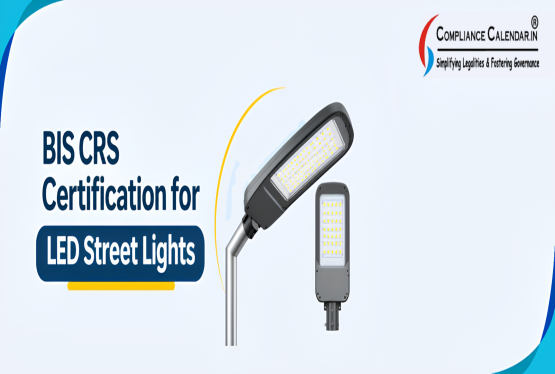
An LED street lighting luminaire is a complete lighting fixture designed to illuminate roads, streets, pathways and similar outdoor areas. Unlike an ordinary LED bulb, a street lighting luminaire generally contains multiple components, including LED modules, an electronic driver, housing, optical components, wiring connections and mounting arrangements.
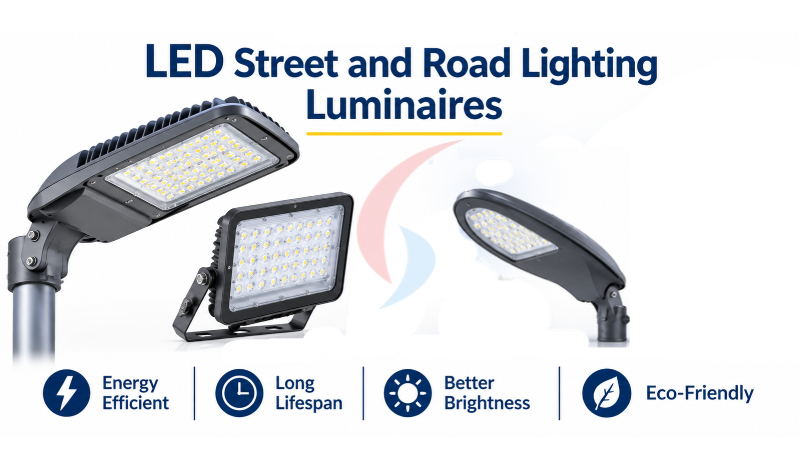
Each component performs a different function. The LED modules produce light, the driver supplies suitable electrical power, and the housing protects the internal components. Optical arrangements help distribute light across the intended area. The mounting system allows the luminaire to be installed on poles or supporting structures.
For example, a highway requires lighting that provides suitable visibility over a large road surface. A residential lane may need a different lighting arrangement because the width of the road, installation height and expected illumination levels are different. Therefore, manufacturers offer street lighting luminaires with different wattages, designs and light distributions. However, higher wattage or brightness does not automatically mean that a luminaire is safer or better suited to every installation. Manufacturers must consider the relevant electrical safety standards and product specifications before placing their lighting products in the market.
Why Is BIS CRS Certification Mandatory for LED Street Lights?
BIS CRS Certification is mandatory for covered LED luminaires used in road and street lighting. This product category was brought under compulsory registration with effect from 23 May 2018. The requirement originates from the relevant government notification and continues under the Electronics and Information Technology Goods (Requirement of Compulsory Registration) Order, 2021, as amended. The scheme operates within the legal provisions of the BIS Act, 2016 and the BIS (Conformity Assessment) Regulations, 2018.
Under these requirements, covered products must satisfy the prescribed Indian Standard and bear the applicable Standard Mark with a valid registration number. Manufacturers, importers and distributors cannot disregard these requirements merely because a product has passed internal factory testing. BIS registration is associated with the actual manufacturing unit and the approved product scope. Therefore, a company importing LED streetlights must verify whether its overseas supplier has valid registration for the relevant brand and models.
To understand mandatory certification requirements for electronic products, read our BIS CRS Registration: Step-by-Step Process for Electronic Products.
Which BIS Standard Applies to LED Street and Road Lights?
The Indian Standard applicable to LED luminaires for road and street lighting has been revised from IS 10322 (Part 5/Sec 3):2012 to IS 10322 (Part 5/Sec 3):2026. The revised standard corresponds to IEC 60598-2-3:2002, including Amendment 1:2011. It addresses particular safety requirements for luminaires intended for road and street lighting applications. Manufacturers must also consider applicable general safety requirements under IS 10322 (Part 1). The particular standard and general standard work together to establish the relevant safety provisions for the product. During the permitted transition period, the old and revised editions may run concurrently under the conditions specified by BIS. Manufacturers should therefore verify the applicable edition and implementation instructions before arranging testing.
BIS Standards Related to LED Lighting Products
|
Product Category |
Relevant Indian Standard |
|
LED Street and Road Lighting Luminaires |
IS 10322 (Part 5/Sec 3):2026 |
|
Fixed General Purpose LED Luminaires |
IS 10322 (Part 5/Sec 1):2026 |
|
Recessed LED Luminaires |
IS 10322 (Part 5/Sec 2):2026 |
|
LED Flood Lights |
IS 10322 (Part 5/Sec 5):2026 |
|
General Safety Requirements for Luminaires |
IS 10322 (Part 1), applicable edition |
The table highlights an important distinction. A streetlight and a floodlight may both be installed outdoors, but they are separate product categories under the BIS certification system. Their construction, intended use and applicable requirements must be examined individually.
Which LED Street and Road Lights Need BIS CRS Registration?
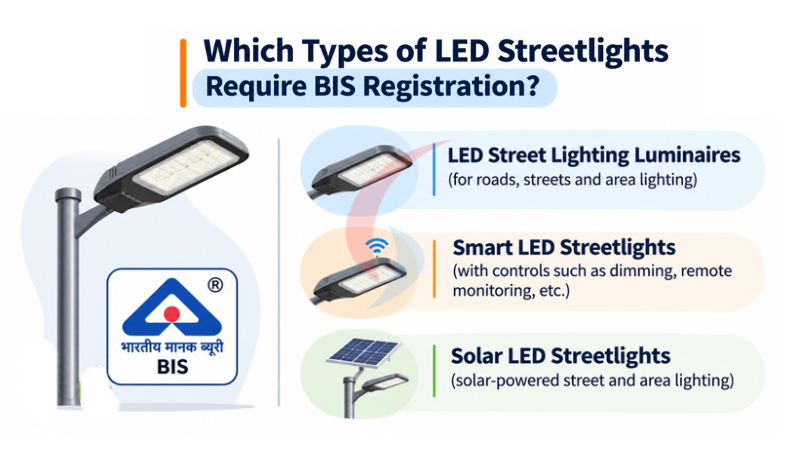
LED streetlights are available in different designs, and the applicable BIS category depends on the actual product rather than its marketing name. Manufacturers should evaluate the complete lighting equipment before determining the registration requirements. Conventional AC-powered LED streetlights used on highways, city roads, residential streets and industrial premises generally fall within the notified road and street lighting luminaire category when they meet the product scope. Smart LED streetlights incorporating sensors, dimming controls or communication features may also fall within the category. However, additional electronic features should be examined separately if they are covered by another applicable requirement.
Solar-powered and battery-operated street lighting systems require more careful classification. Their power arrangement, luminaire design and any separately notified components may affect the applicable certification requirements. Businesses should not automatically assume that every solar lighting system is regulated in exactly the same way as a conventional AC-powered streetlight.
Who Must Obtain BIS CRS Registration?
The actual manufacturer of a notified product is responsible for obtaining the relevant BIS CRS registration. An Indian manufacturer producing LED road and street lighting luminaires must obtain registration for its manufacturing unit and covered products before marketing them. Foreign manufacturers supplying notified streetlights to India must also obtain the necessary registration. They generally need to appoint an Authorised Indian Representative (AIR) to coordinate with BIS and fulfil the prescribed responsibilities. Importers and brand owners should confirm that the manufacturer's registration covers the relevant manufacturing facility, brand and product models. A certificate issued for one manufacturing location cannot automatically be used for products made at another factory.
For example, a lighting distributor in Mumbai may source LED streetlights from two different overseas factories. Even if both suppliers manufacture products under the same brand, the distributor must verify the registration coverage of each relevant manufacturing unit.
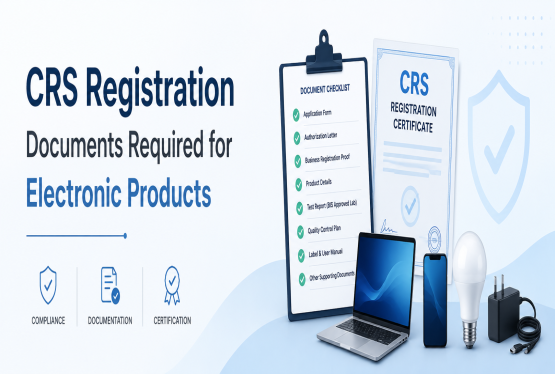
What Documents Are Required for BIS CRS Certification of LED Street Lights?
Documentation is often one of the most time-consuming parts of the registration process. Manufacturers must provide information about the factory, product construction, declared models and laboratory testing.
The details appearing in the application should match the supporting documents. Even a difference in model identification or manufacturing address may result in questions during scrutiny.
Documents Required for BIS CRS Registration
|
Document |
Purpose |
|
Manufacturer's business registration |
Establishes the manufacturer's identity |
|
Factory address proof |
Confirms the manufacturing location |
|
BIS-recognised laboratory test report |
Demonstrates conformity with the applicable standard |
|
Product technical specifications |
Provides wattage, voltage and construction details |
|
Product photographs and labels |
Identifies the product and model |
|
Brand or trademark authorisation |
Establishes brand-use rights, where applicable |
|
Authorised signatory details |
Identifies the application representative |
|
AIR nomination documents |
Required for applicable foreign manufacturers |
|
Prescribed declarations and undertakings |
Supports BIS compliance requirements |
Manufacturers should prepare these records before initiating testing wherever possible. They should also ensure that their product specifications accurately represent the models intended for registration.
Businesses can explore our article on Important Details Checked During CRS Registration to understand common application mistakes.
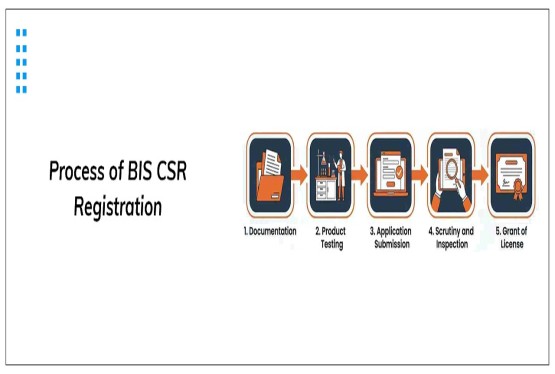
How to Apply for BIS CRS Certification for LED Street and Road Lights?
The registration process becomes easier to understand when it is treated as a sequence of technical and administrative activities rather than simply an online form.
Step 1: Examine the Product Design
The manufacturer should review the luminaire's intended use, electrical ratings, construction and product category. It is important to establish that the product falls under LED luminaires for road and street lighting rather than another notified category.
Step 2: Confirm the Applicable BIS Standard
The manufacturer must identify the applicable edition of IS 10322 (Part 5/Sec 3). In 2026, this requires considering the transition from the 2012 standard to the revised 2026 edition.
Step 3: Identify a BIS-Recognised Laboratory
The manufacturer should choose a BIS-recognised laboratory with the appropriate scope for testing road and street lighting luminaires under the applicable standard.
Step 4: Submit Representative Product Samples
Samples are submitted for laboratory testing. The manufacturer should review the relevant product grouping guidelines when deciding which models require testing and whether models can be included within a permitted series.
Step 5: Obtain the Test Report
After completing the applicable tests, the laboratory issues its report. Manufacturers should check the report for the correct product details, models, ratings and standard.
Step 6: Prepare and File the CRS Application
The manufacturer prepares the online application with factory information, brand details, test reports and declarations. The applicable BIS fee must also be paid. As a general CRS filing requirement, a test report should not be more than 90 days old when the application is submitted online.
Step 7: Respond to BIS Clarifications
BIS examines the application and may request additional documents or explanations. Incomplete information should be corrected promptly to prevent avoidable delays.
Step 8: Receive Registration and Follow Marking Rules
After satisfactory assessment, BIS grants registration covering the approved scope. The manufacturer must follow the relevant Standard Mark and registration-number requirements before marketing covered products.
Manufacturers can refer to the official BIS CRS application process for procedural instructions.
What Safety Tests Are Required for LED Street and Road Lights?
A streetlight installed on a highway must operate under conditions very different from those experienced by an indoor light. It may be exposed to rain, dust, changing temperatures and electrical disturbances. For this reason, the construction and electrical safety of the luminaire are particularly important.
BIS testing examines applicable safety characteristics under the relevant clauses of IS 10322. Manufacturers should understand that basic illumination testing or a successful factory demonstration cannot replace the prescribed conformity assessment.
Important Safety Tests for LED Streetlights
|
Testing Area |
Why It Matters |
|
Protection against electric shock |
Helps prevent hazardous contact with live electrical parts |
|
Insulation resistance and electric strength |
Evaluates electrical insulation under specified conditions |
|
Temperature rise and thermal testing |
Examines the risk of overheating |
|
Mechanical strength and construction |
Checks structural safety and relevant installation provisions |
|
Resistance to dust and moisture |
Evaluates environmental protection as required by the standard and product classification |
|
Creepage distances and clearances |
Checks electrical separation between relevant components |
|
Resistance to heat and fire |
Evaluates specified material safety characteristics |
|
Marking and instructions |
Verifies important safety information and installation guidance |
The actual tests depend on the product's construction, classification and applicable standard. Photometric performance, luminous efficacy, colour temperature and other commercial performance claims may require separate specifications or testing. BIS CRS safety certification should not be represented as automatic approval of every performance claim.
Manufacturers can review the official BIS test report format for IS 10322 (Part 5/Sec 3):2026 for additional technical guidance.
Latest BIS Updates for LED Street and Road Lights in 2026
One of the biggest changes affecting India's LED lighting industry in 2026 is the revision of the IS 10322 series. Manufacturers holding existing BIS registrations, as well as businesses applying for new registrations, need to understand how the revised standards affect their products.
Revision of IS 10322 (Part 5/Sec 3):2026
BIS introduced the revised 2026 edition for luminaires used in road and street lighting. The revised standard replaces the earlier 2012 edition through the prescribed implementation process. Manufacturers should review relevant changes in technical requirements, references, marking and testing provisions. An existing registration under the previous edition does not eliminate the obligation to comply with the revised standard when the transition becomes mandatory.
Implementation Guidelines Issued on 20 March 2026
On 20 March 2026, BIS issued implementation guidelines for the revised IS 10322 series covering seven categories of LED luminaires. The guidelines explain how existing licensees, new applicants and manufacturers requesting model inclusion should demonstrate conformity with the revised standards. Existing licensees must address the applicable testing and documentation requirements, including updated reports for relevant lead models.
Deadline Extended to 2 February 2027
BIS initially set 2 August 2026 as the last date for concurrent running of the old and revised standards. However, the circular dated 31 July 2026, published on the BIS portal on 5 August 2026, extended this deadline to 2 February 2027.
The extension applies to road and street lighting luminaires and six other categories of LED luminaires. Manufacturers have additional time to complete the required transition, but the extension does not suspend the underlying mandatory BIS registration requirement.
BIS Conformity Assessment Amendment Regulations, 2026
The 2026 regulatory amendments also revised important Scheme II requirements concerning registration validity, annual licence fees and renewals. Under the revised provisions, registration may initially be granted for up to five years and renewed for up to five years, subject to applicable conditions. Manufacturers must also comply with the prescribed annual fee and production-information requirements. The individual licence validity date should not be confused with the deadline for implementing a revised Indian Standard. These are separate compliance obligations.
Read our BIS LED Luminaire Standards Update for background on the revised standards. The original August 2026 date discussed in that article has subsequently been extended to February 2027.
How Much Does BIS CRS Certification for LED Street Lights Cost?
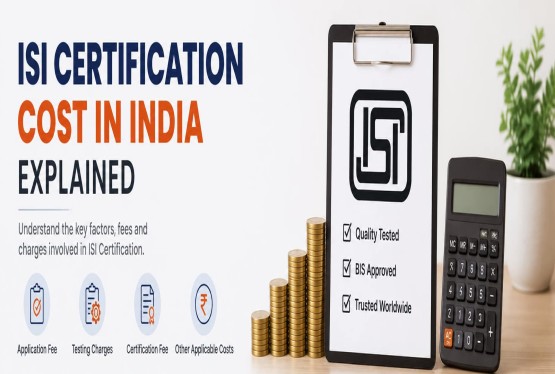
The cost of BIS CRS Certification for LED Street Lights is not the same for every manufacturer. It depends on the applicable registration fees, recognised laboratory testing charges, number of product models and other registration requirements. Manufacturers should budget for application and processing fees, annual licence fees, product testing, documentation and any additional testing required after design modifications. For foreign manufacturers, expenses related to the AIR arrangement may also arise.
Testing charges can vary considerably between laboratories. For example, BIS laboratory listings show different quoted charges for testing against IS 10322 (Part 5/Sec 3):2026. Manufacturers should obtain a current quotation from a laboratory recognised for the required standard. LIMS (Laboratory Information Management System) The total processing time is influenced by the availability of laboratory testing, completeness of documents, test results and BIS scrutiny. Businesses planning government tenders or large supply orders should begin compliance activities early.
Can a BIS-Registered LED Streetlight Be Used in Government Projects?
A valid BIS registration can be an essential requirement when supplying notified LED street lighting products for government projects. However, BIS registration alone does not establish that the product satisfies every technical condition of a government tender. Public procurement projects may specify additional requirements concerning wattage, luminous efficacy, ingress protection, electrical performance, product warranties and installation conditions.
For example, a municipal corporation may invite bids for 5,000 LED streetlights. The tender may require appropriate BIS registration along with specific electrical and lighting performance characteristics. A manufacturer must examine the complete tender conditions rather than assuming that its BIS registration is sufficient for every project.
What Happens If LED Streetlights Are Sold Without BIS Registration?
Supplying notified LED street lighting luminaires without meeting mandatory BIS registration requirements can create serious commercial and legal consequences. The BIS Act, 2016 and the applicable compulsory registration provisions regulate the manufacture, import, distribution and sale of notified products. Non-compliance may result in enforcement action, including restrictions, seizure or penalties where authorised under the applicable law. For importers, missing or incorrect BIS registration coverage can also create problems during customs clearance and distribution. Manufacturers should verify the registration status before dispatching products, especially when several models or manufacturing locations are involved.
How Can Manufacturers Maintain BIS Compliance After Registration?
Receiving a BIS registration number is an important milestone, but manufacturers must continue maintaining conformity with the approved requirements. A manufacturer may introduce a different LED driver, change a housing design or modify the electrical specifications of an existing streetlight model. Depending on the nature of the change, additional evaluation, testing or model-inclusion procedures may be required.
Manufacturers should also maintain records of their registered models, product specifications, test reports, applicable standard editions and required annual compliance activities. Where a revised standard is introduced, the company should examine whether its existing products need additional testing or documentation. With the 2026 revision of the IS 10322 series, this is particularly important for businesses holding registrations based on the previous standard.
Learn about ongoing manufacturer responsibilities in our CRS Compliance for Manufacturers guide.
Why Choose Compliance Calendar LLP for BIS CRS Certification?
For a lighting manufacturer, the main concern is often not whether BIS registration is necessary, but how to complete the process without unnecessary delays. A business may have several streetlight models, an approaching supply commitment and limited experience with the BIS application process. At Compliance Calendar LLP, we help businesses understand these practical challenges. Instead of treating every LED lighting product in the same way, we begin by reviewing the product category, manufacturing details and applicable Indian Standard.
We can also assist foreign manufacturers and Indian importers in understanding manufacturing-unit registration, Authorised Indian Representative requirements and the documents needed for overseas products. Our assistance covers BIS applicability assessment, product documentation, testing coordination, CRS application support, query responses and guidance on ongoing compliance. We aim to help manufacturers understand what is required at each stage, particularly when new standards or regulatory changes affect their products.
If you manufacture or import LED street and road lighting products and need assistance with the certification process, contact Compliance Calendar LLP at +91 9988424211 or info@ccoffice.in
Frequently Asked Questions (FAQs)
Q1. Is BIS CRS Certification mandatory for LED streetlights in India?Ans. Yes. LED luminaires for road and street lighting are included in the BIS Compulsory Registration Scheme. Covered products must comply with the applicable Indian Standard and registration requirements before being marketed in India.
Q2. Which BIS standard applies to LED road and street lighting luminaires?Ans. The revised standard is IS 10322 (Part 5/Sec 3):2026. It replaces the earlier IS 10322 (Part 5/Sec 3):2012 through the applicable BIS transition process. Relevant general luminaire safety requirements also apply.
Q3. When did BIS certification become mandatory for LED streetlights?Ans. Mandatory BIS CRS registration for LED luminaires used in road and street lighting became effective on 23 May 2018. The requirement continues under India's compulsory product certification rules.
Q4. What is the latest 2026 BIS update for LED streetlights?Ans. BIS revised IS 10322 (Part 5/Sec 3) in 2026. It subsequently extended the concurrent-running deadline for the old and revised standards to 2 February 2027, giving manufacturers additional time to complete the transition.
Q5. an foreign manufacturers obtain BIS CRS Registration?Ans. Yes. Eligible foreign manufacturers can apply for BIS CRS registration. They must fulfil the applicable testing, documentation and Authorised Indian Representative requirements before supplying covered products to India.
Q6. Is BIS registration required for solar LED streetlights?Ans. The answer depends on the product's design, electrical arrangement and applicable notified category. Manufacturers should assess solar-powered street lighting systems individually instead of assuming that every solar lighting product has identical certification requirements.
Q7. Can several LED streetlight models be included under one BIS registration?Ans. Multiple models may be covered where they meet the relevant BIS grouping and model-inclusion requirements. The manufacturer must ensure that the approved registration scope covers the models being manufactured or supplied.
Q8. How long does BIS CRS Registration take for LED streetlights?Ans. The timeline varies depending on laboratory testing, application preparation, product conformity and BIS scrutiny. Manufacturers should begin the process early, especially when planning commercial imports or tender-based supply commitments.
Q9. Does BIS certification guarantee government tender eligibility?Ans. No. BIS registration may satisfy an important regulatory requirement, but individual tenders may prescribe additional technical, performance, eligibility and documentation conditions. Suppliers must evaluate the complete tender requirements.
Q10. How can manufacturers verify BIS registration for LED streetlights?Ans. Manufacturers, importers and buyers can use the official BIS CRS portal to examine registration information. They should verify the manufacturing unit, brand, registration status and relevant model coverage before relying on a certificate.
Article last updated on : 18 Nov 2026.