


Induction stoves have become a popular choice in Indian households because they offer faster cooking, energy efficiency, and convenient features such as touch controls, adjustable temperature settings, and automatic shut-off. With increasing demand, many manufacturers and importers are introducing new induction cooktop models into the Indian market. However, before these appliances can be legally sold, businesses must ensure that they meet the applicable safety standards prescribed by the Bureau of Indian Standards (BIS). Simply manufacturing a functional induction stove or completing internal quality checks is not enough.
This is where BIS CRS Registration for Induction Stoves in India plays an important role. Under the Compulsory Registration Scheme (CRS), manufacturers must get their induction stoves tested according to the applicable Indian Standard, IS 302 (Part 2/Sec 6): 2009, and obtain BIS Registration before placing covered products on the Indian market. This requirement has been mandatory since 1 April 2021 and applies to both domestic manufacturers and foreign manufacturers supplying induction stoves to India. The certification process helps ensure that these appliances meet prescribed electrical safety requirements and reduces the risks associated with defective or non-compliant products.
Whether you are manufacturing induction stoves, importing them from overseas, or launching your own kitchen appliance brand, understanding the BIS CRS registration process, required documents, applicable standards, fees, and latest 2026 updates can help you meet legal requirements and avoid unnecessary delays in bringing your products to market.
What is BIS CRS Registration for Induction Stoves?
BIS CRS Registration is a mandatory product registration requirement administered by the Bureau of Indian Standards. It ensures that induction stoves covered under the government notification comply with prescribed electrical safety standards. Under the Compulsory Registration Scheme, manufacturers must get their products tested at a BIS-recognised laboratory. After receiving a satisfactory test report, the manufacturer submits an application to BIS with the prescribed documents and fees. Once approved, BIS grants registration and permits the manufacturer to use the prescribed Standard Mark with its registration number.
For example, if a company manufactures induction cooktops in Noida and plans to sell them throughout India, its GST Registration and factory licence alone are not sufficient. The company must also comply with the applicable BIS CRS requirements.
Is BIS CRS Registration Mandatory for Induction Stoves?
Yes. Induction stoves are included in the list of products requiring compulsory BIS registration in India. The product category was added through the government notification dated 1 April 2020, with mandatory implementation effective from 1 April 2021.
|
Particulars |
Details |
|---|---|
|
Regulatory authority |
Bureau of Indian Standards (BIS) |
|
Certification scheme |
Compulsory Registration Scheme (CRS) |
|
Product category |
Induction Stove |
|
Applicable standard |
IS 302-2-6: 2009 |
|
Mandatory implementation |
1 April 2021 |
|
Applicable applicants |
Indian and foreign manufacturers |
|
Testing requirement |
BIS-recognised laboratory |
|
Official portal |
Manufacturers should confirm the product's classification and current registration requirements before launching or importing induction stoves.
Why is BIS Certification Important for Induction Stoves?
Induction stoves work through electromagnetic induction. Although they do not use an open gas flame, they contain electrical circuits, heating controls, sensors, and other components that must operate safely. Poor insulation, defective wiring, or inadequate thermal protection may create risks of electric shock, overheating, or fire. BIS certification helps establish whether the product conforms to the prescribed safety standard. It also supports lawful market access and gives distributors greater confidence in the manufacturer's compliance arrangements. For a growing appliance business, completing certification before launching products can help avoid shipment delays, rejected marketplace listings, and avoidable regulatory expenses.
Visit Our Learn Article Manufacturers planning to certify electronic appliances can read our Process to Get BIS CRS Certification in India article to understand the complete product registration procedure.
Which Induction Stoves Require BIS CRS Registration?
BIS CRS applicability depends on whether the appliance falls within the notified induction stove category.
Common products that may fall under this category include:
-
Portable Induction Stoves: Single-burner induction cooktops commonly used in homes, hostels, and offices.
-
Digital Induction Cooktops: Appliances with touch controls, timers, temperature settings, and automatic cooking programmes.
-
Built-in Induction Hobs: Induction cooking appliances designed for installation in modular kitchens.
-
Multi-Zone Induction Cooktops: Appliances featuring multiple induction heating zones.
MeitY has clarified that stoves and hobs transferring heat through the principle of induction are covered. However, an oven or other appliance should not automatically be classified as an induction stove merely because it contains electrical heating components. For commercial and industrial appliances, the manufacturer should examine the intended application, construction, technical specifications, and scope of the relevant standard before deciding whether CRS applies.
Applicable BIS Standard for Induction Stoves
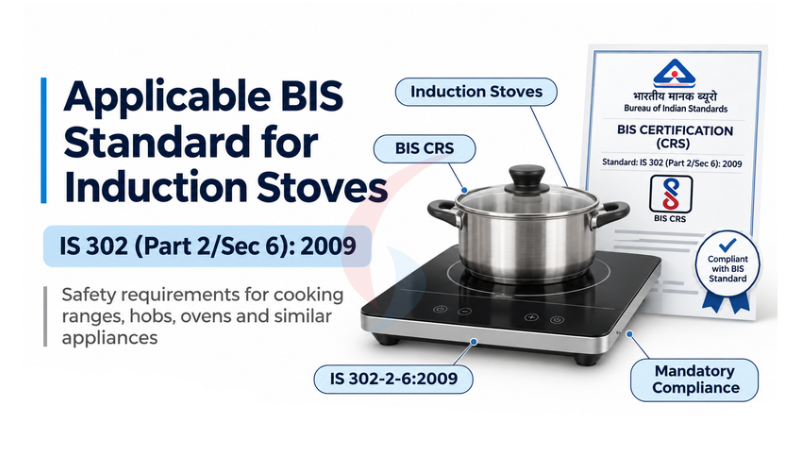
The applicable Indian Standard is IS 302 (Part 2/Sec 6): 2009, titled Safety of Household and Similar Electrical Appliances — Part 2: Particular Requirements — Section 6: Cooking Ranges, Hobs, Ovens and Similar Appliances. Important testing areas may include protection against electric shock, leakage current, insulation resistance, temperature rise, abnormal operation, mechanical strength, wiring arrangements, and product markings.
For example, an induction stove may perform well during normal cooking but still fail a laboratory test because its internal insulation is inadequate. The manufacturer would need to correct the issue and arrange further testing. Testing must follow the applicable clauses of the standard rather than relying only on the company's internal performance checks.
Laws and Legal Provisions Governing BIS CRS Registration
BIS CRS Registration for Induction Stoves is governed by the Bureau of Indian Standards Act, 2016, the BIS (Conformity Assessment) Regulations, 2018, and the relevant compulsory registration order.
|
Law or regulation |
Important provision |
Relevance |
|---|---|---|
|
BIS Act, 2016 |
Section 16 |
Compulsory conformity assessment for notified goods |
|
BIS Act, 2016 |
Section 17 |
Restrictions concerning notified products |
|
BIS Act, 2016 |
Sections 29 and 30 |
Offences and penalties |
|
BIS (Conformity Assessment) Regulations, 2018 |
Scheme II of Schedule II |
CRS registration procedure |
|
Electronics and IT Goods CRO, 2021, as amended |
Product notification |
Mandatory requirements for covered appliances |
|
IS 302-2-6: 2009 |
Product safety standard |
Technical requirements for induction stoves |
The Electronics and Information Technology Goods (Requirement of Compulsory Registration) Order, 2021 replaced the earlier 2012 framework, while retaining mandatory requirements for notified products.
Who Can Apply for BIS CRS Registration?
The actual manufacturer of the induction stove is responsible for obtaining BIS CRS registration.
-
Indian manufacturers: Businesses operating an induction stove manufacturing facility in India may apply for registration covering their factory, brand, and eligible models.
-
Foreign manufacturers: Overseas manufacturers supplying induction stoves to India can apply under CRS. Where required, they must appoint an Authorised Indian Representative (AIR) to coordinate regulatory matters.
-
Importers and brand owners: An importer or trader cannot ordinarily obtain the manufacturer's CRS registration merely because it sells the product. It must ensure that the actual manufacturing facility has valid registration covering the relevant products.
For example, if an Indian company imports induction stoves from a factory in China under its private label, it should verify that the foreign manufacturer holds appropriate BIS registration for that brand and product category.
Visit Our Learn Article Small appliance manufacturers can explore our BIS Certification for Small Manufacturers and MSMEs guide for information about eligibility, documents, and product certification requirements.
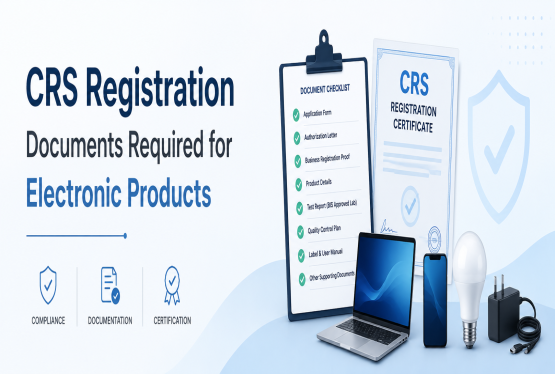
Documents Required for BIS CRS Registration for Induction Stoves
Before applying, manufacturers should prepare their business records, product specifications, and laboratory testing documents.
Common documents include:
-
Manufacturer's business registration certificate.
-
Factory address and manufacturing unit details.
-
Product specifications and model numbers.
-
Brand ownership or authorisation documents.
-
Valid test report from a BIS-recognised laboratory.
-
Product photographs and marking details.
-
Authorised signatory identification and authorisation.
-
Applicable declarations and undertakings.
-
AIR appointment documents for foreign manufacturers, where required.
The actual checklist may differ depending on the manufacturing location, product models, applicant category, and current BIS instructions.
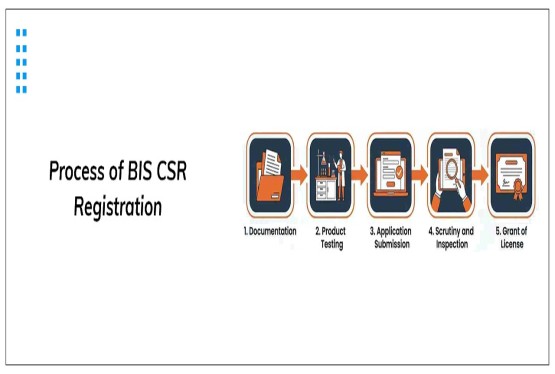
Step-by-Step BIS CRS Registration Process for Induction Stoves
The registration process becomes easier when manufacturers complete product classification and documentation before testing.
Step 1: Confirm product applicability
Verify that the induction stove falls within the notified CRS category and identify the applicable standard, IS 302-2-6: 2009.
Step 2: Prepare technical documents
Collect factory documents, model details, circuit information, product specifications, and brand-related records.
Step 3: Arrange laboratory testing
Submit representative samples to a BIS-recognised laboratory authorised to test against the applicable standard.
Step 4: Obtain the test report
Review the laboratory report and ensure that the tested products meet applicable safety requirements.
Step 5: Submit the online application
Apply through the official BIS CRS portal, upload the prescribed documents and test report, and pay the applicable fees.
Step 6: Respond to BIS observations
BIS examines the application and may request clarifications, corrections, or supporting information.
Step 7: Receive registration approval
Once BIS approves the application, the manufacturer receives registration covering the approved product scope and may use the prescribed CRS Standard Mark.
For manufacturers offering multiple induction stove models, BIS model grouping and inclusion requirements should be examined. BIS has published grouping guidance indicating that a single licence may cover eligible induction stove models, subject to applicable requirements.
BIS CRS Registration Fees for Induction Stoves
The overall cost depends on laboratory testing, registration charges, the number of models, and the manufacturer's location.
|
Expense |
Details |
|---|---|
|
Government application fee |
As prescribed by BIS |
|
Registration and processing charges |
Based on applicable BIS fee provisions |
|
Laboratory testing fees |
Depend on testing scope and laboratory |
|
Model inclusion charges |
Additional fees may apply |
|
AIR-related expenses |
Applicable to certain foreign manufacturers |
|
Professional assistance |
Depends on services required |
Latest BIS CRS Updates and Amendments in 2026
Manufacturers should remain informed about changes in BIS registration procedures, licence conditions, and product classification requirements.
-
Revised CRS Licence Provisions — 27 May 2026 : BIS issued revised provisions concerning licence validity, renewal, and annual fee payments under CRS on 27 May 2026. Under the revised framework, registrations may be granted for up to five years, subject to applicable conditions. Manufacturers should review their individual registration validity, renewal obligations, and annual fee requirements rather than relying on older two-year renewal guidance.
-
Product Category Guidance — 13 August 2026 : BIS published additional guidance on product categories covered under the Compulsory Registration Scheme. This is relevant when manufacturers are uncertain whether a multifunctional cooking appliance falls within the notified induction stove category.
- Continued Applicability of IS 302-2-6: 2009 : As of 13 November 2026, the official BIS CRS product list continues to identify IS 302-2-6: 2009 for induction stoves. No replacement standard specifically applicable to the notified induction stove category was identified in the current product list reviewed.
Visit Our Learn Article To understand how different certification schemes apply to electrical products, read our Different Types of BIS Certification in India article.
Penalties for Selling Induction Stoves Without BIS Registration
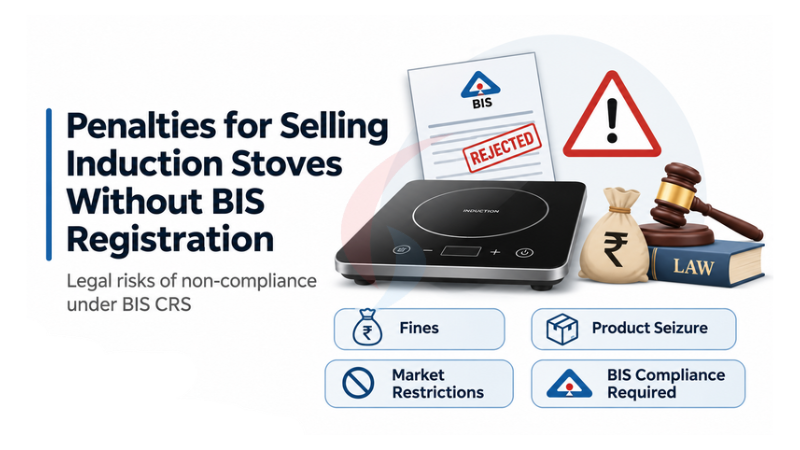
Manufacturing, importing, storing for sale, or distributing covered induction stoves without the required registration may result in regulatory action. Under the BIS Act, 2016, contraventions of compulsory conformity assessment requirements may attract penalties, including fines and imprisonment, depending on the applicable provision and nature of the violation. Non-compliant products may also face seizure, market restrictions, and interruption of imports or sales. Manufacturers should therefore complete the applicable registration requirements before commercial distribution.
Common Mistakes During BIS CRS Registration
Businesses sometimes face unnecessary delays because they begin testing or filing without reviewing the requirements. Common mistakes include selecting an incorrect product category, using laboratories without the required BIS recognition scope, submitting incomplete factory records, providing inconsistent model details, and assuming that one manufacturer's registration automatically covers products made at another factory. Another mistake is changing important electrical components or product specifications after testing without evaluating whether additional compliance action is necessary. Manufacturers should also verify the applicable registration scope before introducing new models or using a different brand name.
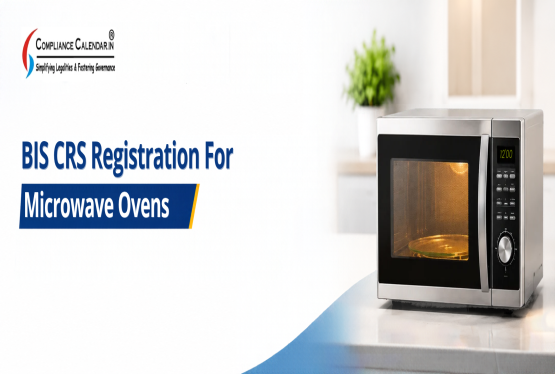
Explore Our Learn Article Businesses dealing with other kitchen appliances can explore our BIS CRS Registration for Microwave Ovens guide for additional information about testing, documentation, and product safety standards.
Why Choose Compliance Calendar LLP for BIS CRS Registration for Induction Stoves?
Obtaining BIS CRS Registration for Induction Stoves in India requires proper documentation, product testing, and compliance with the applicable BIS standards. At Compliance Calendar LLP, we understand the challenges manufacturers and importers face during the certification process. Our team assists businesses with product eligibility assessment, coordination with BIS-recognised laboratories, application filing, and responding to BIS queries.
Whether you are manufacturing induction stoves in India, importing them from overseas, or launching your own kitchen appliance brand, we provide guidance to help you understand the requirements and avoid unnecessary compliance delays.
For more details about BIS CRS Registration for Induction Stoves in India, visit Compliance Calendar LLP or contact our team at info@ccoffice.in or +91 9988424211.
Frequently Asked Questions (FAQs)
Q1. Is BIS CRS Registration mandatory for induction stoves in India?
Ans. Yes. Induction stoves are included under the BIS Compulsory Registration Scheme. Covered products must comply with the applicable Indian Standard and registration requirements before being marketed in India.
Q2. Which BIS standard applies to induction stoves?
Ans. The applicable Indian Standard is IS 302 (Part 2/Sec 6): 2009. It covers safety requirements concerning cooking ranges, hobs, ovens, and similar electrical appliances.
Q3. Can induction stoves be imported without BIS registration?
Ans. Covered induction stoves cannot ordinarily be imported for commercial sale without complying with mandatory BIS registration requirements. Importers must ensure that the overseas manufacturer's registration covers the products.
Q4. Who can apply for BIS CRS Registration?
Ans. The actual manufacturer applies for BIS CRS registration. Indian and foreign manufacturers are eligible, subject to the prescribed registration conditions.
Q5. How much does BIS CRS Registration for induction stoves cost?
Ans. The total expense depends on laboratory testing fees, BIS charges, the number of product models, and additional professional or foreign manufacturer requirements.
Q6. How long does BIS CRS Registration take?
Ans. The timeline depends on sample testing, document preparation, application scrutiny, and any queries raised by BIS. Incomplete documentation or failed testing can extend the process.
Q7. Can one BIS registration cover multiple induction stove models?
Ans. Yes, eligible models may be included under one registration, subject to BIS grouping guidelines, the manufacturing facility, brand, and applicable testing requirements.
Q8. Is BIS CRS Registration required for foreign induction stove manufacturers?
Ans. Yes. Foreign manufacturers supplying covered induction stoves to India must comply with BIS CRS requirements and appoint an Authorised Indian Representative where required.
Q9. What happens if an induction stove fails BIS testing?
Ans. The manufacturer must identify the non-conformity, make the necessary technical corrections, and arrange further testing as required before obtaining a satisfactory report.
Q10. What is the validity of BIS CRS Registration in 2026?
Ans. BIS revised its licence validity, renewal, and annual fee provisions on 27 May 2026. Registrations may be granted for up to five years, subject to applicable terms. Manufacturers should verify their individual licence conditions.
Article last updated on : 13 Nov 2026.