


India's gems and jewellery industry connects traditional craftsmanship with international markets. From diamond manufacturers in Surat to jewellery exporters in Jaipur and Mumbai, businesses selling precious stones, gold ornaments, silver jewellery and other products overseas must understand the regulations governing exports.
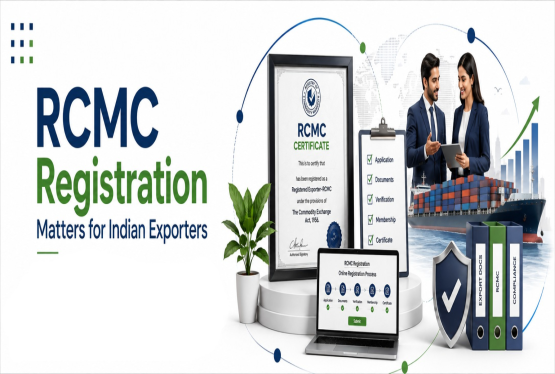
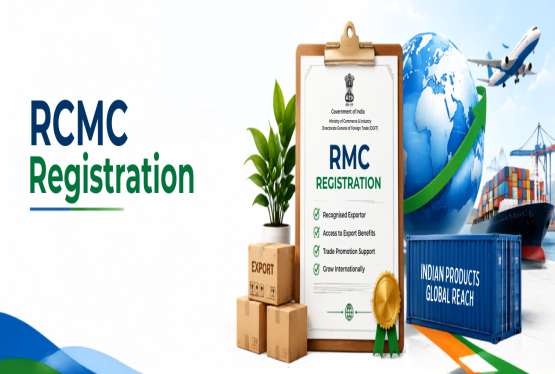
One important registration is GJEPC Registration, which connects eligible exporters with the Gem & Jewellery Export Promotion Council and enables them to obtain a Registration-cum-Membership Certificate (RCMC Registration).
In 2026, this registration has become particularly relevant because of changes to the RCMC exemption for small-value exports and expanded eligibility for qualified jewellers importing bullion through the India International Bullion Exchange (IIBX).
The following article explains the GJEPC membership process, eligibility, documents, current fees, legal provisions, renewal, compliance obligations and practical examples for Indian exporters.
What is GJEPC Registration in India?
GJEPC Registration is the process through which an eligible gems and jewellery exporter becomes a member of the Gem & Jewellery Export Promotion Council. The registration enables businesses to obtain a Registration-cum-Membership Certificate (RCMC), which confirms their membership with the recognised Export Promotion Council for the sector.
The Gem & Jewellery Export Promotion Council represents Indian exporters of diamonds, precious gemstones, jewellery, and other products falling within its jurisdiction. It works with government departments, trade organisations, international buyers, and industry stakeholders to promote Indian exports.
For exporters, GJEPC Registration is more than obtaining a membership document. It provides access to industry information, trade exhibitions, buyer-seller meetings, policy updates, and other export promotion activities. A valid RCMC is also relevant when applying for certain authorisations, benefits, or concessions under India's Foreign Trade Policy.
However, GJEPC Registration should not be confused with an Import Export Code (IEC). IEC is the basic identification generally required for international trade, while GJEPC membership connects the exporter with the appropriate industry council.
What is the Gem & Jewellery Export Promotion Council?
The Gem & Jewellery Export Promotion Council is an export promotion organisation working to strengthen India's position in the international gems and jewellery market. It supports exporters through trade promotion, industry representation, international exhibitions, market information, and communication with government authorities.
The council plays an important role in connecting Indian manufacturers and merchant exporters with international business opportunities. Its activities include organising trade exhibitions such as India International Jewellery Show (IIJS), facilitating buyer-seller interactions, and communicating issues affecting the industry to policymakers.

For example, a jewellery manufacturer in Jaipur may have high-quality products and the production capacity to fulfil overseas orders but limited knowledge of international buyers. Participation in GJEPC-supported trade programmes can help the manufacturer explore potential markets and develop business relationships.
Nevertheless, membership does not guarantee export orders, government benefits, or automatic regulatory approvals. Businesses must independently satisfy the applicable conditions for each facility.
Is GJEPC Registration Mandatory for Every Jewellery Exporter?
GJEPC Registration is not mandatory for every jewellery export shipment. Under Paragraph 2.57 of the Foreign Trade Policy, 2023, RCMC is required for specified authorisations, benefits, and concessions, unless an exemption applies.
|
Situation |
Is GJEPC Registration Required? |
|---|---|
|
Exporting Jewellery Without Claiming Benefits |
Not necessarily. RCMC may not be required if no applicable regulation or authorisation requires it. |
|
Claiming Export Benefits or Concessions |
Generally required where a particular scheme or authorisation specifies RCMC as an eligibility condition. |
|
Export Consignment Up to Rs 3 Lakh |
Eligible consignments may qualify for the RCMC exemption introduced in September 2026, subject to applicable conditions. |
|
Applying for Specific DGFT Authorisations |
Required where the relevant authorisation specifically mandates a valid RCMC. |
|
IEC and Customs Compliance |
IEC, customs declarations, and other applicable export requirements must still be followed, even where RCMC is not required. |
Before starting a jewellery export business, it is important to understand the registrations required under India's Foreign Trade Policy. Many first-time exporters are unsure whether obtaining an IEC is sufficient or whether they also need an RCMC to access applicable export benefits.
New exporters who are confused about the difference between IEC and RCMC can read Planning to Export? Start with RCMC Registration to understand their separate purposes and requirements.
Laws and Legal Provisions Governing GJEPC Registration
GJEPC Registration operates within India's foreign trade regulatory system. Several legal provisions govern RCMC issuance, exporter eligibility, registration requirements, and compliance obligations.
Foreign Trade (Development and Regulation) Act, 1992
The Foreign Trade (Development and Regulation) Act, 1992 provides the statutory foundation for regulating India's international trade.
Section 3 empowers the Central Government to make provisions concerning the development and regulation of foreign trade, including import and export restrictions.
Section 5 authorises the Central Government to formulate and announce the Foreign Trade Policy and amend it when necessary.
Section 7 deals with Import Export Code requirements. A business intending to import or export goods generally needs an IEC unless it falls within a specified exemption.
For gems and jewellery exporters, these provisions are important because international trade activities must comply with the applicable foreign trade framework, regardless of whether the business holds GJEPC membership.
Foreign Trade Policy, 2023
The Foreign Trade Policy, 2023, as amended, provides the principal policy framework governing RCMC.
Paragraph 2.56 recognises Export Promotion Councils as organisations established to promote and develop Indian exports and permits eligible councils to function as registering authorities.
Paragraph 2.57 deals with circumstances requiring an RCMC or Certificate of Registration, particularly applications for specified import-export authorisations and benefits or concessions under the policy, unless an exemption applies.
This means GJEPC Registration is not a universal licence for every jewellery shipment. Its legal necessity depends on the relevant authorisation, benefit, concession, or other applicable requirement.
Handbook of Procedures, 2023
The DGFT Handbook of Procedures contains the operational rules for RCMC registration.
Paragraph 2.77 deals with registering authorities, while Paragraph 2.79 provides for obtaining RCMC through membership of the appropriate Export Promotion Council.
Paragraph 2.80 requires exporters to identify their main line of business and approach the competent registering authority.
Paragraph 2.81 deals with RCMC validity, Paragraph 2.82 concerns changes in business particulars, and Paragraphs 2.83 and 2.84 address de-registration and appeals.
Customs Act, 1962
Gems and jewellery exports must also comply with customs law. Section 50 of the Customs Act, 1962 governs the entry of goods for export. Exporters are required to submit the prescribed Shipping Bill or Bill of Export and make accurate declarations.
Section 17 deals with self-assessment of duty, wherever applicable. Customs authorities may verify classifications, valuations, declarations, and supporting documentation. Incorrect information concerning precious metals, gemstones, product classification, or shipment value may create legal consequences under the Customs Act.
GST and Foreign Exchange Regulations
The Integrated Goods and Services Tax Act, 2017 and the Central Goods and Services Tax Act, 2017 are relevant to the taxation of jewellery exports.
Exports qualifying as zero-rated supplies under Section 16 of the IGST Act may be undertaken through the applicable refund or Letter of Undertaking arrangements, subject to prevailing law.
Foreign exchange transactions are also governed by the Foreign Exchange Management Act, 1999 and relevant RBI directions. Exporters must follow applicable requirements concerning export proceeds, authorised dealer banks, and reporting.
Who Needs GJEPC Registration?
GJEPC Registration is relevant to businesses involved in exporting gems, jewellery, diamonds, and precious stones. Exporters may require GJEPC RCMC to meet applicable Foreign Trade Policy requirements and access eligible export-related benefits.
|
Type of Exporter |
Description |
|---|---|
|
Gold and Silver Jewellery Exporters |
Businesses exporting gold, silver, platinum jewellery, and other precious-metal ornaments. |
|
Diamond Exporters |
Businesses involved in cutting, polishing, manufacturing, trading, or exporting diamonds, subject to applicable customs and Kimberley Process requirements. |
|
Precious and Semi-Precious Stone Exporters |
Exporters dealing in gemstones such as rubies, emeralds, sapphires, and other precious or semi-precious stones. |
|
Merchant Exporters |
Businesses purchasing jewellery, diamonds, or gemstones from manufacturers and exporting them under their own business name. |
|
Manufacturer Exporters |
Businesses manufacturing jewellery, polishing diamonds, or processing gemstones for direct export to international markets. |
New exporters and eligible prospective exporters may also apply for GJEPC associate membership, subject to the council's eligibility criteria and documentation requirements.
Eligibility Criteria for GJEPC Registration
Businesses applying for GJEPC Registration must meet the eligibility requirements prescribed by the Gem & Jewellery Export Promotion Council. Both existing exporters and new businesses planning to enter the gems and jewellery export industry can apply.
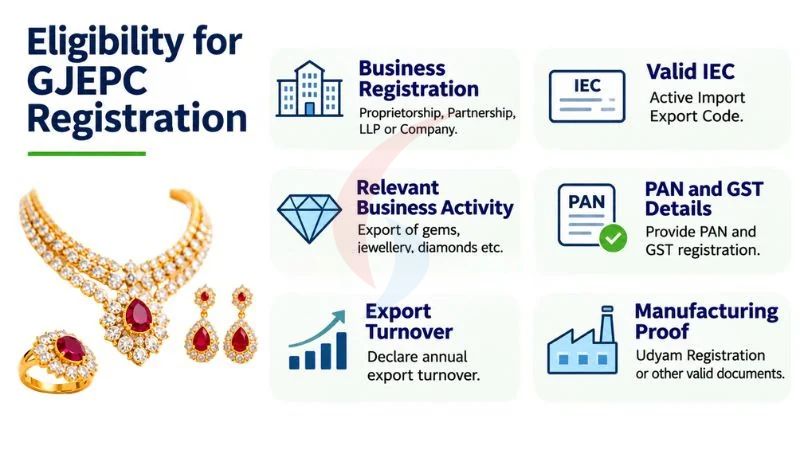
1. Business Registration: The applicant must be a legally established business, such as a proprietorship, partnership firm, LLP, or company. The business should have valid registration documents proving its legal existence.
2. Valid Import Export Code (IEC): Applicants must generally have an active IEC issued by DGFT. The business details registered with DGFT should match the information provided in the GJEPC application.
3. Relevant Business Activity: The business must be involved in or planning to export gems, jewellery, diamonds, precious stones, or related products. Its main export activities should fall within GJEPC's jurisdiction.
4. PAN and GST Details: Applicants must provide their PAN, registered business address, and GST registration details, where applicable. These details help verify the identity and legal status of the business.
5. Export Turnover Information: Existing exporters must declare their relevant annual export turnover. GJEPC uses this information to determine the applicable membership category and fees.
6. Manufacturing Proof: Businesses applying as manufacturer exporters may need to provide Udyam Registration or other acceptable manufacturing documents. These records help establish that the applicant carries out manufacturing activities.
Note: New exporters may also apply for GJEPC membership without completing their first export order, provided they meet the applicable eligibility and documentation requirements.
New jewellery exporters who have not yet obtained an IEC can refer to the Procedure for Obtaining Import Export Code before applying for GJEPC membership.
Documents Required for GJEPC Registration
Businesses applying for GJEPC Registration must submit documents to verify their legal identity, export activities, and membership eligibility. The requirements may vary depending on whether the applicant is a manufacturer exporter, merchant exporter, proprietorship, partnership firm, LLP, or company.
The following documents are generally required for GJEPC Registration:
|
Documents |
Description |
|---|---|
|
Import Export Code (IEC) |
A self-attested copy of the valid IEC issued by DGFT. |
|
PAN Card |
PAN of the applicant business for identification and verification. |
|
GST Registration Certificate |
Valid GST registration details, wherever applicable. |
|
Business Registration Documents |
Certificate of Incorporation, Partnership Deed, MOA, AOA, or other applicable business documents. |
|
Identity Proof |
PAN, Aadhaar, or passport of the proprietor, partners, directors, or authorised signatory, as required. |
|
Manufacturing Proof |
Udyam Registration or other acceptable documents proving manufacturing activities, where applicable. |
|
Bank-Attested Signature Slip |
Signature verification certified by the applicant's bank in the prescribed format. |
|
Application and Payment Proof |
Completed membership and RCMC application forms, fee payment receipt, and required declarations. |
Before submitting the application, businesses should ensure that their name, address, IEC, PAN, and GST details match across all documents. Incorrect or inconsistent information may result in clarification requests and delays in GJEPC Registration.
GJEPC Registration Process Online in 2026
GJEPC Registration can be completed through the official GJEPC website and DGFT e-RCMC portal. Applicants must provide accurate business details, submit the required documents, and pay the applicable membership fees.
|
Steps |
GJEPC Registration Process |
|---|---|
|
Step 1: Obtain IEC |
Ensure the business has a valid Import Export Code (IEC) issued by DGFT. |
|
Step 2: Visit GJEPC Website |
Visit the official GJEPC website and access the new membership registration section. |
|
Step 3: Select Membership Category |
Choose the appropriate membership category based on business activities and annual export turnover. |
|
Step 4: Fill Application Form |
Enter the business name, IEC, PAN, GST details, registered address, and export product information. |
|
Step 5: Upload Documents |
Submit IEC, PAN, GST certificate, business registration proof, bank-attested signature slip, and other required documents. |
|
Step 6: Pay Membership Fees |
Pay the applicable membership subscription, admission fee, and GST through the prescribed payment method. |
|
Step 7: Apply for e-RCMC |
Visit the DGFT portal, select GJEPC as the registering authority, and complete the e-RCMC application. |
|
Step 8: Download RCMC |
After verification and approval, download the GJEPC Registration-cum-Membership Certificate (RCMC). |
Note: Applicants should ensure that their IEC, PAN, GST, and business details match across all documents to avoid delays in the registration process.
Exporters applying for GJEPC membership can follow our step-by-step guide to RCMC Registration Online in India to understand the online application process, document submission and certificate issuance.
GJEPC Registration Fees in India for 2026
GJEPC membership fees are generally based on the export performance of the applicant during the preceding financial year. The council's published fee schedule for new membership includes an annual subscription, a one-time admission fee where applicable, and GST at 18%.
New GJEPC Membership Fees:
| Annual Export Turnover | Total New Membership Fee (Including GST) |
|---|---|
| Up to Rs 25 lakh | Rs 17,582 |
| Above Rs 25 lakh to Rs 1 crore | Rs 23,010 |
| Above Rs 1 crore to Rs 5 crore | Rs 29,854 |
| Above Rs 5 crore to Rs 15 crore | Rs 50,150 |
| Above Rs 15 crore to Rs 50 crore | Rs 63,720 |
| Above Rs 50 crore to Rs 100 crore | Rs 97,704 |
| Above Rs 100 crore to Rs 500 crore | Rs 1,45,140 |
| Above Rs 500 crore to Rs 1,000 crore | Rs 2,12,990 |
| Above Rs 1,000 crore | Rs 2,80,840 |
The council also lists an Associate Micro Membership category for eligible applicants meeting the specified conditions, with a published fee of Rs 1,298 including GST.
For ordinary new membership, the listed amounts include a one-time admission charge of Rs 7,500 plus GST. The micro-associate category does not carry that admission charge.
These amounts reflect the published GJEPC fee schedule checked for this article. Applicants should confirm the fee shown by the official portal for FY 2026–27 before making payment.
GJEPC RCMC Validity and Annual Renewal
GJEPC RCMC validity and annual council membership renewal are separate matters. Under Paragraph 2.81 of the DGFT Handbook of Procedures, RCMC is ordinarily valid for five licensing years, beginning from 1 April of the licensing year in which it is issued, unless otherwise specified.
For example, an RCMC issued during FY 2026–27 would ordinarily remain valid until 31 March 2031, subject to its stated terms. However, GJEPC follows an annual membership subscription system. The council's published renewal process specifies a period from 1 April to 30 April each financial year.
Members should renew their subscription, update export turnover information, and verify that their records remain accurate. GJEPC's published renewal schedule also specifies a late renewal charge of Rs 7,500.
An exporter should therefore not assume that a five-year RCMC validity period eliminates the requirement to maintain annual membership.
Benefits of GJEPC Registration for Exporters
GJEPC membership can provide several business and industry-related advantages.
Access to International Trade Exhibitions
GJEPC organises and supports jewellery exhibitions and promotional events, including the India International Jewellery Show.
These events allow eligible businesses to explore international market opportunities, examine changing customer preferences, and connect with prospective buyers. Participation remains subject to the relevant exhibition rules and fees.
Export Promotion and Market Information
The council provides information about developments affecting gems and jewellery exports. This may include international trade trends, government policy changes, regulatory developments, and market opportunities.
For smaller exporters without a dedicated international trade team, industry information can support better commercial decisions.
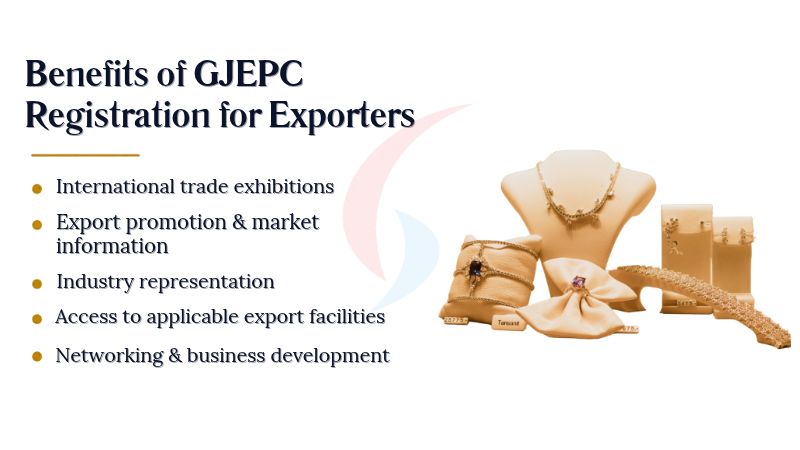
Industry Representation
GJEPC represents sector concerns before relevant government authorities. Issues relating to customs, trade restrictions, taxation, international market access, and sector-specific regulatory requirements may be raised through the council's industry representation activities.
Access to Applicable Export Facilities
A valid GJEPC RCMC can support eligibility for authorisations or concessions for which RCMC is prescribed. However, benefits are not automatic. Each government scheme has its own eligibility requirements and documentation conditions.
Networking and Business Development
GJEPC facilitates communication between exporters, trade associations, international buyers, and other industry participants. Membership may therefore be useful for businesses seeking to strengthen their international relationships and understand market requirements.
Latest GJEPC and Export Compliance Updates in 2026
1. RCMC Exemption for Exports up to Rs 3 Lakh
DGFT Notification No. 36/2026-27, dated 15 September 2026, introduced an important relaxation for low-value exports.
Under the amendment to Paragraph 2.57 of the Foreign Trade Policy, RCMC or a Certificate of Registration is not required for an export consignment with a Free-on-Board (FOB) value not exceeding Rs 3 lakh, wherever that requirement would otherwise arise under the specified Foreign Trade Policy provision.
The change is intended to reduce compliance burdens for smaller exporters, including first-time businesses using postal and courier export channels.
Consider a new jewellery exporter sending a qualifying sample consignment worth Rs 2 lakh to an overseas buyer. The exporter may benefit from the amended RCMC exemption but must still comply with IEC, customs, precious-metal, foreign exchange, and any other applicable rules.
2. GJEPC RCMC Holders and IIBX Bullion Imports
A major development in June 2026 expanded the relevance of GJEPC RCMC. On 15 June 2026, the International Financial Services Centres Authority (IFSCA) amended the eligibility framework for entities seeking notification as Qualified Jewellers for bullion imports through the India International Bullion Exchange.
Under the revised arrangement, entities holding a valid GJEPC RCMC became eligible to apply through IIBX for notification as Qualified Jewellers, subject to the applicable conditions.
The change expanded access beyond the earlier conventional eligibility criteria. This development can be particularly relevant for jewellery manufacturers requiring gold or silver for export-linked activities.
However, holding GJEPC RCMC does not automatically authorise bullion imports. Separate IFSCA approval, IIBX procedures, KYC, anti-money-laundering compliance, and applicable import conditions must be satisfied.
3. September 2026 Expansion of the Qualified Jeweller Provision
IFSCA further updated the bullion import arrangements on 22 September 2026.
The revised framework also recognised eligible entities holding specified DGFT authorisations as candidates for Qualified Jeweller notification.
The changes were reflected in an updated consolidated circular concerning imports of gold and silver through IIBX.
For businesses evaluating bullion sourcing arrangements, these developments demonstrate the growing interaction between GJEPC membership, DGFT authorisations, and IFSCA-regulated facilities.
4. Continued Digital RCMC Compliance
The DGFT common e-RCMC platform remains central to registration, renewal, amendment, and other electronic membership processes.
Exporters should ensure that their IEC profile, council membership details, and RCMC records remain consistent. These digital records are particularly important when undertaking transactions requiring verification by government authorities.
Compliance Requirements After GJEPC Registration
Obtaining membership does not end the exporter's responsibilities. Businesses must continue to follow the terms of their registration, maintain accurate information, and comply with applicable foreign trade, customs, taxation, and foreign exchange laws.
Updating Changes in Business Information
Paragraph 2.82 of the DGFT Handbook of Procedures requires an RCMC holder to inform the registering authority about changes in ownership, constitution, business name, or address within one month from the date of change.
For example, if a jewellery exporter converts its partnership firm into a company, it should examine the required changes to its IEC, GJEPC membership, and other business registrations.
Maintaining Active IEC Details
IEC holders must comply with the applicable DGFT annual confirmation and updating requirements. Businesses should review their records during the prescribed April–June period each year. Exporters can explore Annual IEC Updation services to understand the steps involved in maintaining accurate IEC records.
Exporters can also read about IEC Registration and Annual Updation to understand DGFT requirements, updating procedures, and the importance of maintaining accurate IEC information.
Customs Compliance
Jewellery exporters must correctly declare their products, quantity, classification, value, and relevant shipment information.
Electronic customs filings may also require registration and supporting documentation through ICEGATE.
Businesses can refer to this guide on ICEGATE Registration for Import Export Business to understand customs portal requirements and electronic filing.
GST and Export Records
Businesses should maintain proper invoices, shipping documents, export records, and evidence required under applicable GST laws.
Where exports are made under an LUT or refund arrangement, the exporter must satisfy the relevant conditions for zero-rated supplies.
Jewellery exporters planning to export without payment of integrated tax can read our guide on LUT Under GST to understand the filing process, eligibility and documentation requirements.
RBI and Foreign Exchange Compliance
Exporters must receive export proceeds and complete foreign exchange transactions according to the applicable FEMA framework and RBI directions.
The relevant authorised dealer bank plays an important role in handling international payments and related documentation.
Practical Example: A Diamond Exporter in Surat
Suppose a diamond-processing company in Surat receives an overseas order involving polished diamonds and rough diamonds.
Although both products are part of the gems and jewellery industry, their documentation requirements may differ.
The rough diamond transaction may require Kimberley Process documentation, while polished diamond shipments must follow their applicable customs and trade requirements.
A GJEPC RCMC does not replace these product-specific obligations. The business must therefore assess every shipment according to the actual goods being exported, rather than relying only on its council membership
Why Choose Compliance Calendar LLP for GJEPC Registration?
Starting or expanding a gems and jewellery export business involves more than finding an international buyer. Exporters must also understand DGFT procedures, prepare registration documents, select the correct Export Promotion Council, and maintain accurate compliance records.
At Compliance Calendar LLP, we understand the procedural challenges businesses face while handling export registrations and statutory requirements.
Our team provides professional assistance with business registrations, RCMC applications, DGFT-related documentation, and related compliance matters.
Our assistance may include:
-
Eligibility Guidance: Helping businesses understand GJEPC membership categories and relevant registration requirements.
-
Document Preparation: Reviewing IEC, PAN, GST, constitution documents, and supporting records.
-
Application Assistance: Supporting applicants with membership forms, registration procedures, and filing-related queries.
-
RCMC Support: Guidance on the applicable certificate process, renewal requirements, and amendments.
-
Personalised Compliance Assistance: Helping exporters understand requirements according to their business structure and export activities.
We aim to make regulatory procedures easier to understand so that business owners can focus on building relationships with international buyers and developing their products. Whether you are establishing a new jewellery export business or managing an existing export operation, our team can assist with the relevant documentation and procedural requirements.
Need assistance with GJEPC Registration? Explore or contact Compliance Calendar LLP 919988424211 for guidance on the applicable registration process.
Frequently Asked Questions (FAQs)
Q1. What is GJEPC Registration?
Ans: GJEPC Registration is the process of becoming a member of the Gem & Jewellery Export Promotion Council and obtaining the applicable RCMC. It is relevant to eligible exporters dealing in diamonds, gemstones, jewellery, and other products covered by the council.
Q2. Is GJEPC Registration mandatory for jewellery exporters?
Ans: GJEPC RCMC is required where an applicable Foreign Trade Policy authorisation, benefit, or concession requires registration with the competent council, unless an exemption applies. It is not a universal licence mandatory for every jewellery shipment.
Q3. Who is eligible for GJEPC membership?
Ans: Eligible manufacturer exporters, merchant exporters, and prospective exporters operating in the gems and jewellery sector may apply under the relevant category. Applicants must meet the council's documentation and membership conditions.
Q4. What is the GJEPC Registration fee in 2026?
Ans: The published new membership fee begins at Rs 17,582, including GST and admission charges, for the ordinary category with exports up to Rs 25 lakh. A separate qualifying micro-associate category lists Rs 1,298 including GST. Higher turnover categories carry higher fees.
Q5. Is IEC required for GJEPC Registration?
Ans: Yes. GJEPC's published new membership requirements include a valid IEC. It is important to ensure that the IEC information matches the applicant's business registration and other supporting records.
Q6. How long is GJEPC RCMC valid?
Ans: Under the general DGFT provisions, RCMC is ordinarily valid for five licensing years, unless otherwise specified. However, GJEPC membership subscriptions must be renewed separately according to the council's annual renewal requirements.
Q7. What documents are required for GJEPC Registration?
Ans: Common documents include IEC, PAN, GST registration where applicable, business constitution documents, identification records of authorised persons, and the prescribed application forms. Manufacturer exporters may need additional manufacturing evidence.
Q8. Is GJEPC RCMC required for exports below Rs 3 lakh?
Ans: Under the September 2026 DGFT amendment, qualifying export consignments with an FOB value not exceeding Rs 3 lakh are exempt from the specified RCMC requirement under the Foreign Trade Policy. Other applicable export regulations must still be followed.
Q9. Can GJEPC members import gold through IIBX?
Ans: A valid GJEPC RCMC holder may apply through IIBX to be notified as a Qualified Jeweller under the applicable IFSCA framework. Approval is not automatic, and the applicant must satisfy the prescribed regulatory, KYC, and import-related conditions.
Q10. Can Compliance Calendar LLP assist with GJEPC Registration?
Ans: Yes. Compliance Calendar LLP provides assistance with RCMC-related registration procedures, documentation, application preparation, and compliance guidance. The final decision regarding GJEPC membership and RCMC issuance rests with the competent authority.
Article last updated on : 13 Nov 2026.