


Imagine Rajesh, an entrepreneur from Jaipur, who decides to enter India's growing solar energy market. He sets up a small manufacturing unit to produce solar photovoltaic modules and receives an enquiry from a commercial rooftop solar installer. The buyer is interested in purchasing 500 solar panels, but before confirming the order, asks a simple question: “Do your solar modules have BIS registration?” Rajesh initially believes that because his modules use high-quality solar cells and have undergone internal testing, they are ready for sale. However, he soon discovers that manufacturing solar panels involves more than assembling cells, glass and frames.
Products covered by India's compulsory registration requirements must comply with prescribed Indian Standards and obtain the necessary BIS approval. This is where BIS CRS Certification for Solar PV Modules becomes important. It helps manufacturers demonstrate that their products satisfy applicable quality and safety requirements. For businesses entering India's solar sector in 2026, understanding BIS Registration, testing, documentation and related MNRE requirements is essential before launching products into the market.
What is BIS CRS Certification for Solar PV Modules?
BIS CRS Certification for Solar PV Modules refers to registration under the Bureau of Indian Standards' Compulsory Registration Scheme for notified solar photovoltaic products. Solar PV modules are devices that convert sunlight into electricity using interconnected photovoltaic cells. The Compulsory Registration Scheme operates under Scheme II of the BIS conformity assessment framework. Manufacturers must establish conformity with applicable Indian Standards through testing by BIS-recognised laboratories and complete the prescribed registration process.
Once BIS grants registration, the manufacturer may use the prescribed Standard Mark with its registration number on products covered by that registration, subject to the applicable marking requirements. The objective is to improve product safety, quality and accountability. Solar panels remain exposed to sunlight, moisture, temperature variations and other environmental conditions for many years. Poorly designed modules may suffer insulation failures, reduced output or premature deterioration. Proper testing therefore matters to customers, project developers and manufacturers alike.
Explore our Learn article on CRS Compliance for Manufacturers to understand the responsibilities manufacturers must follow.
Is BIS Registration Mandatory for Solar PV Modules in India?
Yes. Solar PV module categories notified under the applicable compulsory registration orders require BIS compliance for covered manufacturing, import and sale activities in India, subject to any applicable exemptions or transitional provisions. India originally introduced compulsory registration requirements for specified solar photovoltaic products through the Solar Photovoltaics, Systems, Devices and Components Goods (Requirements for Compulsory Registration) Order, 2017. The Ministry of New and Renewable Energy subsequently notified the Solar Systems, Devices and Components Goods Order, 2025, revising the earlier regulatory.
For example, suppose a company imports crystalline silicon solar modules from an overseas manufacturer. Even when the overseas supplier holds an international IEC test certificate, the importer must verify that the actual manufacturing facility and product models satisfy India's applicable BIS requirements. An international test certificate does not automatically replace BIS registration.
Applicable Indian Standards for Solar PV Modules
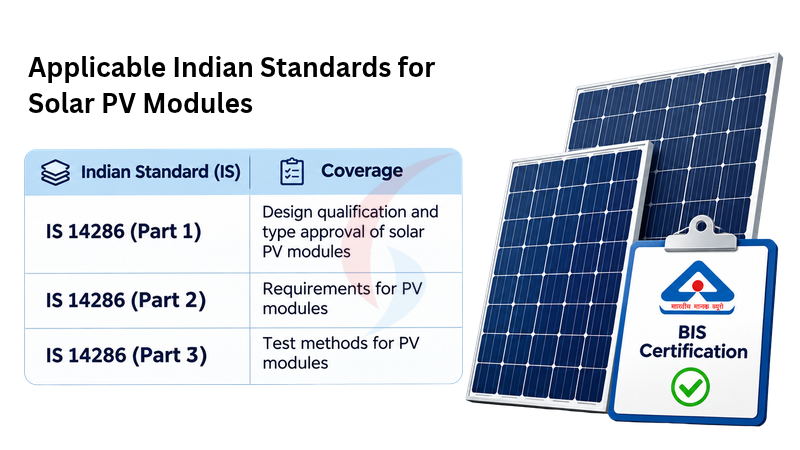
The Indian Standard applicable to a solar PV module depends primarily on its photovoltaic technology. Crystalline silicon modules and thin-film modules have different design qualification requirements, although both are subject to relevant safety standards.
|
Indian Standard |
Application |
Purpose |
|
IS 14286 series / IEC 61215 series |
Terrestrial solar PV modules |
Design qualification and type approval |
|
IS 14286 (Part 1/Sec 1): 2023 |
Crystalline silicon PV modules |
Technology-specific qualification requirements |
|
IS 14286 (Part 1/Sec 2, 3 or 4): 2023 |
Relevant thin-film technologies |
Technology-specific qualification requirements |
|
IS/IEC 61730 (Part 1): 2023 |
PV module construction |
Safety requirements |
|
IS/IEC 61730 (Part 2): 2023 |
PV module testing |
Safety qualification tests |
The applicable combination of standards must match the technology and current BIS product-category requirements.
Explore our BIS CRS Registration Process for Electronic Products to understand the complete registration procedure, documentation, and testing requirements.
Difference Between IS 14286 and IS/IEC 61730
-
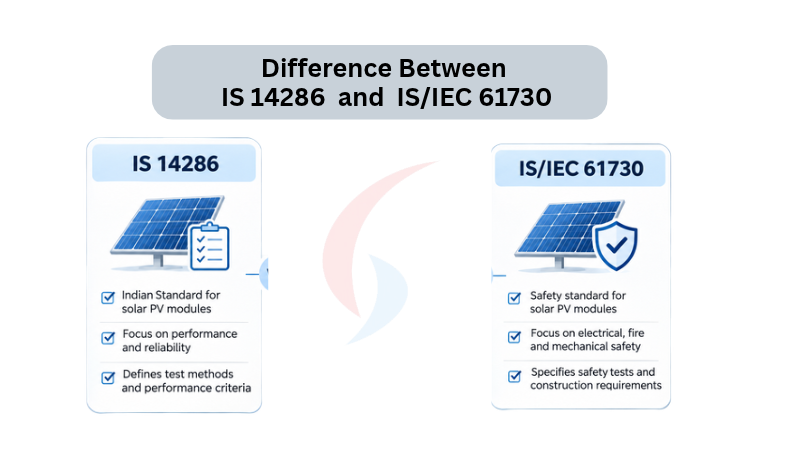
IS 14286 addresses design qualification and type approval. It examines whether a solar module can withstand specified environmental and operating stresses and continue to meet the relevant qualification criteria.
-
IS/IEC 61730 focuses on safety. It covers construction requirements and safety-related tests designed to reduce electrical, mechanical and fire-related risks.
Which Solar PV Modules Require BIS Registration?
Solar PV modules are manufactured using different cell technologies and configurations. The BIS registration requirement depends on the notified product category, applicable Indian Standard and scope of the particular manufacturing operation. Common technologies include crystalline silicon modules, such as monocrystalline and multicrystalline modules, and thin-film modules using materials such as amorphous silicon, cadmium telluride or copper indium gallium compounds. Modern commercial products may also use PERC, TOPCon, HJT, bifacial or other technology features. Such marketing or technology descriptions do not automatically establish separate BIS product categories.
For example, a manufacturer producing 550 W and 600 W crystalline silicon modules must determine whether the models can be covered under the applicable model-family or series guidelines. Higher wattage does not automatically mean that an entirely separate registration is necessary, but additional testing or model inclusion may be required.
Documents Required for BIS CRS Registration
Manufacturers should prepare their business, factory, product and technical records before approaching a testing laboratory. A complete application reduces the possibility of clarification requests and discrepancies during examination.
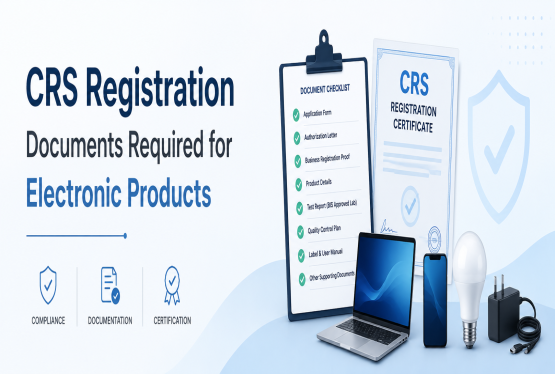
Commonly required documents include:
- Factory registration and business incorporation details.
- Manufacturing unit name and complete address.
- Identity and authorisation documents of the applicant.
- Brand ownership or brand authorisation details.
- Solar module model numbers and technical datasheets.
- Product construction and bill of materials information.
- Relevant laboratory test reports.
- Manufacturing process and quality-control details.
- Product ratings and proposed marking information.
- Applicable undertakings and declarations.
- Authorised Indian Representative documents for foreign manufacturers, where required.
The precise checklist depends on the manufacturer's location, product category and current BIS requirements.
For instance, if a solar panel manufacturer submits a test report mentioning one factory address while the application contains a different address, BIS may request clarification. Even a minor inconsistency can delay a registration that otherwise has complete technical testing.
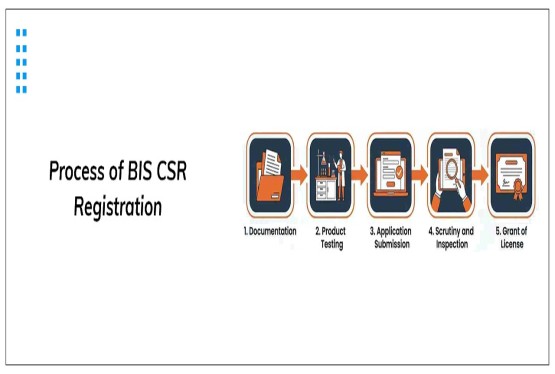
BIS CRS Registration Process for Solar PV Modules
Manufacturers should plan the registration process before beginning commercial production for the Indian market.
|
Step |
Registration Activity |
Important Requirement |
|
1 |
Identify product category |
Determine the module technology and applicable standards |
|
2 |
Prepare documents |
Collect factory, brand and product records |
|
3 |
Arrange testing |
Select an appropriately recognised BIS laboratory |
|
4 |
Complete laboratory tests |
Obtain compliant test reports |
|
5 |
Submit BIS application |
File registration details through the prescribed portal |
|
6 |
Respond to queries |
Provide clarifications and corrected documents |
|
7 |
Obtain registration |
Receive approval for the relevant products and manufacturing site |
|
8 |
Maintain compliance |
Follow marking, surveillance and annual requirements |
Step 1: Identify the Applicable Product Standard
The manufacturer must first determine whether the product is crystalline silicon or thin-film and identify the relevant Indian Standards. This decision affects the testing programme, estimated cost and documentation.
Step 2: Arrange Product Testing
The next step is to approach a BIS-recognised laboratory with the appropriate testing scope. The manufacturer provides representative modules, technical specifications and related documents. Solar module testing may require substantial time because some qualification tests involve repeated environmental stress cycles.
Step 3: Submit the Registration Application
After receiving the necessary test reports, the manufacturer files the application through the official BIS CRS Portal. The application must correctly identify the manufacturing facility, product category, brand and proposed model coverage. The required fee and supporting documents must also be submitted.
Step 4: Respond to BIS Queries
BIS examines the application and may request corrections or additional information. Common issues include incomplete technical documents, inconsistent model numbers, missing authorisations or test-report discrepancies.
Step 5: Obtain Registration and Follow Marking Rules
Once the application satisfies the relevant requirements, BIS grants registration. The manufacturer can then use the prescribed Standard Mark on the products covered by its approval. Registration for one factory does not automatically authorise another factory, even when both manufacture the same module design.
Learn how product testing, document submission and application examination work in our detailed guide on BIS CRS Registration: Step by Step Process for Electronic Products.
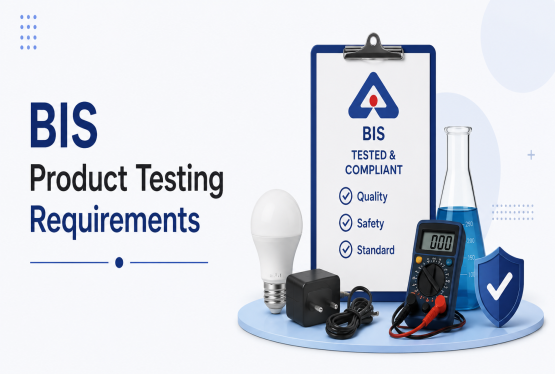
BIS Testing Requirements for Solar PV Modules
Testing is one of the most important stages of solar PV certification because solar modules are expected to withstand outdoor operating conditions over an extended period.
The applicable qualification and safety testing programmes may examine:
-
Thermal cycling: Evaluates the module's ability to withstand repeated changes between high and low temperatures.
-
Damp heat resistance: Examines durability during prolonged exposure to elevated temperature and humidity.
-
Mechanical load resistance: Assesses the module's resistance to specified mechanical stresses, relevant to environmental conditions such as wind and snow.
-
Electrical insulation: Checks insulation-related safety characteristics under prescribed conditions.
-
Wet leakage current: Helps evaluate electrical safety when a module is exposed to moisture.
-
Hot-spot endurance: Assesses the module's ability to withstand specified operating conditions associated with localised heating.
-
Performance measurements: Include relevant electrical characteristics and output measurements before and after prescribed qualification tests.
Not every test is identical for every technology. The laboratory follows the applicable standard and the BIS requirements for the relevant product category. A failed test may require technical modifications and retesting. Manufacturers should therefore ensure that production samples are representative of the intended commercial design.
BIS CRS Registration Fees for Solar PV Modules
The total cost of registration depends on the BIS fee schedule, laboratory testing requirements, number of models, manufacturing locations and other circumstances.
|
Fee Component |
What It Covers |
|
BIS application and processing fees |
Examination of the registration application |
|
Licence or annual charges |
Applicable registration-related fees |
|
Laboratory testing charges |
Testing as per the relevant Indian Standards |
|
Additional model or test-report charges |
Further testing or inclusion, where required |
|
AIR and professional assistance |
Additional services, if applicable |
There is no single reliable all-inclusive amount for every solar module manufacturer.
For example, a manufacturer registering one crystalline silicon model family may have a different testing budget from a company seeking coverage for both crystalline silicon and thin-film modules. Solar PV testing costs should be obtained directly from the appropriate BIS-recognised laboratory. The latest official BIS fee schedule should also be checked before payment.
Manufacturers dealing with electrical products can read our BIS Certification for Power Adapters for IT Equipment guide to understand product safety standards and compliance requirements.
Latest BIS and MNRE Updates for Solar PV Modules in 2026
The regulatory framework for solar manufacturing has continued evolving, making it important to distinguish compulsory BIS registration from other solar-sector requirements.
Solar Systems, Devices and Components Goods Order, 2025
In January 2025, MNRE notified a revised goods order covering specified solar photovoltaic modules, solar PV inverters and storage batteries. MNRE also published an implementation-related notification on 3 July 2026. Manufacturers should review the precise transitional provisions, applicable standards and effective dates rather than relying exclusively on older references to the 2017 order.
Revised Indian Standards
The IS 14286 series and updated IS/IEC 61730 standards are important for solar module qualification and safety. The current BIS product list specifies relevant combinations of these standards for crystalline silicon and thin-film technologies.
BIS CRS Validity Changes in 2026
BIS revised its CRS licence validity, renewal and annual-fee framework in 2026, including changes relating to five-year licence terms and annual compliance obligations.
Manufacturers should check the provisions applicable to their own registration before planning annual payments, renewals or continued production.
ALMM Requirements
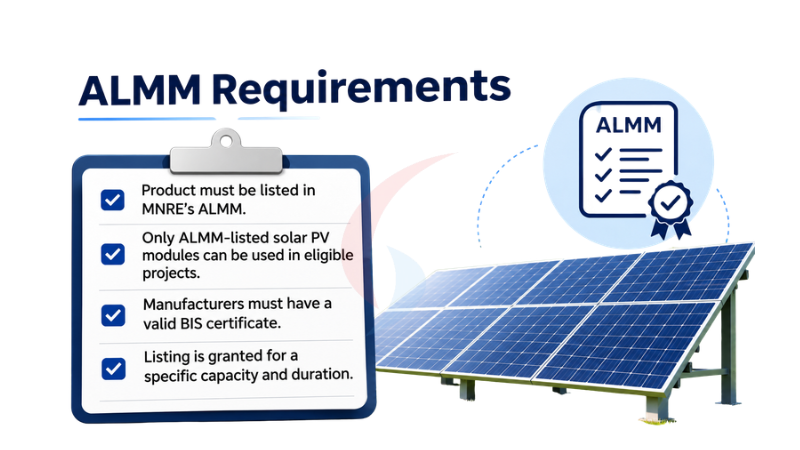
The Approved List of Models and Manufacturers (ALMM) is administered by MNRE and must not be confused with BIS CRS registration. BIS registration establishes conformity under the applicable compulsory certification framework. ALMM requirements concern the eligibility of approved solar module models and manufacturers for specified projects or programmes.
MNRE continued updating ALMM lists during 2026, including requirements involving solar PV cells under List-II. Applicability depends on the project category and current MNRE orders. A module may therefore have BIS registration without automatically satisfying every ALMM-related project requirement.
Learn how manufacturers prepare product documents, testing reports, and applications through our article on BIS Certification for Webcams.
Important: BIS Certification and ALMM Are Different
A solar manufacturer entering government-supported or otherwise ALMM-covered projects should separately verify BIS registration, applicable ALMM listing and project eligibility conditions. One approval should never be assumed to replace the other.
Common Reasons for Delays in BIS Registration
Solar manufacturers sometimes experience delays because they underestimate the documentation and testing work involved. Common difficulties include selecting the wrong Indian Standard, submitting incomplete manufacturer details, using inconsistent model numbers, providing insufficient technical information, experiencing laboratory testing delays or failing to respond properly to BIS queries. Another issue arises when manufacturers make design changes after completing qualification testing.
For example, changing an encapsulant, backsheet, junction box or other critical component may affect the module's qualified construction. The manufacturer should check whether the change requires additional testing, inclusion or another action under BIS rules. The most effective approach is to verify product classification, technical documents and testing requirements before submitting samples.
Penalties and Consequences of Non-Compliance
The Bureau of Indian Standards Act, 2016 provides the statutory framework for compulsory conformity requirements and enforcement. Section 17 addresses prohibited activities relating to products covered by compulsory certification requirements. Section 29 provides penalties for specified contraventions, including those involving Section 17.
Depending on the nature of the violation, enforcement consequences may include prosecution, monetary penalties, restrictions on non-compliant products and other action available under the law. For businesses, the commercial consequences can also be significant. Customs issues, cancelled purchase orders, rejected tenders and damaged buyer confidence may create losses beyond the direct regulatory penalties. Manufacturers should therefore verify that their product, factory, registration scope and marking practices remain compliant throughout commercial operations.
Frequently Asked Questions (FAQs)
Q1. Is BIS CRS Certification mandatory for solar PV modules?
Ans. Yes. Notified solar photovoltaic module categories are subject to compulsory BIS registration requirements for covered activities in India. Manufacturers should check the applicable product category, current goods order and any relevant exemptions or transitional provisions.
Q2. Which Indian Standard applies to solar PV modules?
Ans. The applicable standards include relevant parts of the IS 14286 series for design qualification and IS/IEC 61730 for safety qualification. The specific standard combination depends on whether the module uses crystalline silicon or thin-film technology.
Q3. Can foreign solar manufacturers obtain BIS registration?
Ans. Yes. Foreign manufacturers can apply for BIS CRS registration for covered products. They must meet the applicable requirements, including appointing an eligible Authorised Indian Representative where required and supplying valid factory and product documentation.
Q4. How long does BIS CRS Certification take?
Ans. There is no guaranteed timeline for every application. The overall period depends on laboratory testing, sample preparation, documentation, product conformity and BIS examination. Solar qualification testing can be time-consuming because of environmental stress tests.
Q5. Can one BIS certificate cover multiple solar panel models?
Ans. Multiple models may be covered when they satisfy the applicable BIS product-family or series guidelines. Manufacturers must verify model eligibility and complete any required inclusion or additional testing before treating a new model as covered.
Q6. Is BIS certification the same as ALMM registration?
Ans. No. BIS certification addresses conformity with applicable Indian Standards, while MNRE's ALMM framework governs approved module models and manufacturers for specified projects. Depending on the project, both requirements may need to be satisfied independently.
Q7. What happens if a solar module fails BIS testing?
Ans. A manufacturer must identify the reason for the failure, correct the relevant technical issue and complete any necessary retesting. An unsuccessful test does not establish conformity, and registration cannot be assumed until the prescribed requirements are fulfilled.
Q8. Is BIS registration required for imported solar panels?
Ans. Imported solar modules falling within the notified compulsory-registration scope must satisfy the applicable BIS requirements, subject to lawful exemptions or transitional arrangements. Importers should verify the overseas manufacturer's registration and exact model coverage.
Q9. What is the validity of BIS CRS Registration in 2026?
Ans. BIS revised its CRS validity framework in 2026, including five-year licence terms and annual compliance requirements. Manufacturers should verify the conditions applicable to their licence and comply with the current annual fee and reporting provisions.
Q10. Can a manufacturer change solar module components after registration?
Ans. Changes in critical components may affect the qualified construction and registered scope. The manufacturer should evaluate the proposed change against relevant BIS guidelines and complete additional testing or approval procedures wherever required.
Article last updated on : 13 Nov 2026.