


Imagine a home appliance manufacturer in Delhi preparing to launch a new range of microwave ovens. The products have attractive designs, useful cooking features and competitive prices. The company has already finalised its packaging and received enquiries from retailers. However, before launching the products, the manufacturer discovers that microwave ovens fall under India's mandatory BIS Compulsory Registration Scheme (CRS).
This means the manufacturer cannot simply start selling the products. The microwave ovens must meet the applicable Indian safety standard, undergo testing in a BIS-recognised laboratory and obtain the required registration. Without proper certification, the company could face regulatory action and delays in bringing its products to market. BIS CRS Registration for Microwave Ovens is an important legal requirement for manufacturers planning to manufacture, import or sell microwave ovens in India. It helps ensure that these electrical appliances meet prescribed safety requirements and are suitable for consumer use.
What Is BIS CRS Registration for Microwave Ovens?
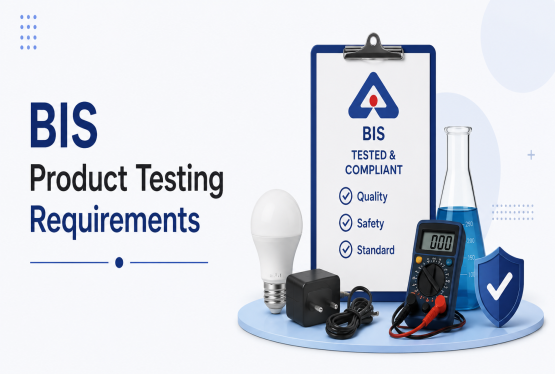
BIS CRS Registration is a mandatory product conformity registration administered by the Bureau of Indian Standards (BIS). Under this scheme, manufacturers must demonstrate that their products comply with the applicable Indian Standard before supplying them to the Indian market.
Microwave ovens are covered under the Compulsory Registration Scheme, which operates under Scheme II of Schedule II of the BIS (Conformity Assessment) Regulations, 2018. Once registration is granted, the manufacturer can use the prescribed BIS Standard Mark with its registration number on products covered by the registration.
Important: BIS CRS Registration is granted to the manufacturer for the relevant product category and manufacturing location. A trader or importer cannot generally substitute its own name for the actual manufacturer's registration.
Is BIS Certification Mandatory for Microwave Ovens in India?
Yes. BIS CRS Registration has been mandatory for microwave ovens since 3 July 2013. The applicable product standard currently listed by BIS is IS 302-2-25:2014.
The requirement applies to covered products manufactured domestically and those imported from other countries. A manufacturer must obtain the necessary BIS registration before the product is placed on the Indian market.
To understand broader BIS registration requirements and regulatory developments, refer to our BIS CRS Registration in India guide.
|
Particulars |
Details |
|---|---|
|
Regulatory Authority |
Bureau of Indian Standards (BIS) |
|
Certification Scheme |
Compulsory Registration Scheme (Scheme II) |
|
Product Category |
Microwave Ovens |
|
Applicable Standard |
IS 302-2-25:2014 |
|
Mandatory Since |
3 July 2013 |
|
Applicable Legislation |
BIS Act, 2016 and applicable regulations/orders |
|
Testing Requirement |
BIS-recognised Laboratory |
|
Foreign Manufacturer |
Authorised Indian Representative, where required |
Microwave ovens were among the first categories brought under India's mandatory electronics registration requirements.
Which Types of Microwave Ovens Require BIS Registration?
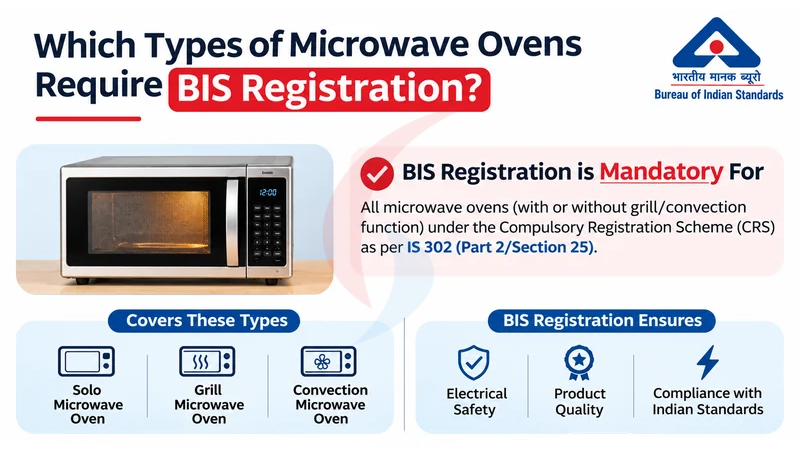
Microwave ovens are available in different designs, capacities and heating configurations. Manufacturers frequently ask whether each type requires a separate registration. The relevant standard covers household and similar microwave ovens, including combination microwave ovens, within its specified scope.
Common examples include:
-
Solo Microwave Ovens: Appliances primarily used for heating, reheating and defrosting food.
-
Grill Microwave Ovens: Microwave ovens equipped with additional grilling functionality.
-
Convection Microwave Ovens: Appliances combining microwave heating with convection cooking features.
-
Combination Microwave Ovens: Products incorporating multiple heating methods in one appliance.
-
Built-in Microwave Ovens: Covered microwave appliances designed for installation within kitchen cabinetry.
The exact classification depends on the product's technical design, intended use and applicable standard. A commercial appliance should not automatically be treated as covered merely because it uses microwave technology.
Applicable Indian Standard: IS 302-2-25:2014
IS 302-2-25:2014 specifies particular safety requirements for microwave ovens, including combination microwave ovens.
It addresses the hazards associated with operating electrical microwave appliances in household and similar environments.
For example, consider a customer using a microwave oven several times a day. If the door interlock fails or excessive microwave energy escapes from the cooking chamber, the appliance may create a safety risk. The Indian Standard addresses these types of concerns through prescribed construction, performance and safety requirements.
Major Safety Tests for Microwave Ovens
|
Testing Area |
Purpose |
|---|---|
|
Microwave Leakage |
Checks microwave radiation leakage against prescribed limits |
|
Electrical Safety |
Evaluates protection against electric shock |
|
Door Interlock Testing |
Verifies safe operation of the door safety mechanism |
|
Temperature Rise |
Checks heating of accessible surfaces and components |
|
Insulation Resistance |
Evaluates electrical insulation safety |
|
Mechanical Strength |
Assesses resistance to relevant mechanical stresses |
|
Abnormal Operation |
Evaluates safety under specified abnormal conditions |
|
Marking and Instructions |
Checks required warnings and operating information |
For example, the door interlock is particularly important because a microwave oven must not continue generating microwave energy when its door is opened.
A BIS-recognised laboratory performs the applicable tests and issues a report based on the product's conformity with the relevant standard. Safety Highlight: A microwave oven may work perfectly during normal cooking but still fail a mandatory safety test. Functional performance alone does not establish BIS compliance.
Who Needs BIS CRS Registration for Microwave Ovens?
The responsibility for obtaining registration primarily rests with the manufacturer.
Indian Manufacturers
Companies manufacturing microwave ovens in India must obtain BIS registration for the covered products manufactured at their production facility.
Foreign Manufacturers
Foreign companies manufacturing microwave ovens for the Indian market also need the required registration. Where applicable, they must appoint an Authorised Indian Representative (AIR) to fulfil prescribed responsibilities in India.
Importers and Distributors
Importers and distributors must ensure that the products they source are covered by valid BIS registration. They should verify the manufacturing location, brand, models and registration details before placing orders.
Private Label Brands
Businesses selling microwave ovens under their own brand through contract manufacturers must ensure that the actual manufacturing facility and relevant brand and models are appropriately covered.
Before submitting your application, read our guide on Important Details Checked During CRS Registration to avoid common documentation errors.
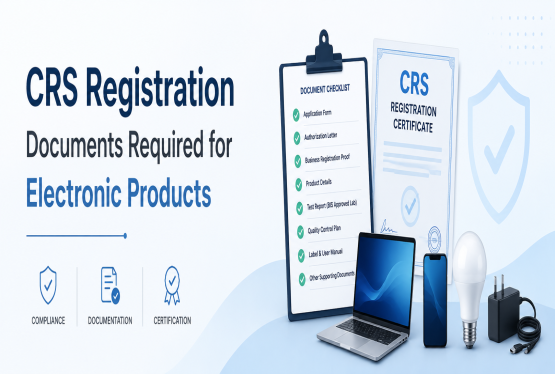
Documents Required for BIS CRS Registration for Microwave Ovens
Before applying for BIS Certification for Microwave Ovens, the applicant should prepare the relevant business, manufacturing and product documents.
Commonly required documents include:
-
Manufacturing unit name and complete address.
-
Business registration or manufacturing establishment documents.
-
Product specifications, model details and brand information.
-
Electrical circuit diagrams and relevant technical drawings.
-
Product photographs and proposed marking-label details.
-
Test report issued by a BIS-recognised laboratory.
-
Applicable application forms and declarations.
-
Authorisation documents for the signatory.
-
Brand ownership or brand authorisation documents, where required.
-
AIR nomination and supporting documents for applicable foreign manufacturer applications.
The exact documentation depends on the applicant's status, manufacturing location, ownership of the brand and other application-specific requirements.
A common problem occurs when the manufacturer's name or address differs between its test report and registration application. Preparing consistent documents from the beginning helps reduce such objections.
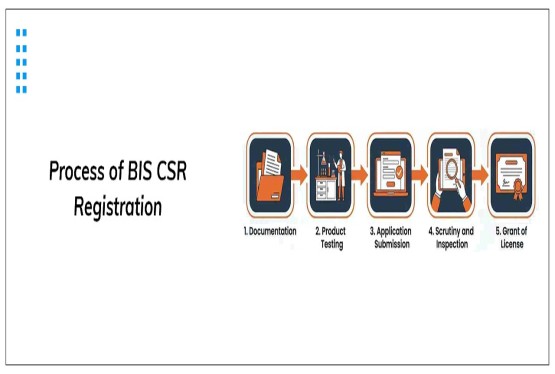
Step-by-Step BIS CRS Registration Process for Microwave Ovens
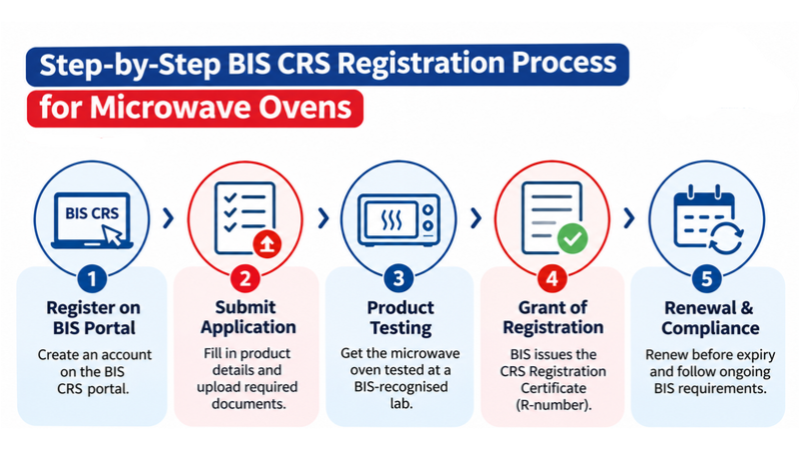
The registration process becomes easier to understand when divided into practical stages.
-
Identify the Product Category : Confirm that the microwave oven falls under the notified CRS category and identify the applicable Indian Standard.
-
Prepare the Technical Documentation : Collect details of the manufacturing facility, brand, models, rated voltage, components and product construction.
-
Select a BIS-Recognised Testing Laboratory : Choose a laboratory recognised by BIS for IS 302-2-25:2014 and confirm sample and testing requirements.
-
Submit Product Samples for Testing : The laboratory evaluates the submitted models against the applicable safety requirements and issues test reports.
-
Submit the BIS CRS Application : Complete the application through the BIS registration portal with the prescribed fees, test reports and supporting documents.
-
Respond to BIS Queries : BIS may request clarifications, additional documents or corrections. The manufacturer must address these requirements.
-
Obtain Registration and Apply the Standard Mark : After approval, the manufacturer receives registration and may use the prescribed Standard Mark on covered products in accordance with BIS requirements.
An important practical point is that the test report should not be more than 90 days old when the online application is submitted, as stated in BIS application instructions.
To understand the complete application procedure for electronic appliances, read our detailed guide on BIS CRS Registration for Electronic Products
BIS CRS Registration Fees for Microwave Ovens
The cost of registration depends on applicable BIS charges, product testing, the number of models, additional reports and professional assistance.
|
Fee Component |
Explanation |
|---|---|
|
BIS Application Fee |
Prescribed fee for filing a registration application |
|
Processing and Registration Fees |
Applicable BIS charges under the current fee schedule |
|
Laboratory Testing Fee |
Charged by the recognised laboratory |
|
Additional Model or Report Charges |
May apply depending on the models and testing series |
|
AIR and Documentation Costs |
Relevant for certain foreign manufacturers |
|
Consultancy Fee |
Depends on the scope of professional assistance |
BIS has published fee schedules and subsequently introduced revisions, including changes affecting licence validity, renewal and annual fee arrangements in May 2026. Therefore, manufacturers should confirm the latest applicable fees before filing rather than relying on an older quotation.
If you are planning to import microwave ovens into India, explore our guide on Imported Products Under BIS CRS to understand importer responsibilities and registration requirements.
BIS CRS Registration Timeline
There is no single guaranteed completion period for every microwave oven application.
The overall timeline depends on laboratory availability, sample preparation, test results, documentation and BIS scrutiny. Testing may require additional time if a model fails and modifications or fresh testing become necessary.
For example, a manufacturer preparing three models may discover that the door interlock on one model does not meet the prescribed requirement. The manufacturer must resolve the issue before the affected model can proceed successfully. The best approach is to begin BIS compliance planning before finalising the commercial launch schedule.
Latest BIS CRS Updates and Amendments in 2026
Manufacturers should stay informed about changes in BIS standards, registration procedures and compliance requirements.
1. Implementation of IS 302-2-25:2014
The earlier microwave oven standard, IS 302-2-25:1994, was revised to IS 302-2-25:2014.
BIS subsequently extended the transition deadline to 30 June 2015. New registrations were required to follow the revised standard. The 2014 edition remains listed for microwave ovens in the official CRS product list as of November 2026.
2. Revised Registration Provisions in May 2026
On 27 May 2026, BIS published revised provisions concerning licence validity, renewal and annual fee payment under CRS.
Manufacturers should check these revised provisions before submitting new registration or renewal applications. Older guidance describing fixed two-year renewal arrangements should not be relied upon without checking the current requirements.
3. Product Category Guidance in August 2026
On 13 August 2026, BIS published guidance on product categories under the Compulsory Registration Scheme. Manufacturers introducing combination microwave ovens or modified models should verify their product classification and applicable registration requirements.
4. Other Electrical Appliance Regulations
BIS also lists the Safety of Household, Commercial and Similar Electrical Appliances (Quality Control) Order, 2026, along with related transition provisions.
Businesses should examine how the relevant QCOs apply to their particular appliances. A product covered by CRS should not automatically be assumed to require an additional licence under another scheme without examining the relevant legal scope and exemptions.
Manufacturers should also understand their continuing legal obligations. Read our article on CRS Compliance for Manufacturers for more information.
Case Study: How a Microwave Oven Manufacturer Prepared for BIS Registration
The following fictional case study illustrates a typical compliance situation.
A small appliance company in Noida planned to introduce a new series of convection microwave ovens under its own brand. The company had completed product development and contacted distributors. However, during its compliance review, it discovered that the products required BIS CRS Registration.
Initially, the management believed that having an international product testing certificate would be sufficient. Its compliance adviser explained that the company still needed to satisfy the applicable Indian Standard and BIS registration requirements. The manufacturer organised its technical documents, finalised the model details and submitted samples to a BIS-recognised laboratory.
During testing, one model required changes relating to its door safety mechanism. The manufacturer corrected the design and arranged the necessary additional testing. After obtaining satisfactory reports, the company submitted the required registration documents and responded to the regulator's queries.
Common Mistakes to Avoid During BIS Registration
Manufacturers sometimes face objections or delays because of avoidable mistakes.
-
Incorrect Product Classification: Applying under an unsuitable category or standard may require changes to the application.
-
Incomplete Documentation: Missing declarations, manufacturer details or brand authorisations may result in queries.
-
Testing at an Unrecognised Laboratory: The test report must meet BIS requirements, including applicable laboratory recognition.
-
Mismatch in Model Details: Product specifications, test reports and application information should remain consistent.
-
Improper Standard Mark Usage: A company should not display the BIS Standard Mark as though registration has been granted before receiving the required approval.
-
Failure to Update Registration: New models, relevant design changes or additional manufacturing locations may require further action under applicable BIS procedures.
BIS CRS Registration Renewal and Ongoing Compliance
Registration is not necessarily the end of the manufacturer's compliance responsibilities.
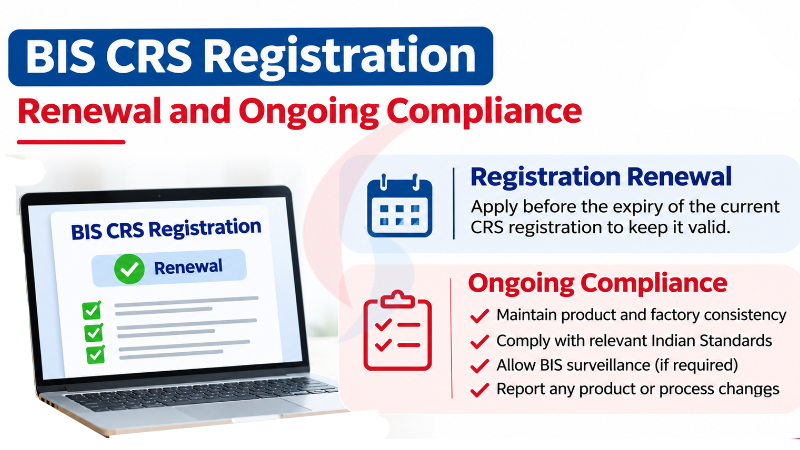
After receiving approval, the manufacturer must maintain product conformity with the applicable Indian Standard and comply with BIS requirements concerning marking, records, surveillance and registration validity. If the manufacturer introduces additional microwave oven models, it should determine whether those models can be included under the existing registration through the applicable inclusion process.
Changes involving the manufacturing facility, brand, product design or critical components may require further examination or approval. Renewal and annual fee obligations should be reviewed under the revised BIS provisions applicable in 2026.
Benefits of BIS CRS Registration for Microwave Oven Manufacturers
Apart from fulfilling a mandatory legal requirement, BIS registration offers practical business benefits.
It demonstrates that the product has undergone the prescribed conformity assessment process and helps manufacturers address safety requirements before entering the market.
Registration can also support smoother coordination with importers, distributors and retailers who need evidence of applicable product compliance.
Most importantly, proper product testing helps manufacturers identify safety-related issues before products reach consumers.
Why Choose Compliance Calendar LLP for BIS CRS Registration?
Imagine that your company has completed microwave oven manufacturing and received its first major distributor order. The only remaining concern is BIS registration. At this stage, you may have several questions. Which models need testing? What documents should be prepared? Can multiple models be covered under one registration? How should you respond if BIS raises an objection?
At Compliance Calendar LLP, we help manufacturers and importers understand these requirements and manage the registration process systematically. Our assistance includes product-category assessment, document preparation, coordination with BIS-recognised testing laboratories, application filing, query resolution and registration-related support.
For example, when a manufacturer has several microwave oven models, our approach is to review the product specifications and applicable grouping requirements before advising on testing and registration. This helps identify documentation gaps and avoid unnecessary procedural delays.
Need assistance with BIS CRS Registration for Microwave Ovens? Contact Compliance Calendar LLP at +91 9988424211 or email info@ccoffice.in for professional guidance.
Frequently Asked Questions (FAQs)
Q1. Is BIS CRS Registration mandatory for microwave ovens in India?
Ans. Yes. Microwave ovens have been covered under mandatory BIS CRS Registration since 3 July 2013. Manufacturers must comply with the applicable Indian Standard and registration requirements.
Q2. Which Indian Standard applies to microwave ovens?
Ans. IS 302-2-25:2014 is the applicable Indian Standard currently listed under BIS CRS. It addresses safety requirements for microwave ovens, including combination microwave ovens.
Q3. Who can apply for BIS CRS Registration for microwave ovens?
Ans. The manufacturer is responsible for applying for registration. Indian and foreign manufacturers can apply, subject to applicable eligibility, documentation and representative requirements.
Q4. Can importers obtain BIS CRS Registration?
Ans. BIS CRS registration is ordinarily granted to the manufacturer, not independently to the importer. Importers must ensure that the products they import are covered by the required valid registration.
Q5. What documents are required for microwave oven BIS certification?
Ans. Common documents include manufacturer details, business documents, product specifications, brand authorisation where applicable, laboratory test reports and prescribed declarations.
Q6. How much does BIS CRS Registration for Microwave Ovens cost?
Ans. The cost includes applicable BIS fees, laboratory testing charges and any additional documentation or consultancy expenses. The total depends on the models, application requirements and current fee schedule.
Q7. How long does BIS CRS Registration take?
Ans. The timeline depends on testing, documentation, application scrutiny and any technical objections. Manufacturers should begin the process sufficiently before their proposed product launch.
Q8. Is BIS certification required for imported microwave ovens?
Ans. Yes. Covered imported microwave ovens must comply with the applicable BIS requirements. Foreign manufacturers may also need to appoint an Authorised Indian Representative.
Q9. Can multiple microwave oven models be registered together?
Ans. Multiple models may be covered under a registration, subject to applicable model-grouping and testing requirements. The manufacturer should verify eligibility before submitting samples and applications.
Q10. What happens if microwave ovens are sold without BIS registration?
Ans. Manufacturing, importing or selling covered non-compliant microwave ovens can result in regulatory action under applicable BIS legislation. This may include restrictions, seizure or other statutory consequences, depending on the violation.
Q11. Is CE certification sufficient for selling microwave ovens in India?
Ans. No. CE marking does not automatically replace mandatory BIS CRS Registration. Covered microwave ovens must comply with the applicable Indian regulatory requirements.
Q12. Does every microwave oven model require separate laboratory testing?
Ans. Not necessarily. BIS provides model-grouping and series guidelines that may allow multiple eligible models to be covered through the applicable testing procedure. The actual testing requirement depends on the models and their technical differences.
Article last updated on : 12 Nov 2026.