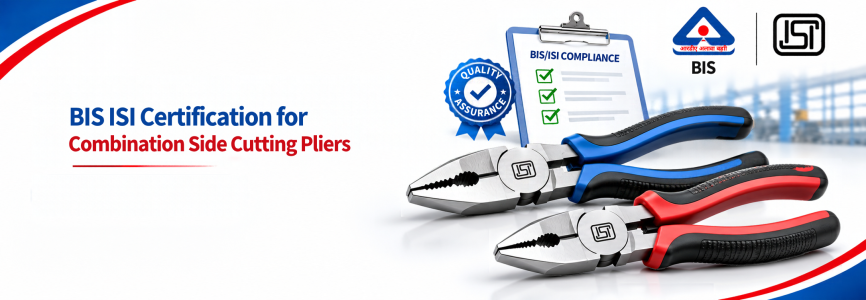



Combination side cutting pliers are among the most commonly used hand tools in electrical work, automotive repairs, construction and industrial maintenance. Electricians use them to grip wires, mechanics use them to hold small components, and technicians use their cutting edges to cut suitable wires and materials. But have you ever considered what might happen if the cutting edges break or the handles fail while someone is using these pliers?
For example, imagine an electrician working on an electrical installation. He uses combination side cutting pliers to grip and cut a wire. If the pliers are manufactured using poor-quality steel or the cutting edges are improperly hardened, the tool may become damaged or fail during use. This is why manufacturers need to pay attention to the strength, material quality and performance of these tools.
In India, the Bureau of Indian Standards (BIS) specifies quality requirements for combination side cutting pliers. These products were earlier covered under IS 3650:1981, which has now been replaced by IS 3650:2026. The Government of India has also introduced compulsory certification requirements under the Hand Tools (Quality Control) Order, 2026. Manufacturers of covered combination side cutting pliers must comply from their applicable implementation dates in 2027.
What Is BIS ISI Certification for Combination Side Cutting Pliers?
BIS ISI Certification is a product certification process through which manufacturers demonstrate that their combination side cutting pliers meet the requirements of the applicable Indian Standard. The certification is administered by the Bureau of Indian Standards under Scheme-I of Schedule-II to the BIS (Conformity Assessment) Regulations, 2018. After obtaining the required BIS licence, manufacturers can use the ISI Standard Mark on products covered by their approved certification scope. Consider a manufacturer in Jalandhar producing combination pliers for electrical contractors and hardware distributors. The company manufactures pliers in different sizes and supplies them to retailers across India. Before obtaining certification, the manufacturer needs to ensure that its products satisfy the prescribed requirements relating to dimensions, material quality, hardness, gripping performance, cutting ability and mechanical strength.
BIS assesses the manufacturing arrangements, testing facilities and product conformity before granting the licence. The ISI Mark helps customers identify products covered by the BIS certification system. However, a manufacturer cannot use the mark merely because its products have passed internal quality checks. A valid BIS licence is necessary. Manufacturers producing several types of hand tools should also understand that certification is product-specific.
To learn how BIS certification applies across different categories, read the BIS ISI Certification for Hand Tools in India – Complete Guide.
What Is IS 3650:1981 for Combination Side Cutting Pliers?
IS 3650:1981 was the earlier Indian Standard specifying requirements for combination side cutting pliers. It covered technical characteristics such as dimensions, materials, hardness, cutting ability, gripping performance, mechanical strength and product marking. These requirements help manufacturers produce pliers suitable for the applications for which they are designed.
However, the standard has undergone an important revision.
BIS established IS 3650:2026 – Combination Side Cutting Pliers — Specification (Third Revision) on 20 March 2026. The earlier 1981 edition was scheduled for withdrawal on 20 September 2026. Therefore, manufacturers preparing certification applications in November 2026 should review IS 3650:2026 and the applicable BIS product manual rather than relying only on the withdrawn 1981 edition.
Important Details of IS 3650
|
Particulars |
Details |
|---|---|
|
Product |
Combination Side Cutting Pliers |
|
Earlier Indian Standard |
IS 3650:1981 |
|
Current Indian Standard |
IS 3650:2026 |
|
Revision |
Third Revision |
|
Standard established |
20 March 2026 |
|
Earlier edition withdrawal date |
20 September 2026 |
|
Certification authority |
Bureau of Indian Standards |
|
Certification scheme |
Scheme-I (ISI Mark) |
|
Relevant legislation |
|
|
Latest QCO |
Hand Tools (Quality Control) Order, 2026 |
|
First mandatory implementation date |
1 April 2027 |
The revision is especially important because the 2026 Quality Control Order specifies that the latest versions of the Indian Standards, including applicable amendments notified by BIS, must be followed.
What Are Combination Side Cutting Pliers?
Combination side cutting pliers are hand tools designed to perform more than one function. They generally have gripping jaws, cutting edges near the pivot and handles that allow the user to apply force. The tool can be used to hold, bend, grip and cut suitable materials.
For example, an electrician may use a pair of combination pliers to grip a wire before connecting it to a terminal. A mechanic may use the same type of tool to hold a small metal component during repair work.
Common Applications of Combination Side Cutting Pliers
|
Application |
How the tool is used |
|---|---|
|
Electrical installations |
Gripping and cutting suitable wires |
|
Automobile workshops |
Holding small components during repairs |
|
Machinery maintenance |
Gripping and bending small metal parts |
|
Construction |
Cutting and holding suitable materials |
|
Hardware repair |
General gripping and cutting work |
|
Assembly operations |
Holding components during assembly |
Not every pair of pliers falls under IS 3650. Long-nose pliers, diagonal cutting pliers and other specialised tools may be subject to different standards. Manufacturers should confirm the product classification before applying for certification.
Which Sizes of Combination Side Cutting Pliers Are Covered?
Combination side cutting pliers are manufactured in different sizes depending on their intended use.
The historical BIS product manual for IS 3650:1981 identified the following nominal sizes:
|
Nominal size |
Common application |
|---|---|
|
160 mm |
General electrical and repair work |
|
180 mm |
Routine workshop and maintenance activities |
|
200 mm |
Mechanical and industrial applications |
|
250 mm |
Applications requiring greater handle leverage |
The earlier manual also distinguished between insulated and uninsulated handles. These are historical classifications, not a confirmation that the same sizes and categories remain unchanged in IS 3650:2026. Manufacturers must check the current standard and certification scope when deciding which product varieties to include in their application.
Is BIS ISI Certification Mandatory for Combination Side Cutting Pliers in India?
Yes. The Government of India notified compulsory BIS certification requirements for combination side cutting pliers through the Hand Tools (Quality Control) Order, 2026. The Order was issued by the Department for Promotion of Industry and Internal Trade (DPIIT) on 9 October 2026 through S.O. 5561(E).
It superseded the Hand Tools (Quality Control) Order, 2025, while preserving applicable actions already taken or omitted under the earlier Order. Under the 2026 notification, covered products must conform to IS 3650:2026 and bear the BIS Standard Mark under a valid licence once their mandatory implementation date takes effect.
BIS Certification Mandatory Dates for Combination Side Cutting Pliers
|
Business category |
Implementation date |
|---|---|
|
General manufacturers, other than micro and small enterprises |
1 April 2027 |
|
Small enterprises |
1 July 2027 |
|
Micro enterprises |
1 October 2027 |
These deadlines are important for businesses planning to manufacture or supply combination side cutting pliers in the Indian market.
For example, a medium-sized company manufacturing pliers should prepare for mandatory compliance from 1 April 2027. A qualifying micro enterprise has a later implementation date of 1 October 2027. However, businesses should not assume that submitting an application on the deadline is sufficient. They should complete the certification process in time to satisfy the applicable requirements.
Are There Any Exemptions?
The 2026 Order provides exemptions subject to specified conditions, including certain products manufactured domestically for export. It also permits specified limited imports by manufacturers for research and development purposes, subject to restrictions concerning commercial sale, disposal and recordkeeping.
Businesses should examine the complete notification before relying on an exemption.
Who Needs BIS ISI Certification for Combination Side Cutting Pliers?
The certification requirements primarily concern manufacturers of covered combination side cutting pliers.
-
Indian Manufacturers : Indian companies manufacturing combination side cutting pliers for the domestic market should prepare for the applicable BIS certification requirements. This includes businesses producing pliers under their own brand names.
-
Foreign Manufacturers : Foreign manufacturers intending to supply covered combination side cutting pliers to India must comply with the applicable certification requirements. Eligible overseas manufacturers may apply through the relevant BIS foreign manufacturer certification arrangements.
-
OEM Manufacturers : Original Equipment Manufacturers producing combination pliers for other brands should examine the applicable BIS requirements. Manufacturing products for a separate brand does not automatically remove certification obligations.
-
Importers and Distributors : Importers and distributors generally do not obtain a manufacturing licence merely because they sell pliers. However, once compulsory certification becomes applicable, they must ensure that covered products supplied in India meet the requirements of the QCO, unless an exemption applies.
-
Manufacturers of Multiple Hand Tools : A business may manufacture combination pliers alongside other products, such as adjustable wrenches, pipe wrenches and spanners. Each product category must be assessed against its applicable Indian Standard and certification scope.
For example, the requirements for pliers under IS 3650 are different from those for BIS ISI Certification for Adjustable Wrenches under IS 6149.
Benefits of BIS ISI Certification for Combination Side Cutting Pliers
BIS certification helps manufacturers demonstrate conformity with prescribed standards and improve consistency in their manufacturing processes.
|
Benefit |
Explanation |
|---|---|
|
Product quality |
Supports conformity with technical specifications |
|
Customer confidence |
Provides an identifiable BIS certification mark |
|
Regulatory compliance |
Helps businesses meet applicable compulsory certification requirements |
|
Improved quality control |
Encourages regular inspection and testing |
|
Product reliability |
Supports verification of cutting, gripping and strength requirements |
|
Business opportunities |
May help manufacturers satisfy customer procurement requirements |
|
Manufacturing consistency |
Encourages controls over materials and production processes |
For example, a tool manufacturer supplying combination pliers to industrial maintenance companies may find that buyers prefer products with verifiable BIS certification. However, BIS certification does not guarantee sales or automatically qualify a manufacturer for every government tender.
Technical Requirements for BIS ISI Certification of Combination Side Cutting Pliers
Before applying for certification, manufacturers must understand the technical requirements of the applicable Indian Standard. The earlier BIS product manual for IS 3650:1981 identified several tests used to evaluate the quality and performance of combination side cutting pliers. These included dimensional checks, hardness testing, cutting tests, torsion tests, bend tests, tube gripping tests, handle load tests and insulation tests.
Manufacturers should now verify the exact procedures and acceptance criteria under IS 3650:2026.
1. Material Quality
The steel used for manufacturing combination pliers must be suitable for the intended performance requirements. The historical BIS product manual referred to tools and die steels under IS 3748. Manufacturers should verify the material specifications prescribed by the current standard and maintain relevant supplier and material records.
2. Dimensional Requirements
Combination pliers must have the prescribed dimensions and tolerances. Important features include the jaws, pivot, cutting edges, handles and other relevant components. Incorrect dimensions can affect gripping performance, cutting ability and ease of operation.
3. Hardness Testing
Hardness testing helps determine whether relevant components have the prescribed mechanical characteristics. The cutting edges and gripping surfaces must satisfy the requirements of the applicable standard.
4. Cutting Performance
The cutting edges must perform according to the prescribed test requirements. For example, a pair of pliers used for cutting suitable wire should complete the applicable test without unacceptable damage to the cutting edges.
5. Torsion Testing
Torsion testing evaluates the tool's performance under the prescribed twisting or loading conditions. It helps determine whether the product meets the applicable mechanical strength requirements.
6. Bend Testing
Bend testing assesses the performance of the tool under the specified bending conditions. The results must satisfy the applicable standard.
7. Tube Gripping Test
This test examines the gripping performance of the pliers under the prescribed conditions. A combination plier should provide appropriate gripping performance for its intended use.
8. Handle Load Test
Handle load testing evaluates the performance of the handles when the prescribed force is applied. Manufacturers should ensure that the handles and their connections satisfy the relevant requirements.
9. Insulation Testing
Where applicable, insulated-handle pliers must satisfy the relevant insulation requirements.
Important: A plastic-coated handle or an ISI Mark under IS 3650 does not automatically establish that the tool is safe for live electrical work. Electrical insulation suitability, voltage rating and any separate applicable certification must be verified before the tool is used on energised equipment.
Testing Requirements at a Glance
|
Test |
Purpose |
|---|---|
|
Dimensional test |
Checks prescribed product measurements |
|
Hardness test |
Evaluates relevant material properties |
|
Cutting test |
Assesses cutting performance |
|
Torsion test |
Checks performance under twisting or loading conditions |
|
Bend test |
Evaluates prescribed bending performance |
|
Tube gripping test |
Checks gripping ability |
|
Handle load test |
Evaluates handle strength |
|
Insulation test |
Checks applicable insulation requirements |
|
General examination |
Assesses workmanship and relevant product characteristics |
This table summarises tests in the historical BIS product manual for IS 3650:1981. The current IS 3650:2026 and updated product manual govern new assessments.
Documents Required for BIS ISI Certification for Combination Side Cutting Pliers
Manufacturers should arrange their business, factory and technical documents before submitting the application.
The exact checklist may vary according to the manufacturing arrangement, certification route and current BIS requirements.
|
Document or information |
Purpose |
|---|---|
|
Company registration certificate |
Establishes the legal identity of the manufacturer |
|
PAN and applicable GST details |
Supports business verification |
|
Factory address proof |
Identifies the manufacturing location |
|
Manufacturing process flowchart |
Explains the production process |
|
List of manufacturing machinery |
Shows available production facilities |
|
Testing equipment details |
Establishes testing capabilities |
|
Calibration records |
Supports the reliability of testing instruments |
|
Product size and type details |
Defines the proposed certification scope |
|
Quality control personnel details |
Identifies responsible technical staff |
|
Laboratory test reports, where required |
Provides evidence of product conformity |
|
Authorised signatory details |
Identifies the person responsible for the application |
|
Brand or trademark documents, where applicable |
Supports the proposed marking information |
For example, a manufacturer producing both insulated-handle and uninsulated-handle combination pliers should clearly identify the variants proposed for certification. Incomplete documentation may result in additional queries during the assessment process.
BIS ISI Certification Process for Combination Side Cutting Pliers in India
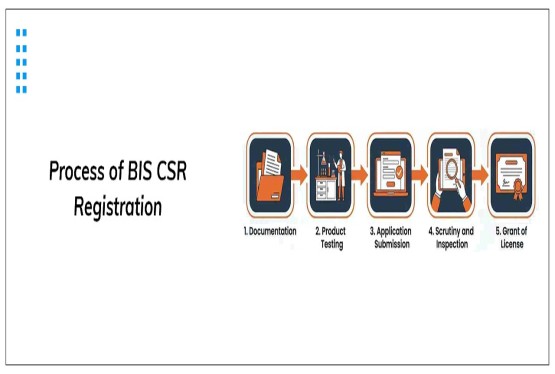
Manufacturers can apply for BIS ISI Certification through the official BIS Manak Online Portal.
The following steps explain the general application procedure.
Step 1: Identify the Applicable Indian Standard
First, confirm that the manufactured product falls under the scope of combination side cutting pliers. Review IS 3650:2026 and the applicable BIS product manual. Identify the sizes, handle types and other product varieties proposed for certification.
Step 2: Review Manufacturing Facilities
Examine the factory's manufacturing machinery, production process, raw materials and quality control arrangements. The manufacturer should determine whether its existing facilities can consistently produce pliers that conform to the applicable standard.
Step 3: Arrange Testing Equipment
Review the required product tests and testing equipment. The factory should maintain the facilities required under its applicable certification arrangements. Where necessary, testing instruments should be calibrated and the appropriate records maintained.
Step 4: Register on the BIS Portal
Open the BIS Manakonline portal and create the appropriate applicant account. Enter the business name, factory address and other required registration information. Ensure that the details match the supporting documents.
Step 5: Complete the Application Form
Select the relevant certification scheme and Indian Standard. Provide the details of the manufacturing unit, product specifications, machinery, quality control personnel and testing arrangements. The proposed certification scope should accurately reflect the products manufactured at the factory.
Step 6: Upload the Required Documents
Upload the supporting business, factory and technical documents. Review the application carefully before submission. Incorrect addresses, missing machinery details or incomplete product descriptions may lead to clarification requests.
Step 7: Arrange Product Testing
Product samples must satisfy the requirements of the applicable Indian Standard. Depending on the certification route, testing may be performed through a BIS-recognised or empanelled laboratory, factory testing arrangements or another permitted assessment procedure. The applicable BIS requirements determine which tests and assessment methods must be followed.
Step 8: Complete the BIS Factory Assessment
BIS examines the manufacturing facilities, production controls, testing arrangements and quality records. During the assessment, officials may review manufacturing machinery, calibrated instruments, product testing procedures and relevant records.
Step 9: Respond to BIS Queries
If BIS identifies deficiencies or product non-conformities, the manufacturer must provide appropriate clarification or corrective action evidence. For example, if plier samples fail the prescribed hardness test, the manufacturer may need to investigate material selection or heat treatment arrangements.
Step 10: Obtain the BIS ISI Licence
When the applicable requirements are satisfied, BIS may grant the product certification licence. The manufacturer can then use the ISI Standard Mark on products covered by the licence, subject to the licence conditions.
BIS ISI Certification Fees for Combination Side Cutting Pliers
The cost of BIS ISI Certification depends on the current fee schedule, factory assessment, testing arrangements and product-specific marking fees.
The total amount may differ between manufacturers.
|
Fee component |
Explanation |
|---|---|
|
Application fee |
Payable under the applicable BIS application schedule |
|
Factory inspection charges |
Depend on the relevant assessment requirements |
|
Product testing charges |
Vary according to laboratory and testing scope |
|
Annual licence fee |
Payable under the applicable BIS schedule |
|
Marking fee |
Product-specific amount prescribed by BIS |
|
Additional preparation costs |
May include testing equipment, calibration and documentation |
For example, a manufacturer with suitable testing facilities may have lower preparation expenses than a business that needs to purchase new equipment. Government charges and professional consultancy fees are separate. Manufacturers should confirm the latest applicable amounts on the BIS portal before making payment.
How Much Time Does BIS ISI Certification Take?
The time needed for BIS certification depends on the certification route, application completeness, laboratory testing and factory assessment. Delays may occur when documents are incomplete, product samples fail testing or manufacturing facilities need improvement.
For example, if a manufacturer submits an application without arranging the necessary testing capabilities, BIS may require the deficiency to be corrected before the certification process can proceed. Manufacturers should therefore begin preparing their documents and factory arrangements before the applicable mandatory implementation date.
The BIS processing timeline should not be treated as a guaranteed approval period.
What Happens After Obtaining BIS ISI Certification?
Receiving a BIS licence does not end the manufacturer's responsibilities. The manufacturer must continue producing combination side cutting pliers that conform to the applicable Indian Standard and approved certification scope. Important responsibilities include maintaining quality control records, conducting prescribed tests, following product marking requirements, maintaining testing equipment and cooperating with BIS inspections.
For example, suppose a manufacturer obtains certification for a particular range of combination pliers.
Later, the company introduces a new size or handle design. Before using the existing licence for the new product, it should check whether the variety is included in the approved scope or whether BIS approval or a scope extension is required. A BIS licence for combination side cutting pliers does not automatically cover adjustable wrenches, pipe wrenches or other hand tools.
For a related product example, read BIS ISI Certification for Chain Pipe Wrenches.
Common Mistakes to Avoid During BIS ISI Certification
Manufacturers sometimes face delays because they begin the certification process without reviewing the current technical requirements.
|
Common mistake |
How to avoid it |
|---|---|
|
Using an outdated standard |
Review IS 3650:2026 and applicable amendments |
|
Selecting the wrong product category |
Confirm the correct classification of the pliers |
|
Incomplete business documents |
Prepare the required records before applying |
|
Incorrect raw materials |
Verify material specifications |
|
Inadequate testing arrangements |
Review the applicable BIS product manual |
|
Incorrect dimensions |
Check product tolerances during production |
|
Failing cutting or hardness tests |
Review manufacturing and heat treatment controls |
|
Ignoring BIS observations |
Submit appropriate corrective action evidence |
|
Using the ISI Mark before approval |
Use the mark only under a valid licence |
|
Poor recordkeeping |
Maintain required testing and inspection records |
Difference Between Combination Side Cutting Pliers and Other Hand Tools
Although several hand tools are used in electrical and mechanical work, each has its own design, purpose and applicable technical requirements.
|
Product |
Primary use |
Current standard under 2026 QCO |
|---|---|---|
|
Combination side cutting pliers |
Gripping, bending and cutting suitable wires and components |
IS 3650:2026 |
|
Tightening and loosening nuts and bolts |
IS 6149:2025 |
|
|
Turning nuts and bolts using open jaws |
IS 2028:2026 |
|
|
Turning fasteners using enclosed ring ends |
IS 2029:2026 |
|
|
Gripping and turning pipes with a chain mechanism |
IS 4123:2024 |
Manufacturers producing several categories must verify the certification requirements applicable to each product.
For detailed comparisons, read BIS ISI Certification for Open-Jaw Spanners and BIS ISI Certification for Ring Spanners.
Penalties for Non-Compliance with BIS Certification Requirements
Once mandatory certification becomes applicable, covered combination side cutting pliers must comply with the relevant Quality Control Order. Manufacturing, importing, selling or distributing products in contravention of the applicable requirements can attract enforcement action under the Bureau of Indian Standards Act, 2016. Unauthorised use of the ISI Standard Mark can also lead to legal consequences.
Manufacturers should therefore ensure that their products are covered by a valid licence before applying the mark. Businesses should also avoid making misleading claims about BIS certification or using a licence for products outside its approved scope.
How Compliance Calendar LLP Can Help with BIS ISI Certification
For manufacturers applying for BIS certification for the first time, understanding the technical requirements, documentation and online application process can be challenging. Compliance Calendar LLP assists manufacturers in understanding the applicable BIS certification requirements and preparing the necessary application documents.
Our team can help businesses identify the relevant Indian Standard, review documentation requirements, organise manufacturing and testing information, prepare BIS applications and respond to procedural queries. We also assist businesses in understanding licence renewal, product scope extension and ongoing compliance responsibilities. With compulsory certification requirements for covered hand tools taking effect in phases from April 2027, manufacturers should evaluate their readiness before the applicable deadline.
Frequently Asked Questions (FAQs)
Q1. What is BIS ISI Certification for Combination Side Cutting Pliers?
Ans. BIS ISI Certification is a product certification process through which manufacturers demonstrate conformity with the applicable Indian Standard. Once a valid licence is granted, the manufacturer can use the ISI Standard Mark on combination side cutting pliers covered by that licence.
Q2. Which Indian Standard applies to Combination Side Cutting Pliers?
Ans. The earlier Indian Standard was IS 3650:1981. BIS revised it to IS 3650:2026, which was established on 20 March 2026. Manufacturers preparing new applications should refer to the current edition and its applicable amendments.
Q3. Is BIS ISI Certification mandatory for Combination Side Cutting Pliers?
Ans. Yes. The Hand Tools (Quality Control) Order, 2026 introduces compulsory BIS certification for covered combination side cutting pliers from the applicable implementation dates in 2027. Products must meet the current Indian Standard and carry the required Standard Mark under a valid licence, subject to applicable exemptions.
Q4. What is the BIS Certification deadline for Combination Side Cutting Pliers?
Ans. The deadline is 1 April 2027 for general manufacturers, 1 July 2027 for small enterprises and 1 October 2027 for micro enterprises, under the October 2026 notification. Businesses should verify their enterprise classification before determining the applicable deadline.
Q5. Who can apply for BIS ISI Certification for Combination Side Cutting Pliers?
Ans. Indian manufacturers and eligible foreign manufacturers producing covered combination side cutting pliers can apply through the applicable BIS certification framework. Importers and distributors should ensure their products comply with the Quality Control Order once the relevant requirements become enforceable.
Q6. What documents are required for BIS Certification of Combination Side Cutting Pliers?
Ans. Common documents include company registration details, factory address proof, manufacturing process information, machinery lists, testing equipment details, calibration records, quality control information and relevant product specifications. BIS may request additional documents depending on the certification route.
Q7. What tests are required for Combination Side Cutting Pliers?
Ans. The historical BIS manual identifies dimensional checks, hardness, cutting, torsion, bend, tube gripping, handle load and applicable insulation tests. Manufacturers should verify the exact testing requirements and acceptance criteria under IS 3650:2026.
Q8. How much does BIS ISI Certification for Combination Side Cutting Pliers cost?
Ans. The total cost depends on applicable application fees, factory inspection charges, product testing, licence charges and marking fees. Manufacturers should confirm the latest BIS fee schedule and laboratory testing costs before applying.
Q9. Can a manufacturer use the ISI Mark without obtaining a BIS licence?
Ans. No. A manufacturer must hold a valid BIS licence covering the relevant product before using the ISI Standard Mark. Unauthorised use of the mark can attract action under the Bureau of Indian Standards Act, 2016.
Q10. How can manufacturers apply for BIS ISI Certification online?
Ans. Manufacturers can apply through the BIS Manakonline portal. The process generally involves selecting the relevant Indian Standard, preparing factory documents, submitting the application, arranging product testing, completing the required assessment and obtaining the BIS licence after satisfactory verification.
Article last updated on : 09 Nov 2026.