


Imagine a chemical manufacturer in Gujarat receiving a large order for Polyphosphoric Acid from an industrial customer. The production team has completed manufacturing, the quality department has prepared the test reports, and the company is ready to dispatch the material. However, during the final procurement review, the buyer asks for BIS Certification under IS 17439:2020. The manufacturer realises that its internal quality reports alone may not satisfy the applicable legal requirements. This is where BIS Certification for Polyphosphoric Acid becomes important.
In India, Polyphosphoric Acid is covered by the Polyphosphoric Acid (Quality Control) Order, 2021, issued by the Department of Chemicals and Petrochemicals. The order requires covered products to comply with IS 17439:2020 and bear the BIS Standard Mark under an appropriate licence or registration. Following the 2022 amendment, the order took effect on 22 December 2022. Manufacturers and overseas suppliers serving the Indian market must therefore understand the applicable certification requirements before placing covered products on the market.
What is Polyphosphoric Acid?
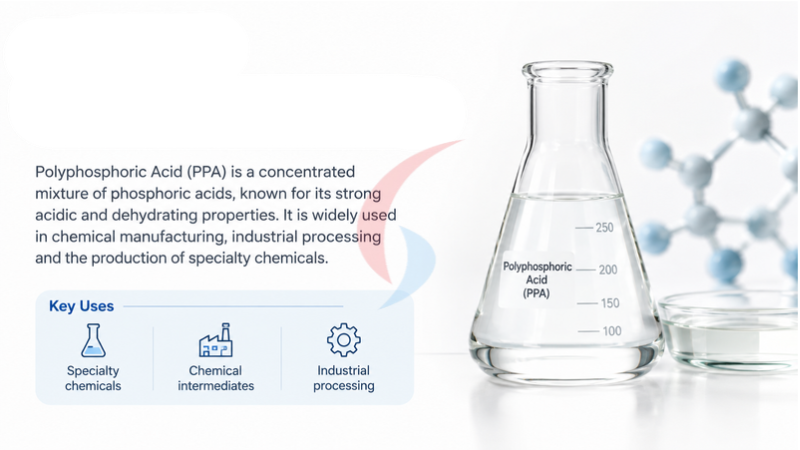
Polyphosphoric Acid, commonly called PPA, is a concentrated mixture of phosphoric acids used in chemical manufacturing and industrial processing. It is valued for its strongly acidic and dehydrating properties and can support several chemical reactions where ordinary phosphoric acid may not provide the required processing characteristics.
Polyphosphoric Acid is used in producing specialty chemicals, chemical intermediates and certain catalysts. It may also be used as a dehydrating agent in industrial chemical processes. Since its composition and quality can influence manufacturing performance, industrial buyers often require reliable specifications and supporting test documentation. Unlike ordinary Orthophosphoric Acid, Polyphosphoric Acid contains condensed phosphoric acid species. These are different chemical products, and businesses should not assume that certification for one automatically covers the other.
Is BIS Certification Mandatory for Polyphosphoric Acid in India?
Yes. BIS certification is mandatory for Polyphosphoric Acid covered by the applicable Quality Control Order, subject to its stated exemptions. The Central Government notified the Polyphosphoric Acid (Quality Control) Order, 2021 through Notification S.O. 5388(E), dated 24 December 2021, under Section 16 of the Bureau of Indian Standards Act, 2016. The notification specifies IS 17439:2020 as the relevant Indian Standard. It also provides that the certification requirement does not apply to goods or articles meant for export. The correct scope and applicability should be reviewed before relying on that exemption.
Important BIS Certification Details
|
Particulars |
Details |
|
Product |
Polyphosphoric Acid |
|
Indian Standard |
IS 17439:2020 |
|
Standard title |
Polyphosphoric Acid – Specification |
|
Regulatory authority |
Bureau of Indian Standards (BIS) |
|
Quality Control Order |
Polyphosphoric Acid (Quality Control) Order, 2021 |
|
Original notification |
S.O. 5388(E), 24 December 2021 |
|
Applicable scheme |
Scheme-II, Schedule-II of the BIS Conformity Assessment Regulations, 2018 |
|
Mandatory implementation |
22 December 2022 |
|
Export exemption |
Goods meant for export, as provided in the QCO |
The regulatory scheme is particularly important because Polyphosphoric Acid is listed by BIS under its Scheme-II Registration Scheme, rather than the conventional Scheme-I ISI licensing process used for many other chemical products.
Read our Learn Article on BIS Certification for Orthophosphoric Acid to explore the applicable Indian Standard, testing requirements, documents and certification process.
Applicable Indian Standard: IS 17439:2020
IS 17439:2020 establishes the technical specifications for Polyphosphoric Acid. The purpose of the standard is to maintain consistent product quality and provide a common basis for evaluating conformity. Manufacturers should obtain the current official standard and identify the exact requirements applicable to their product. Relevant quality-control considerations may include the product's chemical composition, physical characteristics, specified impurities and prescribed testing methods. Compliance should be established against the actual clauses and limits in IS 17439:2020, rather than relying only on a supplier's certificate of analysis.
For example, a manufacturer may supply a concentrated product that satisfies a customer's internal purchasing specification. However, that does not automatically prove conformity with every requirement of the Indian Standard. Applicable laboratory testing is necessary to establish compliance.
Who Needs BIS Certification for Polyphosphoric Acid?
The requirement primarily concerns manufacturers producing covered Polyphosphoric Acid for the Indian market. Overseas manufacturers supplying this product to India must also assess their certification obligations.
-
Indian manufacturers: Must secure the applicable BIS registration before supplying covered products in the domestic market.
-
Foreign manufacturers: Must follow the BIS requirements applicable to overseas manufacturing units supplying India.
-
Importers: Should verify that imported products come from an appropriately registered manufacturing source and satisfy applicable requirements.
-
Traders and distributors: Should ensure that the products they handle are properly certified and marked wherever certification is mandatory.
An important distinction is that BIS product certification generally relates to the manufacturing source and the covered product. A trader should not assume that a general business registration or a supplier's unrelated BIS licence is sufficient.
BIS Certification Process for Polyphosphoric Acid
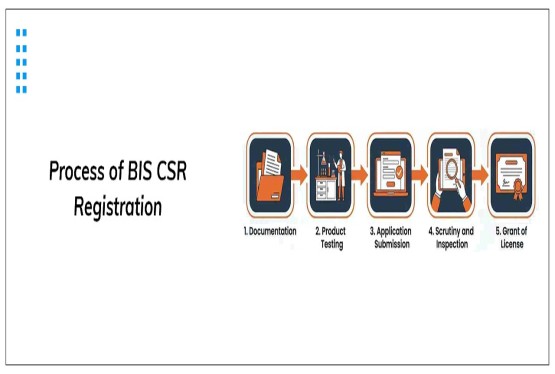
The certification process begins by understanding the product, its manufacturing location and the applicable Indian Standard. Manufacturers should complete technical preparation before submitting an application.
Step 1: Check Product Applicability
Identify whether the manufactured material qualifies as Polyphosphoric Acid under the relevant standard and notification. Review the product description, composition, grades, intended uses and manufacturing details.
Step 2: Review IS 17439:2020
Obtain the applicable standard and compare its requirements with the manufacturer's existing quality-control procedures. Any differences should be addressed before formal product testing.
Step 3: Prepare Manufacturing Documents
Compile details of the manufacturing facility, production process, quality-control arrangements and responsible personnel. Ensure that the company details match the applicant's registration and authorisation records.
Step 4: Arrange Product Testing
Arrange testing under the applicable BIS Scheme-II procedure through a laboratory recognised for the relevant product standard. The sample, laboratory scope and test report must satisfy current BIS requirements.
Step 5: Submit the BIS Application
Complete the appropriate online registration application and upload the required documents and test report through the applicable BIS system. Application information should accurately identify the manufacturer, manufacturing address and product.
Step 6: BIS Scrutiny and Clarifications
BIS examines the submitted information, conformity evidence and other relevant documents. If any discrepancies are found, the applicant may be asked to submit corrections or additional information.
Step 7: Registration Approval
After satisfactory scrutiny, BIS may grant registration covering the approved manufacturer and product. The manufacturer must then follow the applicable marking, registration and continuing compliance conditions.
Read our BIS CRS Registration: Step-by-Step Process article for an example of the registration process.
Documents Required for BIS Certification for Polyphosphoric Acid
Manufacturers should prepare their documents before applying because incorrect information or missing records can delay scrutiny.
The exact requirements depend on the applicant, manufacturing location and applicable BIS procedure.
|
Document |
Purpose |
|
Business registration certificate |
Establishes the legal identity of the manufacturer |
|
Factory address proof |
Confirms the manufacturing location |
|
Manufacturing process details |
Explains how Polyphosphoric Acid is produced |
|
Product specifications |
Identifies the chemical product and relevant characteristics |
|
Laboratory test report |
Establishes conformity with IS 17439:2020 |
|
Authorised signatory details |
Identifies the person submitting the application |
|
Trademark authorisation, if applicable |
Supports the use of the declared brand |
|
Quality-control records |
Demonstrates product monitoring arrangements |
|
Foreign manufacturer documents |
Establishes overseas manufacturing and authorised representation details, where required |
Applicants should ensure that the name of the manufacturing unit, product description and factory address remain consistent across their application and supporting records.
Learn about manufacturing records, technical documents and laboratory testing through our article on BIS Certification for Multipurpose Dry Batteries.
Testing Requirements for Polyphosphoric Acid
Product testing is a major part of the BIS registration process. Manufacturers must establish that their material complies with the technical specifications prescribed under IS 17439:2020. Before submitting samples, the manufacturer should verify the laboratory's current BIS recognition and testing scope. Testing must follow the applicable standard and BIS instructions. A manufacturer's internal certificate of analysis may support quality control, but it does not automatically replace the prescribed conformity evidence.
Example: Suppose a manufacturer produces two commercial grades of Polyphosphoric Acid. Although both are sold under the same product name, their compositions may differ. The manufacturer should verify whether both satisfy the relevant Indian Standard and whether the applicable BIS registration covers them.
For More Information – Importance of BIS Testing Manufacturers can visit the Compliance Calendar LLP Learn Section for additional information about product certification, testing requirements and regulatory compliance before selling products in India.
BIS Certification Fees and Processing Time
The cost of BIS certification depends on the applicable registration fees, testing charges, product coverage and documentation requirements. For overseas manufacturers, additional expenses may arise from authorised representation, sample transportation and other procedural requirements. BIS fees should be checked against the latest official schedule before payment. An exact certification fee or guaranteed processing period should not be assumed without reviewing the application. A complete application with a valid test report generally reduces the possibility of avoidable delays. However, BIS approval remains subject to satisfactory examination of the submitted evidence.
Understand application charges, testing expenses and other certification costs through our article on ISI Certification Cost in India Explained.
Latest BIS Updates and Amendments in 2026
Manufacturers should understand the difference between the original Quality Control Order and subsequent amendments.
|
Notification / Development |
Important Information |
|
S.O. 5388(E), 24 December 2021 |
Introduced the Polyphosphoric Acid Quality Control Order |
|
S.O. 2226(E), 13 May 2022 |
Revised the mandatory implementation date |
|
22 December 2022 |
Quality Control Order became effective |
|
BIS position in October 2026 |
IS 17439:2020 remained listed under the compulsory Scheme-II product category |
The official BIS Scheme-II listing, last updated on 26 October 2026, continues to identify Polyphosphoric Acid under IS 17439:2020. No later product-specific amendment or withdrawal was identified in the official records reviewed for this article as of 16 November 2026. Manufacturers should nevertheless check for subsequent Gazette notifications, changes to the Indian Standard and procedural updates before submitting an application.
Learn how revised Indian Standards and amendments affect product certification through our article on BIS ISI Certification for Ring Slugging Wrenches.
Common Mistakes During BIS Registration
One frequent mistake is assuming that all chemical products follow the same BIS certification procedure. In reality, different products may fall under different standards and certification schemes. Another common issue is submitting an incomplete test report or using a laboratory without the required recognition for the relevant standard. Manufacturers may also overlook discrepancies in their factory address, product identification or brand details.
Foreign manufacturers sometimes begin supplying products without first checking whether their overseas manufacturing unit needs BIS registration. These mistakes can create delays, affect customer commitments and expose businesses to regulatory consequences.
Official references:
- BIS Scheme-II Registration Scheme
- Department of Chemicals and Petrochemicals – Quality Control Orders
Consequences of Non-Compliance
The Polyphosphoric Acid Quality Control Order requires covered products to comply with the notified standard and bear the appropriate BIS Standard Mark. Violation of the order is punishable under the Bureau of Indian Standards Act, 2016. Depending on the facts and applicable legal provisions, enforcement may involve restrictions on non-conforming products, seizure or other statutory action. Businesses should therefore verify product compliance before manufacturing for domestic supply, importing or distributing covered Polyphosphoric Acid.
Benefits of BIS Certification for Polyphosphoric Acid
BIS certification is primarily a legal compliance requirement for covered products, but it also provides practical business advantages. It helps manufacturers demonstrate conformity with a recognised Indian Standard and provides industrial buyers with a consistent basis for evaluating product quality. For manufacturers supplying chemical intermediates, reliable conformity documentation may also simplify procurement discussions and reduce disputes over product specifications. Proper certification can support business credibility, but it does not replace safe chemical handling, environmental permissions, workplace safety requirements or other applicable licences.
Understand how BIS certification supports product conformity, quality control and regulatory compliance through our article on BIS ISI Certification for Slugging Wrenches.
Why Choose Compliance Calendar LLP for BIS Certification for Polyphosphoric Acid?
For a chemical manufacturer, BIS certification may seem like a straightforward application until questions arise about the applicable Indian Standard, laboratory testing, product specifications or manufacturing documents. At Compliance Calendar LLP, we assist businesses with BIS certification requirements and regulatory documentation. Our approach begins with understanding the manufacturer's product, manufacturing location and intended market.
For example, when a manufacturer approaches us with a query about whether Polyphosphoric Acid requires BIS registration, the first step is to identify the applicable Quality Control Order and IS 17439:2020. We then help the business understand the documentation, testing and application requirements.
For more details about BIS Certification for Polyphosphoric Acid, visit Compliance Calendar LLP or contact our team at info@ccoffice.in or +91 9988424211
Frequently Asked Questions (FAQs)
Q1. Is BIS Certification mandatory for Polyphosphoric Acid?
Ans. Yes. Polyphosphoric Acid covered under the Quality Control Order must comply with IS 17439:2020 and meet the applicable BIS certification and marking requirements. The order provides an exemption for goods meant for export.
Q2. Which Indian Standard applies to Polyphosphoric Acid?
Ans. IS 17439:2020 is the applicable Indian Standard. It specifies the requirements for Polyphosphoric Acid and is referenced in the government's Quality Control Order.
Q3. What is the BIS certification process for Polyphosphoric Acid?
Ans. The process generally involves checking product applicability, reviewing the Indian Standard, arranging testing, preparing documents and submitting an application under the applicable BIS procedure.
Q4. Can foreign manufacturers obtain BIS Certification?
Ans. Yes. Overseas manufacturers supplying covered Polyphosphoric Acid to India must follow the applicable BIS requirements. Foreign applicants should review authorised representation and other procedural conditions before applying.
Q5. What is the cost of BIS Certification for Polyphosphoric Acid?
Ans. The cost depends on the applicable BIS registration charges, laboratory testing fees and related expenses. Manufacturers should confirm the current official fee schedule before applying.
Q6. How much time does BIS Certification take?
Ans. Processing time varies according to testing, document completeness and BIS scrutiny. Incomplete applications, discrepancies and additional clarification requests may extend the approval process.
Q7. Can a manufacturer sell Polyphosphoric Acid without BIS Certification?
Ans. Covered Polyphosphoric Acid cannot lawfully be placed on the Indian market without satisfying the mandatory certification and marking requirements. The applicable scope and stated exemptions must be considered.
Q8. Is Polyphosphoric Acid different from Orthophosphoric Acid?
Ans. Yes. Polyphosphoric Acid contains condensed phosphoric acid species, while Orthophosphoric Acid is a different chemical product. They have separate Indian Standards and applicable certification requirements.
Q9. Is product testing compulsory for BIS registration?
Ans. Product conformity must be established through the testing evidence prescribed under the applicable BIS procedure. Manufacturers should use a laboratory recognised for the relevant standard and follow current testing instructions.
Q10. What happens if a BIS registration application is rejected?
Ans. The applicant should examine the reasons for rejection and correct the identified deficiencies. Depending on the circumstances and BIS procedure, a fresh application or other permitted corrective action may be required.
Article last updated on : 16 Nov 2026.