


Imagine a chemical manufacturer in Gujarat receiving a large order for orthophosphoric acid from an industrial buyer in Maharashtra. The manufacturer has production facilities, experienced workers and quality testing arrangements. Everything appears ready until the buyer asks one important question: “Does your orthophosphoric acid have BIS Certification under IS 798:2020?” The manufacturer has laboratory reports but no BIS registration. Now, the company must understand whether certification is mandatory, how the registration process works and which documents are required before supplying the chemical.
This is a common compliance concern for chemical manufacturers, importers and industrial suppliers in India. BIS CRS Certification for Orthophosphoric Acid helps establish that the product meets the applicable Indian Standard and complies with the government's quality control requirements. However, not every use of orthophosphoric acid is treated identically under the law. The Bureau of Indian Standards (BIS) covers orthophosphoric acid under IS 798:2020, while the Ortho Phosphoric Acid (Quality Control) Order, 2021, and subsequent amendments determine mandatory compliance.
What is BIS CRS Certification for Orthophosphoric Acid?
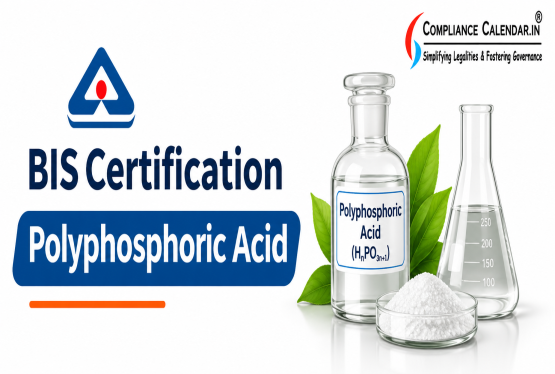
Orthophosphoric acid, also known as phosphoric acid, is a chemical with the formula H?PO?. It is widely used in metal treatment, chemical manufacturing, laboratory applications, detergents and phosphate production. Its quality is important because impurities or inconsistent chemical composition may affect industrial operations and finished products.
BIS CRS Certification for Orthophosphoric Acid refers to compulsory registration under the BIS Conformity Assessment Regulations, 2018, for products covered by the relevant Quality Control Order. A manufacturer must demonstrate compliance with IS 798:2020 and obtain the applicable BIS registration before placing covered products on the Indian market. Although BIS also operates the ISI Mark Certification Scheme, the Orthophosphoric Acid Quality Control Order specifies Scheme-II of Schedule-II, commonly referred to as CRS.
Small chemical manufacturers can read our article on BIS Certification for Small Manufacturers and MSMEs to understand eligibility, certification requirements and available concessions.
Is BIS CRS Certification Mandatory for Orthophosphoric Acid in India?
Yes. BIS registration is mandatory for orthophosphoric acid covered by the Ortho Phosphoric Acid (Quality Control) Order, 2021, subject to the applicable exemptions. The Ministry of Chemicals and Fertilizers notified the original order through S.O. 2335(E), dated 15 June 2021, under Section 16 of the Bureau of Indian Standards Act, 2016. After amendments extending implementation, the BIS CRS product list records 10 December 2022 as the enforcement date. The order requires covered orthophosphoric acid to meet IS 798:2020 and bear the required Standard Mark under valid BIS registration. The restriction is relevant to Indian manufacturers and foreign manufacturers supplying covered products to India.
Who Needs BIS Certification?
|
Business category |
Certification requirement |
|---|---|
|
Indian manufacturers |
Required for covered domestic-market production |
|
Foreign manufacturers |
Required for covered products supplied to India |
|
Importers |
Must ensure covered imports have valid BIS compliance |
|
Traders and distributors |
Must verify compliance of the products they sell |
|
Export-only products |
Excluded under the original QCO |
|
Fertilizer manufacturers |
Specific exemption applies when the acid is used as raw material in fertilizer production |
Example: A Mumbai company imports orthophosphoric acid for metal surface treatment. Since the product is intended for the Indian market, the company must check the manufacturer's BIS registration before importing it. Merely obtaining an independent chemical test report does not replace mandatory registration.
Applicable Indian Standard: IS 798:2020
The applicable Indian Standard is IS 798:2020 – Orthophosphoric Acid Specification. It establishes quality requirements for the chemical, including its composition and relevant impurities. The standard covers technical subgrade 1, technical subgrade 2 and analytical reagent grades. Manufacturers should identify the correct grade because the applicable testing limits and registration details depend on the product variety. The BIS product manual provides sampling guidance and testing requirements, with a minimum sample quantity of 500 ml indicated in the manual.
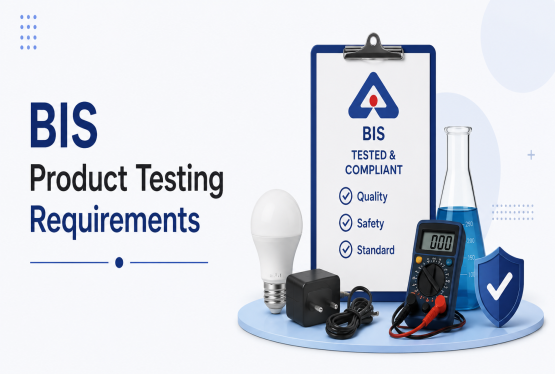
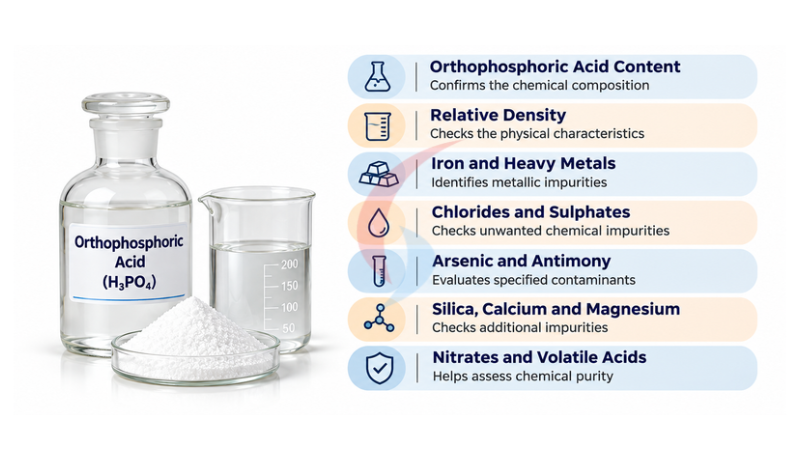
Important Testing Parameters
|
Testing parameter |
Why it matters |
|---|---|
|
Orthophosphoric acid content |
Confirms chemical composition |
|
Relative density |
Checks physical characteristics |
|
Iron and heavy metals |
Identifies metallic impurities |
|
Chlorides and sulphates |
Checks unwanted chemical impurities |
|
Arsenic and antimony |
Evaluates specified contaminants |
|
Silica, calcium and magnesium |
Checks additional impurities |
|
Nitrates and volatile acids |
Helps assess chemical purity |
For More Information: Businesses dealing in different chemical products can explore the Compliance Calendar Learn Section for articles on BIS standards, product certification and regulatory requirements.
Latest BIS Rules and Amendments for Orthophosphoric Acid: 2026
The Quality Control Order has undergone several amendments. These changes are important because the application of BIS requirements has evolved, particularly for fertilizer production.
Major Legal Developments
|
Notification |
Important development |
|---|---|
|
S.O. 2335(E), 15 June 2021 |
Original Quality Control Order notified |
|
S.O. 4914(E), 29 November 2021 |
Implementation date extended |
|
S.O. 2225(E), 13 May 2022 |
Further implementation extension |
|
S.O. 1709(E), 13 April 2024 |
Temporary 90-day exemption for fertilizer raw material |
|
S.O. 2975(E), 26 July 2024 |
Exemption for orthophosphoric acid used as raw material in fertilizer production without the earlier 90-day limit |
The most important product-specific development is the Ortho Phosphoric Acid (Quality Control) Second Amendment Order, 2024. This amendment provides that the QCO does not apply to orthophosphoric acid when used as raw material in fertilizer production. The exemption is based on the specified end use, not merely the buyer's industry or business name.
To understand how a different BIS certification scheme applies to industrial products, visit our article on BIS ISI Certification for Open-Jaw Spanners.
Practical Example of the Fertilizer Exemption
Suppose a company purchases orthophosphoric acid exclusively for manufacturing fertilizers. The relevant fertilizer raw-material exemption may apply to that supply. However, if the same company also sells orthophosphoric acid for industrial cleaning, the exemption should not automatically be extended to those transactions. Separate records identifying the product's intended use are advisable. As of November 2026, the 2024 amendment remains a key notification for evaluating this exemption. Manufacturers should nevertheless verify any subsequent Gazette notifications before making a commercial or import decision.
Important BIS CRS Update in 2026
BIS introduced changes to licence validity, renewal and annual fee payments through the BIS (Conformity Assessment) Amendment Regulations, 2026, notified on 25 February 2026. Under the revised Scheme-II provisions, new registrations generally have a five-year validity period, with applicable annual fees and production statements required in advance. BIS also issued guidance concerning these changes on 27 May 2026. Businesses should follow the updated requirements rather than relying on older two-year renewal instructions.
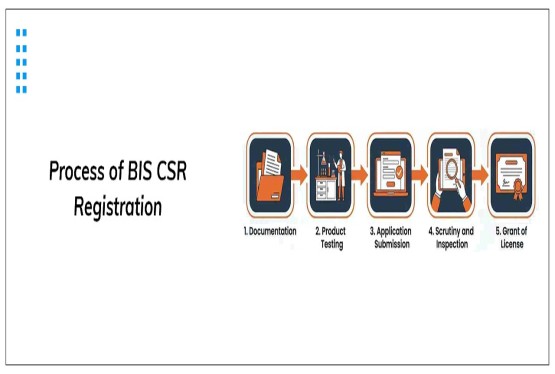
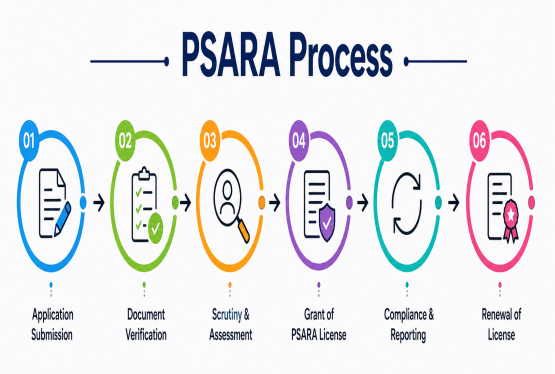
BIS CRS Registration Process for Orthophosphoric Acid
Manufacturers should complete the registration process before supplying covered orthophosphoric acid to the Indian market.
Step 1: Identify Product Applicability
Determine whether the orthophosphoric acid is covered by IS 798:2020 and the applicable QCO. Confirm its grade, intended use and whether any exemption applies.
Step 2: Arrange Laboratory Testing
Submit a representative sample to a BIS-recognised laboratory authorised for the applicable standard. The laboratory checks the prescribed chemical and physical parameters.
Step 3: Prepare the Required Documents
Collect factory registration details, manufacturer authorisation, brand information, product details and laboratory reports. Foreign manufacturers may also require an Authorised Indian Representative.
Step 4: Apply Through the BIS CRS Portal
Submit the application through the official BIS CRS Portal. Ensure that the laboratory test report meets the applicable validity requirements. The BIS application instructions generally require reports to be no more than 90 days old.
Step 5: BIS Application Verification
BIS examines the application, testing records and supporting documents. Any discrepancies may result in clarification requests or additional documentation.
Step 6: Obtain BIS Registration
After successful verification, BIS grants registration. The manufacturer can use the applicable Standard Mark and registration number for the approved product, subject to registration conditions.
To understand the general compulsory registration procedure, read our Learn Article on BIS CRS Registration: Step-by-Step Process for Electronic Products.
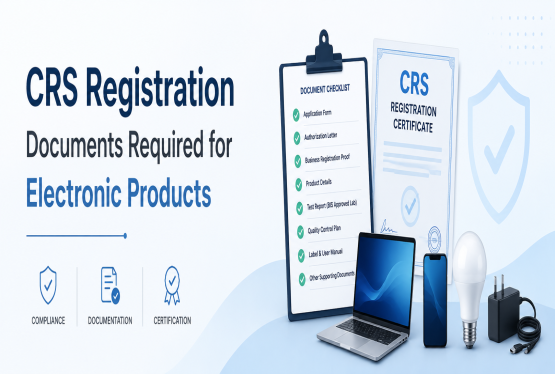
Documents Required for BIS CRS Certification
The documents required depend on the applicant's location and the product details. Commonly required documents include:
-
Manufacturing unit registration and address proof.
-
Manufacturer's legal identity and business details.
-
Product specifications and applicable grade information.
-
Valid test report from a BIS-recognised laboratory.
-
Brand registration or brand authorisation documents, as applicable.
-
Authorisation for the person signing the application.
-
Manufacturing process and relevant product information.
-
Authorised Indian Representative documents for eligible foreign applicants.
-
Required declarations and undertakings.
-
Applicable fee payment details.
Example: A chemical manufacturer may have a valid factory licence but submit a laboratory report showing a different manufacturing address. BIS may seek clarification because the manufacturing unit's identity must match the submitted registration documents.
BIS CRS Certification Cost and Processing Time
There is no single fixed total cost for every orthophosphoric acid registration. Expenses depend on testing, the applicant's circumstances and the applicable BIS fees. The main cost components include application fees, laboratory testing charges, annual registration fees and optional consultancy expenses.
Testing costs can differ between laboratories. The BIS Laboratory Information Management System provides laboratory-specific testing charges for IS 798:2020. Processing time also depends on laboratory availability, document completeness and BIS verification. Manufacturers should avoid committing to an exact approval date before checking these factors.
To learn about marking-fee changes under a different BIS certification scheme, visit our article on BIS Scheme-I Marking Fees Update 2026.
What Happens If Orthophosphoric Acid Is Sold Without BIS Certification?
Selling or importing covered orthophosphoric acid without required BIS compliance may attract enforcement action under the Bureau of Indian Standards Act, 2016. Depending on the violation, consequences may include restrictions on the sale or distribution of non-compliant products, seizure and statutory penalties. Section 17 of the BIS Act restricts certain activities involving goods covered by mandatory certification requirements, while Section 29 provides penalties for specified contraventions.
For More Information: Businesses can refer to our BIS Compliance Resources to understand why correct product classification, testing and certification are important before selling regulated products.
Common Mistakes Manufacturers Should Avoid
Manufacturers sometimes assume that an ISO certificate or an ordinary laboratory report is sufficient for BIS compliance. However, these documents do not replace mandatory registration under the applicable Quality Control Order. Another frequent mistake is using registration issued for a different manufacturer, product category or brand without verifying its scope.nBusinesses should also avoid assuming that all orthophosphoric acid qualifies for the fertilizer exemption. Documentary evidence of its intended use is important when relying on that exemption.
Why Choose Compliance Calendar LLP for BIS CRS Certification?
Imagine a manufacturer contacting Compliance Calendar LLP with a simple question: “We manufacture orthophosphoric acid for industrial customers, but some buyers use it for fertilizer production. Do we need BIS registration for every supply?” Instead of immediately starting an application, the first step should be understanding how the chemical is manufactured, which grade is supplied and what its intended uses are. The fertilizer exemption introduced in July 2024 can make a material difference to the compliance assessment.
At Compliance Calendar LLP, we help businesses examine such product-specific BIS requirements and prepare the necessary registration documentation. For an orthophosphoric acid manufacturer, our assistance can include reviewing IS 798:2020 applicability, identifying relevant exemptions, coordinating testing, checking factory and brand documents and supporting the BIS CRS application process.
For assistance with BIS CRS Certification for Orthophosphoric Acid, contact Compliance Calendar LLP at +91 9988424211 or info@ccoffice.in
Frequently Asked Questions (FAQs)
Q1. Is BIS CRS Certification mandatory for orthophosphoric acid?
Ans. Yes, BIS CRS Certification is mandatory for orthophosphoric acid covered by the applicable Quality Control Order. However, specific exemptions apply, including for export goods and qualifying fertilizer raw-material use.
Q2. Which Indian Standard applies to orthophosphoric acid?
Ans. IS 798:2020 is the applicable Indian Standard. It specifies the quality requirements and relevant testing parameters for different grades of orthophosphoric acid.
Q3. Can orthophosphoric acid be imported without BIS registration?
Ans. Covered imports generally require compliance with the applicable BIS requirements. Importers should verify the foreign manufacturer's registration and examine whether a specific legal exemption applies.
Q4. Is BIS registration required for fertilizer manufacturing?
Ans. The July 2024 amendment exempts orthophosphoric acid used as raw material in fertilizer production from the relevant QCO. Businesses should maintain suitable records establishing the intended use.
Q5. What is the cost of BIS CRS Certification for orthophosphoric acid?
Ans. The total cost includes applicable BIS fees, laboratory testing and other registration expenses. The amount depends on the manufacturer's circumstances and testing requirements.
Q6. How long does BIS CRS Certification take?
Ans. The time depends on sample testing, document preparation and BIS application review. Incorrect documents or unsuccessful test results may increase the processing period.
Q7. Can foreign manufacturers apply for BIS CRS Registration?
Ans. Yes. Foreign manufacturers producing covered orthophosphoric acid for the Indian market can apply for registration. Where applicable, they must appoint an Authorised Indian Representative.
Q8. Is laboratory testing compulsory for orthophosphoric acid?
Ans. Yes, testing is an important requirement for establishing conformity with IS 798:2020. Manufacturers must follow the applicable BIS testing and registration procedures.
Q9. What is the validity of BIS CRS Registration in 2026?
Ans. The 2026 amendments introduced five-year registration validity provisions under Scheme-II, together with annual fee and production-reporting obligations. Manufacturers should check the precise conditions of their registration.
Q10. Can the same BIS registration cover different grades of orthophosphoric acid?
Ans. BIS guidance provides for a single registration covering the applicable varieties of orthophosphoric acid, subject to the relevant grouping guidelines and registration scope. Manufacturers must ensure that the grades are correctly declared and tested.
Article last updated on : 17 Nov 2026.