


Imagine a solar panel manufacturer preparing to supply thin-film solar modules for a large commercial project in India. The company has invested in advanced technology, completed product development and received enquiries from potential buyers. However, before the modules can enter the Indian market, the manufacturer must address an important question: Is BIS Certification mandatory for Thin-Film Solar PV Modules? The answer is yes, for products covered by India's compulsory registration requirements. Thin-film solar modules must comply with applicable Indian Standards and obtain registration from the Bureau of Indian Standards (BIS), subject to the exemptions and conditions provided under the relevant government order.
BIS Certification for Thin-Film Solar PV Modules helps establish that products satisfy prescribed performance, construction and safety requirements. This is particularly important because solar panels are expected to operate outdoors for many years while facing sunlight, rain, heat, humidity and changing weather conditions. India has also updated its solar certification requirements through the Solar Systems, Devices and Components Goods Order, 2025. Manufacturers, importers and solar businesses must understand these changes to avoid registration delays, non-compliant products and possible regulatory action.
What is BIS Certification for Thin-Film Solar PV Modules?
BIS Certification for Thin-Film Solar PV Modules is a compulsory product registration requirement administered by the Bureau of Indian Standards under the Compulsory Registration Scheme (CRS). Thin-film solar photovoltaic modules generate electricity by using thin layers of semiconductor materials deposited on a suitable substrate. Unlike conventional crystalline silicon panels, these modules use different manufacturing processes and photovoltaic materials.
Common thin-film technologies include:
-
Cadmium Telluride (CdTe): Uses cadmium telluride semiconductor material.
-
Amorphous Silicon (a-Si): Uses non-crystalline silicon layers.
-
Copper Indium Gallium Selenide (CIGS): Uses copper, indium, gallium and selenium-based semiconductor materials.
Each technology has different characteristics. Therefore, applicable design qualification standards and testing requirements must be selected according to the actual module technology. Under BIS CRS, manufacturers must demonstrate compliance through testing conducted by an appropriately recognised laboratory and obtain registration before supplying covered products in India.
For More Information: Read our BIS CRS Certification for Solar PV Modules article to understand the broader registration requirements for solar panels in India.
Are thin-film solar PV modules required to have BIS certification?
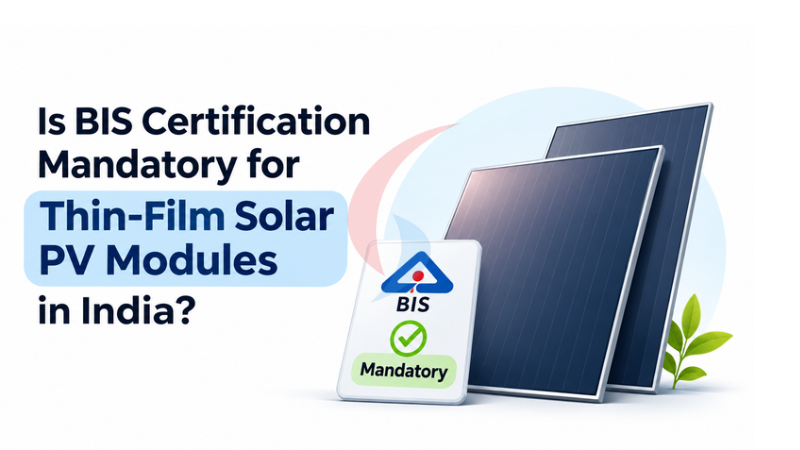
Yes. Thin-Film Terrestrial Photovoltaic Modules are listed under the BIS Compulsory Registration Scheme. The category covers technologies including CdTe, amorphous silicon and CIGS. The legal requirements arise primarily from the Bureau of Indian Standards Act, 2016, and the Solar Systems, Devices and Components Goods Order, 2025, notified by the Ministry of New and Renewable Energy (MNRE). The 2025 Order replaced the earlier 2017 compulsory registration order. It applies to relevant manufacturers, importers, distributors, retailers, sellers and lessors. Products manufactured exclusively for export are exempted under the notified provisions.
For example, suppose a manufacturer in Gujarat produces CdTe thin-film solar panels for commercial installation projects. Before supplying these modules to customers in India, the manufacturer must ensure the relevant models have undergone prescribed testing and are covered by valid BIS registration. Similarly, an Indian importer purchasing thin-film modules from an overseas factory must verify that the foreign manufacturer and the exact product models satisfy the applicable BIS requirements.
Applicable Indian Standards for Thin-Film Solar PV Modules
One of the most important changes manufacturers must understand is the transition from the earlier IS 16077 standard to the revised IS 14286 series for thin-film solar module design qualification.BIS implementation guidelines dated 27 March 2025 identify the revised standards, while the BIS CRS product list includes updated safety standard editions.
|
Indian Standard |
Applicable Product / Requirement |
|---|---|
|
IS 14286 (Part 1): 2023 |
General design qualification requirements for terrestrial PV modules |
|
IS 14286 (Part 1/Sec 2): 2023 |
Cadmium Telluride (CdTe) thin-film modules |
|
IS 14286 (Part 1/Sec 3): 2023 |
Amorphous Silicon (a-Si) thin-film modules |
|
IS 14286 (Part 1/Sec 4): 2023 |
CIGS-family thin-film modules |
|
IS/IEC 61730-1 |
PV module safety and construction requirements |
|
IS/IEC 61730-2 |
PV module safety qualification testing |
The BIS CRS product list identifies the relevant IS 14286 technology-specific sections and IS/IEC 61730 safety standards. Applicants should confirm the currently accepted editions and amendments before submitting samples.
Difference Between IS 16077 and IS 14286
Previously, IS 16077:2013 was the main Indian Standard used for design qualification of thin-film terrestrial PV modules. Under the revised requirements, the IS 14286:2023 series provides technology-specific qualification provisions aligned with the IEC 61215 series. This distinction matters because manufacturers should not prepare fresh applications using an outdated test standard. BIS guidelines state that after 27 July 2025, new licences for solar PV modules cannot be granted without compliance with the revised QCO.
For More Information: Explore CRS Compliance for Manufacturers to understand product testing, model inclusion, marking requirements and the manufacturer's continuing responsibilities.
BIS Testing Requirements for Thin-Film Solar PV Modules
Testing is an essential part of BIS CRS Registration. Thin-film modules must demonstrate that their construction, performance and electrical safety satisfy the applicable Indian Standards. The precise test programme depends on the semiconductor technology, module construction and current BIS guidelines.
Additional technology-specific tests may be required for light-induced degradation, insulation performance and other design characteristics.
For example, a CdTe module manufacturer cannot assume that successful tests for a crystalline silicon module establish compliance for its thin-film product. The applicable qualification requirements must be followed separately. Manufacturers should also understand that laboratory reports do not automatically amount to BIS registration. The registration is granted only after the prescribed application and examination process is completed.
Documents Required for BIS Certification
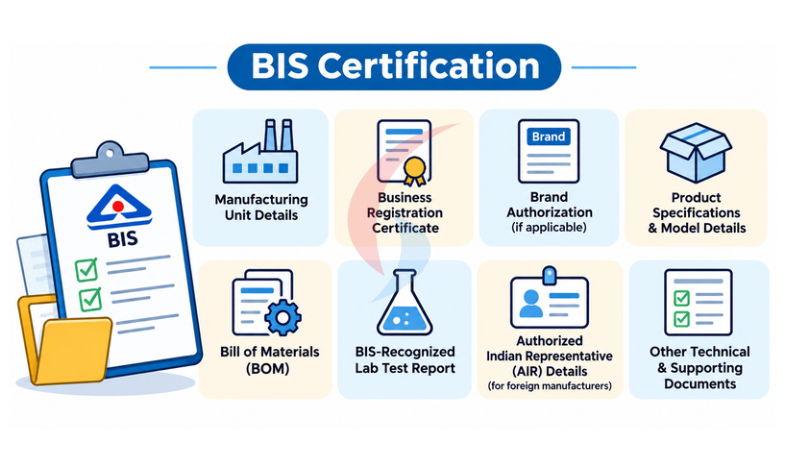
Applicants should arrange their business and technical documents before starting the registration process.
|
Document |
Purpose |
|---|---|
|
Factory registration and business documents |
Establish manufacturing identity |
|
Manufacturing address and details |
Identify the production facility |
|
Product specifications and datasheets |
Describe module technology and ratings |
|
Bill of Materials (BOM) |
Identify critical materials and components |
|
PCB, electrical and construction details, where applicable |
Support technical examination |
|
Brand authorisation, where applicable |
Establish permission to use the brand |
|
Laboratory test reports |
Demonstrate conformity |
|
Authorised Indian Representative documents |
Required for applicable foreign manufacturers |
The exact documents depend on the applicant's circumstances and BIS procedural requirements.
Foreign manufacturers must pay particular attention to Authorised Indian Representative (AIR) arrangements. Incorrect manufacturer details, mismatched brand names or incomplete technical documents can delay registration.
Step-by-Step BIS CRS Registration Process for Thin-Film Solar PV Modules
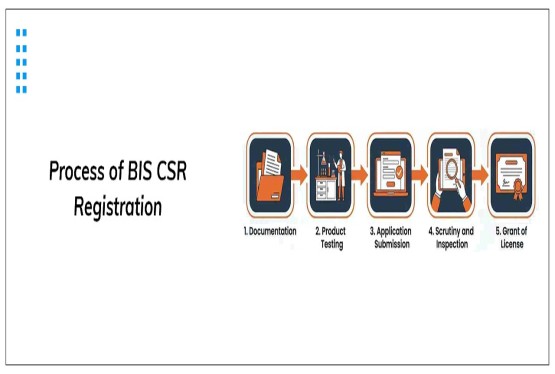
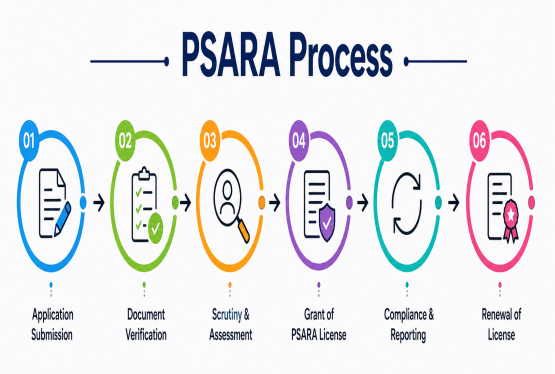
The BIS CRS Registration Process involves product classification, laboratory testing, online filing and regulatory examination.
|
Step |
Registration Process |
Important Point |
|---|---|---|
|
1 |
Identify applicable standards |
Select the correct thin-film technology |
|
2 |
Prepare documents |
Collect factory, brand and technical records |
|
3 |
Select testing laboratory |
Confirm BIS recognition and testing scope |
|
4 |
Complete product testing |
Obtain compliant test reports |
|
5 |
Submit application |
Apply through the BIS CRS portal |
|
6 |
Respond to BIS queries |
Resolve document or technical issues |
|
7 |
Obtain registration |
Receive registration for approved models |
|
8 |
Maintain compliance |
Follow marking, annual and other obligations |
Step 1: Identify the Product Category
First, the manufacturer should identify whether the product uses CdTe, amorphous silicon or CIGS technology. This determines the applicable section of IS 14286 and helps the company prepare an appropriate testing programme.
Step 2: Arrange BIS Laboratory Testing
The manufacturer must submit representative product samples to a BIS-recognised laboratory with the appropriate testing capabilities. Solar module testing can involve lengthy environmental and performance evaluations. Therefore, businesses should arrange testing well before their intended commercial launch.
Step 3: Submit the Application
After obtaining satisfactory test reports, the manufacturer submits the prescribed application through the BIS CRS portal, along with supporting documents and applicable fees. The information provided should match the factory records, brand details, product specifications and test reports.
Step 4: BIS Examination and Approval
BIS examines the application and may request clarification or additional documents. Once the prescribed requirements are satisfied, registration is granted for the approved scope. The manufacturer must then follow the applicable Standard Mark and registration-number marking requirements. Registration for one model or manufacturing facility should not automatically be treated as permission for every product produced by the same company.
For More Information: Read our BIS CRS Certification for LED Lamps guide for additional information on applications, laboratory testing and product inclusion.
BIS Certification Cost and Processing Time
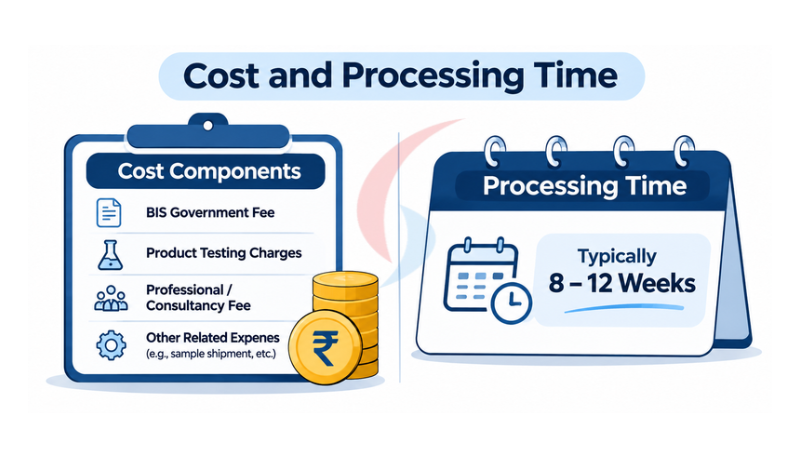
The total cost of BIS Certification for Thin-Film Solar PV Modules depends on product technology, testing requirements, number of models, laboratory charges and applicable registration fees. Testing usually represents a significant part of the total expenditure because solar PV modules require various performance, electrical and environmental tests. Processing time also varies. Manufacturers should consider laboratory availability, test duration, documentation and BIS examination rather than relying on a fixed number of days.
For example, a company seeking registration for multiple CdTe module models may require additional technical evaluation compared with an application involving a single representative model.
Latest BIS and MNRE Updates for Thin-Film Solar PV Modules in 2026
India's solar product certification requirements have undergone important changes. The following updates are especially relevant to manufacturers and importers.
1. Solar Systems, Devices and Components Goods Order, 2025
MNRE notified the revised Quality Control Order on 27 January 2025. The new order replaced the earlier 2017 order and introduced updated Indian Standards and efficiency requirements for covered solar products. The revised provisions became applicable after the prescribed 180-day transition period. BIS also issued implementation guidelines on 27 March 2025. According to those guidelines, new solar module licences could no longer be granted under the superseded standards after 27 July 2025.
2. Revised Testing Standards and Model Inclusion
The updated requirements make the IS 14286 series important for thin-film solar module design qualification. Manufacturers must select the relevant technology-specific standard and comply with applicable safety qualification requirements. Changes in the Bill of Materials, manufacturing process or critical components may also require technical evaluation and additional testing under the applicable BIS guidance.
For example, if a manufacturer changes the encapsulation material or module construction after registration, it should assess whether the modification affects the existing qualification before commercially supplying the revised product.
3. BIS Conformity Assessment Amendments, 2026
The BIS (Conformity Assessment) Amendment Regulations, 2026 introduced changes concerning certification validity and ongoing obligations. BIS also issued revised provisions for licence validity, renewal and annual fee payment under CRS on 27 May 2026. These revisions include changes relating to initial licence terms of up to five years and continuing fee and compliance requirements. Businesses should check the conditions applicable to their individual registration and should not rely on older CRS portal instructions that still describe two-year validity.
4. Important ALMM Updates in 2026
BIS CRS Registration and MNRE's Approved List of Models and Manufacturers (ALMM) serve different purposes. BIS registration deals with conformity to notified Indian Standards. ALMM determines the eligibility of specific solar module models and manufacturers for projects covered by MNRE's ALMM requirements.
For example, MNRE's 6 July 2026 memorandum specified minimum module efficiencies for CdTe thin-film technology, including 19% for utility/grid-scale projects and 18.5% for rooftop and solar pumping applications. These are ALMM eligibility conditions, not universal BIS certification thresholds.
5. July 2026 Extension for Solar PV Inverters
MNRE's notification dated 3 July 2026 extended the self-certification arrangement for specified solar PV inverters above 200 kW until 31 December 2026 or further orders, whichever is earlier.
This extension concerns the specified inverter categories, not a general postponement of compulsory registration for thin-film solar PV modules.
For More Information: Visit our BIS Certification for UPS and Inverters for articles covering BIS registration, product standards, regulatory amendments and manufacturing compliance.
Common Challenges Faced by Manufacturers
One common problem is using an outdated Indian Standard. Manufacturers may already have international test reports, but those reports do not automatically establish compliance with India's current BIS requirements.
Another challenge involves product-family classification. A company may manufacture modules with different power ratings, dimensions and construction materials. Whether these models can be included in one registration depends on the applicable BIS series guidelines. Foreign manufacturers may also experience delays because of incomplete AIR documentation, mismatched factory addresses or differences between the technical information submitted to the laboratory and BIS.
These problems can often be reduced through careful document preparation and product-standard verification before testing begins.
Why Choose Compliance Calendar LLP for BIS Certification?
At Compliance Calendar LLP, we understand that obtaining BIS Certification for Thin-Film Solar PV Modules is not simply about submitting an application. Manufacturers often need help identifying the correct Indian Standards, understanding testing requirements, preparing technical documents and responding to BIS queries.
For example, a manufacturer may approach us with questions about whether its CdTe modules require certification under IS 16077 or the revised IS 14286 series. Our approach is to review the product technology, explain the applicable requirements and assist with the documentation and registration steps.
Our compliance support covers product classification, document preparation, laboratory coordination, application assistance and regulatory follow-up. We also help businesses understand continuing requirements after registration, including model inclusion and product marking. We aim to make the process easier for Indian manufacturers, foreign suppliers and importers by explaining regulatory requirements in straightforward language and helping them prepare for compliance from the beginning.
For enquiries, contact Compliance Calendar LLP by email at info@ccoffice.in or via WhatsApp at +91 9988424211
Frequently Asked Questions (FAQs)
Q1. Is BIS Certification mandatory for Thin-Film Solar PV Modules?
Ans. Yes. Thin-film solar PV modules falling under the notified product category require BIS CRS Registration for covered activities in India, subject to applicable exemptions.
Q2. Which Indian Standard applies to thin-film solar modules?
Ans. The IS 14286:2023 series applies to design qualification, with different sections for CdTe, amorphous silicon and CIGS technologies. IS/IEC 61730 covers safety qualification.
Q3. Is IS 16077 still applicable for new BIS applications?
Ans. IS 16077:2013 was used earlier. New registrations must follow the revised standards notified under the 2025 Quality Control Order.
Q4. Can foreign manufacturers apply for BIS CRS Registration?
Ans. Yes. Foreign manufacturers can apply for covered products, subject to applicable requirements, including appointment of an eligible Authorised Indian Representative.
Q5. What is the cost of BIS Certification for Thin-Film Solar PV Modules?
Ans. The cost depends on laboratory testing charges, registration fees, product models and documentation requirements. There is no single fixed total cost for every manufacturer.
Q6. How long does BIS Certification take?
Ans. The duration depends on the testing programme, laboratory availability, documentation, BIS examination and any necessary corrections or retesting.
Q7. Can multiple solar module models be included in one registration?
Ans. Yes, where permitted under applicable BIS model-family or series guidelines. Additional testing or model inclusion procedures may be required.
Q8. Is BIS Certification the same as ALMM approval?
Ans. No. BIS registration deals with conformity to Indian Standards, while ALMM relates to model and manufacturer eligibility for specified solar projects.
Q9. Is BIS Certification required for imported thin-film solar panels?
Ans. Yes, when the imported modules fall within the notified compulsory registration scope. Importers must verify the relevant manufacturer's BIS registration and model coverage.
Q10. What happens if thin-film solar modules fail BIS testing?
Ans. The manufacturer must identify the non-conformity, make necessary technical corrections and complete the required retesting before conformity can be established.
Article last updated on : 17 Nov 2026.