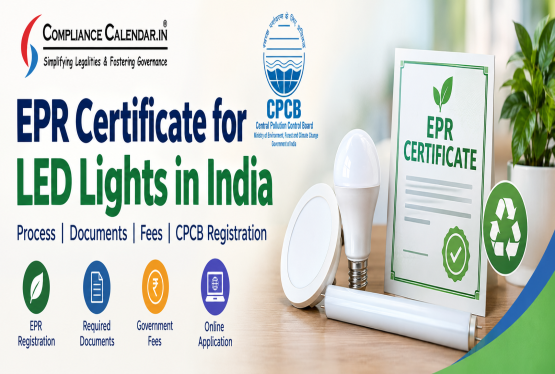



Do you manufacture, import or sell solar panels in India? You may need EPR Registration under the E-Waste (Management) Rules, 2022. These rules make manufacturers and producers responsible for managing waste generated from solar photovoltaic (PV) modules, panels and cells. Businesses covered by the rules must register with the Central Pollution Control Board (CPCB), maintain records of solar panel waste, store it safely and file annual returns.
Solar panels do not last forever. Some get damaged during manufacturing, transportation or installation, while others become unusable after years of use. These panels should not be thrown away with ordinary waste because they contain materials such as glass, aluminium, silicon and metals that need proper handling. If your business deals with solar panels, this guide explains who needs EPR Registration, what the rules require, how to apply and how to manage solar panel waste.
What Is EPR Registration for Solar Panels?
EPR stands for Extended Producer Responsibility. In simple words, it means that certain businesses have a responsibility to manage the waste generated from the products they manufacture or sell. For solar panels, these requirements come under the E-Waste (Management) Rules, 2022, which came into effect on 1 April 2023. Solar photovoltaic modules, panels and cells are covered under a separate chapter of these rules.
For example, a company manufactures solar panels and sells them in India. After some years, these panels may become damaged or stop working. The company must follow the applicable rules for recording and storing the waste. The purpose is to make sure that old, broken and rejected solar panels are handled safely instead of being dumped in open areas or mixed with ordinary rubbish.
Who Needs EPR Registration for Solar Panels in India?
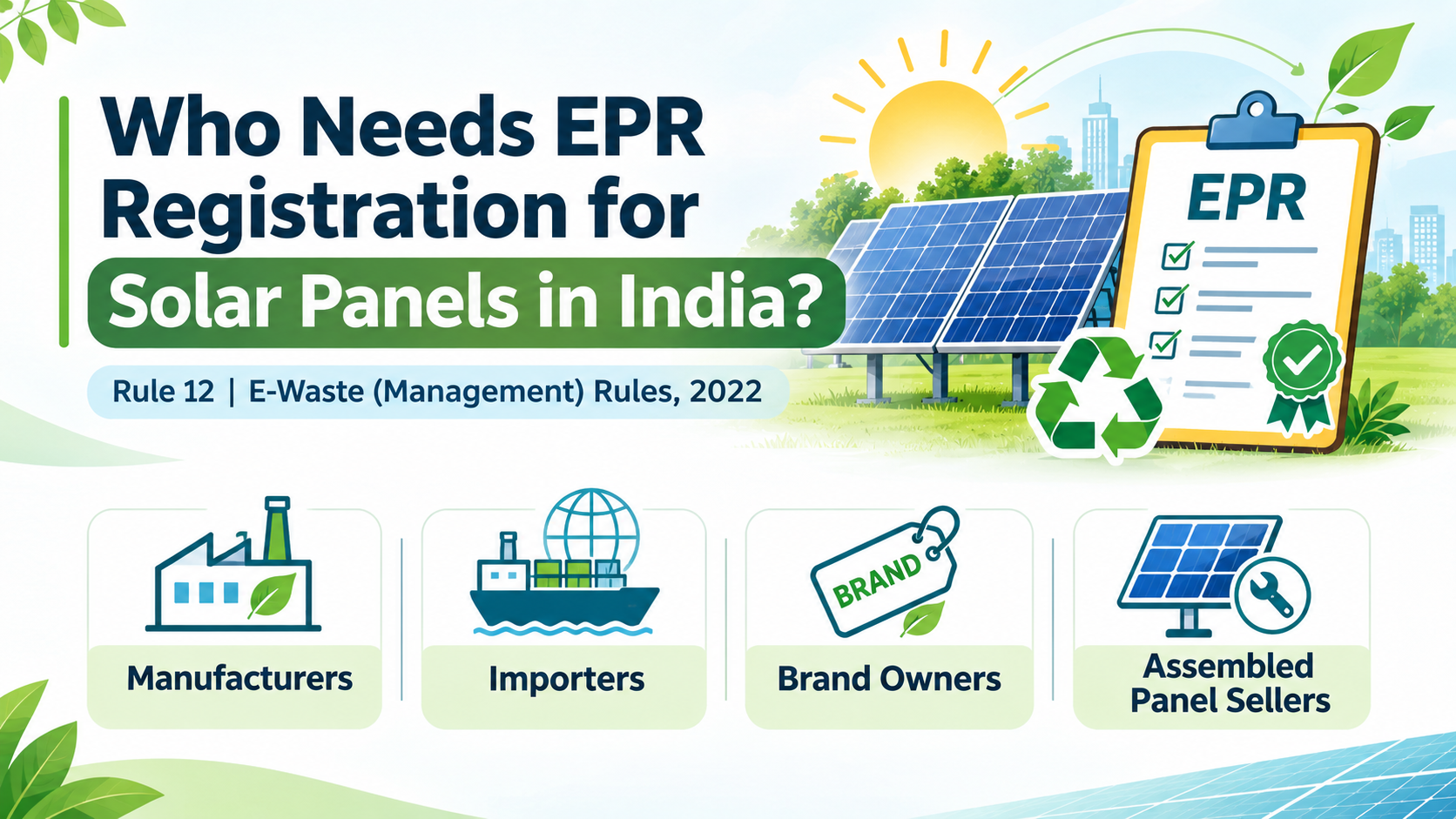
Under Rule 12 of the E-Waste (Management) Rules, 2022, every manufacturer and producer of solar photovoltaic modules, panels or cells must register on the CPCB portal. This requirement covers businesses involved in manufacturing these products as well as businesses that place them in the Indian market under their own brand or through imports.
|
Business Category |
Who Does It Include? |
|---|---|
|
Solar Panel Manufacturers |
Businesses that manufacture solar panels, modules or cells in India. |
|
Importers |
Businesses that import solar panels and offer them for sale in India. |
|
Brand Owners |
Companies that sell solar panels under their own brand, even if another company manufactures them. |
|
Businesses Selling Assembled Panels |
Companies that get solar panels assembled by another manufacturer and sell them under their own brand. |
Example: A Delhi-based solar company manufactures panels in India and sells them under its own brand. A Noida-based energy company imports solar panels from another country and sells them in India. Both businesses should check their applicable EPR Registration requirements under the rules.
Does a solar panel installation company need EPR Registration?
Not automatically. If a company only installs solar panels purchased from another supplier, it does not become a manufacturer or producer just because it carries out installation work. However, if it also manufactures panels, imports them for sale or sells them under its own brand, the registration requirement may apply. The actual business activity is important when deciding whether registration is needed.
Which Solar Products and Waste Are Covered Under EPR Rules?
The E-Waste (Management) Rules, 2022 cover solar photovoltaic modules, panels and cells. The rules also include waste generated during manufacturing, repair and refurbishment. This means the requirements are not limited to old panels removed from rooftops or solar power plants. Damaged panels and rejected products can also be covered.
Some common examples of solar panel waste are:
- Broken or damaged solar panels.
- Defective solar cells and modules.
- Panels rejected during manufacturing.
- Panels damaged during transportation or installation.
- Old panels that are no longer suitable for use.
- Parts and components of solar panels that are discarded as waste.
For example, if a factory manufactures 5,000 solar panels and 50 are rejected because of defects, those rejected panels must be considered when managing and recording solar waste. Similarly, panels damaged during installation should not be thrown away with ordinary rubbish. They need proper handling and storage.
What Are the EPR Responsibilities of Solar Panel Manufacturers and Producers?
Getting EPR Registration is only the first step. Businesses must also follow the responsibilities given under Rule 12 of the E-Waste (Management) Rules, 2022. These include maintaining a separate inventory of solar panels, storing the waste safely, filing annual returns and following CPCB guidelines.
|
Requirement |
What your business needs to do |
|
CPCB Registration |
Register on the CPCB E-Waste portal under the applicable category. |
|
Separate inventory |
Maintain a separate record of solar PV modules, panels and cells on the portal. |
|
Safe storage |
Store solar panel waste generated up to 2034–35 according to CPCB guidelines. |
|
Annual returns |
File annual returns on the portal up to 2034–35, as required under the rules. |
|
CPCB guidelines |
Follow the applicable instructions for handling and storing solar panel waste. |
|
Other types of waste |
Manage waste other than solar panels under the rules that apply to that waste. |
For example, a solar panel manufacturer should keep track of the panels it produces and the waste generated during manufacturing. If some panels are rejected or damaged, the business should record them properly. It must also maintain the required inventory and submit the information through its annual return.
Are There Any EPR Recycling Targets for Solar Panels?
Solar panels have separate waste management requirements under the E-Waste (Management) Rules, 2022. Many other electronic products have recycling targets under Schedule III and Schedule IV. However, these regular recycling targets do not apply to waste generated from solar photovoltaic modules, panels or cells.
This does not mean that solar panel manufacturers and producers are free from waste management responsibilities. They must still:
- Register with CPCB.
- Maintain a separate solar panel inventory.
- Store solar waste according to CPCB guidelines.
- File annual returns.
- Follow the applicable handling and storage requirements.
Solar waste intended for recycling must be handed over to a registered e-waste recycler. The recycler is responsible for recovering materials as required under CPCB guidelines.
In simple words, solar panels follow a separate system under the rules. Businesses should not assume that the usual EPR recycling certificate targets for other electronic products apply to solar panels in the same way.
How Should Solar Panel Waste Be Collected and Stored?
CPCB issued specific guidelines for the storage and handling of waste solar photovoltaic modules, panels and cells in March 2026. These guidelines explain how solar waste should be collected, transported and stored to protect workers and the environment.
Manufacturers and producers should plan how they will collect damaged or discarded panels from consumers and bulk consumers. This may include collection points, take-back arrangements or collection through other suitable stakeholders. They should also make their collection system easy to find by sharing details such as a website link, contact number and collection point information.
Important rules for storing solar panel waste
|
Requirement |
What Should Be Done? |
|---|---|
|
Covered Storage |
Store solar panel waste in a covered shed or designated storage area. |
|
Dry and Ventilated Area |
Keep the storage area dry and ensure proper airflow. |
|
Suitable Flooring |
Use flooring that prevents harmful substances from entering the soil or groundwater. |
|
Separate Storage for Broken Panels |
Keep broken or damaged panels in strong, stable and water-resistant containers with proper labels. |
|
Safe Arrangement |
Arrange panels safely to prevent them from falling, breaking or creating risks for workers. |
|
Fire Safety |
Keep suitable firefighting equipment and an emergency exit and response plan ready. |
|
Regular Inspection |
Inspect the storage area every month and maintain inspection records. |
|
Worker Safety |
Provide workers with suitable protective equipment, such as gloves, safety footwear and eye protection. Respirators should be provided where dust or broken glass creates a risk. |
Note : Solar waste should not be dumped in open areas or ordinary landfills. It should be transported in covered vehicles. Waste meant for recycling must be handed over to a registered e-waste recycler. These steps help prevent environmental damage and allow useful materials to be recovered.
How to Apply for EPR Registration for Solar Panels in India?
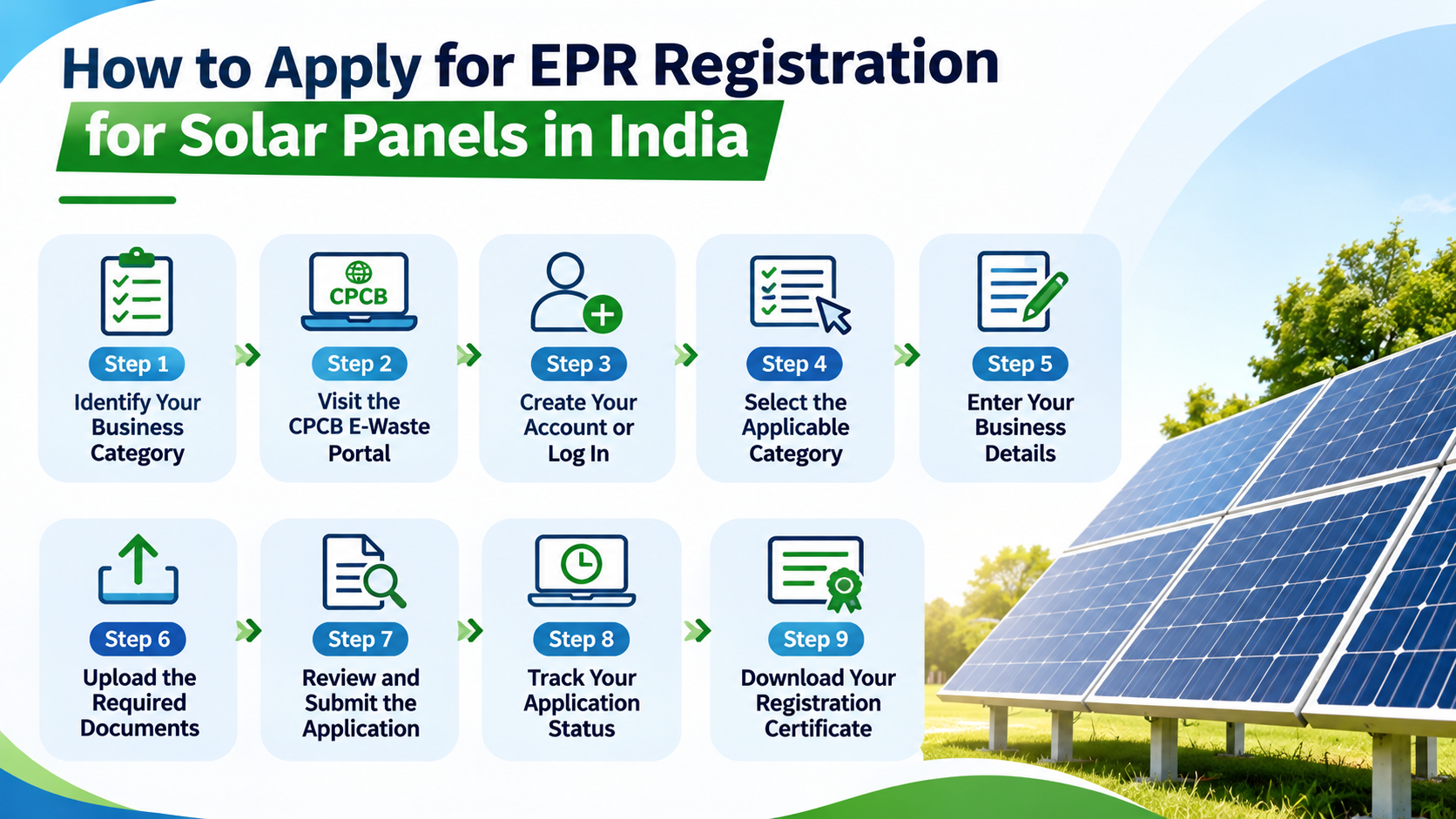
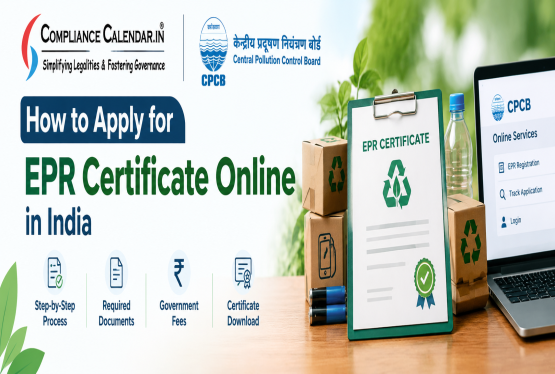
Businesses covered under the E-Waste (Management) Rules, 2022 must apply for EPR Registration through the CPCB E-Waste Management Portal. The application process is online. Follow these steps to complete the application:
Step 1: Identify Your Business Category
First, check whether your business comes under the manufacturer or producer category. Select the category based on your actual business activity, such as manufacturing solar panels, importing them or selling them under your own brand.
Step 2: Visit the CPCB E-Waste Portal
Open the official CPCB E-Waste Management Portal. Use the available registration or login option to access the portal.
Step 3: Create Your Account or Log In
If you are a new applicant, complete the sign-up process using the details requested on the portal. If you already have an account, log in with your registered credentials.
Step 4: Select the Applicable Registration Category
Choose the relevant manufacturer or producer category, as applicable to your business. Make sure you select the correct category before moving ahead.
Step 5: Enter Your Business Details
Fill in the required information, including:
- Company or business name
- Registered office address
- PAN and GST details, where applicable
- Authorised person's contact details
- Manufacturing or import details, as applicable
- Solar panel, module or cell information
- Brand details, where applicable
Step 6: Upload the Required Documents
Upload the documents and declarations requested by the portal. Check that the files are clear, correct and in the accepted format before submitting them.
Step 7: Review and Submit the Application
Carefully check all the details entered in the application. Correct any mistakes and submit the application through the portal.
Step 8: Track Your Application Status
After submission, check your application status through the portal. If CPCB raises any query or asks for additional information, provide the required clarification or documents.
Step 9: Download Your Registration Certificate
Once CPCB approves the application, download the EPR Registration certificate from the portal and keep a copy for your business records.
Important: The information and documents required may vary depending on your business category and the latest CPCB portal instructions. Registration also does not end your responsibilities. You must continue to follow the applicable solar waste inventory, storage and annual return requirements.
What Documents Are Required for EPR Registration?
The documents required may differ depending on whether you are a manufacturer or producer. For example, a manufacturer may need to provide information about its manufacturing activity, while an importer may need to provide relevant import and product details. It is better to keep your basic business records ready before starting the application.
|
Document or information |
Purpose |
|
PAN Card |
To identify the business. |
|
To verify business and tax details, where applicable. |
|
|
Certificate of Incorporation or business registration proof |
To confirm the legal identity of the business. |
|
Business address proof |
To verify the registered or operating address. |
|
Authorised person's details |
To identify the person handling the application. |
|
Solar product details |
To provide information about the panels, modules or cells. |
|
Brand details |
To confirm the brand under which products are sold, where applicable. |
|
Import documents |
To support details of imported solar products, where applicable. |
|
Manufacturing details |
To provide information about the manufacturing activity, where applicable. |
|
Required declarations |
To complete the declarations requested on the portal. |
This is a general preparation list, not a fixed document checklist for every applicant. Always check the latest CPCB portal instructions for the final document requirements.
What Are the Government Fees and Validity of EPR Registration?
The registration fee and annual maintenance charges should be checked on the official CPCB portal before applying. The E-Waste (Management) Rules, 2022 allow CPCB to collect registration fees and annual maintenance charges according to the applicable fee structure. The amount may depend on the registration category and current portal requirements.
Do not rely on a fee quoted for plastic waste, battery waste or another type of e-waste registration without checking whether it applies to your solar panel business. Also, receiving a registration certificate does not end your responsibilities. You must continue to maintain the required records, file annual returns and follow the solar waste storage guidelines.
For the latest fee and application instructions, check the official CPCB E-Waste portal.
What Happens If a Business Does Not Follow Solar Panel EPR Rules?
Manufacturers and producers covered by the rules must follow the applicable registration, record-keeping, storage and reporting requirements. If a business fails to meet these requirements, CPCB and the relevant authorities may take action under the E-Waste (Management) Rules, 2022 and applicable environmental laws.
Depending on the nature of the violation, a business may face:
- Compliance directions: The authority may ask the business to correct the violation.
- Environmental compensation: Financial compensation may be imposed where applicable.
- Registration-related action: CPCB may take action against registration as permitted under the rules.
- Further legal action: Other action may be taken under applicable environmental laws.
Example: If a solar panel manufacturer does not maintain the required waste records or fails to follow the storage guidelines, it may face compliance action. Similarly, dumping broken panels in an open area instead of arranging proper waste management can create environmental and legal problems.
Businesses should understand the requirements before starting their activities and maintain proper records from the beginning. This makes it easier to manage waste and avoid compliance problems later.
How Compliance Calendar Can Help with EPR Registration for Solar Panels
Applying for EPR Registration can be confusing if you are not familiar with the CPCB portal or the E-Waste rules. Businesses may need help choosing the correct registration category, preparing documents and understanding their responsibilities after registration.
Compliance Calendar LLP can assist businesses with EPR Registration and related compliance requirements. Our team can help you understand the applicable process, prepare the required information and complete the registration application. If your business manufactures, imports or sells solar panels, contact us to discuss your requirements.
For any kind of assiatance contact us on 9988424211 or info@ccoffice.in
Frequently Asked Questions (FAQs)
Q1. Is EPR Registration required for solar panels in India?
Yes. Manufacturers and producers of solar photovoltaic modules, panels and cells must register on the CPCB portal under the E-Waste (Management) Rules, 2022.
Q2. Which authority provides EPR Registration for solar panels?
The Central Pollution Control Board (CPCB) manages the E-Waste EPR portal and the registration process.
Q3. Do solar panel importers need EPR Registration?
A business that imports solar panels and offers them for sale in India may fall under the producer definition. It should check its business activity and complete the applicable registration requirements.
Q4. Does a solar panel installation company need EPR Registration?
Not automatically. A company that only installs solar panels purchased from another supplier does not become a producer just because it carries out installation work. If it also manufactures, imports or sells panels under its own brand, the requirement may apply.
Q5. Are solar panels covered under the E-Waste (Management) Rules, 2022?
Yes. Solar photovoltaic modules, panels and cells are specifically covered under Chapter V of the E-Waste (Management) Rules, 2022.
Q6. Do solar panels have mandatory EPR recycling targets?
The recycling targets under Schedule III and Schedule IV do not apply to waste generated from solar photovoltaic modules, panels or cells. However, registration, inventory, storage and annual return requirements still apply.
Q7. Until when must solar panel waste be stored?
Manufacturers and producers must store solar panel waste generated up to the year 2034–35 according to CPCB guidelines.
Q8. Is annual return filing required for solar panel manufacturers?
Yes. Manufacturers and producers must file annual returns on the CPCB portal as required under Rule 12, up to the year 2034–35.
Q9. Can solar panel waste be sold to an ordinary scrap dealer?
Solar waste intended for recycling should be handed over to a registered e-waste recycler. It should not be dumped in open areas or ordinary landfills.
Q10. Can a company sell solar panels under its own brand without manufacturing them?
A company that sells solar panels under its own brand, even if another business manufactures them, may fall under the producer definition. It should check and complete the applicable registration requirements.
Q11. Is EPR Registration for solar panels the same as EPR Registration for other electronic products?
Both come under the E-Waste (Management) Rules, 2022, but solar panels have separate requirements under Chapter V. Solar panel waste is not covered by the regular recycling targets under Schedule III and Schedule IV.
Article last updated on : 04 Nov 2026.












_learn_crop10_thumb.jpg)