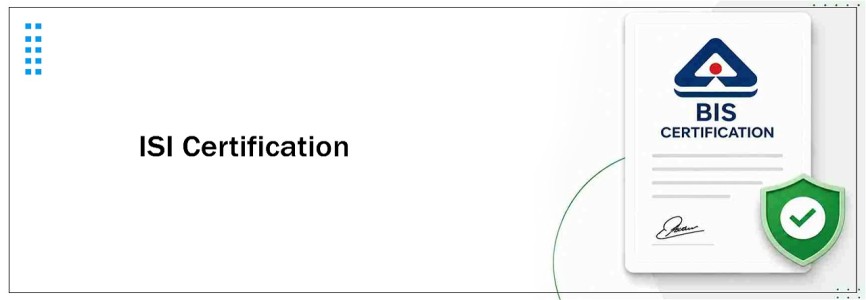



ISI Certification in India is one of the most important product quality approvals issued by the Bureau of Indian Standards, commonly known as BIS. The ISI mark is a standard mark that shows that a product conforms to the relevant Indian Standard. For consumers, it works as a sign of safety, quality, and reliability. For manufacturers, it works as legal permission to manufacture and sell certain notified products in the Indian market. In simple words, if a product is covered under mandatory BIS certification, the manufacturer cannot legally sell, distribute, store, import, or display that product for sale in India without a valid BIS licence.
The ISI mark is generally granted under Scheme-I of the BIS Conformity Assessment Regulations, 2018, which deals with product certification for use of the ISI mark. BIS describes Scheme-I as the product certification scheme for use of the ISI mark, and BIS also provides product certification process guidelines, grant of licence guidelines, renewal guidelines, suspension guidelines, change in scope guidelines, and operation of licence guidelines under this framework.
The legal foundation of ISI Certification comes mainly from the Bureau of Indian Standards Act, 2016, the BIS Rules, 2018, and the BIS (Conformity Assessment) Regulations, 2018. These laws give BIS the authority to establish standards, grant licences, regulate the use of the standard mark, conduct inspections, test products, suspend or cancel licences, and take action against misuse of the ISI mark. Therefore, ISI Certification is not merely a branding tool. It is a legal compliance requirement for many products.
Meaning of ISI Certification
ISI Certification means that a manufacturer has obtained permission from BIS to use the ISI mark on a product after proving that the product meets the applicable Indian Standard. The term “ISI” comes from the earlier Indian Standards Institution, but today the certification is administered by BIS. The ISI mark is usually seen on products such as cement, electrical appliances, pressure cookers, steel products, helmets, packaged drinking water, LPG cylinders, automotive components, and many other products notified by the government.
The purpose of ISI Certification is to ensure that products available in the market meet minimum safety and quality standards. For example, if an electrical appliance does not follow safety standards, it may cause fire, electric shock, or injury. Similarly, if cement, steel, or construction material is substandard, it may create public safety risks. Therefore, BIS certification helps protect consumers, industry, and public interest.
Legal Framework Governing ISI Certification in India
The primary law governing BIS certification is the Bureau of Indian Standards Act, 2016. This Act establishes BIS as the National Standards Body of India and gives it legal powers relating to standardisation, marking, certification, conformity assessment, and quality assurance. The Act also deals with the use of standard marks, compulsory certification, penalties, search and seizure, and action against false claims or misuse of BIS marks.
The BIS Rules, 2018 support the Act by providing procedural rules for implementation. These rules deal with matters such as application, licence, certification, use of standard mark, fees, inspection, and related regulatory processes. The BIS (Conformity Assessment) Regulations, 2018 provide the detailed certification framework, including different schemes of conformity assessment. For ISI Certification, Scheme-I is the most relevant because it applies to product certification for use of the ISI mark. BIS lists the BIS Act, Rules, and Regulations as the key legal framework for its functioning.
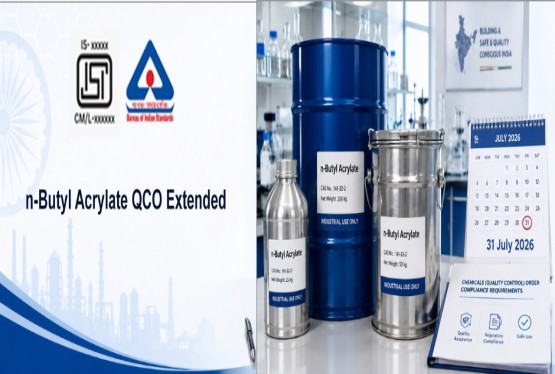
Apart from these laws, Quality Control Orders, commonly called QCOs, also play a very important role. QCOs are issued by the Central Government for specific products. Once a product is covered under a QCO, compliance with the relevant Indian Standard becomes mandatory. BIS states that for products under compulsory certification, the Central Government directs mandatory use of the Standard Mark under a BIS licence or Certificate of Conformity through QCOs.
Voluntary and Mandatory ISI Certification
ISI Certification may be voluntary or mandatory depending on the product. For many products, BIS certification is voluntary, which means the manufacturer may apply for certification to improve market credibility. However, for products notified under Quality Control Orders, certification becomes mandatory. In such cases, the manufacturer must obtain a BIS licence before selling or manufacturing the product.
Mandatory certification is generally imposed where product safety, consumer protection, public health, national interest, or environmental concerns are involved. For example, products like cement, electrical appliances, pressure cookers, steel products, helmets, packaged drinking water, and several industrial goods are commonly covered under compulsory certification. BIS maintains a list of products under compulsory certification and also updates QCO-related information from time to time.
Recent Updates Related to ISI Certification
In recent years, the Government of India has expanded the scope of mandatory BIS certification by issuing multiple Quality Control Orders for different product categories. This means that more products are gradually being brought under compulsory quality control. BIS has also maintained updated online lists of products under compulsory certification and upcoming QCOs due for implementation. This is important for manufacturers because a product that was earlier not mandatory may later become subject to compulsory certification through a new QCO.
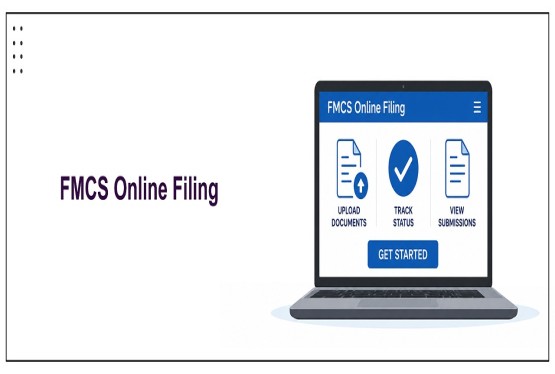
Another recent compliance trend is the increasing digitalisation of the BIS application process. Manufacturers are expected to apply online, upload documents, track applications, respond to queries, and manage compliance digitally. BIS also provides online tools such as “Know Your Standard,” “Search Licence,” “All Quality Control Orders,” and product certification information on its portal.
Further, BIS continues to issue guidelines on operation of licence, non-conformity, suspension, revocation, renewal, and testing requirements. For example, BIS issued guidelines in December 2024 for dealing with non-conformity observed during operation of licence under Scheme-I of Schedule-II of the BIS Conformity Assessment Regulations, 2018. This shows that BIS is focusing not only on grant of licence but also on continuous post-licence compliance.
Who Can Apply for ISI Certification?
Generally, the actual manufacturer of the product can apply for ISI Certification. The reason is simple: BIS certification is linked to the manufacturing location, production process, quality control system, testing facility, and product conformity. A trader, dealer, distributor, or importer usually cannot apply in the same way unless the applicable scheme permits or the certification is taken by the original manufacturer.
If the product is manufactured at more than one factory location, a separate licence may be required for each manufacturing unit. Similarly, if the manufacturer wants to cover different products, grades, varieties, sizes, models, or brands, the scope of licence must clearly include them. The licence is not a blanket approval for all products of the manufacturer. It applies only to the product and standard mentioned in the licence.
Main Steps in ISI Certification Process
Step 1: Product Identification and Standard Selection
The first step in ISI Certification is identifying the correct Indian Standard applicable to the product. Every product covered under BIS certification has a specific IS number. Selecting the wrong standard can lead to rejection, delay, or unnecessary testing cost. Therefore, the manufacturer must carefully check product category, product use, product material, technical specifications, and applicable QCO.
For example, an electrical appliance, steel product, cement product, or packaging material may have different standards depending on its composition, size, use, and safety requirements. The manufacturer should also check whether the product is covered under mandatory certification or voluntary certification.
Step 2: Gap Assessment and Factory Readiness
Before filing the application, the manufacturer should check whether the factory is ready for BIS inspection. BIS may verify machinery, manufacturing process, in-house laboratory, testing equipment, quality control staff, calibration records, raw material control, finished goods testing, and production records. If the factory is not ready, the application may face objection or rejection.
A proper gap assessment helps identify what is missing before the application is filed. For example, the factory may need additional testing equipment, updated calibration certificates, proper quality control records, or process control documents. This stage is important because ISI Certification is based not only on product testing but also on the manufacturer’s ability to maintain continuous quality.
Step 3: Application Filing with BIS
After confirming the correct standard and factory readiness, the manufacturer has to file the application with BIS through the applicable online process. The application must contain details of the manufacturer, factory address, product, brand, Indian Standard, machinery, testing equipment, quality control personnel, raw material, production process, and other technical information.
The details must be accurate and consistent with the supporting documents. If the GST certificate, factory licence, electricity bill, lease deed, test report, and application form show different names or addresses, BIS may raise objections.
Step 4: Submission of Documents
The applicant must upload or submit all required documents. These documents prove the legal identity of the applicant, factory ownership or possession, manufacturing capability, product details, testing capability, and quality control system. Document accuracy is one of the most important parts of ISI Certification because incomplete or mismatched documents can delay the application.
Step 5: Product Testing
Product testing is a key requirement under the ISI Certification process. The product must be tested as per the relevant Indian Standard. Testing may be done through BIS-recognised laboratories or as per the testing arrangement applicable to the product category. If the product fails any required parameter, the application may not proceed smoothly.
The test report must match the exact product, grade, model, size, variety, and brand mentioned in the application. An old, incomplete, unrelated, or invalid test report may not be accepted.
Step 6: Factory Inspection by BIS Officer
BIS may conduct factory inspection before granting the licence. During inspection, the BIS officer may check manufacturing facilities, quality control arrangements, testing equipment, calibration records, production records, raw material control, packaging, marking, and sample availability. The officer may also draw samples for independent testing.
Factory inspection is important because BIS wants to confirm that the manufacturer is capable of producing standard-compliant products on a regular basis. If the factory is not operational, testing equipment is missing, records are not maintained, or the production process is not controlled, BIS may raise objections.
Step 7: Sample Testing and Review
Samples drawn during inspection may be sent for testing. BIS reviews the inspection report, test reports, application details, and documents. If the product conforms to the Indian Standard and the factory has adequate quality control arrangements, BIS may proceed toward grant of licence.
If there are deficiencies, BIS may ask for clarification, corrective action, additional documents, retesting, or further inspection. The applicant must respond properly and within the prescribed timeline.
Step 8: Grant of BIS Licence
After successful completion of document review, inspection, and testing, BIS grants the licence to use the ISI mark. The licence mentions the product, Indian Standard, factory location, brand, scope, validity, and other conditions. Once the licence is granted, the manufacturer can use the ISI mark only as per BIS conditions.
The manufacturer must not use the ISI mark before the licence is granted. Premature or unauthorised use of the ISI mark may attract legal action.
Documents Required for ISI Certification
The documents list required for ISI Certification:
-
Business Registration Proof
-
Factory Address Proof
-
Manufacturing Machinery List
-
Manufacturing Process Flow Chart
-
Raw Material Details
-
Testing Equipment List
-
Calibration Certificates
-
Laboratory Layout
-
Quality Control Staff Details
-
Qualification Proof of Technical Staff
-
In-House Test Records
-
Brand Ownership Proof
-
Brand Authorisation Letter
-
Factory Layout
-
Location Map
-
Product Specifications
-
Product Test Reports
-
Undertaking and Declaration
-
Nomination Form
-
Authorised Signatory Details
-
Identity Proof of Authorised Person
-
Pollution Control Approval, if applicable
-
Factory Licence, if applicable
-
Product-Specific Declarations or Documents
Fees for ISI Certification in India
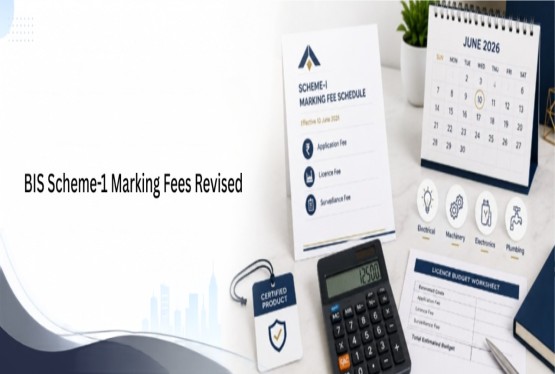
The fees for ISI Certification depend on the product, standard, factory location, testing requirement, inspection requirement, marking fee, and licence scope. BIS provides product certification fee information and marking fee details for products under Scheme-I on its official platform. BIS also provides a facility to search marking fees for Indian Standards and download marking fee information for all products under certification under Scheme-I.
The common fee components may include application fee, audit or inspection charges, sample testing charges, licence fee, marking fee, renewal fee, and other applicable charges. Testing charges may vary significantly because each product has different test parameters. For some products, testing may be simple and affordable, while for technical products, testing may be expensive.
The marking fee is a recurring fee payable for use of the Standard Mark. In many cases, a minimum marking fee may be payable regardless of actual production or sale, depending on the applicable BIS fee notification and product category. BIS fee documents also refer to testing charges, counter sample testing charges, and witnessing testing charges in certain situations.
Because BIS fees may change and product-wise marking fees differ, manufacturers should always check the latest fee schedule before filing the application. Professional fees, laboratory charges, document preparation cost, factory preparation cost, and consultancy charges are separate from government fees.
Validity and Renewal of ISI Licence
An ISI licence is granted for a specific validity period and must be renewed before expiry. Renewal is not automatic. The manufacturer must comply with BIS requirements, pay applicable fees, submit required records, and ensure continued conformity of the product. If the licence is not renewed on time, the manufacturer may lose the right to use the ISI mark.
During the validity period, BIS may conduct surveillance inspections and draw market or factory samples. If any non-conformity is found, BIS may issue directions, require corrective action, suspend marking, or take further action depending on the seriousness of the violation.
Post-Certification Compliance
After obtaining ISI Certification, the manufacturer must continue to follow the applicable Indian Standard. The manufacturer must maintain quality control records, test reports, raw material records, production records, calibration certificates, complaint records, and sales details. The product must carry the ISI mark in the prescribed manner along with the licence number and required marking details.
The manufacturer must also ensure that the ISI mark is not used on products outside the scope of licence. For example, if the licence covers one grade or model, the manufacturer cannot use the ISI mark on another grade or model unless it is included in the scope. Any change in product design, manufacturing process, brand, factory location, machinery, or scope may require BIS approval.
Suspension and Cancellation of ISI Licence
BIS may suspend or cancel a licence if the product fails to conform to the Indian Standard, the manufacturer misuses the ISI mark, the factory fails to maintain quality control, the licensee violates licence conditions, or the applicant provides false information. BIS may also act if surveillance samples fail during testing.
Suspension means the manufacturer may be temporarily stopped from using the ISI mark. Revocation or cancellation means the licence may be withdrawn. If the product is under compulsory certification, cancellation can seriously affect the business because the manufacturer may not be able to legally sell the product without certification.
Penalties for Misuse of ISI Mark
Unauthorised use of the ISI mark is a serious legal offence. If a person uses the ISI mark without a valid licence or sells a mandatory product without BIS certification, action may be taken under the BIS Act, 2016. Penalties may include fine, prosecution, seizure of goods, and other enforcement measures. False claims such as “ISI approved” or “BIS certified” without a valid licence may also create legal risk.
Businesses should also avoid printing the ISI mark on packaging, labels, brochures, websites, invoices, or advertisements before receiving the licence. The right to use the mark begins only after BIS grants the licence.
Common Reasons for Delay or Rejection
Many ISI Certification applications get delayed or rejected because the applicant selects the wrong Indian Standard, files an incomplete application, submits invalid test reports, fails factory inspection, does not maintain testing equipment, provides mismatched address proof, gives unclear brand authorisation, or uses incorrect product labelling. Another common reason is lack of preparation before BIS inspection.
To avoid rejection, the manufacturer should conduct product classification, prepare the factory, arrange testing facilities, verify documents, check QCO applicability, and ensure consistency in all records before applying.
Difference Between ISI Certification and BIS CRS Registration
Many applicants confuse ISI Certification with BIS CRS Registration. ISI Certification is generally granted under Scheme-I for product certification and use of ISI mark. BIS CRS Registration is usually related to certain electronics and IT goods under Scheme-II, where self-declaration of conformity is involved. BIS separately lists Scheme-II as the registration scheme for electronics and IT goods notified under the Compulsory Registration Scheme.
Therefore, the correct certification route depends on the product. A manufacturer should not assume that every BIS approval is ISI Certification. The correct scheme must be selected after checking the product category and applicable notification.
Conclusion
ISI Certification in India is a major legal and quality compliance requirement for manufacturers dealing in products covered under Indian Standards and Quality Control Orders. It is governed by the BIS Act, 2016, BIS Rules, 2018, and BIS Conformity Assessment Regulations, 2018. The certification process involves product identification, standard selection, document preparation, application filing, product testing, factory inspection, review by BIS, and grant of licence.
The process may appear technical, but it becomes easier when the manufacturer prepares the factory, documents, testing system, and product records in advance. The applicant must also understand that ISI Certification is not a one-time approval. After getting the licence, the manufacturer must follow continuous quality control, proper marking, record maintenance, renewal, and surveillance requirements.
With the increasing number of Quality Control Orders and stricter enforcement by BIS, manufacturers should treat ISI Certification as an essential business compliance. A valid ISI licence improves consumer confidence, supports market access, reduces legal risk, and confirms that the product meets recognised Indian quality standards.
FAQs
Q1. What is ISI Certification?
Ans. ISI Certification is a product quality certification issued by the Bureau of Indian Standards. It allows a manufacturer to use the ISI mark on products that comply with the relevant Indian Standard.
Q2. Is ISI Certification mandatory in India?
Ans. ISI Certification is mandatory only for products covered under Quality Control Orders issued by the government. For other products, it may be voluntary, but it still helps improve product credibility and market trust.
Q3. Who can apply for ISI Certification?
Ans. Generally, the actual manufacturer of the product can apply for ISI Certification. Traders, distributors, and dealers usually cannot apply unless they have proper manufacturing control or authorisation as per BIS requirements.
Q4. What documents are required for ISI Certification?
Ans. Common documents include business registration proof, factory address proof, machinery list, testing equipment list, calibration certificates, product test reports, factory layout, process flow chart, brand proof, and authorised signatory details.
Q5. How much time does ISI Certification take?
Ans. The timeline depends on product category, document readiness, testing requirements, factory inspection, and BIS query resolution. If documents and factory facilities are proper, the process can be completed faster.
Q6. What are the fees for ISI Certification?
Ans. ISI Certification fees may include application fee, inspection charges, product testing charges, licence fee, marking fee, and renewal fee. The final cost depends on the product, Indian Standard, testing requirements, and scope of licence.
Q7. Can I use the ISI mark before getting the licence?
Ans. No. The ISI mark can be used only after BIS grants a valid licence. Using the ISI mark without approval is illegal and may lead to penalty, seizure of goods, or prosecution.
Q8. What happens if the product fails BIS testing?
Ans. If the product fails testing, BIS may raise objections or reject the application. The manufacturer must improve product quality, correct deficiencies, and submit compliant samples as required by BIS.
Q9. Is factory inspection required for ISI Certification?
Ans. Yes, in most cases BIS conducts factory inspection to verify manufacturing facilities, testing equipment, quality control system, records, and product conformity before granting the ISI licence.
Q10. How can Compliance Calendar LLP help with ISI Certification?
Ans. Compliance Calendar LLP can assist with product classification, document preparation, BIS application filing, testing coordination, factory inspection preparation, BIS query replies, and complete ISI Certification support. Contact 9988424211 or info@ccoffice.in.


_crop10_thumb.jpg)





_for_FY_2025-26_crop10_thumb.jpg)




_learn_crop10_thumb.jpg)


_Filing_Due_Dates_for_FY_2024-25_learn_crop10_thumb.jpeg)






_of_GST_Act_learn_crop10_thumb.jpg)


_Under_GST_learn_crop10_thumb.jpg)


_crop10_thumb.jpg)


_crop10_thumb.jpg)


_learn_crop10_thumb.jpg)


_of_the_Income_Tax_Act_learn_crop10_thumb.jpg)


_learn_crop10_thumb.jpg)



_learn_crop10_thumb.jpg)


_crop10_thumb.jpg)





_in_The_Income_Tax_Act,_1961_learn_crop10_thumb.jpg)


_learn_crop10_thumb.jpg)


_of_the_Income_Tax_Act_learn_crop10_thumb.jpg)

_Of_Income_Tax_Act_learn_crop10_thumb.jpg)


_learn_crop10_thumb.jpg)


_learn_crop10_thumb.jpg)
_crop10_thumb.jpg)




_learn_crop10_thumb.jpg)
_for_Import_and_Export_learn_crop10_thumb.jpg)


























_crop10_thumb.jpg)