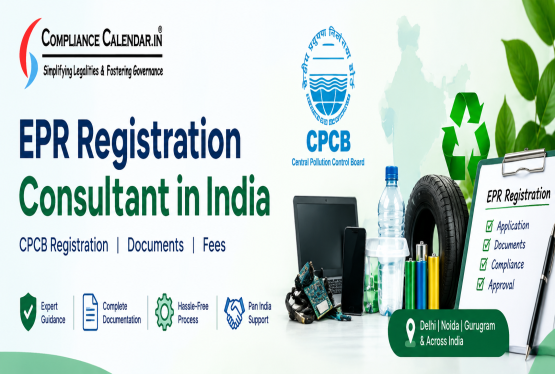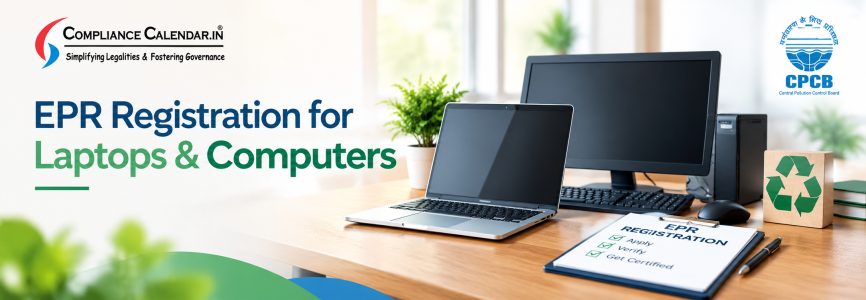



EPR Registration for Laptops and Computers is required for businesses that qualify as producers of covered laptops and computers in India. EPR stands for Extended Producer Responsibility. It means that companies selling these electronic products under their own brands or importing them for sale must take responsibility for their recycling when they become electronic waste. The Central Pollution Control Board (CPCB) manages EPR registration under the E-Waste (Management) Rules, 2022, as amended. Businesses covered by these rules must register through the CPCB E-Waste EPR Portal and meet their recycling responsibilities.
If you manufacture laptops, import computers or sell computers under your own brand, this guide explains who needs EPR registration, which products are covered, the required documents, government fees, the online application process and the rules you must follow after registration.
What Is EPR Registration for Laptops and Computers?
EPR Registration for Laptops and Computers is an official registration issued by CPCB to businesses covered under India's e-waste rules. Its purpose is to make sure that companies selling electronic products also take responsibility for the waste created when those products are no longer useful. For example, suppose a company imports 5,000 laptops and sells them in India. After several years, these laptops may stop working or become too old to use. They then become electronic waste, also called e-waste. Under EPR, the company may have to meet a recycling target based on the products it placed on the market in earlier years.
The company does not need to build its own recycling plant to meet this responsibility. Instead, it can obtain valid EPR recycling certificates from CPCB-registered recyclers through the official system. These certificates help the producer meet its recycling target. EPR also supports the safe handling of old laptops and computers so that useful materials, including copper, aluminium and other metals, can be recovered instead of being wasted.
What Is the Full Form of EPR?
EPR stands for Extended Producer Responsibility. In simple words, it means that a company remains responsible for the waste created by the electronic products it sells, even after customers have finished using them. For laptops and computers, this responsibility includes meeting the applicable recycling targets and following CPCB reporting requirements.
Which Laptops and Computers Are Covered Under EPR?
Laptops, desktop computers, notebook computers and several other electronic products are covered under Schedule I of the E-Waste (Management) Rules, 2022. CPCB uses product codes to identify different types of electronic equipment. These codes help businesses select the correct products during registration and report their sales information properly. A company selling both laptops and desktop computers should identify the relevant categories instead of registering everything under one product code.
The main product categories are listed below:
|
Product |
CPCB Product Code |
|
Personal computers, including CPU with input and output devices |
ITEW2 |
|
Laptop computers |
ITEW3 |
|
Notebook computers |
ITEW4 |
|
Notepad computers |
ITEW5 |
|
Printers, including cartridges |
ITEW6 |
If your business also sells monitors, printers, routers or other computer-related equipment, check the complete CPCB product list before applying. Different products may have different codes, and not every accessory is automatically covered under the laptop category.
Who Needs EPR Registration for Laptops and Computers?
EPR registration is mainly required for businesses that qualify as producers under the e-waste rules. A producer is not always the company that physically manufactures the product. It can also be a business that imports covered electronic equipment or sells it under its own brand. This is why laptop brands, computer importers and businesses that purchase finished computers from another factory must understand their responsibilities before selling products in India.
For example, an Indian company that buys laptops from a manufacturer and sells them under its own brand may need EPR registration even though it does not own a factory. Similarly, a business importing laptops from another country for sale in India generally falls under the producer definition. A factory manufacturing covered equipment must also check the registration requirements for manufacturers. If a business falls under more than one category, separate registrations may be required for the applicable activities.
Does a Normal Laptop Shop Need EPR Registration?
A shop that only resells laptops purchased from an Indian brand or supplier does not automatically become a producer simply because it sells laptops. However, the position may change if the shop imports laptops, sells computers under its own brand or carries out another activity covered by the rules. The important question is not whether the business operates online or offline, but what it actually does with the products.
Is EPR Registration Required for Refurbished Laptops?
A business that repairs or improves used laptops so they can be sold again may need registration as a refurbisher. If the same business also imports used laptops or carries out activities that fall under the producer definition, additional responsibilities may apply. Businesses dealing in refurbished computers should check their exact activities before choosing a registration category.
Documents Required for EPR Registration for Laptops and Computers
Businesses applying for CPCB EPR registration must provide accurate information about their company, electronic products and business activities. The documents help CPCB identify the applicant, understand which products are being sold and determine the applicable recycling responsibilities. The exact requirements depend on whether the applicant is a producer, manufacturer, importer or refurbisher, so businesses should check the latest document checklist on the CPCB portal before filing.
Documents Commonly Required for Producer Registration
- PAN card or PAN details of the business.
- GST registration certificate, as applicable.
- Certificate of Incorporation or relevant business registration document.
- Import Export Code (IEC), where applicable.
- CIN, where applicable.
- Details of the authorised person handling EPR compliance.
- Registered business address and contact information.
- List of laptops, computers and other covered electronic products.
- Correct CPCB product codes.
- Sales and purchase information required by the portal.
- Import information, where applicable.
- Signed covering letter and required undertaking.
- Other declarations or supporting documents requested by CPCB.
CPCB may also require earlier sales information to calculate the producer's recycling target. A newly established company that has not started selling products may have different reporting requirements from a business that has been selling computers for several years. Before submitting the application, check that the company name, address, PAN, GST and other details match the supporting documents, because incorrect or inconsistent information may lead to clarification requests.
How to Apply for EPR Registration for Laptops and Computers Online
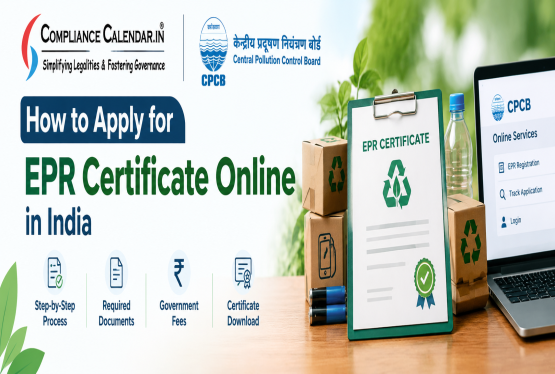
Businesses can apply for EPR registration through the official CPCB E-Waste EPR Portal. The process involves creating an account, selecting the correct business category, entering product and sales information, uploading documents and paying the applicable government fee. CPCB reviews the submitted application and may ask for corrections or additional information before issuing the registration certificate.
Step 1: Visit the CPCB E-Waste EPR Portal
Open the official CPCB E-Waste EPR Portal and select the relevant registration option. Follow the current sign-up instructions.
Step 2: Create Your Business Account
Enter the required business details, email address, mobile number and authorised person's information. Complete the account verification process.
Step 3: Select the Correct Registration Category
Choose the category that matches your business activity, such as producer, manufacturer or refurbisher. A business carrying out more than one covered activity may need separate registrations.
Step 4: Enter Product Details
Select the laptops, computers and other covered electronic products your business sells or plans to sell. For example, a company selling laptops and desktop computers may need to select both ITEW3 and ITEW2.
Step 5: Provide Sales and Import Information
Enter the required sales, purchase and import details. CPCB uses the relevant information to assess the producer's recycling obligations.
Step 6: Upload the Required Documents
Upload the requested business certificates, declarations, covering letter and other supporting documents. Make sure the information matches your application.
Step 7: Pay the Government Fee
Pay the applicable registration fee using the payment method provided on the portal. The fee depends on the current CPCB fee schedule and the applicant's circumstances.
Step 8: Submit and Track Your Application
Review the completed application before submitting it. If CPCB requests clarification or additional documents, respond through the portal within the applicable time.
Step 9: Receive the EPR Registration Certificate
Once CPCB approves the application, the registration certificate becomes available through the portal. After registration, the business must continue to meet its recycling targets and reporting requirements.
How Long Does EPR Registration Take?
The processing time depends on the accuracy of the application, the documents submitted and whether CPCB requests any clarification. There is no single approval period that should be guaranteed for every applicant. Preparing correct business details, choosing the right product codes and uploading complete documents can help reduce avoidable delays.
EPR Registration Fees for Laptops and Computers in India
The government fee for EPR registration depends on the applicant's category and the applicable CPCB fee schedule. For producers, the published fee structure uses the relevant annual recycling target to determine the registration fee and also provides for producers whose sales have not yet started. Therefore, businesses should not assume that every laptop importer or computer brand pays the same amount.
It is also important to understand that the government registration fee is different from the cost of meeting recycling targets. A registered producer may need to obtain EPR recycling certificates from registered recyclers to meet its obligations. These costs depend on the producer's target and the applicable certificate system.
|
Cost |
What It Means |
|
Government registration fee |
Fee payable under the applicable CPCB schedule |
|
Annual maintenance charges |
Charges applicable under the current CPCB fee rules |
|
EPR recycling certificates |
Cost of obtaining certificates needed to meet recycling targets |
|
Professional assistance |
Optional charges for registration and compliance support |
Before making payment, check the latest fee schedule on the CPCB portal. This is especially important for new businesses, importers and companies selling several categories of electronic products.
What Are the EPR Recycling Targets for Laptops and Computers?
After obtaining registration, producers must meet the recycling targets applicable to their business. These targets are based on the quantity of covered electronic products placed on the market in earlier years and the average life of those products. The target is not simply calculated using the laptops or computers sold during the same financial year. For example, laptops sold several years ago may become relevant when they reach the average end of their useful life.
The E-Waste (Management) Rules, 2022 provide the following general recycling target schedule:
|
Financial Year |
Recycling Target |
|
2023–24 |
60% |
|
2024–25 |
60% |
|
2025–26 |
70% |
|
2026–27 |
70% |
|
2027–28 |
80% |
|
2028–29 onwards |
80% |
Example of an EPR Recycling Target
Suppose a computer company has an applicable e-waste quantity of 10 tonnes for the financial year 2026–27. If its recycling target is 70%, it would need to meet a recycling obligation of 7 tonnes before any other adjustments required under the rules. This is a simple example to explain the calculation. The actual target depends on the product category, average product life, sales history and the applicable CPCB calculation method.
What Is an EPR Certificate for Laptops and Computers?
An EPR registration certificate and an EPR recycling certificate are not the same thing. An EPR registration certificate confirms that a business is registered with CPCB under the applicable e-waste rules. An EPR recycling certificate is generated by a registered recycler through the official system and is used by producers to meet their recycling obligations.
For example, a laptop brand may receive its EPR registration certificate before starting or continuing its covered business activities. However, this does not mean that the company has already completed its recycling target. It must separately track its obligations and obtain eligible recycling certificates through the official system when required.
EPR Compliance After Registration
Getting an EPR registration certificate is only the beginning. Producers must continue to meet the recycling targets and reporting requirements under the E-Waste (Management) Rules. They should maintain accurate sales and import records, obtain eligible recycling certificates, file the required returns and follow the applicable process when important business details change. Ignoring these duties can create compliance problems even if the business already has a registration certificate.
Important Responsibilities After Registration
- Meet recycling targets: Obtain and use eligible EPR recycling certificates to meet the applicable obligation.
- File required returns: Submit quarterly and annual returns under the current rules and portal instructions.
- Maintain records: Keep accurate product, sales and import information.
- Update business details: Follow the applicable amendment process when registered information changes.
- Check CPCB notices: Monitor official announcements for filing deadlines and portal updates.
Important EPR Update for 2026
The CPCB E-Waste EPR Portal announced an extension of the annual return filing deadline for the financial year 2025–26 to 30 September 2026. As of October 2026, that extended date has passed. Businesses that have not filed should check their portal status and any later official notice instead of assuming that another extension is available. CPCB has also announced the use of a Single Sign-On system for access to EPR portals.
Is EPR Registration Required for Imported or Refurbished Laptops?
Businesses importing laptops and computers for sale in India generally fall under the producer definition and must check their CPCB EPR registration obligations. This applies even when the products are manufactured by a foreign company. Importers should also remember that EPR registration does not replace customs requirements or other approvals that may apply to electronic products.
Used and refurbished laptops require special attention. Under the e-waste rules, importers of used electrical and electronic equipment have a 100% EPR obligation for the imported material after the end of its life if it is not re-exported. A company importing used laptops, repairing them and selling them again should review both its import-related responsibilities and the registration requirements for refurbishers.
What Happens If a Business Does Not Follow EPR Rules?
Businesses covered by the E-Waste (Management) Rules must obtain the required registration and follow their applicable responsibilities. Failure to register, meet recycling targets, submit required information or comply with other requirements may lead to regulatory action. Depending on the violation, this may include environmental compensation, action affecting registration and other measures available under the law.
For example, a laptop importer that obtains EPR registration but repeatedly ignores its recycling targets or reporting duties may still face compliance action. This is why businesses should treat EPR as an ongoing responsibility rather than a certificate they obtain once and forget.
Common Mistakes Businesses Should Avoid
Many EPR registration and compliance problems begin with incorrect product information, incomplete documents or a misunderstanding of the rules. Checking these points before applying can help businesses avoid unnecessary delays.
|
Common Mistake |
What You Should Do |
|
Choosing the wrong product code |
Check the CPCB product list before applying |
|
Assuming importers do not need registration |
Review the producer definition carefully |
|
Uploading documents with different addresses |
Check the business records before filing |
|
Confusing registration with recycling compliance |
Track both registration and EPR targets |
|
Ignoring quarterly or annual returns |
Monitor portal notices and filing deadlines |
|
Assuming refurbished laptops are exempt |
Check producer, importer and refurbisher obligations |
|
Buying certificates without checking eligibility |
Follow the official CPCB certificate system |
How Compliance Calendar Helps With EPR Registration for Laptops and Computers
If you manufacture, import or sell laptops and computers under your own brand, understanding EPR requirements can be difficult. You may need to identify the correct registration category, select product codes, prepare documents, provide sales information and understand recycling targets. Compliance Calendar LLP helps businesses understand these requirements and prepare the information needed for CPCB EPR registration.
Our team can also assist businesses in understanding ongoing EPR compliance, including applicable returns and recycling obligations. Whether you are starting a laptop brand, importing computers or expanding your electronic product business, preparing the correct information from the beginning can help reduce common application mistakes.
Need help with EPR Registration for Laptops and Computers?
Contact Compliance Calendar LLP for guidance on CPCB EPR registration and compliance.
Phone: +91 9988424211
Email: info@ccoffice.in
Frequently Asked Questions About EPR Registration for Laptops and Computers
1. Is EPR registration mandatory for laptops and computers in India?
Yes. EPR registration is mandatory for businesses that qualify as producers of covered laptops and computers under the E-Waste (Management) Rules, 2022, as amended. This generally includes laptop brands, computer importers and companies selling covered electronic products under their own brand names. Such businesses must obtain registration from the Central Pollution Control Board (CPCB) and follow the applicable recycling requirements.
2. What is the full form of EPR in laptop registration?
EPR stands for Extended Producer Responsibility. It means that businesses selling covered electronic products must take responsibility for meeting the recycling requirements when those products become electronic waste. For example, a company selling laptops in India may have to meet recycling targets based on its earlier sales and the average life of those products.
3. Who needs EPR registration for laptops and computers?
Laptop manufacturers selling products under their own brands, computer importers and companies selling covered computers under their own brand names generally need EPR registration as producers. A factory manufacturing electronic equipment may also need registration under the manufacturer category. Businesses should choose the correct registration category based on their actual activities.
4. How can I apply for EPR registration for laptops online?
You can apply through the official CPCB E-Waste EPR Portal. First, create an account and select the correct business category. Then enter your company and product details, provide the required sales or import information, upload documents and pay the applicable fee. CPCB reviews the application and may request clarification before granting registration.
5. What documents are required for EPR registration for laptops?
Common documents include business PAN, GST details, Certificate of Incorporation or other business registration proof, Import Export Code (IEC) where applicable, authorised person details and information about the laptops or computers being sold. CPCB may also require sales records, product codes, declarations and other supporting documents. The exact list depends on the applicant's registration category.
6. What is the government fee for EPR registration for laptops?
The government fee depends on the applicant's category and the applicable CPCB fee schedule. For producers, the published fee structure considers the relevant annual recycling target and includes provisions for businesses that have not started sales. The registration fee is separate from the cost of obtaining EPR recycling certificates. Businesses should check the latest CPCB fee schedule before applying.
7. How long does EPR registration for laptops take?
The time required depends on whether the application is complete, the documents are correct and CPCB needs any additional information. An application with missing documents or incorrect product details may take longer. Businesses should not rely on a guaranteed approval period because the final decision rests with CPCB.
8. Is EPR registration required for laptop importers in India?
Yes. Businesses importing covered laptops or computers for sale in India generally qualify as producers under the e-waste rules. They must check their CPCB EPR registration and recycling obligations, even when the laptops are manufactured by a foreign company. Importers must also follow any separate customs and product import requirements that apply.
9. Does a laptop retailer or computer shop need EPR registration?
A retailer that only resells laptops purchased from an Indian supplier does not automatically need producer registration. However, the business may need registration if it imports laptops, sells computers under its own brand or carries out another activity covered by the rules. The requirement depends on what the business does, not simply whether it sells products online or from a physical shop.
10. Is EPR registration required for refurbished or second-hand laptops?
Businesses refurbishing used laptops must check the registration requirements for refurbishers under the E-Waste (Management) Rules. If the business also imports used laptops or sells covered products in a way that qualifies it as a producer, additional responsibilities may apply. The correct registration depends on the business activity and the products involved.
11. What is the CPCB product code for laptops and desktop computers?
The CPCB product code for laptop computers is ITEW3, while personal computers, including the CPU with input and output devices, are listed under ITEW2. Notebook computers fall under ITEW4, and notepad computers under ITEW5. Businesses should select the correct product codes during registration because these details are used for reporting and EPR calculations.
12. What is the difference between an EPR registration certificate and an EPR recycling certificate?
An EPR registration certificate confirms that a producer is registered with CPCB under the e-waste rules. An EPR recycling certificate is generated by a CPCB-registered recycler and is used by producers to meet their recycling obligations. Receiving EPR registration does not mean that the producer has already completed its recycling targets.
13. What is the EPR recycling target for laptops and computers in 2026–27?
The general EPR recycling target for the financial year 2026–27 is 70% under the E-Waste (Management) Rules, 2022. The percentage applies to the relevant quantity calculated under the rules, based on factors such as earlier sales and the average life of the products. It does not simply mean recycling 70% of the laptops sold during the same year.
14. How are EPR recycling targets calculated for laptop manufacturers?
EPR recycling targets are generally calculated using the quantity of covered electronic products placed on the market in earlier years and their average life. For example, if a producer has an applicable e-waste quantity of 10 tonnes and a 70% recycling target, the basic recycling obligation would be 7 tonnes before any adjustments required under the rules. CPCB's applicable calculation method determines the actual target.
15. Can a laptop manufacturer meet EPR targets without opening a recycling plant?
Yes. A laptop producer does not need to open its own recycling plant simply to meet its EPR obligations. It can obtain eligible EPR recycling certificates from CPCB-registered recyclers through the official system. These certificates are used to meet the producer's recycling targets under the applicable rules.
16. Is EPR registration required for businesses selling laptops on Amazon or Flipkart?
Selling laptops through an online marketplace does not automatically create or remove an EPR registration requirement. A business importing covered laptops or selling them under its own brand may need producer registration, whether it sells through a website, an online marketplace or a physical store. A seller that only resells products from an Indian supplier should check whether its activities fall under the producer definition.
17. Does EPR registration for laptops have to be renewed every year?
Businesses should not assume that EPR registration requires a fresh application every year. They must follow the validity, renewal or maintenance requirements applicable to their registration under the current CPCB rules and portal instructions. They must also continue to meet recycling targets and file the required returns. Registration validity and annual compliance are separate matters.
18. What happens if a laptop importer does not obtain EPR registration?
A laptop importer that is required to register but fails to do so may face action under the E-Waste (Management) Rules. Depending on the violation, this may include environmental compensation and other regulatory measures. Importers should check their registration obligations before starting covered business activities rather than waiting until a compliance problem arises.
19. Are EPR registration and BIS certification the same for laptops?
No. EPR registration and BIS certification serve different purposes. EPR registration deals with electronic waste and the producer's recycling responsibilities. BIS certification deals with applicable product quality and safety requirements. A laptop business may need to comply with both frameworks, depending on the products and its activities. Having one approval does not automatically replace the other.
20. Can Compliance Calendar help with EPR registration for laptops and computers?
Yes. Compliance Calendar LLP helps laptop manufacturers, computer importers and brand owners understand CPCB EPR registration requirements. Our team can assist with identifying the correct registration category, preparing documents, reviewing product codes and understanding the online application process. We can also guide businesses on applicable recycling targets and ongoing compliance requirements.
Article last updated on : 28 Oct 2026.










_learn_crop10_thumb.jpg)