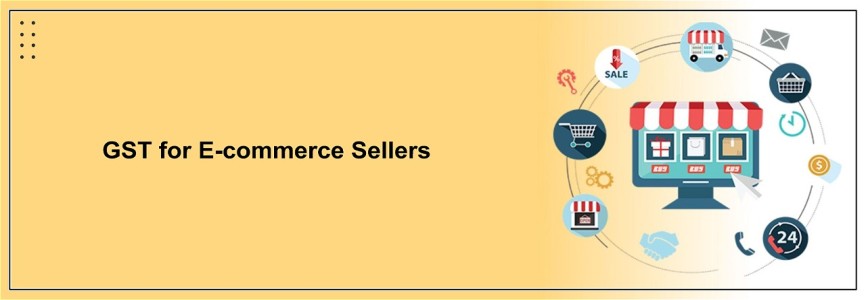



Selling products through an e-commerce platform allows businesses to reach customers across different cities and States without opening physical stores. However, online sellers must understand how GST registration, invoicing, return filing, Tax Collected at Source and Input Tax Credit apply to their transactions. The GST rules for e-commerce sellers are different from those applicable to many traditional offline businesses.
Although small sellers were earlier generally required to obtain GST registration before selling goods through an e-commerce operator, certain eligible sellers can now supply goods through online marketplaces without registration, subject to strict conditions. This article explains when GST registration is mandatory for e-commerce sellers, when an online seller can operate without a GSTIN, the registration procedure, documents required, marketplace TCS provisions and regular compliance obligations.
Meaning of E-commerce under GST
Section 2(44) of the Central Goods and Services Tax Act, 2017 defines electronic commerce as the supply of goods, services or both, including digital products, over a digital or electronic network.cAn electronic commerce transaction may therefore include the sale of physical products, digital products or services through a website, mobile application, online marketplace or any other electronic network.
Electronic Commerce Operator
An electronic commerce operator, commonly called an ECO, is defined under Section 2(45) of the CGST Act as a person who owns, operates or manages a digital or electronic platform for electronic commerce. Platforms such as online marketplaces generally provide sellers with digital listings, payment collection, order processing, logistics support, customer communication and settlement services. Where the platform collects the sale consideration on behalf of sellers, the TCS provisions under Section 52 may also become applicable.
E-commerce Seller
An e-commerce seller is the actual supplier of goods or services listed on an online platform. The seller may operate as a proprietorship, partnership firm, LLP, company, trust, society, manufacturer, trader, reseller, service provider or home-based business. The seller remains responsible for determining the applicable GST rate, issuing invoices, maintaining records, reporting sales and paying tax unless the supply falls under a category where the e-commerce operator is made responsible for tax under Section 9(5).
Why GST Registration Is Important for Online Sellers
GST registration gives an e-commerce seller a unique Goods and Services Tax Identification Number, commonly known as GSTIN. It allows the seller to collect GST, issue valid tax invoices and claim eligible Input Tax Credit. Registration also helps marketplaces and tax authorities identify the seller’s State, legal name, business address, product category and compliance status.
Ability to Make Taxable Supplies
A registered seller can collect applicable GST from customers and deposit it with the Government through GST returns. The tax charged depends on the classification of the goods or services, applicable HSN or SAC code and place of supply.
Input Tax Credit Benefit
A regular GST-registered seller may claim eligible Input Tax Credit on purchases and business expenses. This can include GST paid on inventory, packaging, marketplace commission, advertisements, warehousing, courier services and professional fees. The credit is subject to the conditions prescribed under GST law, including possession of a valid tax invoice and proper reporting by the supplier.
Expansion across India
A registered seller can undertake inter-State sales, subject to the applicable GST requirements. This allows the business to deliver products to customers in different States through marketplaces or its own website. Unregistered sellers using the special e-commerce exemption are not allowed to make inter-State supplies of goods.
Marketplace Onboarding
Many online marketplaces require sellers to provide GST details while creating a seller account, particularly when the seller deals in taxable goods or intends to sell across India. Even where an exemption is legally available, the seller must confirm whether the relevant marketplace supports onboarding through the GST enrolment number facility.
Legal Provisions Governing GST Registration for E-commerce Sellers
GST obligations for online sellers are mainly governed by Sections 22, 23, 24, 25 and 52 of the CGST Act, along with the related rules and notifications. Understanding these provisions helps determine whether the seller needs full GST registration or can operate under an exemption.
Section 22: Turnover-Based Registration
Section 22 provides the general turnover-based registration rule. A supplier becomes liable for GST registration when aggregate turnover exceeds the applicable threshold. For eligible persons exclusively engaged in the supply of goods, the threshold may generally extend up to Rs.40 lakh, subject to State-wise limits, exclusions and conditions. In other cases, the normal threshold is generally Rs.20 lakh, with a lower limit applicable in certain specified States.
Section 24: Compulsory Registration
Section 24 contains situations where registration may be compulsory irrespective of the normal turnover threshold. It includes persons supplying goods or services through an e-commerce operator required to collect TCS under Section 52. However, the Government has issued specific exemptions for eligible suppliers of goods and certain suppliers of services.
Section 23: Exemption from Registration
Section 23 empowers the Government to exempt specified categories of persons from obtaining GST registration. Using this power, Notification No. 34/2023–Central Tax was issued to exempt eligible small suppliers of goods selling through e-commerce operators from mandatory registration.
Section 52: Tax Collected at Source
Section 52 requires an eligible e-commerce operator to collect TCS on the net value of taxable supplies made through its platform where consideration is collected by the operator. The operator reports these transactions in Form GSTR-8, and the registered seller receives the corresponding TCS credit through the GST portal.
Is GST Registration Mandatory for Every E-commerce Seller?
GST registration is not mandatory for every person selling through an online marketplace. The requirement depends on the nature of supply, turnover, location of customers and whether the seller satisfies the conditions of the e-commerce exemption. The position should be examined separately for sellers of goods and providers of services.
GST Registration for Sellers of Goods
Earlier, a person selling goods through an e-commerce operator required to collect TCS generally had to obtain GST registration irrespective of turnover. From 1 October 2023, eligible small suppliers of goods can sell through e-commerce operators without GST registration, provided all the prescribed conditions are fulfilled. Notification No. 34/2023–Central Tax introduced this relaxation.
Condition 1: Turnover Must Remain within the Threshold
The seller’s aggregate turnover during the preceding financial year and the current financial year must remain below the applicable GST registration threshold. Aggregate turnover is calculated on an all-India basis for businesses operating under the same PAN. Therefore, offline sales, online sales, exempt supplies, exports and supplies from other business locations may have to be considered while checking the threshold.
Condition 2: Only Intra-State Supplies Are Allowed
An unregistered e-commerce seller cannot make inter-State supplies of goods. For example, an unregistered seller operating from Delhi may sell to customers located within Delhi. The seller cannot use this exemption to deliver goods to customers in Haryana, Uttar Pradesh, Maharashtra or any other State.
Condition 3: Sales Must Be Restricted to One State or Union Territory
The seller cannot supply goods through e-commerce operators in more than one State or Union Territory. The exemption is therefore designed primarily for small local sellers who want to use an online marketplace to reach customers within their own State.
Condition 4: A Valid PAN Is Mandatory
The seller must possess a Permanent Account Number issued under the Income Tax Act. The PAN is used to verify the identity of the seller and monitor aggregate turnover across different e-commerce platforms.
Condition 5: Business Details Must Be Declared
Before making supplies through the marketplace, the seller must declare the PAN, principal place of business and State or Union Territory on the common GST portal. The details are validated electronically before an enrolment number is issued.
Condition 6: Enrolment Number Must Be Obtained
An eligible unregistered seller must obtain an enrolment number through the GST portal. The e-commerce operator cannot allow the person to supply goods through the platform until the enrolment number has been allotted. A person cannot obtain more than one such enrolment number in the same State or Union Territory.
Condition 7: Registration Must Be Obtained after Crossing the Threshold
The exemption remains available only while the seller continues to satisfy the prescribed conditions. When turnover crosses the applicable threshold or the seller becomes liable for registration for another reason, regular GST registration must be obtained. The enrolment number becomes invalid from the effective date of registration.
Responsibilities of the Marketplace for Unregistered Sellers
Notification No. 37/2023–Central Tax prescribes a special procedure for e-commerce operators facilitating supplies by eligible unregistered sellers. The marketplace must monitor the seller’s enrolment status, location and nature of transactions.
-
Verification of Enrolment Number: The operator must allow the seller to supply goods only after a valid enrolment number has been allotted through the GST portal. This prevents persons who have not completed the prescribed enrolment process from using the special exemption.
-
Restriction on Inter-State Supplies: The operator must not permit an eligible unregistered seller to undertake inter-State supplies. The marketplace should therefore restrict the seller’s delivery area to customers located within the permitted State or Union Territory.
-
No TCS Deduction: The e-commerce operator is not required to collect TCS under Section 52 on supplies made by eligible unregistered sellers covered by the special procedure. This is different from supplies made by regular registered sellers, where TCS may be collected.
-
Reporting in Form GSTR-8: Although TCS is not collected, the operator must report the details of supplies made by unregistered sellers in Form GSTR-8. This reporting enables the tax authorities to monitor the seller’s turnover and determine whether the person continues to remain eligible for the registration exemption.
-
GST Registration for Online Service Providers: Service providers using e-commerce platforms are governed by slightly different rules. Notification No. 65/2017–Central Tax exempts certain suppliers of services through e-commerce platforms from compulsory registration where their turnover remains below the applicable threshold.
-
Services Not Covered under Section 9(5): A person supplying services through an e-commerce platform may claim the normal threshold exemption where the service is not covered under Section 9(5) and the conditions of Notification No. 65/2017 are fulfilled. Registration becomes necessary when the service provider crosses the applicable threshold or becomes liable under another provision.
-
Services Covered under Section 9(5): For certain notified services supplied through an e-commerce operator, the operator is responsible for paying GST as though it were the supplier. Notified categories have included specified passenger transportation, accommodation, housekeeping and restaurant services, subject to the wording and conditions of the relevant notifications.
Registration Must Be Examined Separately
The fact that the e-commerce operator pays GST on a particular transaction does not automatically settle every registration issue of the underlying service provider. The provider’s other supplies, turnover and business activities must also be considered.
-
When GST Registration Becomes Mandatory for an E-commerce Seller: An online seller should obtain GST registration where the business does not qualify for the exemption or stops satisfying its conditions. Registration may become necessary in the following circumstances.
-
Turnover Exceeds the Applicable Limit: GST registration becomes necessary when aggregate turnover exceeds the threshold applicable to the seller. The seller must consider turnover from all businesses operated under the same PAN rather than only the turnover appearing on one marketplace.
-
Inter-State Supplies Are Made: An unregistered seller operating under Notification No. 34/2023 cannot supply goods to customers located outside the State or Union Territory from which the seller is enrolled. A seller intending to deliver goods across India should generally obtain regular GST registration before beginning inter-State sales.
-
Goods Are Stored in Another State: E-commerce marketplaces may offer fulfilment centres where the seller’s inventory is stored and dispatched by the platform. If goods are stored and supplied from a warehouse located in another State, the seller may need GST registration in that State and may have to declare the warehouse as an additional place of business.
-
Seller Operates from Multiple States: GST is a State-wise registration. A person may need separate GST registrations in each State or Union Territory from which taxable supplies are made. One GST registration cannot ordinarily be used for taxable supplies made from business establishments located in different States.
-
Seller Wants to Claim Input Tax Credit: An unregistered seller cannot claim Input Tax Credit. Businesses incurring significant GST on inventory, packaging, commission, digital advertisements or logistics may voluntarily consider registration even when the threshold has not been crossed.
-
Marketplace Requires a GSTIN: A marketplace may require GST registration for specific categories, fulfilment models or pan-India selling arrangements. Marketplace onboarding requirements should be checked separately from the statutory exemption under GST law.
Can Composition Taxpayers Sell through E-commerce Platforms?
Eligible composition taxpayers are permitted to sell goods through e-commerce operators from 1 October 2023. Notification No. 36/2023–Central Tax prescribes the special procedure that e-commerce operators must follow for supplies made by composition taxpayers.
-
Only Intra-State Outward Supplies Are Allowed: A composition taxpayer cannot make inter-State outward supplies of goods. The e-commerce operator must ensure that the composition seller’s transactions remain within the permitted State or Union Territory.
-
TCS May Be Collected: Unlike the special procedure for eligible unregistered sellers, TCS may be collected on supplies made through the platform by composition taxpayers in accordance with Section 52. The operator must report the relevant supplies in Form GSTR-8.
-
No Input Tax Credit Is Available: A composition taxpayer cannot claim Input Tax Credit on business purchases or marketplace charges. The taxpayer also cannot issue a regular tax invoice or separately collect GST from the customer.
-
Suitability Should Be Evaluated: The composition scheme may reduce return-filing complexity, but it may not be suitable for every online seller. Businesses should compare turnover limits, product margins, Input Tax Credit loss, customer profile and expansion plans before choosing the scheme.
-
GST Registration for Sellers Using Their Own Website: A seller using its own website must distinguish between selling its own products and operating a marketplace for third-party sellers. The GST treatment may differ significantly between these two models.
-
Selling Own Products: Where a business sells only its own goods through its own website, it is generally making direct supplies to customers. The normal GST registration threshold, inter-State supply rules, invoicing requirements and place-of-supply provisions must be examined.
-
Operating a Multi-Seller Marketplace: Where the website allows independent third-party sellers to list products and collects payment on their behalf, the website owner may qualify as an e-commerce operator. In that case, separate ECO registration, TCS collection and Form GSTR-8 compliance may arise.
-
Social Media Sales: Orders received through Instagram, Facebook, WhatsApp or similar platforms may still constitute taxable supplies. The method used to receive the order does not remove GST liability where the seller is otherwise required to register.
Documents Required for GST Registration
The documents required depend on the constitution of the business, nature of premises and identity of the authorised signatory. Proper and readable documents reduce the possibility of receiving a clarification notice.
PAN and Identity Documents
The applicant should generally keep the following documents ready:
-
PAN of the proprietor or business entity
-
Aadhaar of the proprietor, partners or directors
-
Recent photographs
-
Mobile number and email address
-
Identity proof of the authorised signatory
Constitution Documents
The required documents may include:
-
Partnership deed for a partnership firm
-
Certificate of incorporation for a company
-
LLP incorporation certificate and LLP agreement
-
Memorandum and Articles of Association
-
Trust deed or society registration certificate
-
Board resolution or letter of authorisation
Principal Place of Business Proof
The applicant may submit documents such as:
-
Electricity bill
-
Property tax receipt
-
Ownership document
-
Rent or lease agreement
-
Consent letter
-
No-objection certificate from the owner
Where the premises are rented, the rent agreement should ordinarily be supported by ownership or utility documentation of the property.
Bank Account Proof
The applicant may provide:
-
Cancelled cheque
-
Bank statement
-
Passbook front page
-
Bank certificate
The legal name and account details should match the business information declared in the application.
Digital Signature and Authorisation
Companies and LLPs generally submit GST applications using a Digital Signature Certificate. Other applicants may use Electronic Verification Code or another prescribed verification method, subject to portal requirements.
GST Registration Process
GST registration is completed online through Form GST REG-01 on the GST portal. The applicant should ensure that PAN, business address and legal constitution details are consistent across all supporting documents.
Step 1: Start a New Registration Application
The applicant must select “New Registration” and enter the legal name as appearing on PAN, State, email address and mobile number. OTP verification is completed for the mobile number and email address.
Step 2: Generate the Temporary Reference Number
After successful verification, a Temporary Reference Number is generated. The applicant uses the TRN to access and complete Part B of the registration application.
Step 3: Enter Business Details
The applicant must provide:
-
Trade name
-
Constitution of business
-
Date of commencement
-
Reason for registration
-
Existing registrations
-
Nature of business activities
The reason for registration should be selected carefully, such as crossing the threshold, inter-State supply, voluntary registration or another applicable category.
Step 4: Add Promoters and Authorised Signatory
Details of the proprietor, partners, directors, trustees or managing committee members must be provided. The applicant must also identify the primary authorised signatory who will manage GST compliance on behalf of the business.
Step 5: Declare the Principal Place of Business
The complete business address, possession type and nature of activities carried out at the premises must be declared. Activities may include retail business, wholesale business, warehouse, office, factory or works contract services.
Step 6: Add Additional Places of Business
Warehouses, fulfilment centres, branches and other business locations within the same State should be added where applicable. A location in another State cannot simply be added to the existing GSTIN of the first State; separate registration may need to be examined.
Step 7: Add Goods and Services
The applicant must provide details of the main goods or services supplied by the business. Correct HSN or SAC classification is important for determining the GST rate and return-reporting requirements.
Step 8: Complete Aadhaar Authentication
The applicant may be required to complete Aadhaar authentication. Failure or non-selection of Aadhaar authentication may result in additional verification, document examination or physical verification of the business premises.
Step 9: Submit the Application
The application is submitted using DSC, EVC or another prescribed verification method. After submission, an Application Reference Number is generated for tracking the registration status.
Step 10: Respond to Clarification, If Issued
The GST officer may approve the application directly or issue a notice in Form GST REG-03 seeking clarification or additional documents. The applicant must respond within the prescribed time through Form GST REG-04. Failure to provide an adequate response may result in rejection of the application.
Tax Collected at Source for E-commerce Sellers
TCS under GST is collected by an e-commerce operator on the net value of taxable supplies made through its platform where consideration is collected by the operator. TCS is different from the GST charged by the seller and should not be treated as an additional GST rate on the product.
Current TCS Rate
With effect from 10 July 2024, the total GST TCS rate is 0.5% of the net value of taxable supplies. For intra-State transactions, it is divided into 0.25% CGST and 0.25% SGST or UTGST. For inter-State transactions, the TCS rate is 0.5% IGST.
Net Value of Taxable Supplies
TCS is calculated on taxable supplies made through the operator after reducing the value of supplies returned during the relevant period. Exempt supplies and transactions on which the operator itself is liable to pay tax under Section 9(5) are dealt with according to the applicable provisions.
Example of TCS Calculation
Suppose an online seller makes taxable sales of Rs.8,00,000 during a month and customers return products worth Rs.1,00,000. The net value of taxable supplies will be Rs.7,00,000. TCS at 0.5% will amount to Rs.3,500.
Credit in Electronic Cash Ledger
The registered seller can review the TCS details reported by the operator. After the details are properly reflected and accepted through the GST system, the TCS amount becomes available in the seller’s electronic cash ledger and may be used for payment of eligible GST liabilities.
GST Returns Applicable to E-commerce Sellers
A regular GST-registered seller must file applicable returns even where the marketplace has already collected TCS. TCS collection by the marketplace does not replace the seller’s responsibility to report sales and pay GST.
-
Form GSTR-1: GSTR-1 contains details of outward supplies. The seller must correctly report marketplace sales, direct website sales, B2B invoices, B2C supplies, credit notes, debit notes and amendments. Supplies made through e-commerce operators are reported in the relevant tables of GSTR-1, including the prescribed ECO-related details.
-
Form GSTR-3B: GSTR-3B is the summary return through which the seller declares outward tax liability, claims eligible Input Tax Credit and pays GST. The liability should be calculated on the taxable value of supplies and not merely on the net amount received from the marketplace.
-
Form GSTR-8: Form GSTR-8 is filed by the e-commerce operator required to collect TCS. The seller does not file GSTR-8 merely because it sells through Amazon, Flipkart, Meesho or another marketplace.
Composition Scheme Returns
A composition taxpayer generally pays tax through Form CMP-08 and files the applicable annual return in Form GSTR-4. The seller must also comply with the restrictions and documentation requirements of the composition scheme.
Input Tax Credit for E-commerce Sellers
Input Tax Credit can reduce the effective GST cost of running an online business. However, the credit is available only to eligible regular taxpayers who satisfy the prescribed conditions.
ITC on Purchase of Inventory
A registered trader or manufacturer may claim eligible GST paid on goods purchased for resale or manufacturing. The purchase invoices should be issued in the correct legal name and GSTIN of the seller.
ITC on Marketplace Commission
E-commerce operators generally charge commission or platform fees for facilitating sales. A regular registered seller may claim eligible Input Tax Credit on GST charged on such fees, subject to proper invoice reporting and other conditions.
ITC on Advertising Expenses
GST paid on online advertising, sponsored listings and promotional services may qualify as Input Tax Credit where the expenditure is incurred for business purposes. The advertisement account and tax invoice should contain the correct GST details.
ITC on Warehousing and Logistics
Eligible GST paid on warehousing, fulfilment, packaging, courier and logistics services may be claimed by a regular registered seller. Blocked credits, personal expenses and invoices not satisfying GST requirements must be excluded.
Invoicing Requirements for E-commerce Sellers
A registered online seller must issue a GST-compliant tax invoice for taxable supplies. The invoice should reflect the correct seller, recipient, product, tax rate and place-of-supply details.
Seller Details
The invoice should contain the seller’s legal name, address and GSTIN. Where the seller operates under a trade name, the trade name may also be mentioned appropriately.
Product and Tax Details
The invoice should contain:
-
Description of goods or services
-
Quantity
-
HSN or SAC code, where applicable
-
Taxable value
-
GST rate
-
CGST, SGST, UTGST or IGST amount
-
Total invoice value
Place of Supply
The place of supply determines whether CGST and SGST or IGST should be charged. For goods delivered to an unregistered customer, the applicable legal provisions relating to the delivery address and place of supply must be followed.
Credit Notes for Returns
Customer returns are common in e-commerce transactions. Where the original taxable value or tax needs to be reduced, the seller should issue and report an appropriate credit note within the legally permitted conditions and timeline.
Marketplace Settlement Reconciliation
One of the biggest compliance challenges for e-commerce sellers is matching marketplace reports with GST returns and bank settlements. The net amount received from the marketplace is rarely equal to the seller’s gross taxable turnover.
Gross Sales
Gross sales represent the value of products sold before deductions such as commission, shipping, TCS and TDS. GST liability should not be calculated only on the amount deposited into the seller’s bank account.
Sales Returns and Cancellations
Cancelled orders and customer returns must be identified separately. Returns should be matched with credit notes, marketplace reports and inventory records.
Marketplace Charges
The platform may deduct:
-
Commission
-
Shipping fees
-
Storage charges
-
Collection fees
-
Advertising expenses
-
Return handling fees
-
Penalties or adjustments
These deductions must be recorded separately from outward sales.
TCS and Income-tax TDS
GST TCS under Section 52 and income-tax TDS applicable to e-commerce transactions are separate deductions. Both should be reconciled with the relevant portal statements and accounting records.
Net Bank Settlement
The net bank settlement is the amount remaining after platform deductions. It should not be directly reported as sales turnover without reconciling the underlying transaction data.
Common GST Mistakes Made by E-commerce Sellers
Errors in online selling records can result in tax mismatches, blocked Input Tax Credit, notices and interest liabilities. Sellers should establish a monthly reconciliation process from the beginning.
Selling across States without Proper Registration
An unregistered seller cannot make inter-State supplies under the special exemption. Inventory movement to fulfilment centres in other States should also be examined before dispatch.
Reporting Net Settlement as Turnover
Marketplace settlement is usually received after several deductions. Reporting only the net settlement understates sales and may create a mismatch with GSTR-8 and marketplace data.
Using an Incorrect HSN Code
Incorrect classification can result in payment of GST at the wrong rate. The seller should review the product description, composition, use and relevant tariff classification before selecting the HSN code.
Ignoring TCS Reconciliation
TCS reported by the marketplace should be regularly checked against sales records. Unreconciled differences can affect the electronic cash ledger and may indicate incorrect marketplace reporting.
Claiming Ineligible Input Tax Credit
Input Tax Credit should not be claimed merely because GST appears on an invoice. The seller must ensure that the expense is business-related, the invoice is valid and the credit is not blocked under GST law.
Failing to Report Returns Properly
Customer returns should not be adjusted informally in accounting records. The relevant credit note and GST return reporting requirements should be followed.
Not Updating Warehouse Addresses
Warehouses and fulfilment centres should be declared correctly wherever required. Failure to add the appropriate place of business may create issues during stock verification, e-way bill generation or departmental proceedings.
Benefits of GST Registration for E-commerce Sellers
Although GST registration creates filing and record-keeping responsibilities, it can support the long-term growth of an online business. The benefits should be compared with the seller’s scale and operational model.
-
Wider Market Access: A registered seller can generally expand beyond local customers and make inter-State supplies. This makes GST registration important for businesses targeting customers throughout India.
-
Availability of Input Tax Credit: Input Tax Credit can reduce the GST cost embedded in purchases and operating expenses. This benefit may be significant for businesses with high marketplace commission, advertising or inventory costs.
-
Improved Business Credibility: A GSTIN gives customers, vendors and marketplace operators a verifiable tax identity. It may also support opening business accounts, applying for loans and entering formal supply contracts.
-
Better B2B Opportunities: Business customers generally prefer suppliers who can issue valid tax invoices. Registration may therefore improve the seller’s ability to sell to companies, dealers and institutional purchasers.
Conclusion
GST registration for e-commerce sellers depends on the seller’s turnover, business location, nature of supply, customer location and marketplace model. Small suppliers of goods can now use online marketplaces without obtaining regular GST registration, but only when they remain within the turnover threshold, obtain an enrolment number and restrict their supplies to one State or Union Territory. Sellers intending to make inter-State sales, store stock in multiple States, claim Input Tax Credit or build a pan-India business should consider regular GST registration. They must also maintain proper invoices, reconcile marketplace settlements, report returns accurately and monitor TCS credits.
Because online marketplaces report transaction details to the GST system, differences between marketplace reports, accounting records and GST returns can easily be identified. A systematic compliance process helps an e-commerce seller avoid notices, interest, penalties and disruption of marketplace operations.
Frequently Asked Questions
Q1. Is GST registration mandatory for every Amazon seller?
Ans. No. An eligible small supplier of goods may sell through an e-commerce operator without GST registration from 1 October 2023, subject to turnover, PAN, enrolment and intra-State supply conditions. A seller planning inter-State sales or operating from multiple States may still require GST registration.
Q2. Can I sell on Flipkart without a GST number?
Ans. An eligible seller of goods may sell without a GSTIN if the marketplace supports the enrolment facility and all conditions under Notification No. 34/2023 are satisfied. The seller must obtain an enrolment number and cannot make inter-State supplies.
Q3. Can an unregistered seller sell outside the State?
Ans. No. An unregistered seller using the e-commerce exemption cannot make inter-State supplies of goods. Regular GST registration should be obtained before supplying products to customers in other States.
Q4. Is GST registration required for selling through Instagram?
Ans. Receiving orders through Instagram does not automatically create a separate GST exemption. Registration depends on turnover, inter-State supplies, nature of products and other compulsory registration provisions.
Q5. Can a composition dealer sell through an online marketplace?
Ans. Yes. Eligible composition taxpayers may sell goods through e-commerce operators under the procedure effective from 1 October 2023. However, they cannot make inter-State outward supplies and cannot claim Input Tax Credit.
Q6. Who deducts GST TCS on marketplace sales?
Ans. The e-commerce operator collects TCS where Section 52 applies and the operator collects consideration for supplies made through its platform. The operator reports the amount in Form GSTR-8.
Q7. What is the current GST TCS rate?
Ans. The total TCS rate is 0.5% of the net value of taxable supplies from 10 July 2024. It is divided into 0.25% CGST and 0.25% SGST or UTGST for intra-State supplies, or charged as 0.5% IGST for inter-State supplies.
Q8. Can a seller claim ITC on Amazon or Flipkart commission?
Ans. A regular GST-registered seller may claim eligible Input Tax Credit on GST charged on marketplace commission, subject to the conditions prescribed under GST law. Unregistered sellers and composition taxpayers cannot claim such credit.
Q9. Is a separate GST registration required for every warehouse?
Ans. Separate registration may be required when goods are stored and supplied from warehouses located in different States. Warehouses located within the same State may generally be declared as additional places of business under the relevant State GST registration.
Q10. Does TCS replace the seller’s GST payment?
Ans. No. TCS is not a substitute for the seller’s GST liability. The registered seller must report sales in GST returns, calculate tax liability and use available cash or credit ledger balances to make payment.


_crop10_thumb.jpg)




_for_FY_2025-26_crop10_thumb.jpg)




_learn_crop10_thumb.jpg)


_Filing_Due_Dates_for_FY_2024-25_learn_crop10_thumb.jpeg)




_of_GST_Act_learn_crop10_thumb.jpg)


_Under_GST_learn_crop10_thumb.jpg)


_crop10_thumb.jpg)


_crop10_thumb.jpg)


_learn_crop10_thumb.jpg)


_of_the_Income_Tax_Act_learn_crop10_thumb.jpg)


_learn_crop10_thumb.jpg)


_learn_crop10_thumb.jpg)


_crop10_thumb.jpg)





_in_The_Income_Tax_Act,_1961_learn_crop10_thumb.jpg)


_learn_crop10_thumb.jpg)


_of_the_Income_Tax_Act_learn_crop10_thumb.jpg)

_Of_Income_Tax_Act_learn_crop10_thumb.jpg)


_learn_crop10_thumb.jpg)


_learn_crop10_thumb.jpg)
_crop10_thumb.jpg)



_learn_crop10_thumb.jpg)
_for_Import_and_Export_learn_crop10_thumb.jpg)





















_crop10_thumb.jpg)