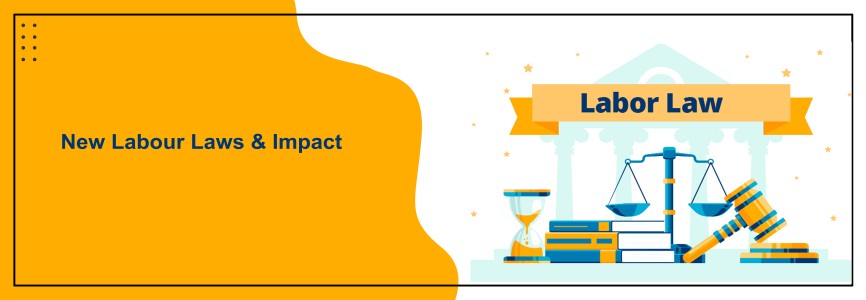



India has taken a big step towards modernising the way workplaces function with the introduction of new labour laws. These laws are designed to bring more clarity, transparency, and fairness for both employees and employers. The government has merged 29 old labour laws into four major labour codes all aimed at making compliance simpler and improving working conditions across the country.
Many people are still confused about what these new labour laws mean, how they will work, and how they will affect salaries, leaves, working hours, and overall business operations. This article explains everything in a simple and easy-to-understand manner.
What Are the Four New Labour Codes?
The Government of India has merged 29 old labour laws into four modern labour codes to simplify compliance, improve worker protection, and support business growth. These codes aim to make rules uniform across industries and ensure that every worker whether permanent, contractual, or gig-based receives fair treatment and proper benefits.
Code on Wages, 2019
The Code on Wages combines laws related to minimum wages, payment of wages, bonus, and equal pay. It ensures that every worker receives a fair and timely wage, regardless of gender or job category. This code promotes uniform wage standards across the country and protects workers from unjust deductions or discrimination.
Industrial Relations Code, 2020
The Industrial Relations Code regulates how companies hire, fire, and manage disputes with employees. It aims to maintain a healthy balance between protecting workers' rights and giving businesses flexibility to operate efficiently. It includes rules for strikes, trade unions, and grievance redressal mechanisms.
Social Security Code, 2020
The Social Security Code combines laws related to PF, ESI, maternity benefits, gratuity, and welfare schemes. A key highlight is that it extends social security to gig workers, platform workers, and unorganized-sector employees. It ensures more people receive long-term financial protection and social benefits.
Occupational Safety, Health and Working Conditions (OSH) Code, 2020
The OSH Code focuses on creating safe, healthy, and humane working conditions. It sets standards for workplace safety, working hours, medical facilities, welfare measures, and employee health. The goal is to ensure dignified working environments, especially in factories, mines, construction sites, and hazardous industries.
Key Changes Under the New Labour Laws
The new labour codes have introduced several major reforms that affect both employees and employers. These changes are designed to bring uniformity, increase social security, and modernize work practices across India.
Changes in Salary Structure (Impact on Take-Home Salary)
One of the most significant changes is the new salary structure rule. Under the labour codes, the basic salary must be at least 50% of the total salary, and allowances cannot exceed the remaining 50%. Because a higher basic salary means higher PF and gratuity deductions, employees may notice a reduction in take-home pay. However, the positive side is that PF and gratuity contributions will increase, which strengthens long-term savings and retirement benefits. The intention is to ensure financial security for employees in the long run.
Working Hours and Overtime
The new labour codes allow companies more flexibility in scheduling work. Although 8 hours per day remains the standard, organisations can opt for a 12-hour workday as long as weekly working hours do not exceed 48 hours. This helps companies manage shifts more efficiently. Overtime has also been made stricter: employees must be paid double their regular wage for overtime work, and employers must maintain proper overtime records to avoid exploitation.
Weekly Off and Rest Periods
To prioritise employee well-being, the new laws mandate proper rest periods. A worker must receive one weekly off after completing 48 hours of work. Additionally, every employee should get one rest day for every seven days of work. Daily work schedules must include a fixed rest interval to prevent fatigue. These measures aim to maintain work-life balance and reduce burnout.
Leave Rules May Change
The OSH Code proposes uniform leave rules across all industries. Employees may earn one day of leave for every 20 days worked, and carry-forward limits may be standardised so that all sectors follow similar norms. Certain industries may also require employees to maintain a minimum leave balance. These changes help reduce confusion and ensure fairness in leave management.
Strikes and Layoffs – New Procedures
The Industrial Relations Code brings stricter rules for strikes and layoffs. Workers must now provide 14 days’ notice before going on strike, even in essential services like transport and communication. For layoffs or closure, companies with 300 or more employees must seek government approval. These rules aim to prevent sudden disruptions in operations while protecting both worker rights and business continuity.
PF, ESI, and Gratuity – Wider Coverage
The Social Security Code extends benefits to a much larger workforce. More employees including those hired on fixed-term contracts will now be covered under PF and ESI. Fixed-term employees will also be eligible for gratuity without completing the usual 5 years of service. For the first time, gig workers and platform workers such as food delivery partners, cab drivers, and freelancers will receive special social security schemes. This is a major step toward protecting India’s growing informal workforce.
Safety and Health Standards
The OSH Code focuses heavily on improving workplace safety. Employers must provide clean drinking water, toilets, first-aid facilities, and proper ventilation at the workplace. Workers in hazardous industries must undergo mandatory safety training. Women are allowed to work night shifts, but only if the employer ensures adequate safety measures, transportation, and security. This code aims to ensure safe, hygienic, and worker-friendly work environments across all sectors.
Impact of the New Labour Laws on Employees
The new labour codes are expected to significantly influence how employees work and what benefits they receive. These reforms introduce more structure, fairness, and protection in the workplace, although some adjustments may be required from employees.
Positive Impacts
Employees will enjoy stronger social security benefits, as PF, gratuity, and ESI coverage will expand under the new rules. This ensures long-term financial stability. Workplace safety will improve because employers must now follow stricter health and safety standards. Clearer rules on working hours and overtime will help employees understand their rights better, while wage transparency will reduce confusion related to salary structure and deductions.
Challenges for Employees
On the other hand, employees may see a reduction in take-home salary due to higher PF and gratuity contributions. Although this money benefits them later, the immediate monthly payout may decrease. Leave policies may also change, requiring employees to adapt to uniform rules. Additionally, some workplaces may introduce longer shift hours, though total weekly hours remain capped at 48.
Overall Outcome
Despite certain adjustments, the overall aim of the new labour codes is to improve long-term financial security, transparency, and workplace conditions for employees across India.
Impact on Employers and Businesses
The new labour codes will also bring significant changes for employers and businesses, affecting the way they manage their workforce, salaries, and workplace policies. These reforms aim to simplify compliance while creating a structured and fair environment for both employees and employers.
Advantages for Employers
One major benefit is simplified compliance, as 29 separate labour laws have now been consolidated into just 4 codes, reducing confusion and administrative burden. Employers also gain flexibility in managing work shifts, with the option to choose 8-hour or 12-hour workdays, provided the weekly limit of 48 hours is maintained. Clear procedures for dispute resolution help prevent conflicts and ensure smoother workplace operations. Additionally, hiring fixed-term employees becomes easier under the new rules, allowing businesses to meet short-term staffing needs without long-term obligations.
Challenges for Employers
However, these changes also present some challenges. With the new definition of wages, employers may see an increase in PF and gratuity contributions, which raises overall payroll costs. Companies will need to revise their salary structures, requiring HR teams to redesign compensation models to meet the 50% basic wage rule. The new safety and welfare standards also demand additional investments in workplace facilities, documentation, and compliance checks.
Overall Impact
To fully comply with the new labour codes, many companies will need to update their employment contracts, HR policies, shift schedules, and payroll systems. While the transition may require effort and restructuring, the long-term outcome is expected to create a more transparent, organized, and employee-friendly work environment.
Why These Laws Were Introduced
The earlier labour laws in India were created decades ago and had become outdated, complicated, and difficult for both businesses and workers to follow. Many of these laws overlapped, used different definitions, and created confusion during compliance. To solve these issues, the government introduced the new labour codes with the goal of modernizing the country’s labour framework.
The primary purpose of these reforms is to simplify labour regulations by merging 29 old laws into just four easy-to-understand codes. This makes compliance smoother and helps businesses operate more efficiently. Another major objective is to attract investment and generate employment by creating a flexible and business-friendly environment.
At the same time, the new laws aim to ensure that employees receive fair wages, safe working conditions, and better social security. For the first time, gig workers and informal-sector workers are also included in social security schemes, reflecting India’s changing workforce.
Overall, these labour reforms are designed to build a modern, transparent, and balanced labour ecosystem that supports economic growth while safeguarding worker rights and improving workplace standards.
Conclusion
The new labour laws mark a major reform in India’s employment structure and aim to modernize how workplaces function across the country. Although these laws introduce several changes such as revised salary structures, updated working hours, and stricter compliance they also bring long-term benefits for both workers and employers. Employees gain stronger social security, clearer wage systems, and safer working environments, while businesses benefit from simplified regulations and more flexibility in operations.
Like any major reform, there will be an adjustment period as companies and individuals adapt to the new rules. However, the overall goal of these labour codes is to create a workplace that is balanced, transparent, and fair for everyone. As the laws gradually come into full effect, it becomes essential for employees, HR professionals, and employers to understand their rights, duties, and compliance requirements. With proper awareness and effective implementation, these new labour codes have the potential to significantly enhance India’s labour ecosystem, improve working conditions, and support the country’s economic growth.
Frequently Asked Questions (FAQs)
Q1. When will the new labour codes officially come into force?
Ans. The four labour codes have been passed by Parliament, but they will be implemented only when all states notify their rules. Since labour is a state subject, the implementation will happen once both the Centre and states complete the rule-making process.
Q2. Do the new labour laws apply to all companies and industries?
Ans. Yes, the new labour codes apply to almost all establishments, including factories, shops, IT companies, service industries, start-ups, and gig-economy platforms. However, certain provisions may vary based on the size and nature of the business.
Q3. Will the new labour codes affect contract workers?
Ans. Yes. Contract workers will receive better legal protection, PF/ESI benefits (if eligible), improved safety conditions, and standardised wages. Employers must ensure proper documentation and compliance for all contract labour.
Q4. Are gig workers and platform workers covered under the new laws?
Ans. Yes. For the first time in India, gig workers and platform workers such as delivery partners, cab drivers, freelancers, and app-based workers are included under social security schemes like insurance, pension, and welfare funds.
Q5. Will small businesses (MSMEs) face difficulties in compliance?
Ans. Some MSMEs may need to adjust payroll, maintain better records, and update HR policies. However, the simplified structure of the four labour codes reduces confusion and makes compliance easier than older laws.
Q6. Can employers reduce salaries because of the new labour codes?
Ans. No. Employers cannot reduce the total salary package. Only the salary structure may change (basic pay must be 50%), which may reduce take-home salary but increase retirement benefits.
Q7. Will employees get more paid leaves under the new codes?
Ans. Not necessarily more leaves, but leave rules will become uniform across industries, reducing confusion. Earned leave accumulation and carry-forward limits will also be standardised.
Q8. How will the new overtime rules impact employees working in shifts?
Ans. Employees working beyond 8 hours a day or 48 hours a week must receive double wages for overtime. This ensures fair compensation and discourages excessive working hours.
Q9. Are women allowed to work night shifts under the new laws?
Ans. Yes. Women can work night shifts, but only if employers provide proper safety measures, transportation, and protection against harassment.
Q10. Will employers need to rewrite employment contracts?
Ans. Yes. Many companies will need to update appointment letters, HR manuals, compensation structures, shift policies, and leave rules to comply with the new labour codes.


_crop10_thumb.jpg)




_for_FY_2025-26_crop10_thumb.jpg)




_learn_crop10_thumb.jpg)


_Filing_Due_Dates_for_FY_2024-25_learn_crop10_thumb.jpeg)





_of_GST_Act_learn_crop10_thumb.jpg)


_Under_GST_learn_crop10_thumb.jpg)


_crop10_thumb.jpg)


_crop10_thumb.jpg)


_learn_crop10_thumb.jpg)


_of_the_Income_Tax_Act_learn_crop10_thumb.jpg)


_learn_crop10_thumb.jpg)


_learn_crop10_thumb.jpg)


_crop10_thumb.jpg)





_in_The_Income_Tax_Act,_1961_learn_crop10_thumb.jpg)


_learn_crop10_thumb.jpg)


_of_the_Income_Tax_Act_learn_crop10_thumb.jpg)


_Of_Income_Tax_Act_learn_crop10_thumb.jpg)


_learn_crop10_thumb.jpg)


_learn_crop10_thumb.jpg)
_crop10_thumb.jpg)



_learn_crop10_thumb.jpg)
_for_Import_and_Export_learn_crop10_thumb.jpg)























_crop10_thumb.jpg)