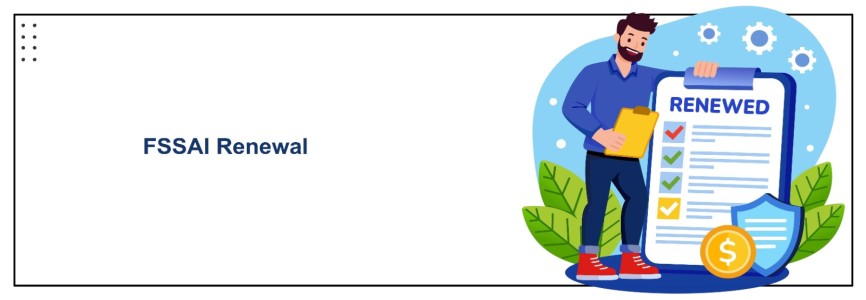



Running a food business in India does not end with getting an FSSAI license. The real responsibility lies in keeping the license valid through timely renewal. Many food business operators (FBOs) assume the license is permanent and later face penalties, suspension, or even closure. FSSAI license renewal is a legal requirement under the Food Safety and Standards Act, 2006, and ignoring it can seriously affect business continuity.
This article explains FSSAI license renewal due dates, penalties for delay, and ongoing compliance requirements in simple language so that food businesses can stay on the right side of the law.
What Is FSSAI License Renewal?
An FSSAI license or registration is issued for a fixed validity period, which can range from 1 year to 5 years, depending on what the applicant selected at the time of registration.
FSSAI license renewal means extending the validity of the existing license before it expires. Renewal ensures that your food business remains legally authorised to manufacture, store, distribute, sell, or transport food products in India.
If a license is not renewed on time, it expires automatically, and the business becomes illegal from the very next day.
Types of FSSAI Licenses That Require Renewal
All categories of FSSAI approvals require renewal:
-
FSSAI Basic Registration – for small food businesses
-
FSSAI State License – for medium-scale food businesses
-
FSSAI Central License – for large food businesses, importers, exporters, and operators working in multiple states
The renewal process applies equally to all three.
FSSAI License Renewal Due Dates
FSSAI has clearly defined timelines for renewal.
Standard Renewal Timeline
-
Renewal application must be filed at least 30 days before the expiry date of the license.
-
The expiry date is mentioned on the FSSAI certificate.
Best Practice Timeline
Though 30 days is the legal minimum, it is advisable to apply 60–90 days in advance to avoid last-minute issues such as:
-
Document errors
-
Portal delays
-
Inspection requirements
-
Payment failures
Applying early also gives enough time to respond if the food authority raises any query.
What Happens If You Miss the FSSAI Renewal Due Date?
Missing the renewal deadline does not just mean paperwork delay it has legal and financial consequences.
Late Renewal (Before Expiry)
If the renewal application is filed after the 30-day window but before expiry, FSSAI allows renewal with a late fee of Rs.100 per day.
There is no upper cap on this penalty, meaning delays can become expensive very quickly.
License Expired (After Expiry Date)
If the license expires:
-
The FSSAI number becomes invalid
-
The food business must stop operations immediately
-
A fresh FSSAI license application must be filed
-
Business may face inspection and scrutiny
-
Operating without license attracts heavy penalties
Penalties for Operating Without FSSAI Renewal
Running a food business with an expired license is treated as operating without FSSAI approval, which is a serious offence.
Possible penalties include:
-
Monetary penalty up to Rs.5 lakh
-
Seizure of food products
-
Business closure orders
-
Legal prosecution in severe cases
For online sellers, restaurants, cloud kitchens, and exporters, expired FSSAI licenses can also lead to:
-
Delisting from platforms like Swiggy, Zomato, Amazon
-
Cancellation of import/export permissions
-
Loss of business credibility
Documents Required for FSSAI License Renewal
The documents depend on the license category, but generally include:
-
Existing FSSAI license copy
-
Form A or Form B (auto-generated online)
-
Updated business details (if any change)
-
List of food products
-
Identity and address proof of proprietor/partners/directors
-
Updated layout plan (if premises changed)
-
Water test report (for manufacturers)
-
Authority letter or board resolution
If there are no changes in business details, the renewal process becomes faster.
Step-by-Step Process of FSSAI License Renewal
-
Log in to the FoSCoS portal
-
Select “Renew License/Registration”
-
Enter existing FSSAI license number
-
Verify and update business details
-
Upload required documents
-
Pay government renewal fees
-
Submit the application
-
Track application status online
In some cases, the food authority may conduct a renewal inspection, especially for manufacturing units.
Key Compliance Requirements After Renewal
Renewal is not just about paying fees it confirms that your business continues to meet food safety standards.
Ongoing Compliance Includes:
-
Maintaining hygiene and sanitation
-
Proper food storage and labelling
-
Using approved raw materials
-
Regular pest control
-
Staff hygiene and training
-
Display of FSSAI license number at premises and invoices
Failure to follow compliance conditions can result in suspension or cancellation even after renewal.
Common Mistakes to Avoid During FSSAI Renewal
-
Waiting till the last week before expiry
-
Ignoring portal alerts or SMS reminders
-
Uploading outdated documents
-
Not updating changes in business address or product list
-
Assuming automatic renewal without application
These mistakes often lead to rejection or penalties.
Why Timely FSSAI Renewal Is Important for Business Growth
Timely renewal helps:
-
Maintain uninterrupted business operations
-
Avoid unnecessary penalties and legal risk
-
Retain trust of customers and partners
-
Ensure eligibility for tenders and online platforms
-
Strengthen brand credibility in food safety
For food businesses, compliance is not optional it is a growth enabler.
Conclusion
FSSAI license renewal is not a mere formality it is a legal necessity and a business safeguard. Missing renewal deadlines can result in penalties, operational shutdowns, and loss of market credibility. By understanding due dates, penalties, and compliance responsibilities, food business operators can stay compliant and focus on growth.
A simple habit of tracking expiry dates and planning renewals in advance can save businesses from major legal and financial trouble.
FAQs
Q1. When should I apply for FSSAI license renewal?
Ans. You should apply at least 30 days before the expiry date, but applying 60–90 days early is safer.
Q2. What is the penalty for late FSSAI renewal?
Ans. A late fee of Rs.100 per day is charged if the renewal application is filed after the due date but before expiry.
Q3. Can I operate my food business if my FSSAI license expires?
Ans. No. Operating with an expired license is illegal and can attract penalties up to Rs.5 lakh.
Q4. Do I need a fresh license if my FSSAI license expires?
Ans. Yes. Once expired, you must apply for a new FSSAI license, not renewal.
Q5. Is FSSAI renewal required every year?
Ans. It depends on the validity chosen. Licenses can be valid for 1 to 5 years, and renewal is required before expiry.
Q6. Can I change business details during renewal?
Ans. Yes. You can update address, product list, or other details while filing the renewal application.
Q7. Is inspection mandatory during renewal?
Ans. Not always. However, manufacturing units may face inspection if required by the authority.
Q8. What happens if my renewal application is rejected?
Ans. You may be asked to correct documents or, in some cases, apply afresh depending on the reason for rejection.
Q9. Can online food sellers continue without FSSAI renewal?
Ans. No. Online platforms usually suspend sellers with expired FSSAI licenses.
Q10. Who should handle FSSAI renewal business owner or professional?
Ans. While owners can apply themselves, professionals help avoid errors, delays, and penalties.


_crop10_thumb.jpg)




_for_FY_2025-26_crop10_thumb.jpg)




_learn_crop10_thumb.jpg)


_Filing_Due_Dates_for_FY_2024-25_learn_crop10_thumb.jpeg)





_of_GST_Act_learn_crop10_thumb.jpg)


_Under_GST_learn_crop10_thumb.jpg)


_crop10_thumb.jpg)


_crop10_thumb.jpg)


_learn_crop10_thumb.jpg)


_of_the_Income_Tax_Act_learn_crop10_thumb.jpg)


_learn_crop10_thumb.jpg)



_learn_crop10_thumb.jpg)


_crop10_thumb.jpg)





_in_The_Income_Tax_Act,_1961_learn_crop10_thumb.jpg)


_learn_crop10_thumb.jpg)


_of_the_Income_Tax_Act_learn_crop10_thumb.jpg)

_Of_Income_Tax_Act_learn_crop10_thumb.jpg)


_learn_crop10_thumb.jpg)


_learn_crop10_thumb.jpg)
_crop10_thumb.jpg)




_learn_crop10_thumb.jpg)
_for_Import_and_Export_learn_crop10_thumb.jpg)























_crop10_thumb.jpg)