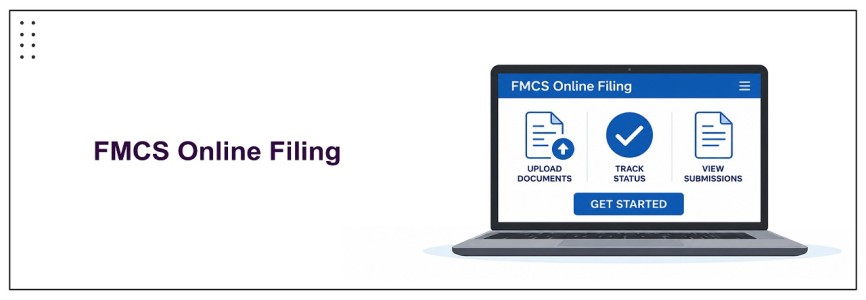



Foreign manufacturers seeking a BIS licence under the Foreign Manufacturers Certification Scheme can no longer start a fresh application through offline or hard-copy filing. BIS has stated on its official FMCS application page that offline applications were accepted only up to 31 May 2026 and that, from 1 June 2026, only applications submitted through the Manakonline portal will be accepted. The change does not remove any technical, factory, documentation or testing requirement. It changes the filing channel and makes portal readiness a basic part of every new FMCS matter.
The FMCS Filing Update in One View
|
Particular |
Official Detail |
|
BIS Scheme |
Foreign Manufacturers Certification Scheme (FMCS) |
|
Issuing Body |
Bureau of Indian Standards |
|
Official Update |
Fresh applications accepted online through Manakonline |
|
Offline Cut-off |
31 May 2026 |
|
Online-only Start Date |
1 June 2026 |
|
Applicant |
Foreign manufacturer seeking a BIS licence |
|
Representative Requirement |
Nomination of an Authorised Indian Representative in the prescribed manner |
|
Nature of Change |
Application mode changed; certification obligations remain applicable |
What Has Changed in the Application Journey?
Earlier, the BIS FMCS guidance referred to submission of the prescribed application, supporting documents, AIR nomination and fees to the Foreign Manufacturers Certification Department at BIS Headquarters. BIS subsequently enabled online submission through Manakonline and issued a user manual. The May 2026 update completes the shift: a new application in offline mode or hard copy is no longer accepted after the stated cut-off.
This is an administrative change with real operational impact. A technically ready manufacturer may still face delay if the portal account, authorised signatory information, document format, payment process or online data fields are incomplete. Teams accustomed to circulating signed paper sets should rebuild their internal workflow around digital documents, consistent data and timely online responses.
FMCS Still Grants the Licence to the Manufacturing Unit
BIS explains that FMCS has operated since 2000 and that the licence is granted to a foreign manufacturer for using the Standard Mark on a product conforming to an Indian Standard. The Indian importer, distributor or brand owner may support the project, but it is not a substitute for the actual manufacturing unit in the certification process.
Where one brand sources the same product from more than one overseas factory, each manufacturing location may require separate examination under the applicable scheme. Likewise, shifting production to another plant after registration should not be treated as a routine commercial change without reviewing the BIS implications.
Who Must Rework Their Compliance Process?
Foreign manufacturers planning their first BIS application need to register and file through the online portal. Existing licensees should separately check the online requirements for inclusion, renewal, amendments or other post-licence actions; the 1 June statement is specifically relevant to applications for grant of licence.
Indian importers and brand owners should update contracts and onboarding checklists so that the overseas factory provides portal-ready documents. Consultants, testing coordinators and AIRs also need to manage data consistency because differences in the legal name, factory address, brand ownership, product model or Indian Standard can create deficiencies.
A business importing products subject to a Quality Control Order should not wait until the shipment is ready. The online-only rule does not reduce the time needed for testing, application examination, factory assessment, query resolution or other steps applicable to the product.
Dates Foreign Manufacturers Should Record
|
Compliance Event |
Relevant Date |
Business Impact |
|
Last date for offline/hard-copy FMCS applications |
31 May 2026 |
Any new grant application after this date should not be planned through physical filing. |
|
Online-only acceptance begins |
1 June 2026 |
New FMCS grant applications must be submitted through the online portal. |
|
BIS page last updated |
12 May 2026 |
The official application guidance records the procedural change. |
Building a Portal-Ready FMCS Application
-
Confirm that the product is covered by an Indian Standard and determine whether compulsory BIS certification applies.
-
Identify the exact overseas manufacturing unit and ensure that its legal name and address are used consistently in all documents.
-
Register or activate the required Manakonline account and allocate responsibility for portal access, payment and response tracking.
-
Complete the prescribed application form and prepare all documents in upload-ready format.
-
Nominate an Authorised Indian Representative using the prescribed form and confirm that the AIR can discharge the stated responsibilities in India.
-
Review the BIS checklist and the commonly observed deficiencies before pressing submit.
-
Coordinate product testing, factory information and the certification schedule according to the applicable Indian Standard.
-
Respond to portal queries promptly and maintain a record of submissions, payments and revised documents.
Documents That Commonly Need Early Coordination
The final checklist depends on the product and certification scheme, but an FMCS application commonly requires the prescribed application form, AIR nomination, legal documents of the manufacturer, factory details, product and brand information, manufacturing-process information, machinery and testing-equipment details, quality-control records, test reports or sample-related documents, undertakings and fee-related information.
Foreign-language documents may need suitable translation or authentication depending on the requirement. Brand ownership and authorisation should be resolved early, especially where the brand owner, manufacturer and Indian importer are different entities. Portal upload limits and file naming should also be addressed before the final filing day.
Why Incomplete Online Filing Can Still Delay a Licence
BIS expressly advises applicants to review commonly observed deficiencies. Its application page also states that the applicant is responsible for delay arising from an incomplete application, delayed response to queries or non-payment of dues. Online submission therefore should not be confused with automatic or instant approval.
A rushed filing may produce mismatched model details, missing signatures, unclear factory boundaries, incomplete test facilities or inconsistent addresses. Corrections can affect inspection planning and commercial launch dates. Importers should build a realistic buffer rather than arranging production and freight on the assumption that portal submission itself completes compliance.
Business Exposure When FMCS Is Started Too Late
A foreign manufacturer without the required BIS licence may be unable to supply a covered product to India after the mandatory date. The Indian customer may then face shipment postponement, customs queries, storage cost, cancellation of purchase orders, inability to list products on marketplaces, loss of tenders or a need to shift production to an already licensed source.
Incorrect use of the Standard Mark or representation that a product is BIS approved before grant can create separate compliance concerns. Businesses should also avoid assuming that certification granted to another factory, group company or similar model covers their supply.
Practical Example: A Foreign Appliance Factory Filing in June
An overseas appliance manufacturer receives an Indian purchase order in June 2026. Its local team has already prepared a paper application, but no online account has been completed. Under the revised BIS filing position, dispatching the paper set will not start a valid new FMCS application. The manufacturer should convert the documents into the prescribed online workflow, nominate the AIR, verify the applicable Indian Standard, arrange testing and submit through Manakonline. The importer should revise the launch plan around the complete certification process, not merely the date of portal submission.
FMCS Online Application Checklist
-
Applicable product and Indian Standard confirmed
-
Foreign manufacturing unit and legal address verified
-
Manakonline account and authorised user ready
-
Prescribed application form completed
-
AIR nominated through the correct form
-
Brand and trademark documents reviewed
-
Factory, machinery and test-equipment details compiled
-
Test report and sample plan checked
-
Fees and payment process arranged
-
Common deficiencies reviewed before submission
-
Portal query-response responsibility assigned
How Compliance Calendar LLP Can Assist Foreign Manufacturers
Compliance Calendar LLP can support applicability assessment, identification of the correct Indian Standard, FMCS project planning, AIR coordination, document review, portal filing, testing coordination, factory-inspection preparation, responses to BIS observations and post-registration compliance. The engagement can also coordinate the Indian importer, brand owner and overseas manufacturing team so that technical and legal information remains consistent. BIS retains authority over examination, inspection, testing, fees and grant of licence.
Digital Filing Requires Better Preparation, Not Less Preparation
The online-only requirement is a clear procedural deadline: new FMCS applications from 1 June 2026 must be filed through Manakonline. Foreign manufacturers should treat portal preparation as part of the certification project from the beginning. The product standard, factory capability, testing evidence, AIR nomination and supporting documents remain central. A clean digital file can reduce avoidable deficiencies, while incomplete uploads or inconsistent information may delay market entry. Importers should confirm the supplying factory’s licence position before committing to production and freight. Early coordination among the manufacturer, AIR, laboratory and Indian customer remains the safest approach.
Frequently Asked Questions
Q1. Are offline FMCS applications accepted after 31 May 2026?
Ans. BIS states that offline or hard-copy applications were accepted only up to 31 May 2026. From 1 June 2026, applications for grant of licence under FMCS are accepted only through the online portal.
Q2. Does online submission mean the licence is granted instantly?
Ans. No. Online submission is the application channel. Technical review, documentation, testing, factory-related assessment, queries, dues and other applicable requirements still have to be completed.
Q3. Who is the applicant under FMCS?
Ans. The foreign manufacturer is the applicant and the BIS licence is granted to the manufacturing unit for use of the Standard Mark on a conforming product. An importer or brand owner should not assume that it can replace the manufacturer.
Q4. Is an Authorised Indian Representative required?
Ans. BIS FMCS guidance requires nomination of an AIR through the prescribed form. The AIR must be an Indian resident and accepts responsibility for compliance obligations connected with the licence.
Q5. Can an Indian importer file in its own name for a foreign factory?
Ans. The certification is factory-based and the foreign manufacturer is the applicant. The importer may coordinate documentation and act through the approved representative structure, but the actual manufacturing unit remains central.
Q6. What happens if documents are incomplete?
Ans. BIS warns that the applicant is responsible for delays caused by an incomplete application, delayed replies to queries or non-payment of dues. A pre-filing deficiency review is therefore valuable.
Q7. Does the online-only update apply to CRS applications?
Ans. This specific update appears on the BIS FMCS application page and concerns applications for grant of licence under FMCS. CRS and domestic Scheme-I applications follow their own online procedures.
Q8. How can Compliance Calendar LLP help with online FMCS filing?
Ans. CCL can assess applicability, structure the document checklist, coordinate AIR and testing requirements, submit the online application, prepare query replies and support factory-inspection readiness. Approval remains subject to BIS.


_crop10_thumb.jpg)




_for_FY_2025-26_crop10_thumb.jpg)




_learn_crop10_thumb.jpg)


_Filing_Due_Dates_for_FY_2024-25_learn_crop10_thumb.jpeg)




_of_GST_Act_learn_crop10_thumb.jpg)


_Under_GST_learn_crop10_thumb.jpg)


_crop10_thumb.jpg)


_crop10_thumb.jpg)


_learn_crop10_thumb.jpg)


_of_the_Income_Tax_Act_learn_crop10_thumb.jpg)


_learn_crop10_thumb.jpg)


_learn_crop10_thumb.jpg)


_crop10_thumb.jpg)





_in_The_Income_Tax_Act,_1961_learn_crop10_thumb.jpg)


_learn_crop10_thumb.jpg)


_of_the_Income_Tax_Act_learn_crop10_thumb.jpg)

_Of_Income_Tax_Act_learn_crop10_thumb.jpg)


_learn_crop10_thumb.jpg)


_learn_crop10_thumb.jpg)
_crop10_thumb.jpg)




_learn_crop10_thumb.jpg)
_for_Import_and_Export_learn_crop10_thumb.jpg)
















_crop10_thumb.jpg)