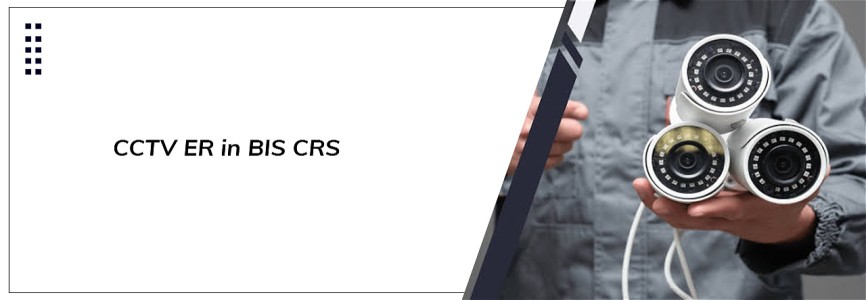



The BIS Compulsory Registration Scheme, commonly known as BIS CRS, has always played an important role in ensuring that notified electronic and IT products meet prescribed Indian Standards before they are sold in the Indian market. For many years, manufacturers, importers and brand owners understood CRS compliance mainly as product testing against the applicable Indian Standard, submission of documents, factory details, test reports and grant of registration by BIS.
However, with the growth of connected products, surveillance devices, smart electronics and technology-driven equipment, compliance is no longer limited only to basic electrical safety. Product security, software behaviour, data protection, traceability and misuse prevention are now becoming important parts of regulatory control. This is the reason why Essential Requirements, or ERs, have started receiving serious attention under the BIS CRS.
At present, the most important example of ER under CRS is the Essential Requirement for Security of CCTV. This requirement is specifically linked with CCTV Cameras and CCTV Recorders covered under CRS. It does not mean that all CRS products now require ER compliance. ER is product-specific and becomes mandatory only when the competent authority notifies it for a particular product category.
BIS CRS in Simple Terms
BIS CRS is a mandatory registration scheme for notified electronic and IT goods. Under this scheme, products cannot be manufactured, imported, distributed or sold in India unless they comply with the applicable Indian Standard and carry valid BIS registration.
Unlike the ISI mark scheme, CRS is based on self-declaration of conformity supported by testing from BIS-recognized laboratories. The manufacturer gets the product tested as per the notified Indian Standard and then applies to BIS for registration. Once the registration is granted, the product can be marked as per the CRS marking requirements.
The main purpose of CRS is to ensure that products placed in the Indian market meet minimum safety and quality requirements. Products such as mobile phones, power banks, LED products, laptops, adapters, CCTV cameras, smart watches and many other electronic items are covered under this scheme.
What Are Essential Requirements in CRS?
Essential Requirements are additional mandatory requirements notified for a specific product category due to the nature, use, risk or technology of that product. These requirements are not meant to replace the Indian Standard. Instead, they operate along with the Indian Standard.
In simple words, the Indian Standard provides the basic testing and compliance framework, while ER adds product-specific checks where the government or BIS feels that the normal standard alone is not enough to address practical risks.
For example, a CCTV camera is not just an electronic device. It is also a surveillance product. It may capture sensitive visuals, connect with networks, store data, transmit feeds and operate in homes, offices, factories, public places and government premises. Therefore, apart from electrical safety, its security behaviour also becomes important. This is where ER becomes relevant.
Why ER Was Introduced for CCTV Products
CCTV cameras are widely used across India for security, monitoring and surveillance. Their use has increased in residential societies, commercial buildings, factories, warehouses, retail stores, offices, schools, hospitals and public infrastructure. Many CCTV products are now internet-enabled and can be accessed remotely through mobile applications, cloud platforms or network systems.
This creates a different type of risk. If such products are not properly secured, they may expose users to privacy breaches, unauthorized access, data leakage, weak password practices, insecure firmware or misuse of recorded footage.
The normal safety standard may check electrical and product safety, but it may not fully address security-related concerns. Therefore, the Essential Requirement for Security of CCTV was introduced to strengthen product-level security compliance. The purpose is not only to improve product quality but also to build trust in surveillance products used in the Indian market.
Products on Which ER Is Currently Applicable
Under the BIS CRS framework, ER is currently relevant for CCTV products, mainly CCTV Cameras and CCTV Recorders, where the applicable standard is IS 13252 Part 1 along with the Essential Requirement for Security of CCTV.
This means a manufacturer or importer dealing with non-analog CCTV products cannot look only at IS 13252 Part 1 compliance. They must also check whether the product falls under the scope of CCTV Security ER and whether testing, documentation and model approval requirements are fulfilled accordingly.
It is also important to understand that ER has not been made applicable to every CRS product. Products such as mobile phones, smart watches, adapters, power banks, LED products and other CRS items continue to follow their respective notified Indian Standards unless a separate ER is notified for them.
Is ER Applicable on Analog CCTV Cameras?
A very important clarification is that Analog CCTV Cameras are not required to be tested against the Essential Requirement for Security of CCTV. For such products, compliance continues to be based on the applicable Indian Standard, subject to the scope and classification applicable under BIS CRS.
This distinction matters because many businesses treat all CCTV products in the same manner. In practice, the compliance route may differ depending on whether the product is analog or non-analog, whether it has network connectivity, whether it stores or transmits data, and how it is represented in the test report and BIS application.
For compliance teams, the first step should always be correct product classification. A wrong classification can lead to wrong testing, delay in BIS registration, rejection of application or difficulty at the time of customs clearance and market sale.
Effective Date of CCTV Security ER
The Essential Requirement for Security of CCTV has been implemented from 09 April 2025. From this date, BIS registration and model inclusion for applicable CCTV products require compliance with the notified ER.
For new applicants, this means that the product must be tested as per IS 13252 Part 1 as well as the applicable CCTV Security ER before filing or processing the registration. For existing licensees, the models covered under registration must also be reviewed for ER compliance wherever applicable. If a product is covered under ER and the manufacturer fails to comply with it, the model may face difficulty in approval, continuation or sale in the Indian market.
Difference Between Indian Standard and ER
The Indian Standard and ER should not be confused with each other. Both serve different compliance purposes. The Indian Standard is the base technical standard. It generally deals with safety, construction, performance and testing parameters of the product. It provides a uniform method for laboratories and manufacturers to test the product.
ER, on the other hand, deals with additional product-specific requirements. In the case of CCTV, the ER focuses on security-related aspects because CCTV products have a direct connection with surveillance, privacy and data protection risks.
Therefore, for applicable CCTV products, compliance is not complete merely because the product has passed IS 13252 Part 1. The product must also meet the Security ER requirements wherever applicable.
Why BIS and MeitY Add ER When Indian Standards Already Exist
One common question asked by manufacturers is: if Indian Standards already exist, why is ER needed?
The answer lies in product behaviour. A single Indian Standard may cover different types of electronic products, but every product does not create the same level of risk. For example, a simple IT device and a network-connected surveillance device may fall under the same broad safety standard, but their real-world risks are different.
CCTV products can record sensitive visuals, connect to networks, allow remote access and store footage. These risks are not limited to electrical safety. They involve cybersecurity, access control and misuse prevention. ER helps bridge this gap. It allows the regulator to add focused checks without completely replacing the existing Indian Standard. This makes the compliance system more practical and responsive to technology changes.
Impact on Manufacturers
For manufacturers, CCTV Security ER has increased the importance of product planning before testing. A manufacturer must now examine the product design, software features, access controls, network functions, firmware, documentation and security declarations before submitting the product for testing.
The test report must support both the base standard and the ER requirement wherever applicable. If the model has multiple variants, the manufacturer must also check whether all variants can be grouped together or whether separate testing is required. Manufacturers should not treat ER as a last-stage formality. It should be checked at the product development and pre-testing stage itself. This helps avoid repeated testing, failed reports and delay in BIS registration.
Impact on Importers and Brand Owners
Importers and brand owners must be more careful because they often depend on foreign manufacturers for technical details. In many cases, the importer may not have full access to firmware details, security features or product architecture.
Before importing CCTV products into India, the importer should confirm whether the product is analog or non-analog, whether it falls under CCTV Security ER, whether the overseas manufacturer can support testing, and whether the product documentation is complete. If the manufacturer is unable to provide the required technical support, the BIS process may get delayed. This can affect import timelines, customs clearance, launch plans and market commitments.
Impact on BIS Testing Laboratories
For laboratories, ER creates the need for a more uniform and careful testing approach. Labs must check not only the product’s electrical safety but also the additional security requirements notified for CCTV products.
The ER framework helps reduce testing ambiguity. When the same requirement is applied uniformly, laboratories, manufacturers and BIS officers can follow a clearer compliance process. It also improves consistency in test reports, model evaluation and registration decisions. This is especially important for products where technology keeps changing and different manufacturers use different hardware, software and network configurations.
Impact on BIS Registration Process
The BIS registration process for applicable CCTV products now requires stronger coordination between the manufacturer, lab and BIS. The applicant must ensure that the correct product category is selected, the right standard is followed, ER testing is completed where applicable, and all documents are aligned with the tested model.
For existing registrations, model inclusion requests must also be reviewed carefully. If a new model is being added under an existing registration and that model falls under the ER scope, ER compliance will be required. This makes documentation more important than before. Product manuals, technical specifications, model declarations, security details and test reports must match each other. Any mismatch may lead to query, delay or rejection.
Why ER Is Important for Consumer Protection
CCTV products are closely linked with privacy and security. A weak or insecure product can affect not only the buyer but also employees, visitors, customers and the general public whose footage may be captured.
ER helps ensure that products entering the Indian market meet a minimum security expectation. This supports consumer protection, reduces misuse risk and improves accountability of manufacturers and brand owners. It also encourages the industry to move towards safer and more responsible product design.
Practical Compliance Checklist for CCTV Products
Businesses dealing with CCTV products should follow a structured compliance approach. First, identify whether the product is a CCTV camera, CCTV recorder or related product covered under CRS. Second, check whether it is analog or non-analog. Third, verify the applicable Indian Standard and whether ER applies. Fourth, coordinate with a BIS-recognized laboratory for proper testing. Fifth, prepare product documents, technical details, model list and declarations carefully. Sixth, file the BIS CRS application or inclusion request with complete supporting documents. This approach reduces confusion and helps avoid unnecessary delays.
Common Mistakes Businesses Should Avoid
Many applicants make the mistake of assuming that all CRS products now require ER. This is not correct. ER is applicable only where it is specifically notified.
Another common mistake is treating all CCTV products in the same category. Analog CCTV products and non-analog CCTV products may have different ER treatment. Therefore, product classification should be done carefully. Some businesses also start the BIS application without checking whether the test report covers the ER requirement. This can lead to queries and re-testing. The better approach is to confirm scope, standard and ER applicability before testing.
Conclusion
The introduction of Essential Requirement for Security of CCTV marks an important shift in India’s electronic product compliance system. BIS CRS is no longer limited to basic safety testing for certain technology-driven products. Where product risks are higher, additional requirements may be introduced to address real market concerns. At present, CCTV Cameras and CCTV Recorders are the key CRS products where ER compliance is relevant. The requirement has become applicable from 09 April 2025 for covered CCTV products. However, it should not be assumed that ER applies to every CRS product.
For manufacturers, importers, brand owners and compliance teams, the message is clear: product classification, correct testing and proper documentation are now more important than ever. ER should be checked at the planning stage, not at the last stage of BIS filing. A well-prepared compliance approach will help businesses avoid delays, meet BIS requirements smoothly and place safer products in the Indian market.
FAQs
Q1. What are Essential Requirements in BIS CRS?
Ans. Essential Requirements, or ERs, are additional product-specific compliance requirements notified for certain products under the BIS CRS. They are applied along with the relevant Indian Standard where extra checks are needed due to safety, security, technology or usage-related risks.
Q2. Are Essential Requirements applicable to all CRS products?
Ans. No. Essential Requirements are not applicable to all CRS products. ER becomes mandatory only when it is specifically notified for a particular product category by the concerned authority.
Q3. Which CRS products currently require ER compliance?
Ans. At present, ER compliance is mainly relevant for CCTV Cameras and CCTV Recorders covered under BIS CRS, where the Essential Requirement for Security of CCTV is applicable along with IS 13252 Part 1.
Q4. From when is CCTV Security ER mandatory?
Ans. The Essential Requirement for Security of CCTV has been implemented from 09 April 2025. From this date, applicable CCTV products require compliance with both the relevant Indian Standard and CCTV Security ER.
Q5. Is ER applicable to Analog CCTV Cameras?
Ans. No. Analog CCTV Cameras are not required to be tested against the Essential Requirement for Security of CCTV. For Analog CCTV Cameras, compliance is based on the applicable Indian Standard under BIS CRS.
Q6. Why was ER introduced for CCTV products?
Ans. ER was introduced for CCTV products because CCTV cameras and recorders may involve surveillance, remote access, data storage, network connectivity and privacy-related risks. These risks require additional security checks beyond basic product safety testing.
Q7. Is IS 13252 Part 1 enough for CCTV BIS registration?
Ans. For applicable non-analog CCTV products, IS 13252 Part 1 alone is not enough. The product must also comply with the Essential Requirement for Security of CCTV wherever ER is applicable.
Q8. Does ER replace the Indian Standard?
Ans. No. ER does not replace the Indian Standard. It works as an additional requirement along with the applicable Indian Standard. The product must comply with both, wherever ER is notified.
Q9. Who needs to follow CCTV Security ER?
Ans. Manufacturers, foreign manufacturers, importers and brand owners dealing with applicable CCTV products under BIS CRS must follow CCTV Security ER before placing such products in the Indian market.
Q10. What happens if a CCTV product does not comply with ER?
Ans. If a product falls under ER scope and does not comply, its BIS registration, model inclusion or market sale may be affected. Existing models may also face deletion or regulatory action if compliance is not completed as required.
Q11. Is ER required for model inclusion under existing BIS registration?
Ans. Yes. If a new CCTV model is being added under an existing BIS registration and the model falls under the ER scope, then ER compliance will be required for model inclusion.
Q12. How can businesses check whether ER applies to their product?
Ans. Businesses should first identify the product category, technology type, applicable Indian Standard and BIS notification. For CCTV products, they should check whether the product is analog or non-analog and whether it falls under the CCTV Security ER scope.
Q13. Can BIS introduce ER for more CRS products in future?
Ans. Yes. BIS or the concerned ministry may introduce Essential Requirements for more CRS products in future if additional safety, security, quality or technology-related checks become necessary.
Q14. Why is correct product classification important for ER?
Ans. Correct product classification helps decide whether ER applies or not. Wrong classification may result in wrong testing, delay in BIS registration, application queries or non-compliance issues during import or sale.
Q15. What should manufacturers do before applying for BIS CRS registration?
Ans. Manufacturers should confirm the applicable standard, ER requirement, product classification, testing scope, technical documents and model details before applying. This helps avoid re-testing, document mismatch and registration delays.


_crop10_thumb.jpg)





_for_FY_2025-26_crop10_thumb.jpg)





_learn_crop10_thumb.jpg)


_Filing_Due_Dates_for_FY_2024-25_learn_crop10_thumb.jpeg)






_of_GST_Act_learn_crop10_thumb.jpg)


_Under_GST_learn_crop10_thumb.jpg)


_crop10_thumb.jpg)


_crop10_thumb.jpg)


_learn_crop10_thumb.jpg)


_of_the_Income_Tax_Act_learn_crop10_thumb.jpg)


_learn_crop10_thumb.jpg)



_learn_crop10_thumb.jpg)


_crop10_thumb.jpg)





_in_The_Income_Tax_Act,_1961_learn_crop10_thumb.jpg)


_learn_crop10_thumb.jpg)


_of_the_Income_Tax_Act_learn_crop10_thumb.jpg)

_Of_Income_Tax_Act_learn_crop10_thumb.jpg)


_learn_crop10_thumb.jpg)


_learn_crop10_thumb.jpg)
_crop10_thumb.jpg)




_learn_crop10_thumb.jpg)
_for_Import_and_Export_learn_crop10_thumb.jpg)


































_crop10_thumb.jpg)