


A PSARA License is mandatory for businesses that want to operate as private security agencies in India. Since private security services are directly connected with public safety, manpower deployment and protection of property, the licensing authority carefully reviews every application before granting approval. One of the most common reasons for delay or objection in PSARA License applications is documentation error.
Many security businesses prepare the application in a hurry and later face issues because of incomplete, mismatched or outdated documents. PSARA documentation is not just a formality. It helps the authority verify the identity of the applicant, legal status of the business, background of promoters, office address, training arrangement and readiness of the agency to provide security services. If the documents are not proper, even an eligible applicant may face unnecessary delay.
Not Checking the State-Specific Document List
One common mistake is assuming that the PSARA document checklist is the same across India. The main law is central, but the application procedure and supporting documents may vary from state to state. Some states may ask for specific affidavits, police verification formats, training institute documents or additional declarations. Others may have online portal-based filing with different upload requirements.
If an applicant follows a generic checklist without checking state rules, the application may remain incomplete. This can result in objections, repeated follow-ups and loss of time. Before preparing the application, the agency should confirm the correct state application form, government fee details, affidavits, declarations, police verification process, training institute requirement and office proof requirements.
Incorrect or Incomplete Business Documents
The business entity documents form the foundation of the PSARA application. If these documents are incomplete or inconsistent, the authority may question the legal existence or business purpose of the applicant. The applicant should make sure that the legal name, PAN details, registered office address and business structure are consistent across all documents.
For a company, documents such as Certificate of Incorporation, PAN, Memorandum of Association, Articles of Association, registered office proof and board resolution may be required. For an LLP, the LLP Agreement, incorporation certificate, PAN and partner authorization are important. A common mistake is submitting old or incomplete documents. Sometimes the applicant submits a business registration certificate but does not attach proper authorization in favour of the person signing the application.
Object Clause Not Covering Security Services
Another common mistake is ignoring the object clause of the business entity. If the company or LLP documents do not clearly allow security agency activities, the authority may raise an objection. For example, if a company was incorporated for manpower supply, facility management or consultancy, but its object clause does not mention private security services, the PSARA application may require clarification.
Before applying, companies should review their Memorandum of Association. LLPs should review the LLP Agreement. If required, the business objects should be amended before filing the application. This step is often missed because applicants focus only on identity proof and address proof. However, the object clause is important for proving that the entity can legally provide private security services.
Mismatch in Names, Addresses and Identity Details
Small mismatches can create major delays in PSARA documentation. The licensing authority may compare details across PAN, Aadhaar, incorporation documents, address proof, affidavits, police verification forms and application forms. Common mismatches include different spellings of names, old addresses, incomplete father’s name, wrong date of birth, different business address or mismatch between PAN and incorporation documents.
For example, if the director’s name is written differently in Aadhaar and in the application form, the authority may ask for clarification. Similarly, if the office address in the rent agreement differs from the address entered in the application, the file may be put on hold. Before submission, every document should be cross-checked. The applicant should use the same spelling, address format and identity details throughout the application.
Submitting Invalid or Weak Office Proof
A proper office address is important for PSARA License approval. The security agency must have a genuine place of business from where records, client coordination and deployment activities can be managed. A common mistake is submitting weak office proof, such as an incomplete rent agreement, old electricity bill, unsigned NOC or unclear ownership document.
If the premises are rented, the rent agreement should be valid and properly executed. If the premises are owned, ownership proof should be clear. If the property belongs to another person, a no-objection certificate may be required. The office proof should match the address mentioned in the application and business documents. A clear office address helps show that the agency is serious and operationally ready.
Missing Authorization Documents
In many PSARA applications, the person signing or submitting the application acts on behalf of a company, LLP or partnership firm. In such cases, proper authorization is important. For a company, a board resolution may be required authorizing a director or officer to file the PSARA application. For an LLP, partner authorization may be needed. For a partnership firm, authorization from partners may be required.
A common mistake is submitting the application without proper authorization. This creates doubt about whether the person has the legal authority to represent the business. The authorization document should clearly mention the name of the authorized person, purpose of authorization and power to sign, submit and complete the PSARA License process.
Incomplete Police Verification Documents
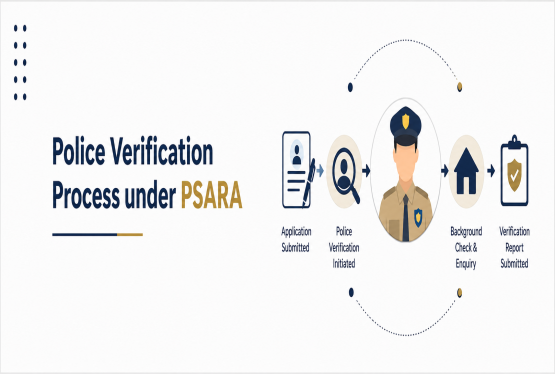
Police verification is one of the most important parts of PSARA documentation. It helps the authority check the background of promoters, directors, partners, principal officers, guards and supervisors.
Many applications get delayed because police verification documents are incomplete or wrongly filled. Sometimes the applicant provides incomplete addresses, missing identity proof, unclear photographs or wrong personal details. The details submitted for police verification should be accurate and complete. Current address, permanent address, identity proof, photographs and personal information should be properly provided.
Not Maintaining Guard and Supervisor Records
Security agencies often focus on documents of the business entity but ignore the records of guards and supervisors. This is a mistake because the actual service is provided through security personnel. The agency should maintain proper records of security guards and supervisors, including identity proof, address proof, photographs, police verification, training records and deployment details.
If the agency cannot show that its guards are verified and trained, it may face compliance issues. The licensing authority may also ask for details to ensure that the agency is capable of deploying eligible personnel. A good guard and supervisor record system also helps during inspections, renewals and client audits.
No Proper Training Arrangement Documents
Training is a key part of PSARA compliance. Security guards should be trained before deployment. In many states, the agency may need to show an arrangement or MoU with a recognized training institute. A common mistake is applying without proper training documents. Some agencies assume they can arrange training after getting the license. However, depending on state rules, training arrangement documents may be required at the application stage. The training documents should clearly show the name of the training institute, scope of training, period of arrangement and recognition status, where applicable. If the training arrangement is incomplete or not recognized as per state requirements, the authority may raise an objection.
Using Old or Expired Documents
Another common documentation mistake is using old, expired or outdated documents. PSARA applications require current and valid documents. Applicants sometimes submit old rent agreements, expired identity proofs, outdated electricity bills, old affidavits or previous versions of business documents. These documents may not reflect the current status of the business.
Before filing, the applicant should review the validity of every document. Rent agreements should be valid. Utility bills should be recent. Affidavits should be properly dated. Business documents should reflect current directors, partners and office address. Using outdated documents can make the application look careless and may lead to objections.
Poorly Drafted Affidavits and Declarations
Affidavits and declarations are commonly required in PSARA License applications. They may relate to criminal background, compliance undertaking, office details, training arrangement or other eligibility conditions.
A common mistake is using generic or poorly drafted affidavits. Some applicants use formats copied from the internet without checking whether they match the state requirement. Affidavits should be drafted carefully and should contain correct names, addresses, business details and declarations. They should be signed and notarized where required.
Wrong File Format or Poor Document Uploads
With many states moving towards online filing, document upload quality has become important. Even if the documents are correct, poor scanning or wrong upload format can create problems. Common issues include blurred scans, cut pages, unreadable text, wrong file names, oversized files, missing pages and documents uploaded under the wrong category.
The applicant should scan all documents clearly. Each file should be readable and complete. File names should be simple and relevant. If the portal has size or format restrictions, documents should be prepared accordingly. Poor uploads can lead to objections even when the original documents are valid.
Not Keeping Documents Consistent With Labour Compliance
Security agencies are manpower-based businesses. Therefore, labour compliance documents may become relevant during the licensing process or after approval. A common mistake is ignoring labour-related readiness. Agencies may prepare PSARA documents but fail to align them with employee records, wage compliance, PF, ESI, professional tax or minimum wage obligations.
While all labour documents may not be required at the initial stage in every state, the agency should be ready to comply once operations begin. Clients may also demand these documents before entering into contracts. If employee records and compliance documents are not maintained, the agency may face issues during inspections, client audits or renewals.
Not Preparing a Proper Document Index
A PSARA application usually includes many documents. Without a proper document index, the file can become confusing for both the applicant and the authority. A document index helps organize the application. It shows which document is attached for which requirement. This reduces confusion and makes the file easier to review.
The index may include business documents, promoter documents, office proof, police verification documents, training documents, affidavits and authorization documents. For online filing, the same discipline should be followed by naming files properly and uploading them under the correct sections.
Not Reviewing Documents Before Final Submission
The final mistake is submitting the application without a proper review. Many errors can be avoided if the entire file is checked before submission. The applicant should review whether all forms are filled correctly, documents are attached, signatures are complete, dates are correct, names match and affidavits are properly executed.
A simple pre-submission review can identify spelling errors, missing pages, wrong addresses and outdated documents. It can also ensure that the application is aligned with the specific state rules. A few hours spent on checking documents can save weeks of delay later.
Best Practices to Avoid PSARA Documentation Mistakes
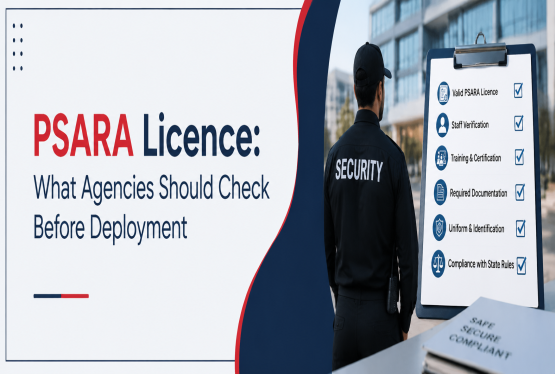
Security businesses can avoid most documentation issues by following a structured approach. The application should be prepared carefully, with state-specific requirements in mind. The agency should first create a checklist, then collect documents, verify details, update business records, prepare affidavits, arrange police verification documents and check training requirements. Before filing, the agency should also ensure that all documents are readable, valid and consistent. Any mismatch should be corrected in advance.
Useful best practices include:
-
Prepare a state-specific checklist
-
Keep names and addresses consistent
-
Use valid and recent documents
-
Maintain proper guard records
-
Arrange training documents early
-
Check police verification requirements
-
Use proper authorization documents
-
Review the file before submission
Conclusion
PSARA documentation plays a major role in license approval. Even a genuine and eligible security agency may face delay if documents are incomplete, mismatched or outdated. Common mistakes such as wrong office proof, missing authorization, incomplete police verification, poor training documents, weak affidavits and inconsistent details should be avoided from the beginning.
A security agency should treat documentation as an important compliance step, not just paperwork. Proper documentation helps build trust with the licensing authority, clients and employees. Before filing the PSARA License application, the agency should review all documents carefully and follow the requirements of the state concerned. A well-prepared application reduces objections, saves time and helps the business start its security operations on a strong legal foundation.
FAQ’S
Q1. Why do PSARA applications get delayed?
Ans. PSARA applications often get delayed due to incomplete documents, mismatched details, weak office proof or pending police verification.
Q2. Is office proof important for PSARA License?
Ans. Yes, valid office proof is important because the agency must show a genuine place of business.
Q3. Can name mismatch create issues in PSARA application?
Ans. Yes, mismatch in name, address, PAN, Aadhaar or business documents can lead to objections or delay.
Q4. Is police verification required for PSARA documentation?
Ans. Yes, police verification is generally required for promoters, directors, partners and security personnel.
Q5. Why is object clause important?
Ans. The object clause should allow security services. If it does not, the authority may ask for clarification or amendment.
Q6. Are training documents required for PSARA License?
Ans. Yes, training arrangement or training records may be required, depending on state rules.
Q7. Can old documents be used for PSARA application?
Ans. Old or expired documents should be avoided. Recent and valid documents should be submitted.
Q8. Is authorization required for companies or LLPs?
Ans. Yes, board resolution or partner authorization may be required to authorize the person filing the application.
Q9. What happens if documents are uploaded incorrectly?
Ans. Blurred scans, wrong file formats or missing pages can lead to objections and delay.
Q10. How can PSARA documentation mistakes be avoided?
Ans. Prepare a state-specific checklist, verify all details, use valid documents and review the file before submission.


_crop10_thumb.jpg)





_for_FY_2025-26_crop10_thumb.jpg)





_learn_crop10_thumb.jpg)


_Filing_Due_Dates_for_FY_2024-25_learn_crop10_thumb.jpeg)




_of_GST_Act_learn_crop10_thumb.jpg)


_Under_GST_learn_crop10_thumb.jpg)


_crop10_thumb.jpg)


_crop10_thumb.jpg)


_learn_crop10_thumb.jpg)


_of_the_Income_Tax_Act_learn_crop10_thumb.jpg)


_learn_crop10_thumb.jpg)


_learn_crop10_thumb.jpg)


_crop10_thumb.jpg)





_in_The_Income_Tax_Act,_1961_learn_crop10_thumb.jpg)


_learn_crop10_thumb.jpg)


_of_the_Income_Tax_Act_learn_crop10_thumb.jpg)

_Of_Income_Tax_Act_learn_crop10_thumb.jpg)


_learn_crop10_thumb.jpg)


_learn_crop10_thumb.jpg)
_crop10_thumb.jpg)




_learn_crop10_thumb.jpg)
_for_Import_and_Export_learn_crop10_thumb.jpg)


















_crop10_thumb.jpg)