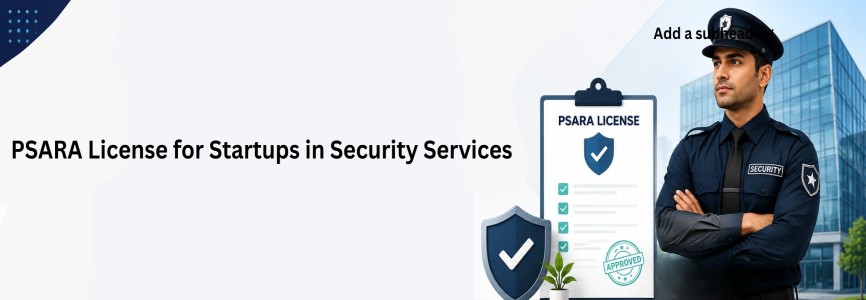



India’s private security industry has grown rapidly in recent years. From residential societies and corporate offices to malls, warehouses, hospitals, schools, factories, events and logistics hubs, almost every sector now depends on trained security personnel. This growth has also created strong opportunities for startups that want to enter the security services business with modern solutions, professional manpower and technology-based monitoring systems.
However, starting a private security agency is not only about hiring guards and getting clients. Since security services directly relate to public safety, trust and protection of property, the business is regulated under the Private Security Agencies Regulation Act, 2005, commonly known as the PSARA Act. Any startup planning to provide private security guards or security-related manpower services must understand the importance of PSARA License before commencing operations.
PSARA License gives legal permission to operate a private security agency in India. For startups, this license is not just a compliance requirement but also a credibility tool. It helps the business appear professional, reliable and legally compliant before clients, investors, institutions and government authorities.
Importance of PSARA License for Security Startups
A security startup may begin with a small team, limited clients and local operations. However, even at an early stage, legal compliance should not be ignored. Security services involve deployment of guards, supervisors and other security personnel at client premises. These personnel may be responsible for entry control, visitor management, asset protection, crowd control, emergency support and surveillance assistance.
Without PSARA License, a startup may face legal issues, rejection by corporate clients and restrictions from operating in the market. Many companies, housing societies, factories and institutions check whether the agency has a valid PSARA License before awarding a security contract.
For startups, the license helps in building a legal identity in the security services sector. It also creates trust with clients and supports the agency in applying for corporate, institutional and government-related security contracts. A startup that starts with proper licensing can scale its operations more confidently and professionally.
Legal Framework Governing Private Security Agencies
The private security agency business in India is governed mainly by the Private Security Agencies Regulation Act, 2005 and the rules framed by different State Governments. The Act regulates agencies providing private security guards and related services. Under this law, no person or entity can carry on or commence the business of a private security agency without obtaining a license from the Controlling Authority of the concerned State. Since law and order is a state subject, PSARA License is generally issued on a state-wise basis.
This means if a startup wants to provide security services in one state, it needs a license for that state. If the startup wants to operate in multiple states, separate permission or license may be required as per the applicable state rules. The purpose of the law is to ensure that private security agencies are properly verified, their management is reliable, security guards are trained and agencies follow prescribed standards.
Eligibility for Startups Applying for PSARA License
Startups can apply for PSARA License if they meet the basic eligibility conditions. The business may be formed as a private limited company, LLP, partnership firm, sole proprietorship or other eligible legal structure, depending on the state rules and business plan. The promoters, directors, partners or key persons involved in the agency should have a clean background. Since the business deals with security and safety, authorities carefully review the credibility of the applicant.
Generally, the applicant should not be involved in serious criminal offences, activities against national security or any conduct that creates doubt regarding fitness to run a security agency. Police verification of the applicant and key persons is an important part of the process. A startup should also have proper office address, business documents, identity proofs, financial records and an arrangement for security guards through a recognized training institute or approved training facility.
Business Structure for Security Startups
Before applying for PSARA License, a startup should decide the right business structure. Many security startups prefer a private limited company because it gives a professional image and helps in dealing with corporate clients. However, other structures may also be suitable depending on the scale and budget.
A private limited company is useful when the startup is planning to raise funds, expand across states or work with large clients. LLP may be suitable for a small professional setup with limited partners. Proprietorship may be simple, but it may not always create the same level of confidence for large security contracts. The selected business structure should be properly registered and supported by valid documents. The name, address and details mentioned in all documents should be consistent because mismatches may delay the PSARA application.
Documents Required for PSARA License
Documentation plays a very important role in PSARA License approval. Startups should prepare the documents carefully before filing the application. Incomplete, incorrect or mismatched documents often lead to delay or objection. Common documents required may include:
- Certificate of incorporation or business registration proof
- PAN card of the business entity
- Address proof of the registered office
- Identity and address proof of promoters, directors or partners
- Police verification documents
- Memorandum of Understanding with training institute
- Affidavits and declarations as required by the state authority
- Financial documents, if required
Role of Police Verification
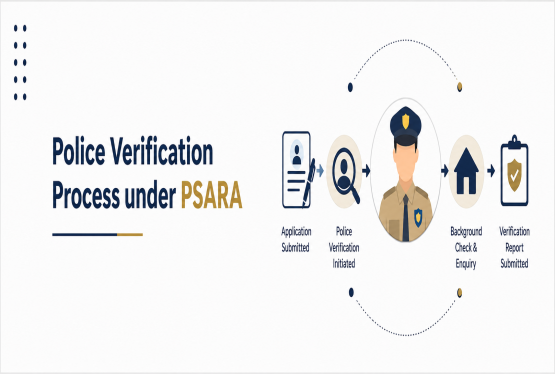
Police verification is one of the most important stages in the PSARA License process. Since the security agency business involves public trust, the authorities want to ensure that the applicant and key persons have a clean and reliable background.
During verification, personal details, address details, identity records and criminal background may be checked. If there is any mismatch in name, address, date of birth or identity proof, the process may get delayed. Startups should ensure that all personal and official documents are updated and accurate. If any promoter or director has changed address recently, the latest proof should be used. Police verification should not be treated as a formality because it directly affects license approval.
Training Requirement for Security Guards
PSARA also focuses on training and discipline of private security guards. A startup cannot simply hire untrained manpower and deploy them as security guards. The guards must be trained as per prescribed norms. Training generally covers basic physical fitness, security duties, fire safety, first aid, access control, emergency response, crowd management, identification of suspicious activities and basic legal awareness.
For startups, proper training creates two benefits. First, it helps in meeting legal requirements. Second, it improves service quality and client satisfaction. A trained guard can handle situations more professionally than untrained manpower. Security startups should maintain proper training records, attendance details and certificates wherever required. This helps during inspection and future compliance checks.
PSARA License Application Process for Startups
The PSARA License process may vary slightly from state to state, but the basic steps remain similar. A startup should first complete business registration and prepare all required documents. After that, police verification and training-related arrangements are completed as per the state rules.
The application is then filed before the controlling authority along with prescribed documents and applicable government fee. The authority reviews the application, checks the background verification status and may ask for additional documents or clarification if required.
If everything is in order, the PSARA License is issued for the approved state or area of operation. The startup must then operate within the scope of the license and comply with all conditions mentioned by the authority. A careless filing may result in objections or rejection. Therefore, startups should ensure that all forms, declarations and supporting documents are properly prepared.
State-Wise Applicability of PSARA License
PSARA License is usually state-specific. This is very important for startups planning to scale their security business. If a startup obtains a license in one state, it should not assume that the same license automatically allows it to operate across India.
For example, if a startup obtains PSARA License for Delhi and later wants to provide security services in Haryana, Uttar Pradesh or Maharashtra, it may need to apply separately as per the respective state requirements. This state-wise applicability should be considered at the business planning stage. Startups should first decide whether they want to start locally, regionally or across multiple states. This helps in estimating compliance cost, documentation effort and timelines.
Importance of Office Setup and Infrastructure
A private security agency should have a proper office setup. The office address mentioned in the application should be genuine and supported by valid proof. Authorities may verify the office address during the process.
For startups, the office may be small in the beginning, but it should be properly documented. Rent agreement, ownership proof, electricity bill or other address proof may be required depending on the state. The agency should also maintain records related to guards, supervisors, clients, attendance, training, salary payment and deployment. A well-maintained office and documentation system creates confidence during inspection and client review.
Compliance After Getting PSARA License
Getting the PSARA License is not the end of compliance. After approval, the startup must continue to follow the conditions of the license and applicable rules. Post-license compliance may include maintaining proper records, deploying trained guards, informing authorities about changes in business details, renewing the license before expiry and ensuring that guards meet eligibility and training standards.
The agency should also follow labour laws, salary payment rules, employee records, PF/ESI requirements, GST compliance and other business laws wherever applicable. If the startup changes its registered office, directors, partners, ownership structure or area of operation, it should check whether intimation or approval is required from the authority.
Common Mistakes Startups Should Avoid
Many startups face delay in PSARA License because of avoidable mistakes. Since the process involves multiple documents and verification stages, careful preparation is necessary. Common mistakes include starting security operations before obtaining the license, submitting incomplete documents, using outdated address proof, ignoring state-specific rules, not completing police verification properly and assuming that one state license is valid across India.
Another common mistake is not having a proper training arrangement before applying. If the training requirement is not properly fulfilled, the application may get delayed or may face objection from the authority. Avoiding these mistakes can save time, cost and legal complications.
PSARA License and Startup Growth
For a security services startup, PSARA License can support long-term growth. Many large clients prefer to work only with licensed agencies. Corporate offices, industrial units, hospitals, hotels, educational institutions and government-linked organizations usually conduct proper vendor checks before hiring security services. A valid PSARA License improves the startup’s chances of getting contracts and building a strong reputation. It also helps in presenting the business as organized and trustworthy.
Startups can also combine traditional security services with modern technology such as CCTV monitoring, visitor management systems, GPS-enabled patrolling, digital attendance, emergency response tools and app-based reporting. However, even if the startup is technology-driven, PSARA compliance is still important if it provides security guards or manpower services.
Cost and Timeline Considerations
The cost of PSARA License depends on the state, area of operation, government fee, documentation, professional assistance and other related expenses. The timeline may also vary depending on police verification, authority review and completeness of documents.
Startups should not plan client deployment without considering the approval timeline. It is better to apply in advance and keep documents ready before pitching to large clients. A realistic compliance budget should include business registration, documentation, government fees, training arrangement, labour law compliance and ongoing record management.
Renewal of PSARA License
PSARA License is valid for a specific period and must be renewed before expiry. The validity period may vary as per applicable rules. Startups should track renewal dates carefully because operating with an expired license may create legal problems.
Renewal should not be left for the last moment. The agency should review documents, compliance records, training records and any changes in business details before applying for renewal. Maintaining compliance from the beginning makes renewal smoother.
Why Professional Assistance Helps Startups?
PSARA License involves legal, documentation and verification requirements. For startups, managing everything internally may become difficult, especially when the founders are also focusing on business development, hiring and client acquisition.
Professional assistance can help in checking eligibility, preparing documents, coordinating application filing, handling queries and understanding state-specific requirements. This reduces the chances of mistakes and delay. However, the startup should still remain actively involved in the process because information related to promoters, business address, employees and operations must be accurate.
Conclusion
PSARA License is a key requirement for startups entering the private security services industry. It gives legal permission to operate, builds trust with clients and creates a strong foundation for future growth. Since security services are directly connected with public safety and protection of property, the government regulates this sector carefully.
For startups, early compliance is always better than correcting mistakes later. Before hiring guards or signing security contracts, the business should check its eligibility, prepare documents, complete police verification and apply for PSARA License in the required state. A startup that follows proper licensing, training and compliance standards can build a professional security agency with better client confidence and long-term business stability.
FAQ’S
Q1. Is PSARA License required for security startups?
Ans. Yes, any startup providing private security guards or security services must obtain PSARA License before starting operations.
Q2. Can a startup apply for PSARA License?
Ans. Yes, startups can apply if they meet eligibility, documentation, police verification and training requirements.
Q3. Is PSARA License valid across India?
Ans. No, PSARA License is generally state-specific. Separate approval may be required for different states.
Q4. Which business structure is suitable for a security startup?
Ans. A private limited company is commonly preferred, but LLP, partnership or proprietorship may also apply as per state rules.
Q5. Is police verification mandatory for PSARA License?
Ans. Yes, police verification of the applicant and key persons is an important part of the approval process.
Q6. Are security guard training records required?
Ans. Yes, guards must be trained as per PSARA norms, and training records should be properly maintained.
Q7. Can a startup start security services before getting PSARA License?
Ans. No, starting operations without PSARA License may lead to legal action and business restrictions.
Q8. What documents are needed for PSARA License?
Ans. Business registration proof, PAN, office address proof, identity documents, police verification and training-related documents are commonly required.
Q9. How long does PSARA License approval take?
Ans. The timeline depends on the state authority, police verification and completeness of documents.
Q10. Why is PSARA License important for startups?
Ans. It gives legal permission, builds client trust and helps startups get corporate or institutional security contracts.


_crop10_thumb.jpg)





_for_FY_2025-26_crop10_thumb.jpg)





_learn_crop10_thumb.jpg)


_Filing_Due_Dates_for_FY_2024-25_learn_crop10_thumb.jpeg)





_of_GST_Act_learn_crop10_thumb.jpg)


_Under_GST_learn_crop10_thumb.jpg)


_crop10_thumb.jpg)


_crop10_thumb.jpg)


_learn_crop10_thumb.jpg)


_of_the_Income_Tax_Act_learn_crop10_thumb.jpg)


_learn_crop10_thumb.jpg)



_learn_crop10_thumb.jpg)


_crop10_thumb.jpg)





_in_The_Income_Tax_Act,_1961_learn_crop10_thumb.jpg)


_learn_crop10_thumb.jpg)


_of_the_Income_Tax_Act_learn_crop10_thumb.jpg)

_Of_Income_Tax_Act_learn_crop10_thumb.jpg)


_learn_crop10_thumb.jpg)


_learn_crop10_thumb.jpg)
_crop10_thumb.jpg)




_learn_crop10_thumb.jpg)
_for_Import_and_Export_learn_crop10_thumb.jpg)




























_crop10_thumb.jpg)