


Lithium batteries have become an important part of everyday life. From smartphones and laptops to power banks, wireless devices and other electronic products, these batteries help us stay connected and work without depending on a direct power supply. As the demand for portable electronics continues to grow in India, manufacturers and importers need to pay close attention to product safety and government regulations. Lithium batteries are popular because they are lightweight, rechargeable and capable of storing considerable energy in a small space. However, poor-quality batteries can create serious safety problems.
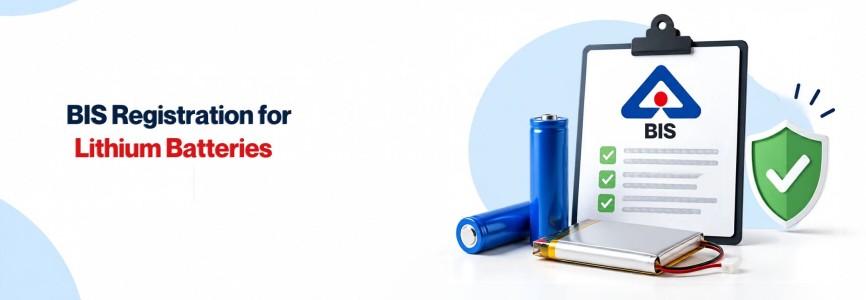
Overheating, swelling, short circuits and even fire are some of the risks associated with defective lithium batteries. To reduce such risks, the Indian government has introduced mandatory safety requirements for specified battery products. BIS Registration for Lithium Batteries 2026 is an important requirement for businesses manufacturing or selling covered lithium cells and batteries in India. The Bureau of Indian Standards (BIS) regulates these products under its Compulsory Registration Scheme (CRS). Manufacturers must ensure that applicable battery models meet the prescribed Indian Standard before placing them on the Indian market.
What Is BIS Registration for Lithium Batteries?
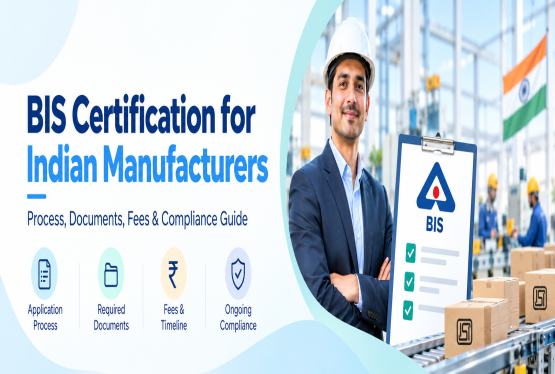
BIS registration is a product compliance requirement that helps ensure specified products sold in India meet applicable safety standards. The Bureau of Indian Standards is the national standards body responsible for developing Indian Standards and administering product certification and registration schemes. For lithium batteries used in portable applications, BIS registration generally falls under the Compulsory Registration Scheme (CRS). Under this scheme, the manufacturer gets the product tested at a BIS-recognised laboratory and submits the necessary documents to BIS. Registration is granted when the applicable requirements are satisfied.
For example, a company planning to manufacture rechargeable lithium-ion batteries for portable electronic devices must first check whether its products fall under the mandatory BIS registration category. If registration is required, the manufacturer must obtain it before supplying those products in India. BIS registration is not simply a formality. It shows that the registered product has been assessed against the relevant Indian safety standard. It also helps businesses demonstrate their commitment to product quality, consumer safety and responsible manufacturing.
Is BIS Registration Mandatory for Lithium Batteries in India?
Yes. BIS registration is mandatory for sealed secondary lithium cells and batteries used in portable applications when they fall within the notified product category.
The applicable requirements come under the Electronics and Information Technology Goods (Requirement of Compulsory Registration) Order, 2021, and associated notifications. The relevant lithium battery product category has been subject to compulsory registration since 1 June 2016. The requirement applies to covered products manufactured in India as well as imported products. Foreign manufacturers must also obtain the necessary registration before their covered lithium battery products can be supplied to the Indian market. However, not every product described as a lithium battery automatically falls under the same standard. Large electric vehicle battery packs, industrial energy storage batteries and other specialised applications may have different requirements. Businesses should confirm the actual product category and intended use before selecting a BIS standard.
Applicable BIS Standard for Lithium Batteries in 2026
The main Indian Standard for covered portable rechargeable lithium cells and batteries is IS 16046 (Part 2): 2018, corresponding to IEC 62133-2:2017. This standard covers safety requirements for portable sealed secondary lithium cells and batteries manufactured from them. Its main purpose is to reduce risks associated with normal operation and reasonably foreseeable misuse.
|
Battery category |
Applicable standard |
|
Portable sealed rechargeable lithium cells |
IS 16046 (Part 2): 2018 |
|
Portable sealed rechargeable lithium battery packs |
IS 16046 (Part 2): 2018 |
|
Portable sealed nickel-based rechargeable cells and batteries |
IS 16046 (Part 1): 2018 |
|
Other specialised battery applications |
Depends on product type and applicable notification |
The standard includes requirements relating to battery construction, safety information, protection mechanisms, electrical safety, testing and marking. A battery must satisfy the applicable test requirements before its manufacturer can complete BIS registration.
Which Lithium Batteries Require BIS Registration?
Lithium batteries used in smartphones, laptops, tablets, power banks and other portable electronic devices are common examples of products that may fall within the mandatory registration category. The requirement may also apply to lithium batteries supplied separately as replacement products or integrated into covered electronic devices. Whether a particular battery requires standalone registration depends on its intended use, product classification and the relevant government instructions. Importers should be especially careful when purchasing batteries from overseas manufacturers. A battery that meets an international standard does not automatically have valid BIS registration for sale in India.
Latest BIS Rules for Lithium Batteries in 2026
The basic BIS registration requirement continues in 2026, but businesses should also be aware of a significant new government order concerning battery capacity declarations.
New Rated Capacity Verification Requirement
On 3 February 2026, the Ministry of Electronics and Information Technology (MeitY) issued an order addressing the measurement of rated capacity for sealed secondary lithium cells and batteries. The order was introduced following concerns about incorrect declarations of battery capacity. It requires rated capacity to be measured according to the specified test method under Clause 7.3.1 of IS 16047 (Part 3), with the result reported for compliance under IS 16046 (Part 2).
The new requirement is scheduled to take effect on 1 May 2027, for new registrations, model inclusions and renewals. It is therefore an important upcoming compliance change announced in 2026, rather than a requirement already in force for every registration in October 2026. Manufacturers should prepare by reviewing how they calculate, test and declare battery capacity. For example, if a battery label shows a capacity of 5,000 mAh, the declared value should be supported by appropriate testing and technical documentation.
Product Classification and Registration Guidance
BIS also published guidance concerning product categories under CRS in August 2026. Businesses should review the latest product classification instructions before submitting applications, especially when a battery or device could fall under more than one product category.
Eligibility for BIS Lithium Battery Registration
BIS CRS registration is primarily granted to manufacturers rather than traders or ordinary distributors. Both Indian and foreign manufacturers can apply when their products fall within the compulsory registration scheme. An Indian manufacturer must have a genuine manufacturing facility and the necessary business documents establishing its manufacturing activities. The product must comply with the applicable Indian Standard, and the manufacturer must arrange testing through a BIS-recognised laboratory.
Foreign manufacturers can also obtain BIS registration. Where required, they must appoint an Authorised Indian Representative (AIR) to handle prescribed responsibilities and communications with BIS. Importers who do not manufacture the batteries themselves should coordinate with the actual overseas manufacturer to ensure that the relevant models, brand and manufacturing location are covered by valid registration.
Documents Required for BIS Registration of Lithium Batteries
Preparing the correct documents is one of the most important parts of the BIS registration process. Incomplete or inconsistent information can result in queries and delays.
The usual documents include:
- Manufacturing business licence showing the manufacturer's name, address and manufacturing activity.
- Factory address and relevant manufacturing details.
- Product specifications, model numbers and technical information.
- Test report issued by a BIS-recognised laboratory.
- Brand ownership or brand authorisation documents, where applicable.
- Authorisation for the person signing and submitting the application.
- Details of critical components and raw materials, as required.
- Applicable undertakings and declarations of conformity.
- Authorised Indian Representative documents for eligible foreign manufacturers.
- Other supporting documents requested under the current BIS application checklist.
The exact requirements depend on the manufacturer's location, product category, brand arrangements and applicable filing procedure. Businesses should verify that the manufacturer name, factory address, product model and brand information remain consistent throughout the test report and application. Even a small difference in the recorded manufacturing details can create problems during scrutiny.
Step-by-Step BIS Registration Process for Lithium Batteries
The BIS registration process involves product classification, testing, application submission and regulatory review. Understanding the sequence can help manufacturers avoid unnecessary expenses and delays.
Step 1: Identify the Applicable BIS Standard
The first step is to understand the type of lithium battery being manufactured. The business should confirm its chemistry, application, construction, product category and relevant Indian Standard. For portable sealed secondary lithium cells and batteries, IS 16046 (Part 2): 2018 is generally the applicable standard. Product classification should be completed before arranging testing.
Step 2: Register on the BIS CRS Portal
The manufacturer must obtain the necessary login credentials on the official BIS CRS portal. Details such as the legal name, manufacturing address, contact information and manufacturing activity must be submitted. Businesses should ensure that the information entered on the portal matches their supporting documents.
Step 3: Arrange Battery Testing
The manufacturer must submit representative samples to a BIS-recognised testing laboratory that is authorised to test the relevant standard. Testing checks whether the cells or batteries satisfy the required safety conditions. The laboratory issues a test report after completing the applicable tests.
Step 4: Review the Test Report
After receiving the laboratory report, the manufacturer should carefully review the details. The report must correctly identify the product, manufacturing unit, model information and relevant Indian Standard. Under the BIS CRS procedure, the test report must be used for application within 90 days of its issue. Therefore, businesses should avoid unnecessary delays between receiving the report and submitting the registration application.
Step 5: Submit the BIS Application
The manufacturer submits the registration application through the BIS CRS portal with the test report, supporting documents, applicable declarations and required fees. Where the relevant procedure requires additional documents or physical submission, the applicant must follow the current BIS instructions.
Step 6: Respond to BIS Queries
BIS examines the application to confirm that the required information and documents have been provided. If any clarification or correction is necessary, BIS may raise an online query. The manufacturer should respond accurately and promptly. Delays at this stage are often caused by incorrect product information, incomplete authorisations or differences between the test report and application.
Step 7: Obtain BIS Registration
Once the application satisfies the applicable requirements, BIS grants registration to the manufacturer for the covered product category and scope. The manufacturer can then use the applicable BIS Standard Mark with the registration number on the registered products, subject to the official marking requirements. BIS registration is linked to the registered manufacturing unit, product category, brand and covered models. Businesses should not assume that a registration for one manufacturing location automatically authorises production at another location.
BIS Registration Fees for Lithium Batteries in 2026
The cost of BIS registration depends on the product, testing requirements, number of models and application details. Manufacturers should consider both the government fees and laboratory testing charges when planning their registration budget. The main expenses generally include the BIS application fee, processing charges, annual registration fees, laboratory testing expenses and professional consultancy charges, where applicable. Foreign manufacturers may also incur expenses for appointing an Authorised Indian Representative.
BIS publishes a fee schedule, but the authority also issued revised provisions relating to licence validity, renewal and annual fee payment on 27 May 2026. Applicants should therefore verify the applicable charges on the current portal instead of relying on an older fixed fee estimate. Testing costs can vary considerably between BIS-recognised laboratories. Additional testing, multiple models or changes to the product can increase the overall expense. It is advisable to obtain a laboratory quotation and confirm the required testing scope before submitting samples.
How Long Does BIS Registration Take?
The time required to obtain BIS registration for lithium batteries depends on laboratory testing, document preparation and the review of the application. Battery testing can take longer than expected because certain safety tests involve repeated charging, discharging and monitoring under different conditions. If the sample fails a test, the manufacturer may need to improve the design and arrange testing again.
After receiving a satisfactory test report, the manufacturer must complete the online application and submit the required information. BIS provides a normal processing timeline of approximately 20 working days in its published procedural guidance, but this is not a guarantee of the entire process, including laboratory testing. Manufacturers can reduce delays by completing product classification early, maintaining accurate documents and responding promptly to BIS queries.
Validity and Renewal of BIS Registration
Obtaining BIS registration is only the beginning of maintaining product compliance. Manufacturers must also ensure that their registration remains valid and that the products supplied continue to satisfy the applicable Indian Standard. BIS procedural guidance has historically described an initial registration period of two years. However, the authority issued revised provisions concerning registration validity, renewal and annual fee payment in May 2026. The current registration certificate and applicable revised guidelines should be checked to determine the correct validity period and renewal requirements. Businesses should also review whether adding new battery models, changing a manufacturing facility or making substantial product modifications requires an inclusion application, additional testing or another regulatory action.
Common Challenges in BIS Lithium Battery Registration
Manufacturers sometimes assume that BIS registration is straightforward once a battery has passed an international safety test. In practice, the registration process requires careful attention to product classification, factory details, recognised laboratory reports and documentation. One common problem is selecting the wrong product category or testing the battery against an unsuitable standard. Another is discovering that the test report does not match the manufacturing details submitted in the application. These issues can lead to clarification requests and repeated documentation.
Foreign manufacturers may face additional difficulties when appointing an Authorised Indian Representative or arranging supporting documents. Importers can also encounter problems when an overseas supplier has BIS registration, but the particular model or manufacturing facility is not covered. The best approach is to check these details before placing orders, arranging large shipments or submitting products for testing.
BIS Registration vs Battery EPR Registration
Businesses selling lithium batteries in India should understand that BIS registration and Battery EPR registration serve different purposes.
|
BIS Registration |
Battery EPR Registration |
|
Focuses on product safety and compliance with Indian Standards |
Focuses on waste battery management |
|
Administered by BIS |
Administered through the applicable CPCB system |
|
Applies to products covered under mandatory certification or registration requirements |
Applies to obligated battery producers, including relevant importers |
|
Involves product testing and regulatory registration |
Involves registration and fulfilment of waste-management obligations |
|
Helps ensure compliance before sale |
Addresses responsibilities relating to batteries placed on the market and waste generated |
The Battery Waste Management Rules, 2022, as amended, establish Extended Producer Responsibility obligations for applicable battery producers. Depending on the business model, a company may need both BIS registration and Battery EPR registration.
For example, a business importing rechargeable batteries for sale in India should examine whether its products require BIS registration and whether it has separate EPR obligations. Completing one registration does not automatically fulfil the requirements of the other.
Why Choose Compliance Calendar LLP for BIS Registration?
Applying for BIS registration can be challenging for businesses unfamiliar with Indian product certification procedures. A manufacturer may understand battery technology but still need assistance with selecting the correct standard, preparing documents, coordinating testing and responding to regulatory queries.
Compliance Calendar LLP provides professional assistance for BIS registration and regulatory compliance in India. Our team can help manufacturers and businesses understand the applicable requirements, review documentation, coordinate the registration process and address procedural difficulties. We also assist businesses with related regulatory requirements, where applicable, to help them plan their product launches and ongoing compliance responsibilities. The aim is to make the registration process easier to understand while ensuring that the responsibility for product conformity remains with the manufacturer.
Frequently Asked Questions
Q1. Is BIS registration mandatory for lithium-ion batteries in India in 2026?
Ans. Yes. BIS registration is mandatory for portable sealed secondary lithium cells and batteries covered under the Compulsory Registration Scheme. Manufacturers must comply with the applicable Indian Standard and obtain registration before supplying covered products in the Indian market.
Q2. Which BIS standard applies to lithium-ion batteries?
Ans. The primary standard for covered portable rechargeable lithium cells and batteries is IS 16046 (Part 2): 2018, corresponding to IEC 62133-2:2017.
Q3. Can I import lithium batteries into India without BIS registration?
Ans. Covered lithium batteries generally cannot be imported for commercial supply in India without the necessary BIS registration. The overseas manufacturer must hold the appropriate registration covering the relevant products.
Q4. How much does BIS registration for lithium batteries cost in 2026?
Ans. The total cost depends on government fees, laboratory testing charges, number of models and any additional documentation or professional assistance required.
Q5. How long does BIS registration for lithium batteries take?
Ans. There is no single guaranteed timeline for the complete registration process.
Q6. Do lithium batteries used in power banks require BIS registration?
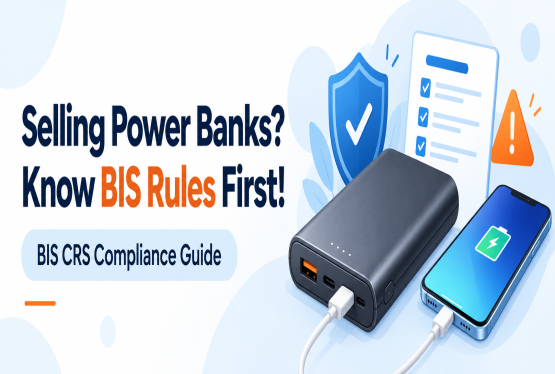
Ans. Portable rechargeable lithium cells and batteries used in power banks may fall under IS 16046 (Part 2): 2018 and require BIS registration.
Q7. Can a foreign manufacturer apply for BIS lithium battery registration?
Ans. Yes. Foreign manufacturers can apply for BIS registration for covered lithium battery products.
Q8. What happens if lithium batteries fail BIS testing?
Ans. If a battery fails a required safety test, the manufacturer should identify the reason for the failure and take corrective action. This may involve improving the battery design, protection circuitry, materials or manufacturing process.
Q9. Is BIS registration different from Battery EPR registration?
Ans. Yes. BIS registration deals primarily with compliance with prescribed product safety standards, whereas Battery EPR registration relates to the responsibilities of producers under India's battery waste management rules.
Q10. What are the latest BIS rules for lithium batteries in 2026?
Ans. One important development is the MeitY order issued on 3 February 2026 concerning verification of the rated capacity of sealed secondary lithium cells and batteries.
Article last updated on : 03 Nov 2026.











_learn_crop10_thumb.jpg)