


Every person who earns money in India needs to understand how income tax is calculated. Whether you are a salaried employee, freelancer, business owner or professional, knowing your taxable income can help you manage your finances and avoid unnecessary tax-related problems. This is where Income Tax Computation becomes important. Income Tax Computation is the process of calculating a person's total taxable income and determining the amount of income tax payable to the government. It includes income earned from different sources, eligible exemptions, deductions, applicable tax rates, rebates and taxes already paid during the financial year.
Many people believe that income tax is calculated directly on their total salary or business earnings. However, this is not always correct. The final tax liability depends on the type of income, applicable tax regime, permitted deductions and other provisions under Indian income tax law. In this article, we will explain what Income Tax Computation means, why it is important, how to calculate income tax step by step, the difference between the old and new tax regimes and the documents required for accurate tax calculations.
What is Income Tax Computation?
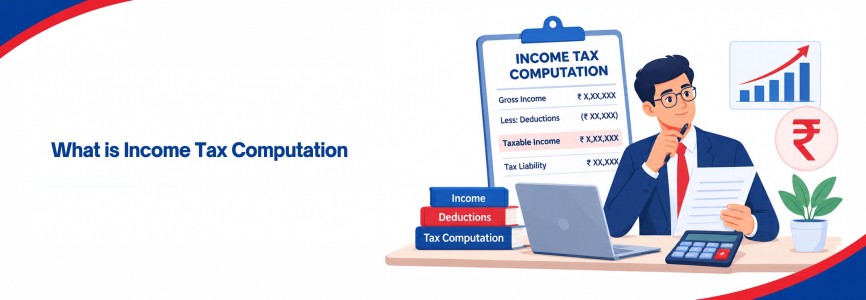
Income Tax Computation is a detailed calculation of a taxpayer's income, deductions and final tax liability for a particular financial year. It helps determine how much tax a person must pay or whether any tax refund is due. In simple words, Income Tax Computation means calculating the tax payable after considering all taxable income and eligible tax benefits.
For example, suppose a salaried employee earns Rs.10 lakh annually. The employee may be eligible for a standard deduction and other benefits depending on the tax regime selected. After applying the relevant provisions, the employee's taxable income is calculated. Income tax is then determined using the applicable tax rates and rebates.
An Income Tax Computation Statement usually provides a complete summary of income from different sources, permissible deductions, taxable income, calculated tax, rebate, cess and tax payments. This statement is useful when preparing an Income Tax Return (ITR), applying for loans, maintaining financial records or reviewing tax liabilities.
Why is Income Tax Computation Important?
Income Tax Computation helps taxpayers understand their financial responsibilities and comply with applicable income tax requirements. Without proper calculations, individuals may pay more tax than required, claim incorrect deductions or report inaccurate income in their tax returns. A properly prepared computation statement provides a clear explanation of how the final tax amount has been determined. It also makes it easier to compare the old and new tax regimes and identify which option may be more beneficial.
For salaried employees, computation helps verify salary income, exemptions, deductions and TDS deducted by the employer. For business owners and freelancers, it helps calculate taxable profits after considering eligible business expenses. Income Tax Computation is also useful for banks and financial institutions when they review an applicant's income. It provides an organised summary of the taxpayer's financial position and may be requested along with ITR acknowledgements and supporting documents.
Five Heads of Income Under Income Tax Computation
Under Indian income tax law, taxable income is generally classified into five major categories. The Income Tax Department uses these categories to determine how income should be calculated and taxed.
-
Income from Salary: Income from salary includes money received by an employee from an employer. It may include basic salary, allowances, bonuses, commissions, perquisites, pension and other employment-related payments. While calculating salary income, applicable exemptions and deductions are considered. For example, the standard deduction reduces taxable salary income for eligible employees. Certain allowances may also qualify for exemptions under the old tax regime, subject to prescribed conditions.
-
Income from House Property: Income from house property generally includes taxable income earned from owning property, including rental income. However, the calculation is not always equal to the total rent received during the year. The computation may consider municipal taxes, the prescribed standard deduction and eligible housing loan interest. Special rules apply to self-occupied properties and the treatment of house property losses.
-
Profits and Gains from Business or Profession: This category includes income earned by business owners, freelancers, consultants, self-employed professionals and other eligible taxpayers carrying on business or professional activities. Business income is generally calculated after deducting eligible expenses from business receipts. Examples include office rent, employee salaries, professional software expenses, business travel and other expenses incurred for business purposes. Some eligible taxpayers may also use presumptive taxation provisions, under which taxable income is calculated using prescribed methods rather than ordinary profit calculations.
-
Income from Capital Gains: Capital gains arise when a person transfers a capital asset and earns a taxable gain. Common examples include selling shares, mutual funds, land, buildings or other capital assets. Capital gains are generally classified as short-term or long-term, depending on the asset and the applicable holding period. The tax calculation may involve special tax rates, exemptions and other rules that differ from ordinary income tax slabs.
-
Income from Other Sources: This category includes taxable income that does not fall under the other four heads. Common examples include savings account interest, fixed deposit interest, dividends and certain taxable gifts. Income from other sources must be included in the computation even if it is not the taxpayer's main source of earnings. For example, a salaried employee who earns interest from fixed deposits generally needs to report that taxable interest along with salary income.
How to Calculate Income Tax in India: Step-by-Step Process
Income Tax Computation involves several stages. The following steps explain the general process for individual taxpayers.Step 1: Calculate Income from All Sources
The first step is identifying all sources of income earned during the financial year. This includes salary, rental income, business profits, capital gains, interest and other taxable earnings. Taxpayers should collect relevant documents and ensure that no taxable income is overlooked. If a person earns both salary and freelance income, both sources need to be considered while preparing the computation statement.
Step 2: Calculate Income Under Each Head
Once income sources are identified, calculate taxable income under the appropriate head. This involves applying the relevant provisions, including permitted expenses, deductions within each head and exemptions. For example, a business owner may deduct eligible business expenses while calculating taxable profits. Similarly, an employee may claim the applicable standard deduction while calculating income from salary.
Step 3: Calculate Gross Total Income
After calculating income under the five heads, applicable clubbing provisions and permitted loss set-offs are considered. The resulting amounts are added together to determine Gross Total Income. Gross Total Income is important because it forms the basis for calculating the taxpayer's final taxable income after eligible Chapter VI-A deductions.
Step 4: Subtract Eligible Deductions
Taxpayers may claim deductions allowed under the applicable tax regime. These deductions reduce taxable income and may lower the final tax liability. For example, eligible taxpayers using the old tax regime may claim deductions under Sections 80C, 80D and other relevant provisions. Most of these deductions are not available under the new tax regime, although certain deductions remain permitted.Step 5: Calculate Total Taxable Income
After subtracting eligible Chapter VI-A deductions from Gross Total Income, the remaining amount represents Total Income, commonly called taxable income. This formula is a simplified explanation. Actual computation may involve special tax provisions, exemptions, loss adjustments and prescribed rounding rules.
Step 6: Apply Tax Rates and Calculate Tax
Once taxable income is determined, income tax is calculated according to the applicable tax regime and tax rates. Some income, such as certain capital gains, may be taxable at special rates rather than ordinary slab rates. Therefore, taxpayers should identify such income separately before calculating the final tax.
Step 7: Adjust Rebates, Cess and Taxes Already Paid
After calculating income tax, applicable rebates, surcharge and Health and Education Cess are considered. Taxes already paid through TDS, TCS, advance tax or self-assessment tax are then adjusted. This final step determines whether the taxpayer needs to pay additional tax or is eligible for a refund. Applicable interest and fees must also be considered where required.
Income Tax Slabs for FY 2025–26 (AY 2026–27)
India provides eligible taxpayers with the option of choosing between the old and new tax regimes. The new tax regime is the default regime for eligible individual taxpayers, while the old regime remains available subject to the prescribed conditions.
New Tax Regime Slabs
| Annual Taxable Income | Tax Rate |
| Up to Rs.4,00,000 | Nil |
| Rs.4,00,001 – Rs.8,00,000 | 5% |
| Rs.8,00,001 – Rs.12,00,000 | 10% |
| Rs.12,00,001 – Rs.16,00,000 | 15% |
| Rs.16,00,001 – Rs.20,00,000 | 20% |
| Rs.20,00,001 – Rs.24,00,000 | 25% |
| Above Rs.24,00,000 | 30% |
Under the new tax regime for AY 2026–27, eligible resident individuals with total income up to Rs.12 lakh may receive a rebate under Section 87A of up to Rs.60,000, subject to applicable restrictions. This rebate does not eliminate tax payable on income taxable at specified special rates.
Old Tax Regime Slabs
For individuals below 60 years of age:
| Annual Taxable Income | Tax Rate |
| Up to Rs.2,50,000 | Nil |
| Rs.2,50,001 – Rs.5,00,000 | 5% |
| Rs.5,00,001 – Rs.10,00,000 | 20% |
| Above Rs.10,00,000 | 30% |
The old tax regime permits several exemptions and deductions that are restricted under the new regime. Eligible resident individuals with taxable income up to Rs.5 lakh may receive a Section 87A rebate of up to Rs.12,500. The above tax slabs relate specifically to FY 2025–26, corresponding to AY 2026–27.
Example of Income Tax Computation for a Salaried Employee To understand Income Tax Computation more clearly, consider an example of a salaried employee earning Rs.15 lakh annually during FY 2025–26. Assume the employee is a resident individual below 60 years of age, has no other income and chooses the new tax regime. For this example, only the standard deduction is considered.
| Particulars | Amount |
| Annual Gross Salary | Rs.15,00,000 |
| Less: Standard Deduction | Rs.75,000 |
| Total Taxable Income | Rs.14,25,000 |
| Tax on first Rs.4,00,000 | Nil |
| Tax on next Rs.4,00,000 at 5% | Rs.20,000 |
| Tax on next Rs.4,00,000 at 10% | Rs.40,000 |
| Tax on remaining Rs.2,25,000 at 15% | Rs.33,750 |
| Total Income Tax | Rs.93,750 |
| Health and Education Cess at 4% | Rs.3,750 |
| Total Tax Liability | Rs.97,500 |
In this example, the employee's total taxable income is Rs.14.25 lakh after applying the Rs.75,000 standard deduction. The tax is calculated using the relevant income tax slabs, resulting in income tax of Rs.93,750. After adding 4% Health and Education Cess, the total tax liability becomes Rs.97,500.
The employee is not eligible for the normal Section 87A rebate because taxable income exceeds Rs.12 lakh. If the employer has already deducted Rs.90,000 as TDS, the remaining tax payable would be Rs.7,500, assuming no other adjustments, interest or fees apply. This example shows why Income Tax Computation is important. A taxpayer does not pay the highest applicable tax rate on the entire income. Different portions of income are taxed according to their respective slabs.
Difference Between Old and New Tax Regimes
The choice between old and new tax regimes can significantly affect an individual's tax liability. The old regime generally offers more deductions and exemptions, while the new regime provides revised slab rates with fewer deduction opportunities.
| Particulars | Old Tax Regime | New Tax Regime |
| Tax Rates | Traditional slabs | Revised slabs |
| Standard Deduction for Salary | Rs.50,000 | Rs.75,000 |
| Section 80C | Available | Generally not available |
| Section 80D | Available | Generally not available |
| HRA Exemption | Available if eligible | Not available |
| Section 87A Rebate | Up to Rs.12,500 | Up to Rs.60,000 |
| Tax Planning | More deduction-based | Simpler for many taxpayers |
Taxpayers should calculate their liability under both regimes before making a decision. The better option depends on income level, eligible deductions, exemptions and other tax-related circumstances. The rules for switching regimes may also differ for taxpayers with business or professional income.
Documents Required for Income Tax Computation
Accurate Income Tax Computation depends on collecting the correct financial records. The documents required may vary depending on the taxpayer's income sources.
Commonly required documents include:
- PAN and Aadhaar: Used for taxpayer identification and income tax compliance.
- Form 16: Provides salary and TDS details issued by the employer.
- Form 16A: Contains details of TDS deducted on certain payments other than salary.
- Form 26AS: Helps verify tax deducted, collected and other tax-related information.
- Annual Information Statement (AIS): Provides information about financial transactions and reported income.
- Bank Statements: Help identify interest income and relevant financial transactions.
- Investment Documents: Support eligible deduction claims.
- Business Records: Include invoices, expense statements, books of account and profit calculations.
- Capital Gains Statements: Provide details of relevant investment and asset transactions.
- Home Loan and Rent Documents: Support applicable income calculations, exemptions or deductions.
What is an Income Tax Computation Statement?
An Income Tax Computation Statement is a written summary showing how a taxpayer's final taxable income and tax liability have been calculated. It generally includes taxpayer details, financial year, assessment year, income from different sources, eligible deductions, total taxable income, applicable tax rates, rebates and other tax adjustments. The statement also records TDS, TCS, advance tax and self-assessment tax already paid. This helps determine the outstanding tax or refund, if any.
Unlike an ITR acknowledgement, the computation statement provides a detailed explanation of the figures used to prepare the return. It may be prepared by a taxpayer, accountant or tax professional using financial records and applicable tax provisions.
Common Mistakes to Avoid in Income Tax Computation
Many taxpayers make errors because they calculate tax using incomplete financial information. One common mistake is considering only salary income and forgetting other taxable earnings, such as bank interest, rental income or capital gains. Another mistake is claiming deductions that are not permitted under the selected tax regime. Taxpayers may also incorrectly calculate business expenses, ignore losses, apply outdated tax slabs or fail to distinguish income taxable at special rates.
Failing to verify TDS details with Form 26AS and AIS can also create differences between reported income and tax department records. Similarly, choosing an incorrect assessment year or overlooking advance tax obligations may result in additional tax-related difficulties. To avoid these problems, taxpayers should carefully review their income records, select the applicable tax regime, verify eligible deductions and reconcile taxes already paid before filing their returns.
Difference Between Income Tax Computation and ITR Filing
Income Tax Computation and Income Tax Return filing are closely connected, but they are not the same process.
| Income Tax Computation | ITR Filing |
| Calculates taxable income and tax liability | Reports prescribed income and tax details to the Income Tax Department |
| Prepared using financial records | Submitted in the applicable ITR form |
| Helps identify tax payable or refund | Completes the formal tax return submission process |
| Used for calculations and documentation | Subject to statutory filing requirements |
Income Tax Computation is generally prepared before filing the Income Tax Return. It ensures that the financial figures entered in the ITR are supported by proper calculations.
Conclusion
Income Tax Computation is an important part of understanding and managing income tax obligations in India. It helps individuals and businesses calculate their taxable income, identify eligible deductions and determine the amount of tax payable. A clear computation statement also supports accurate Income Tax Return filing and helps taxpayers maintain organised financial records. By understanding the five heads of income, applicable tax slabs, deduction provisions and tax payment adjustments, taxpayers can make better financial decisions and reduce avoidable errors. Comparing the old and new tax regimes can also help eligible individuals select a suitable option based on their financial circumstances.
Compliance Calendar LLP provides assistance with income tax compliance, return filing and related regulatory requirements. Proper documentation, accurate calculations and timely compliance can make the income tax process easier for individuals, freelancers, professionals and business owners.
Frequently Asked Questions (FAQs)
Q1 What is Income Tax Computation in simple words?Income Tax Computation is the process of calculating taxable income and the amount of tax payable after considering income from different sources, eligible deductions, applicable tax rates and taxes already paid.
Q2 Who needs Income Tax Computation?
Salaried employees, freelancers, professionals, business owners and other taxpayers may need income tax computation to calculate their taxable income, prepare tax returns or maintain financial records.
Q3 Is Income Tax Computation the same as ITR?
No. Income Tax Computation calculates taxable income and tax liability, while an Income Tax Return is the prescribed form submitted to the Income Tax Department to report income and tax information.
Q4 How is Income Tax Computation calculated?
First, calculate income under the five heads. Apply relevant adjustments and deductions to determine taxable income. Then calculate tax, adjust applicable rebates and cess, and subtract taxes already paid.
Q5 What is the difference between gross income and taxable income?
Gross Total Income is calculated after considering income under the applicable heads and relevant adjustments. Taxable income is the amount remaining after deducting eligible Chapter VI-A deductions.
Q6 Can I prepare Income Tax Computation myself?
Yes. Taxpayers with straightforward income sources may prepare their own computation using financial documents and the applicable tax rules. Complex transactions may require professional assistance.
Q7 What is the standard deduction for salaried employees in FY 2025–26?
For FY 2025–26, the standard deduction is generally Rs.75,000 under the new tax regime and Rs.50,000 under the old tax regime for eligible salaried taxpayers.
Q8 Is Income Tax Computation required for a bank loan?
Banks may request an Income Tax Computation Statement along with ITR acknowledgements and other income documents while assessing loan applications. The requirements depend on the lender and loan type.
Q9 Can Income Tax Computation show a refund?
Yes. If eligible taxes already paid exceed the final tax liability, the computation may show an expected refund. The actual refund remains subject to income tax return processing and verification.
Q10 What happens if Income Tax Computation is incorrect?
Incorrect calculations may result in underpayment, excess tax payment or discrepancies in the income tax return. Depending on the circumstances, taxpayers may need to correct their returns and pay applicable tax, interest or fees.
Article last updated on : 04 Nov 2026.












_learn_crop10_thumb.jpg)