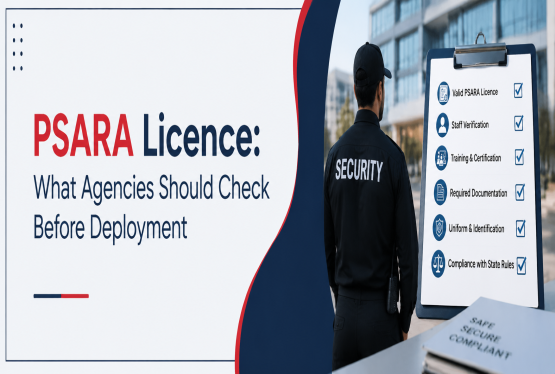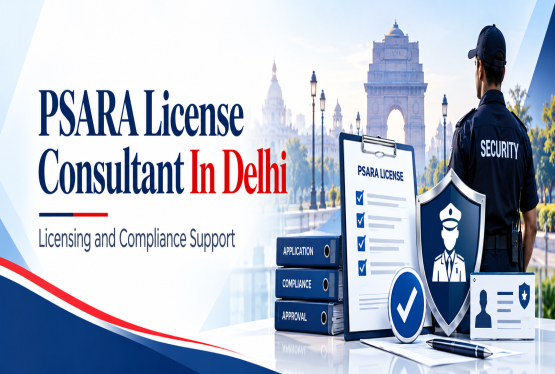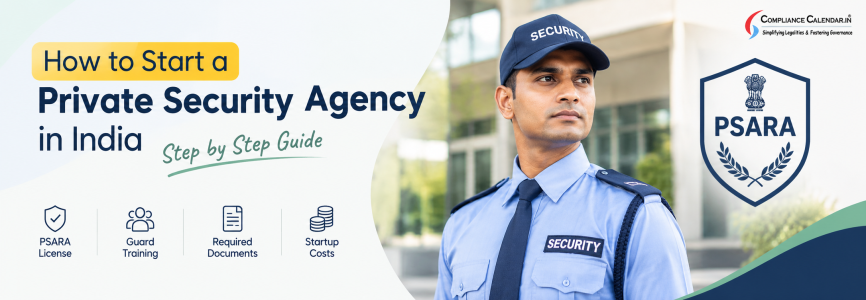



To start a private security agency in India, register your business, obtain a PSARA License from the state's Controlling Authority, arrange security guard training and hire verified guards. The government application fee ranges from Rs. 5,000 to Rs. 25,000. A PSARA License is generally valid for five years.
Starting a private security agency can be a good business opportunity in India because residential societies, offices, hospitals, factories and warehouses need trained security guards to protect their premises. However, starting this business involves more than registering a company and hiring guards. Under the Private Security Agencies (Regulation) Act, 2005, you must obtain a PSARA License before providing private security services to clients. This guide explains the business registration process, licensing requirements, training, documents and estimated startup expenses.
Step 1: Register Your Security Agency Business
The first step is choosing a suitable business structure. You can start a private security agency as a proprietorship, partnership firm, Limited Liability Partnership (LLP) or private limited company. A proprietorship is suitable for someone starting independently, while an LLP or private limited company can be useful for businesses with multiple owners or expansion plans.
If you are starting with partners, you can explore Partnership Firm Registration or LLP Registration. Remember that business registration only establishes your business structure. You still need a separate PSARA License before starting private security agency operations.
Step 2: Decide Where Your Security Agency Will Operate
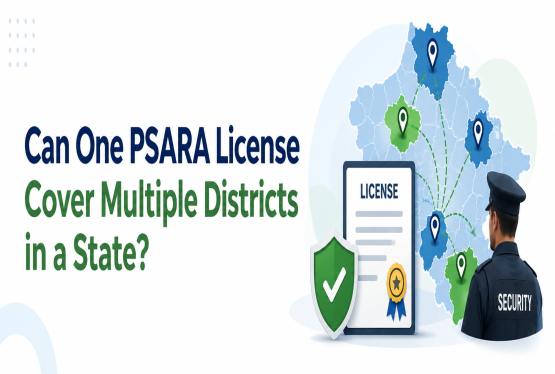
Before applying for a PSARA License, decide whether your agency will provide security guards in one district, multiple districts or throughout a state. This decision is important because the government application fee depends on the area covered by your licence.
|
Licence Coverage |
Government Fee |
|
One district |
Rs. 5,000 |
|
Two to five districts |
Rs. 10,000 |
|
Whole state |
Rs. 25,000 |
For example, if you plan to provide security guards across Delhi, you need the appropriate licence for that jurisdiction. A PSARA License issued in Delhi does not automatically allow you to operate in Haryana or Uttar Pradesh. You must obtain the required approval separately for each state where your agency intends to operate.
Step 3: Check PSARA License Eligibility
Before applying, make sure the applicant meets the eligibility conditions under the PSARA Act, 2005. The authorities examine the background of the applicant and the relevant owners, partners or directors. Certain criminal convictions and other statutory disqualifications can prevent an applicant from receiving a licence.
If you are registering a private limited company or LLP, check the eligibility of the people responsible for managing the business. You should also review the requirements of the state where you want to operate because the application forms, supporting documents and verification procedures can differ.
Step 4: Arrange Security Guard Training
Security guard training is an important legal requirement for private security agencies. The Private Security Agencies Central Model Rules, 2020 prescribe minimum training periods for new security guards and shorter training for eligible ex-servicemen and former police personnel.
|
Guard Category |
Classroom Training |
Field Training |
Minimum Duration |
|
New security guards |
100 hours |
60 hours |
20 working days |
|
Ex-servicemen and former police personnel |
40 hours |
16 hours |
7 working days |
Training covers physical security, fire safety, first aid, emergency response, professional conduct and handling security equipment. Your agency must follow the training requirements adopted by the relevant state and arrange training through a suitable institution. Where required, you must also submit an agreement or Memorandum of Understanding (MoU) with the training institute as part of your licensing documents.
Step 5: Prepare the Required PSARA Documents
Proper documentation is necessary for a smooth PSARA License application. The licensing authority checks your business details, applicant information, office address and other supporting records before processing the application. Commonly required documents include:
- Business registration certificate and PAN
- Identity and address proof of the applicant
- Registered office address proof
- Details of directors, partners or proprietors
- Photographs and prescribed declarations
- Training institute agreement or MoU, where required
- Character and antecedent verification documents
- State-specific application forms and supporting records
Make sure the applicant's name, business address and ownership details are consistent across all documents. Missing signatures, incorrect information or incomplete forms can delay the application and lead to objections from the licensing authority.
Step 6: Apply for Your PSARA License
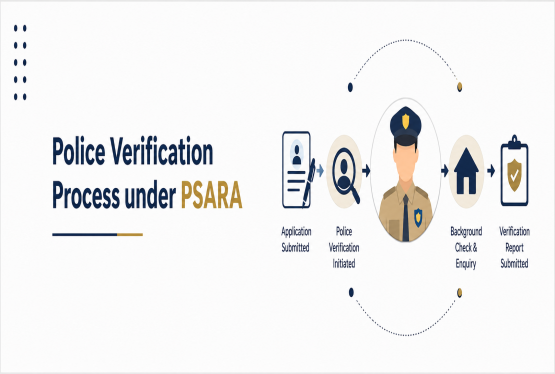
After preparing the documents, submit the prescribed application to the state's PSARA Controlling Authority along with the government application fee. The police check the applicant's background, and the authority can grant the licence only after receiving the required no objection certificate (NOC) from the police. Under Section 7 of the PSARA Act, the authority must grant or refuse the application within 60 days from the date it receives the complete application with the prescribed fee. The application is examined against the eligibility conditions and other requirements under the Act.
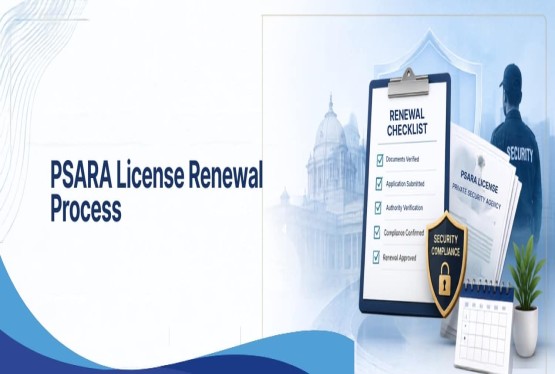
A PSARA License is generally valid for five years, and under Section 8, the renewal application must be submitted at least 45 days before expiry. You can check official licensing information through the PSARA Portal.
Step 7: Set Up Your Security Agency Office
A private security agency needs proper office arrangements to manage its employees, clients and daily operations. You should maintain records of security guards, training certificates, verification documents, client agreements, attendance and deployment details. These records help your agency operate professionally and demonstrate compliance with applicable requirements.
You should also establish a system for handling client complaints, supervising guards and monitoring security services at different locations. Proper office management becomes especially important when your agency starts serving multiple clients or operating across several districts.
Step 8: Hire and Verify Security Guards
Under Section 10 of the PSARA Act, private security guards must be Indian citizens aged between 18 and 65 years, meet the prescribed physical standards, complete the required training and satisfy character and antecedent verification requirements. Before deploying any guard, your agency must check the relevant identity documents, verification status and training records.
The Central Model Rules provide for one supervisor for up to 15 security guards. Where guards work at different premises and effective supervision becomes difficult, the model rules provide a tighter ratio of one supervisor for every six guards. Your agency must also follow applicable minimum wage, working-condition and employee-benefit requirements. For more information, read our blog on Police Verification of Security Guards.
Step 9: Find Clients and Start Your Security Services
After receiving your PSARA License and completing the required preparations, you can approach potential clients such as residential societies, hospitals, factories, warehouses, shopping centres and corporate offices. Prepare a professional company profile explaining your services, licence coverage, guard training arrangements and supervision system. This helps potential customers understand your agency's capabilities.
Before accepting a contract, clearly define the number of security guards, working hours, monthly service charges, payment terms and responsibilities of both parties. A written agreement helps avoid misunderstandings and supports long-term business relationships.
How Much Does It Cost to Start a Security Agency in India?
The total investment required to start a private security agency depends on your location, business structure, office arrangements and number of employees. Apart from the PSARA government application fee, you need to consider business registration expenses, training arrangements, uniforms, office setup and working capital for paying security guards.
|
Cost Item |
Estimated Expense |
|
PSARA government application fee |
Rs. 5,000 / Rs. 10,000 / Rs. 25,000 |
|
Business registration |
Depends on business structure and registration charges |
|
Security guard training |
Depends on training provider and number of guards |
|
Office rent and setup |
Depends on city, location and office size |
|
Uniforms and ID cards |
Depends on supplier and number of guards |
|
Working capital |
Guard salaries and related expenses for 1–2 months |
For example, an agency starting with five security guards will generally require less working capital than an agency employing fifty guards. Before starting, prepare a budget using actual registration charges, training quotations, office expenses and expected salary payments. This will help you understand how much money you need before accepting your first client.
What Happens If You Operate Without a PSARA License?
Under Sections 4 and 20(1) of the PSARA Act, operating a private security agency without the required licence can result in imprisonment of up to one year, a fine of up to Rs. 25,000, or both. However, a company that directly employs security guards only to protect its own premises is generally not considered a private security agency merely because it maintains an in-house security team. The licensing requirement applies when a business provides private security services to others.
Get Free Consultation: Planning to start a security agency? Compliance Calendar LLP can help you understand PSARA licensing requirements and prepare your application. Get Free Consultation
Common Mistakes to Avoid When Starting a Security Agency
One of the biggest mistakes new business owners make is assuming that company registration or GST registration is enough to start providing security guards. PSARA licensing is a separate legal requirement, and you must obtain the required approval before operating a private security agency. Other common mistakes include choosing the wrong licence coverage, submitting incomplete documents, arranging unsuitable training and deploying guards without completing the required verification.
Another mistake is starting operations without enough working capital. Security agencies must pay their guards and manage daily expenses even when clients delay payments. Proper financial planning, accurate documentation and timely compliance can help prevent unnecessary business problems. You can also explore GST Registration to understand the separate tax registration requirements.
How Can Compliance Calendar Help You Start a Security Agency?
Starting a private security agency involves business registration, PSARA licensing, documentation, training arrangements and other compliance requirements. Understanding these rules before investing in your business can help you avoid application delays, penalties and unnecessary expenses.
Compliance Calendar LLP assists entrepreneurs and businesses with PSARA License Registration and related compliance requirements. Our team can guide you through the applicable rules, required documents and registration process based on your state.
Apply for PSARA License Registration with Compliance Calendar LLP.
Phone: +91 9988424211
Email: info@ccoffice.in
Frequently Asked Questions
1. Can I start a security agency without a PSARA License?
You can complete preparatory business activities, but you cannot legally operate a private security agency or provide security guards to clients without obtaining the required PSARA License.
2. How long does it take to get a PSARA License?
Under Section 7 of the PSARA Act, the Controlling Authority must grant or refuse a complete application within 60 days from the date it receives the application with the prescribed fee. Police verification forms part of the licensing process.
3. How much is the PSARA License fee?
The government application fee is Rs. 5,000 for one district, Rs. 10,000 for two to five districts and Rs. 25,000 for the whole state.
4. How long is a PSARA License valid?
A PSARA License is generally valid for five years. You must submit the renewal application at least 45 days before the licence expires.
5. What is the penalty for operating without a PSARA License?
Under Section 20(1) of the PSARA Act, operating a private security agency without a licence can result in imprisonment of up to one year, a fine of up to Rs. 25,000, or both.
6. Can I hire security guards before getting the licence?
You can make lawful recruitment preparations, but you cannot engage or deploy guards as part of operating an unlicensed private security agency. Obtain the required licence before starting security services.
7. Can a proprietorship apply for a PSARA License?
Yes. An eligible individual operating as a proprietor can apply for a PSARA License, subject to the applicable eligibility conditions and state licensing requirements.
8. Is GST registration compulsory for security agencies?
GST registration depends on the applicable GST provisions, including registration thresholds and other legal conditions. GST registration and PSARA licensing are separate requirements.
9. Can one PSARA License cover multiple states?
No. A PSARA License issued in one state does not automatically authorise your agency to operate in another state. You must obtain the required approval for each state.
10. Is security guard training mandatory?
Yes. Security guards must complete the prescribed training. The Central Model Rules specify 100 classroom hours and 60 field hours for new guards, with a shorter course for eligible ex-servicemen and former police personnel.
Article last updated on : 29 Oct 2026.












_learn_crop10_thumb.jpg)