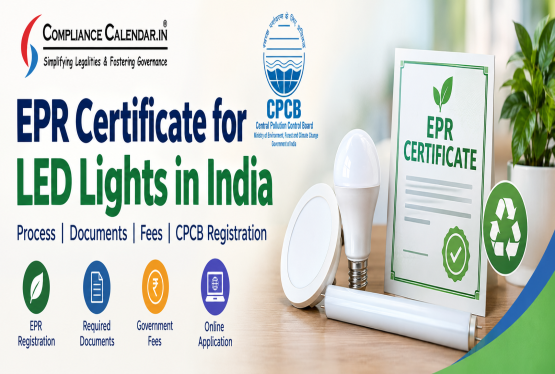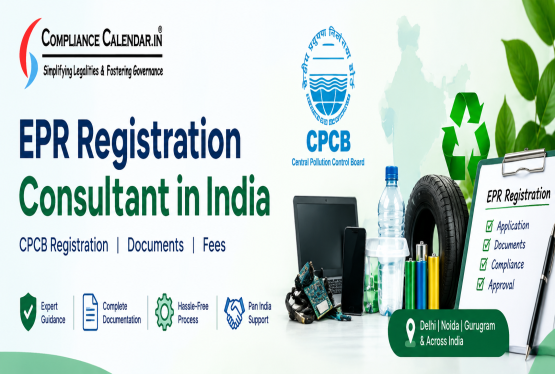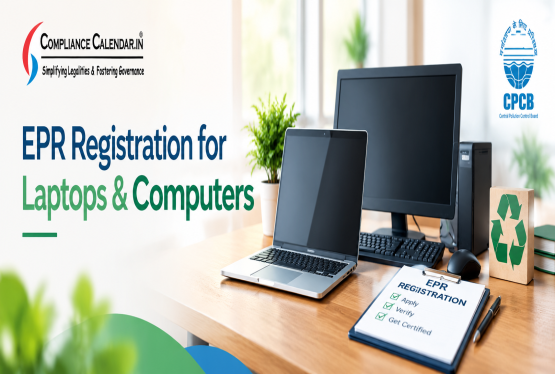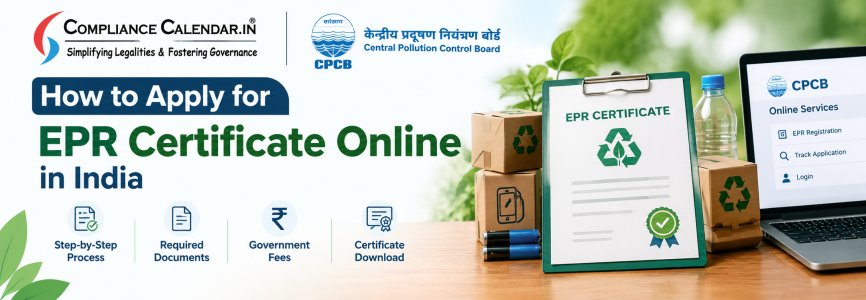



EPR registration online is the process of applying for an Extended Producer Responsibility registration certificate through the Central Pollution Control Board (CPCB) system. Businesses that manufacture, import or sell certain electronics, batteries or products with plastic packaging may need EPR registration in India. The registration helps ensure that businesses take responsibility for the waste created by their products or packaging. The correct application process depends on the type of waste involved.
If you want to apply for an EPR certificate online, you must first check which EPR rules apply to your business. E-waste, plastic packaging and battery waste have different registration requirements. This guide explains what an EPR certificate is, who needs it, the documents required, how to apply online, government fees and how to download your registration certificate after approval.
What Is an EPR Certificate?
EPR stands for Extended Producer Responsibility. It means that businesses covered by EPR rules must take responsibility for the proper collection, recycling or management of waste linked to the products or packaging they introduce into the market.
An EPR registration certificate is proof that a business has registered under the applicable EPR system. For example, a company selling electronic products under its own brand may need e-waste EPR registration. A business importing goods in plastic packaging may need plastic packaging EPR registration. A company importing batteries may need registration under the Battery Waste Management Rules.
EPR registration is important because it helps the government track which businesses are responsible for waste management. However, getting registered is only the first step. Businesses must also meet their recycling targets, submit returns and follow the rules that apply to their category.
Who Needs EPR Registration in India?
EPR registration applies to different businesses depending on their products and activities. Manufacturers, importers and brand owners are common examples, but not every business has the same responsibility.
For example, a cosmetics company selling shampoo in plastic bottles may have EPR duties for plastic packaging. An electronics brand selling covered electrical products may have e-waste EPR duties. A company importing batteries or equipment containing batteries may have battery EPR duties.
Businesses That May Need EPR Registration
|
Business Type |
Example |
EPR Category |
|
Electronics brand owner |
Selling covered electronic products under its own brand |
E-Waste EPR |
|
Electronics importer |
Importing covered electrical equipment |
E-Waste EPR |
|
Plastic packaging manufacturer |
Manufacturing covered plastic packaging |
Plastic EPR |
|
Plastic-packaged product importer |
Importing goods in plastic packaging |
Plastic EPR |
|
Brand owner |
Selling products in plastic bottles or wrappers |
Plastic EPR |
|
Battery manufacturer |
Manufacturing batteries for the Indian market |
Battery EPR |
|
Battery importer |
Importing batteries or equipment containing batteries |
Battery EPR |
Important: Registration requirements depend on the legal definition of each business category. For example, a business that manufactures electronics for another brand may have different duties from the brand owner selling the finished product.
Types of EPR Certificates in India
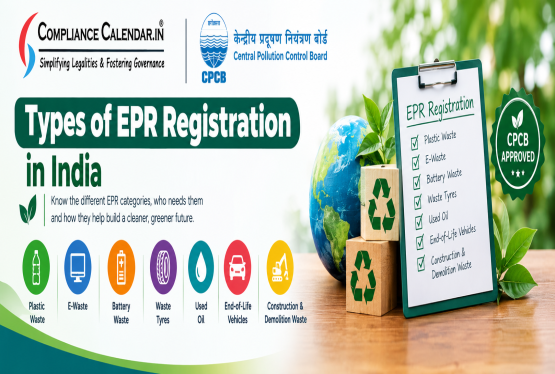
Before starting the EPR registration process, you must identify the correct waste category. The three common types are EPR for e-waste, plastic packaging and battery waste.
1. EPR Certificate for E-Waste
E-waste EPR registration applies to producers of electrical and electronic equipment covered by the E-Waste (Management) Rules, 2022. These include certain electronic products and their covered components, parts and spares.
For example, a business importing covered electronic products for sale in India may need to register as a producer. The rules also require other stakeholders, such as registered recyclers, refurbishers and manufacturers, to register according to their roles.
2. EPR Certificate for Plastic Waste
Plastic EPR registration applies to covered producers, importers and brand owners dealing with plastic packaging. The requirements are based on the Plastic Waste Management Rules and the EPR guidelines for plastic packaging.
For example, a company selling personal care products in plastic bottles may need to report the packaging it introduces into the market and meet the applicable EPR obligations.
3. EPR Certificate for Battery Waste
Battery EPR registration applies to covered producers, including businesses manufacturing or importing batteries and certain equipment containing batteries. The Battery Waste Management Rules, 2022 cover different battery types, subject to the applicable provisions.
For example, a company importing rechargeable batteries into India must check its producer registration and waste battery management responsibilities.
How to Apply for EPR Certificate Online: Step-by-Step Process
The EPR certificate apply online process is handled through CPCB's electronic systems. The exact form and information required depend on whether you are applying for e-waste, plastic packaging or battery waste registration.
Step 1: Identify Your EPR Category
First, check whether your business falls under e-waste, plastic packaging or battery waste rules. Some businesses may need more than one type of EPR registration.
For example, a company importing electronic products with batteries and plastic packaging may have responsibilities under more than one waste management framework.
Step 2: Visit the Official CPCB EPR Portal
Open the official CPCB portal for the applicable category. In 2026, CPCB introduced the Common EPR Portal and single sign-on arrangements for EPR services.
The old plastic packaging EPR portal stopped operating on 28 June 2026, and its data was moved to the Common EPR Portal. Businesses should therefore follow the current instructions rather than relying on older application guides.
Step 3: Create Your Business Account
Choose the correct applicant type and enter your business details. The system may ask for the legal business name, PAN, GSTIN, address, authorised person's details and contact information.
Use your company's own authorised email address and mobile number. These details may be needed for verification, application updates and future compliance work.
Step 4: Fill in the EPR Registration Application
Enter the information requested for your business category. This may include product details, import or sales information, packaging quantities, battery categories or other records used to calculate EPR obligations.
Make sure the information matches your business documents. Incorrect figures or choosing the wrong applicant category may delay the application.
Step 5: Upload the Required Documents
Upload the documents requested by the portal. The checklist will depend on the type of EPR registration.
For example, an importer may need IEC details, while a manufacturing business may need additional information about its production facility.
Step 6: Pay the Applicable Government Fees
Pay the registration fee shown for your application. EPR registration charges are not the same for every category or business.
Before paying, check the current CPCB fee schedule and confirm whether any additional charges apply.
Step 7: Submit Your Application
Review the form carefully and submit it online. The relevant authority will examine the information and may ask for clarification or corrections.
You should regularly check the portal dashboard and respond to any official query.
Step 8: Receive Your EPR Registration Certificate
Once the application is approved, the registration certificate is issued through the applicable online system. You can access the approved certificate from your account.
Remember that approval does not end your responsibilities. You must continue meeting the applicable EPR targets and reporting requirements.
Documents Required for EPR Registration Online
The documents needed for EPR registration online depend on the waste category, business activity and applicant type. However, several basic business records are commonly requested.
EPR Registration Documents Checklist
|
Document |
Purpose |
|
PAN |
Identifies the applicant business |
|
Confirms GST registration details |
|
|
CIN, where applicable |
Identifies a registered company |
|
IEC, where applicable |
Supports importer details |
|
Business address details |
Confirms the registered location |
|
Authorised person details |
Identifies the person responsible for the application |
|
Product information |
Explains the products covered by EPR |
|
Sales or import data |
Helps determine applicable obligations |
|
Packaging or material details |
May be needed for plastic EPR |
|
Manufacturing or consent documents |
May be required for relevant facilities |
This is a general checklist, not a complete list for every application. Always check the current document requirements shown on the official portal before submitting your form.
EPR Registration Fees in India
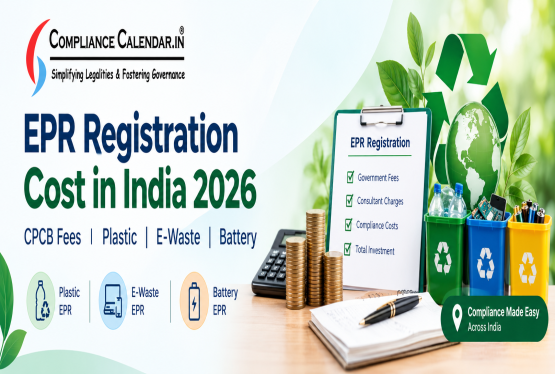
There is no single fixed EPR registration fee for every business in India. Government charges depend on the waste category, applicant type and applicable fee schedule. Some categories also have renewal, annual maintenance or other compliance-related charges.
|
EPR Category |
How Fees Are Determined |
|
E-Waste EPR |
Applicable CPCB registration fee schedule and stakeholder category |
|
Plastic EPR |
Applicant category and applicable registration fee rules |
|
Battery EPR |
Applicable producer or other stakeholder registration requirements |
Government registration fees should not be confused with recycling costs or professional consultancy fees. A business may also need to spend money on meeting its EPR targets after registration.
Tip: Check the latest official fee schedule before applying. Do not rely on an old fee chart, because the amount and payment instructions may change.
How to Download EPR Certificate Online
After approval, you can normally access your registration certificate through the applicable CPCB portal. The exact menu names may differ between EPR categories and may change as CPCB updates its systems.
EPR Certificate Download Process
- Visit the current official CPCB EPR portal.
- Log in using your registered business account.
- Open the registration or application dashboard.
- Find your approved application.
- Select the available certificate view or download option.
- Save the certificate for your business records.
If the certificate is not available, check whether the application has actually been approved. You should also review any pending portal messages or payment requirements.
EPR Registration Certificate vs EPR Recycling Certificate
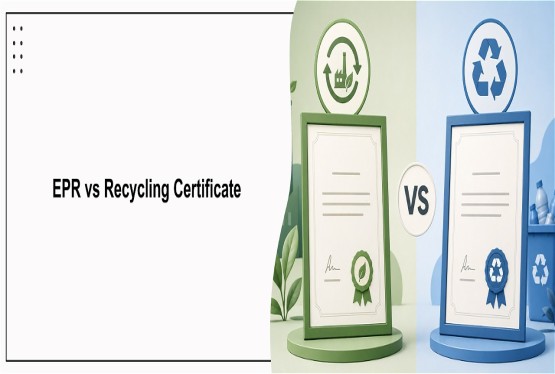
These two terms are often confused. An EPR registration certificate shows that a business is registered under the relevant EPR system. An EPR recycling certificate or credit is different. Under applicable EPR rules, registered recyclers generate certificates based on eligible recycling activities, and producers use them to meet their EPR obligations.
A business cannot assume that downloading its registration certificate means its recycling targets have been completed.
EPR Certificate Validity and Compliance After Registration
The validity and renewal requirements of an EPR registration certificate depend on the waste category and the applicable rules. Businesses should check the validity details printed on their certificate and follow any renewal or maintenance requirements.
After registration, covered businesses may need to report sales or import quantities, meet waste recycling targets, obtain eligible EPR certificates or credits and file returns. These duties are important because EPR is an ongoing responsibility, not simply a one-time registration.
Common EPR Compliance Requirements
- Keep business and product details updated.
- Maintain correct sales, import and waste-related records.
- Meet the applicable recycling or waste management targets.
- Use the required portal process for EPR certificate or credit transactions.
- Submit returns within the applicable deadlines.
- Respond to official notices and compliance queries.
The exact requirements differ for plastic packaging, e-waste and batteries.
Common Mistakes to Avoid During EPR Registration
Many application problems happen because businesses choose the wrong EPR category or submit incomplete information. These mistakes can delay registration and create problems during later compliance reporting.
|
Common Mistake |
How to Avoid It |
|
Selecting the wrong EPR category |
Check your product and business activity first |
|
Using an outdated portal |
Follow current CPCB portal notices |
|
Entering incorrect business details |
Match the information with PAN, GST and other records |
|
Reporting wrong product quantities |
Check sales, import and packaging records |
|
Uploading incomplete documents |
Follow the current category-specific checklist |
|
Ignoring portal queries |
Review application status regularly |
|
Treating registration as full compliance |
Continue meeting EPR targets and filing returns |
A simple way to avoid problems is to prepare your documents and product data before starting the online application.
How Compliance Calendar LLP Can Help with EPR Registration
Applying for an EPR certificate can be confusing when a business deals with several products or types of packaging. You may not know which rules apply, what information the CPCB portal requires or how to calculate your EPR obligations.
Compliance Calendar LLP provides professional assistance with EPR registration for e-waste, plastic packaging and battery waste. We help businesses understand the applicable requirements, prepare documents, complete online applications and respond to registration-related queries.
Our services include EPR registration guidance, document preparation, application assistance, EPR annual return support and general compliance guidance.
For more information, contact Compliance Calendar LLP at +91 9988424211 or info@ccoffice.in
Frequently Asked Questions About EPR Certificates
1. What is EPR registration?
EPR registration is a process through which businesses register under India's Extended Producer Responsibility rules. It applies to certain businesses dealing with electronics, plastic packaging and batteries. Registered businesses must follow the waste management rules that apply to them.
2. What is the full form of EPR?
EPR stands for Extended Producer Responsibility. It means that businesses covered by EPR rules are responsible for the proper management and recycling of waste linked to their products or packaging.
3. What is an EPR certificate?
An EPR certificate is proof that a business has registered under the applicable Extended Producer Responsibility system. It is issued through the relevant government registration process after approval.
4. How can I apply for an EPR certificate online?
To apply for an EPR certificate online, visit the current CPCB EPR portal, select your business category, fill in the application, upload the required documents and pay the applicable fees. After approval, you can access your registration certificate online.
5. Who needs EPR registration in India?
EPR registration is required for businesses covered by the relevant waste management rules. These may include producers, importers and brand owners dealing with certain electronic products, plastic packaging or batteries.
6. Is EPR registration mandatory in India?
Yes, EPR registration is mandatory for businesses that fall under the applicable EPR registration rules. However, not every manufacturer, importer or seller needs the same type of registration.
7. What documents are required for EPR registration?
Common documents include PAN, GST details, business registration information, IEC for applicable importers, product details and sales or import records. Additional documents depend on the EPR category.
8. What is the EPR registration fee in India?
EPR registration fees depend on the waste category, applicant type and applicable government fee schedule. E-waste, plastic packaging and battery EPR registrations may have different charges.
9. How long does it take to get an EPR certificate?
The processing time depends on the EPR category, submitted documents and review by the relevant authority. Applications with missing or incorrect information may take longer.
10. How can I download my EPR certificate online?
Log in to the applicable CPCB EPR portal and open your registration dashboard. Once your application is approved, you can use the available certificate download option.
11. What is the validity of an EPR registration certificate?
EPR certificate validity depends on the waste category and applicable rules. Businesses should check the validity and renewal conditions shown on their certificate and the relevant CPCB portal.
12. Can I apply for EPR registration without GST?
GST details are generally required for many EPR registration applications. However, the exact requirement depends on the applicant category and applicable rules. Businesses without GST registration should check their eligibility before applying.
13. Is EPR registration required for importers?
Yes, importers covered by EPR rules must complete the applicable registration. For example, importing certain electronic products, batteries or goods with plastic packaging may create EPR obligations.
14. Is EPR registration required for small businesses?
Small businesses may also need EPR registration if their activities fall under the applicable rules. Some categories have specific exemptions or conditions, so business size alone does not decide eligibility.
15. What is the difference between EPR registration and an EPR recycling certificate?
An EPR registration certificate confirms that a business is registered under the relevant EPR system. An EPR recycling certificate or credit represents eligible recycling activity and may be used to meet applicable EPR targets.
16. Can one EPR certificate cover plastic, e-waste and batteries?
No. Plastic packaging, e-waste and battery waste are covered by different rules and registration requirements. A business dealing with all three may need separate registrations.
17. How can I renew my EPR certificate?
Log in to the relevant EPR portal and follow the applicable renewal or continuation process. Requirements depend on the waste category, certificate conditions and current rules.
18. What happens if I do not get EPR registration?
A business that is legally required to register but fails to do so may face regulatory action, including environmental compensation or other penalties under the applicable rules. The consequences depend on the violation.
19. Is EPR registration required for plastic packaging?
Yes. Covered producers, importers and brand owners dealing with plastic packaging must follow the applicable EPR registration and waste management requirements.
20. Can a consultant help me apply for an EPR certificate?
Yes. An EPR consultant can help you identify the correct registration category, prepare documents, complete the online application and understand your compliance duties. However, registration approval is given by the relevant authority.
Article last updated on : 27 Oct 2026.










_learn_crop10_thumb.jpg)