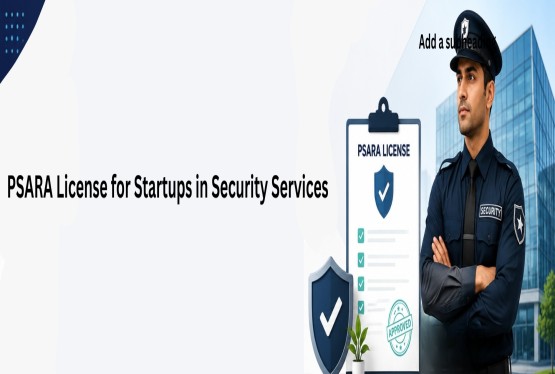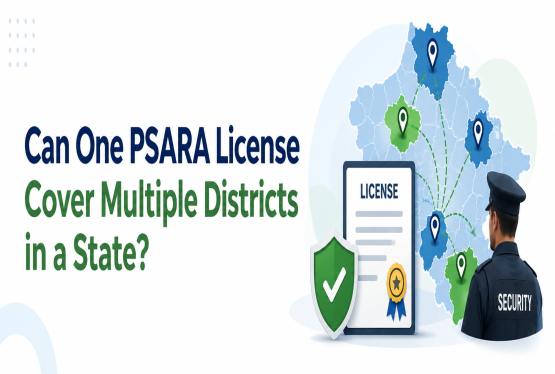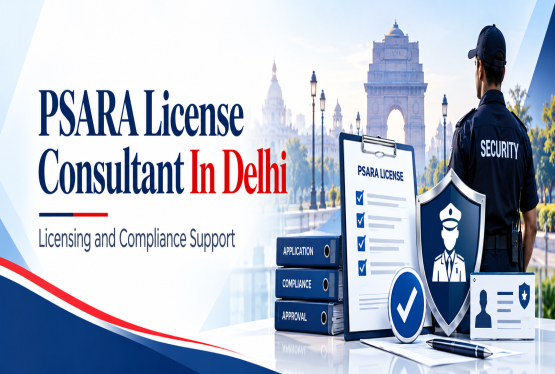



Yes, a PSARA License is mandatory for private security agencies in India. Under the Private Security Agencies (Regulation) Act, 2005, a person or business cannot start or run a private security agency without the required licence. This applies to agencies supplying security guards to offices, factories, shopping malls, residential societies and other customers. However, not every business that employs security guards needs its own PSARA License. For example, a company hiring guards directly for its own office is different from an agency supplying guards to clients.
This article explains who needs a PSARA License, who may not need one and what happens if you operate without it.
What Is a PSARA License and Why Is It Mandatory?
PSARA stands for the Private Security Agencies (Regulation) Act, 2005. This law was introduced to regulate private security agencies in India and make sure they follow proper rules while providing security services. A PSARA License is the government permission required to run a private security agency legally. It helps ensure that agencies employ suitable guards, arrange the required training and maintain proper records.
Section 4 of the PSARA Act clearly states that a person cannot start or operate a private security agency without a licence. This means that simply registering a company or obtaining GST registration does not give you permission to supply security guards. You must obtain the required PSARA License before starting these services.
The law applies to eligible individuals and businesses, including proprietorships, partnership firms, LLPs and companies. The size of your business does not automatically remove the licensing requirement. Even a small agency supplying a few guards to customers may need a licence.
Which Security Agencies Must Have a PSARA License?
The PSARA Act covers businesses that provide private security services to other people or organisations. It includes agencies that supply security guards, provide security for people or property, or carry out other activities covered by the Act.
For example, suppose you start a business in Delhi and supply security guards to three residential societies. Even if you employ only ten guards, you are providing private security services to customers. You must obtain the required PSARA License before starting operations.
Businesses That Generally Need a PSARA License
|
Type of Business |
Is PSARA License Required? |
|
Agency supplying security guards to offices |
Yes |
|
Agency providing guards to residential societies |
Yes |
|
Agency supplying security staff to factories |
Yes |
|
Agency providing guards to shopping malls |
Yes |
|
Private security agency providing personal protection |
Yes |
|
Agency providing armed security guards |
Yes |
|
Business providing private security services to warehouses |
Yes |
|
Business supplying security supervisors to clients |
Generally yes, where the service falls within private security |
|
Business providing security guard training |
May be covered; check the nature of the business and applicable rules |
The important point is not how many guards you employ or how much money your agency earns. What matters is whether your business provides private security services covered by the PSARA Act.
Businesses providing specialised services, such as armed security or cash transportation, may also need to follow additional laws and rules.
Who May Not Need a PSARA License in India?
Not every business that uses security guards is a private security agency. The law mainly regulates businesses that provide private security services. A company that employs guards directly to protect its own property is generally in a different position from a company that supplies guards to customers. However, the answer depends on what the business actually does. If a company starts supplying guards to other businesses, the PSARA licensing requirement may apply even if security services were not its original business.
Common Situations Where PSARA May Not Apply
Companies employing their own security guards
Suppose a manufacturing company hires two guards directly as its employees to protect its factory. The company is not automatically a private security agency merely because it employs guards for its own premises. However, it must still follow the labour, employment and other laws that apply to those workers.
Businesses selling CCTV cameras
A shop that only sells CCTV cameras, alarm systems or security equipment does not automatically need a PSARA License. But if the business also provides services covered by the legal definition of a private security agency, its position may change.
Businesses providing only security equipment installation
A company installing cameras, access-control machines or electronic locks may not need a PSARA License merely for installation work.The business should check whether it also provides guards, private security personnel or other regulated security services.
Government security organisations
The PSARA Act's definition of a private security agency excludes government agencies, departments and organisations. These bodies operate under their own legal arrangements.
What About Security Guard Training Institutes?
This is an important area where businesses should be careful. The definition of a private security agency under Section 2(g) of the PSARA Act includes businesses engaged in providing private security services, including training private security guards or their supervisors.
Therefore, it would be incorrect to say that every training institute is automatically exempt from PSARA. A business providing security guard training should check its activities and the applicable state rules before deciding whether licensing or other approval is required.
Is PSARA License Mandatory for Small Security Agencies?
Yes. There is no general exemption under Section 4 simply because a private security agency is small or has only a few employees. For example, suppose you start a security business in Jaipur and supply four guards to a commercial building. You may think that a PSARA License is required only when you employ 50 or 100 guards. That is not correct. If your business provides private security agency services, the licensing requirement can apply even when your team is small.
The same principle applies to new businesses. You cannot avoid the requirement simply because your agency has recently started or has not yet earned much money.
Can a Proprietor Apply for a PSARA License?
Yes. An eligible individual operating a proprietorship business can apply for a PSARA License, subject to the legal requirements. You do not necessarily need to register a private limited company to apply. However, your business must meet the applicable eligibility, verification and licensing conditions.
Is PSARA License Mandatory for Security Agencies in Every State?
The PSARA Act is a central law that applies across India. However, private security agency licences are issued through the system established for the relevant state or union territory. For example, if you want to start a private security agency in Gujarat, you must follow the applicable Gujarat PSARA rules. If you want to operate in Maharashtra, you must follow Maharashtra's rules. The basic licensing requirement comes from the central Act, but the forms, procedures and some operational requirements can differ.
Can You Use One PSARA License Across India?
No. A PSARA License issued for one state does not automatically allow your agency to operate throughout India. Suppose your company has a PSARA License for Delhi and wants to start supplying guards in Gurugram, Haryana. You cannot assume that your Delhi licence covers those operations. You must obtain the required permission for Haryana.
If your business plans to operate in several states, you should plan the licensing requirements for each state before accepting security contracts.
What Happens If You Run a Security Agency Without a PSARA License?
Operating a private security agency without the required licence is a violation of Section 4 of the PSARA Act. Under Section 20(1), a person who violates this requirement may face:
- Imprisonment for up to one year.
- A fine of up to Rs. 25,000.
- Both imprisonment and a fine.
These are the penalties provided under the central Act. The actual outcome depends on the facts and the legal process. For example, suppose a business starts supplying security guards to factories without obtaining the required licence. The fact that the business has GST registration or a company incorporation certificate does not replace the PSARA License.
Operating without approval can also create practical problems. Customers may ask for licence details before signing contracts, and a business that cannot provide them may lose opportunities.
The safest approach is to obtain the required licence before starting private security agency operations.
Is PSARA License Mandatory Before Hiring Security Guards?
The answer depends on why you are hiring guards. If you are a factory owner directly employing guards to protect your own factory, you are not automatically operating a private security agency.
However, if you are starting a business that will hire guards and supply them to customers, you must obtain the required PSARA License before starting that business.
Can You Start a Security Agency While Your PSARA Application Is Pending?
No. Submitting an application does not automatically give you permission to operate. Under Section 4 of the PSARA Act, the required licence must be held before starting private security agency operations. An application acknowledgement or payment receipt is not the same as an approved licence.
If you are preparing to start an agency, you can work on business planning, documentation and other lawful setup activities while the application is being processed. However, you should not begin providing regulated security services without the required approval.
What Are the Main Requirements for Getting a PSARA License?
If your business needs a PSARA License, you must meet the eligibility conditions under the Act and the rules of the state where you want to operate.The authorities examine the applicant's background, business details and ability to meet the required security guard training and operational conditions.
Basic PSARA License Requirements
- An eligible individual or registered business.
- Required identity and business documents.
- Details of the proprietor, partners or directors, as applicable.
- Office address and other required business information.
- Background verification of the relevant persons.
- Suitable security guard training arrangements.
- Payment of the prescribed government application fee.
- Compliance with the applicable state PSARA rules.
The exact documents and application procedure can differ between states.Security agencies must also ensure that their guards meet the conditions under Section 10 of the PSARA Act. These include the prescribed age, character, training and physical fitness requirements.
What Is the Minimum Age for a Security Guard?
Under the PSARA Act, a person must generally be at least 18 years old and below 65 years of age to be employed as a private security guard.The person must also meet the applicable background verification, training and other eligibility conditions.
How Much Does a PSARA License Cost in India?
The government application fee depends on the area where your agency wants to provide security services. Section 7(3) of the PSARA Act provides three fee categories.
|
Licence Coverage |
Government Application Fee |
|
One district |
Rs. 5,000 |
|
Two to five districts |
Rs. 10,000 |
|
Whole state |
Rs. 25,000 |
For example, an agency planning to operate only in one district pays Rs. 5,000 as the government application fee. An agency seeking permission for the whole state pays Rs. 25,000. These are government application fees only. Other expenses, such as business setup, documentation, training arrangements and optional professional assistance, may be additional.
For a detailed explanation, read our blog on PSARA License Fees in India: Government Charges & Hidden Costs.
How Can You Check Whether a Security Agency Has a Valid PSARA License?
If you are planning to hire a private security agency, checking its licence is an important step. A registered company name, GST number or professional website does not prove that the business has permission to provide private security services. Before hiring an agency, ask for its PSARA License details and check whether the licence covers the area where the guards will work.
You should check:
- The name of the licensed security agency.
- The state and districts covered by the licence.
- The licence number and validity period.
- Whether the licence belongs to the agency providing the service.
- Whether the licence is still valid.
You can use any available official verification facility or contact the concerned state Controlling Authority for confirmation.
The official government PSARA portal is psara.gov.in.
How Long Is a PSARA License Valid?
A PSARA License is generally valid for five years unless it is cancelled earlier under the law. If the agency wants to continue operating, it must apply for renewal at least 45 days before the licence expires.
Get Help with PSARA License Registration from Compliance Calendar
Starting a private security agency involves more than registering a business and hiring guards. You must understand whether your services require a PSARA License, which state rules apply and what documents are needed before you begin operations.
Compliance Calendar LLP helps businesses understand PSARA License Registration requirements and prepare their applications. Whether you want to start a small security agency or expand an existing business into another state, our team can guide you through the applicable process.
If you are unsure whether your business needs a PSARA License, you can contact our team to discuss your business activities and the relevant licensing requirements.
Phone: +91 9988424211
Email: info@ccoffice.in
Frequently Asked Questions
1. Is PSARA License mandatory in India?
Yes. Under Section 4 of the PSARA Act, a person or business must obtain the required licence before starting or operating a private security agency.
2. Is PSARA License mandatory for all security agencies?
Yes, private security agencies covered by the PSARA Act must hold the required licence. However, not every business that employs security guards is automatically a private security agency.
3. Is PSARA License mandatory for a company hiring its own guards?
Generally, no. A company that directly employs guards only to protect its own premises is not automatically a private security agency. Its actual activities and applicable laws must still be considered.
4. Is PSARA License required for a small security agency?
Yes. There is no general exemption simply because an agency employs only a few guards.
5. Is PSARA License mandatory for a proprietorship firm?
Yes, if the proprietor operates a private security agency covered by the Act. An eligible proprietor can apply for the required licence.
6. Is PSARA License required for CCTV installation businesses?
Not automatically. A business that only sells or installs CCTV equipment may not need a PSARA License for that activity. The position may change if it also provides regulated private security services.
7. Can I run a security agency without a PSARA License?
No. Operating a private security agency without the required licence violates Section 4 of the PSARA Act.
8. What is the penalty for operating without a PSARA License?
Under Section 20(1), the punishment may include imprisonment of up to one year, a fine of up to Rs. 25,000, or both.
9. Is one PSARA License valid throughout India?
No. You must obtain the required licence for each state or union territory where your agency plans to operate.
10. Can I start providing security guards after applying for a licence?
No. An application acknowledgement does not replace an approved PSARA License.
11. Is GST registration enough to start a security agency?
No. GST registration and PSARA licensing serve different purposes. A business providing regulated private security services must obtain the required PSARA License.
12. Is PSARA License mandatory for security guard training institutes?
The PSARA Act's definition of a private security agency includes training activities. A business providing security guard training should check the applicable licensing and approval requirements rather than assuming it is exempt.
Article last updated on : 30 Oct 2026.











_learn_crop10_thumb.jpg)