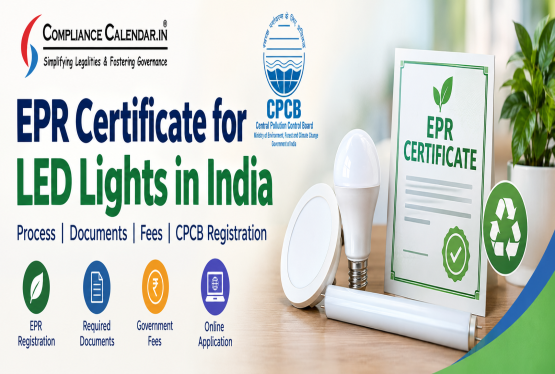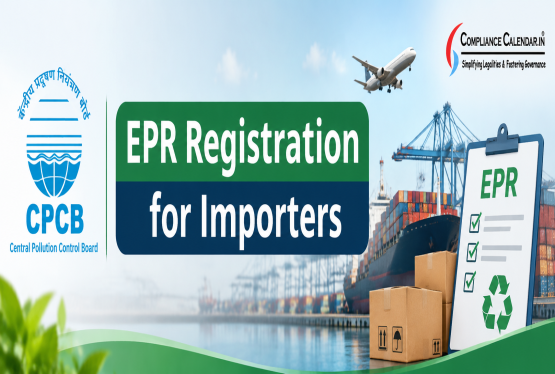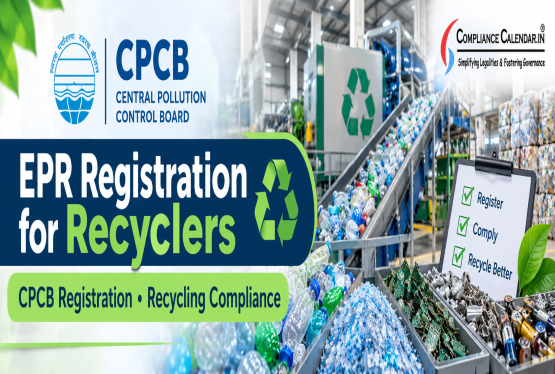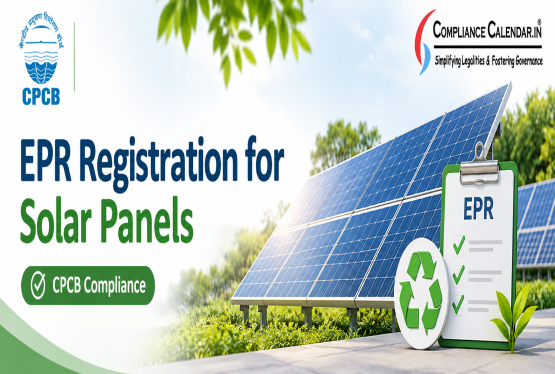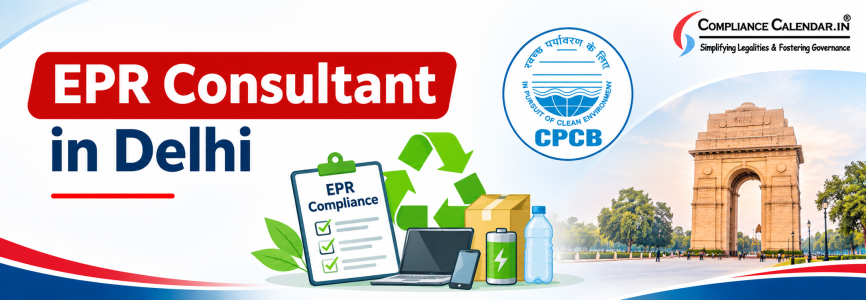



If your business manufactures, imports or sells products in plastic packaging, electronic equipment or batteries, you may have responsibilities under Extended Producer Responsibility (EPR) rules in India. Many business owners know that EPR Registration is important but are not sure whether it applies to their business, which authority handles it or what they need to do after registration. An experienced EPR Consultant can help you understand the applicable rules, prepare documents and complete the registration process.
Delhi has a large number of manufacturers, importers, wholesalers, distributors and brand owners. Businesses operating in areas such as Okhla, Bawana, Narela, Mayapuri and Naraina may deal with products covered under different EPR rules. Whether you sell electronic products, import batteries or use plastic packaging for your products, understanding your responsibilities is important. Compliance Calendar LLP helps businesses with EPR Registration and related compliance requirements.
You can visit our Guide on EPR Registration for more information
What Is EPR and Why Does Your Business Need It?
EPR stands for Extended Producer Responsibility. In simple words, it means that businesses placing certain products or packaging in the market are also responsible for managing the waste generated from them, as required under the applicable rules. The purpose is to make businesses take responsibility for waste instead of leaving the entire burden on local waste collection systems and the environment.
For example, imagine a company in Delhi selling packaged food in plastic containers. After customers use the product, the packaging may become plastic waste. The business may have to meet certain collection, recycling or processing responsibilities under the Plastic Waste Management Rules. Similarly, companies introducing covered electronic products or batteries into the Indian market have responsibilities under separate EPR rules.
EPR is not just about obtaining a certificate. Businesses may also need to maintain records, meet waste management targets, obtain eligible recycling certificates and submit returns. The exact requirements depend on the type of waste and the role of the business.
Who Needs EPR Registration in Delhi?
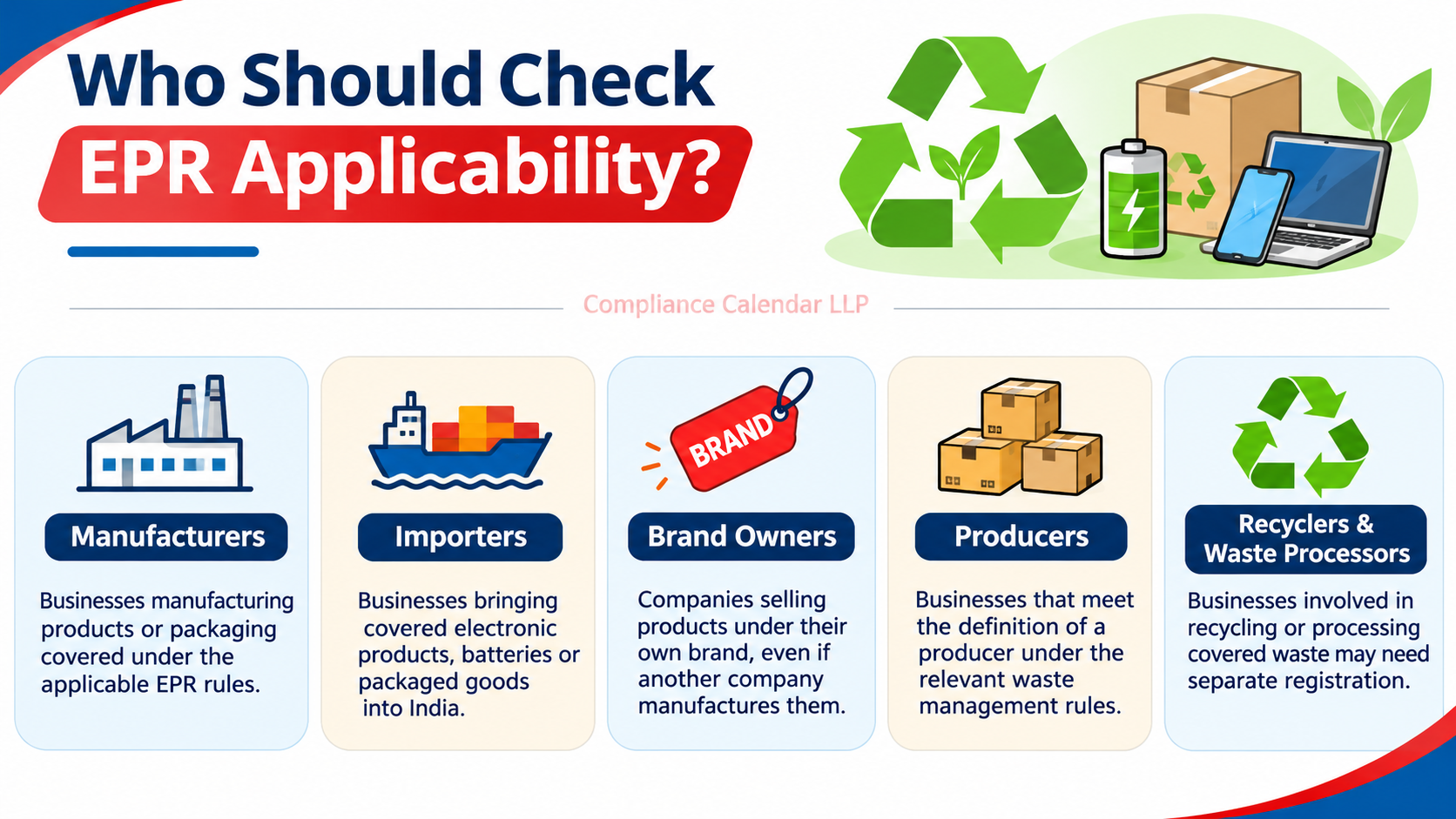
EPR Registration is required for businesses that fall under the relevant waste management rules. The requirement depends on what a business manufactures, imports or sells and whether it falls within a regulated category. A business should first understand its role instead of applying under a category simply because it uses plastic, electronics or batteries.
The following types of businesses should check whether EPR applies to their activities:
|
Business Category |
Who Needs EPR Registration? |
|---|---|
|
Manufacturers |
Businesses manufacturing products or packaging covered under the applicable EPR rules. |
|
Importers |
Businesses bringing covered electronic products, batteries or packaged goods into India. |
|
Brand Owners |
Companies selling products under their own brand, even if another company manufactures them. |
|
Producers |
Businesses that meet the definition of a producer under the relevant waste management rules. |
|
Recyclers and Waste Processors |
Businesses involved in recycling or processing covered waste may need separate registration. |
For example, a company in Delhi importing electronic appliances and selling them under its own brand may need to check its responsibilities under the E-Waste (Management) Rules, 2022. A food or cosmetics brand using plastic packaging may need to check whether it falls under the Producer, Importer or Brand Owner category under plastic waste rules.
Not every business needs the same registration. A business dealing with more than one covered product category may also have separate EPR responsibilities.
Types of EPR Registration for Businesses
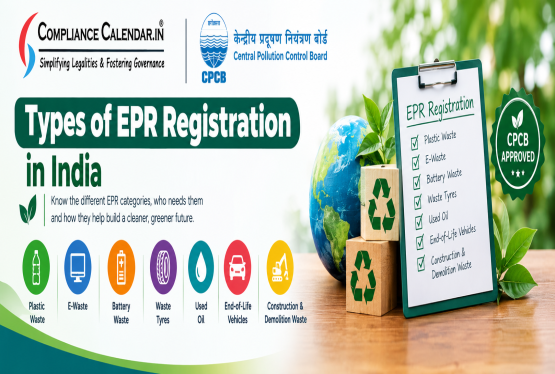
EPR requirements are divided into different waste categories. The three important categories for many businesses are plastic waste, electronic waste and battery waste. Each category has its own rules, registration requirements and compliance responsibilities.
|
Type of EPR |
Businesses that should check applicability |
Examples |
|
Producers, Importers and Brand Owners dealing with covered plastic packaging |
Food packaging, plastic bottles, containers and wrappers |
|
|
Producers of covered electrical and electronic equipment |
Computers, laptops, televisions and printers |
|
|
Producers introducing covered batteries into the Indian market |
Portable batteries, industrial batteries and electric vehicle batteries |
Plastic Waste EPR Registration
Plastic Waste EPR applies to businesses covered under the Plastic Waste Management Rules and related guidelines. These rules mainly cover Producers, Importers and Brand Owners, commonly called PIBOs. Businesses using plastic packaging must understand the category of packaging involved and their responsibilities under the rules.
For example, a Delhi-based company selling packaged snacks in plastic pouches under its own brand should check whether it is covered as a Brand Owner. An importer bringing packaged products into India may also have EPR responsibilities. The applicable targets and reporting requirements depend on the business category and the type of plastic packaging.
E-Waste EPR Registration
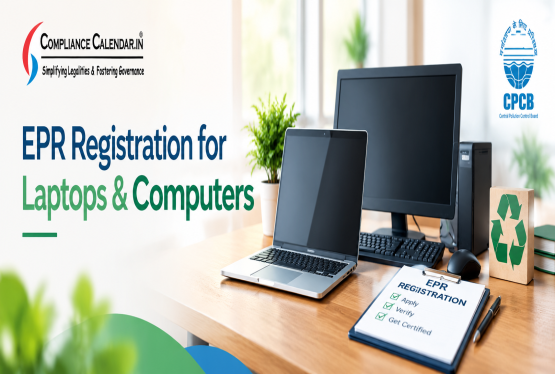
E-waste means discarded electrical and electronic equipment and the covered components, parts and spares listed under the rules. It can include products such as computers, laptops, mobile phones, televisions, printers and other notified electrical or electronic equipment.
Under the E-Waste (Management) Rules, 2022, applicable producers, manufacturers, refurbishers and recyclers have registration and compliance responsibilities. For example, a Delhi business importing covered electronic equipment for sale in India under its own brand should check whether producer registration is required. The product must fall within the categories covered by the rules.
For more information read our article : E-waste registration guide
Battery Waste EPR Registration
Battery Waste EPR applies to batteries covered under the Battery Waste Management Rules, 2022. These rules cover different types of batteries, including portable, automotive, electric vehicle and industrial batteries, subject to the definitions and requirements in the rules.
For example, a company importing lithium-ion batteries for sale in India may need to register as a producer and meet the applicable waste management targets. Businesses should also check their responsibilities when batteries are supplied along with equipment or other products.
For detailed explanation kindly visit : Types of EPR Registration
Why Should You Hire an EPR Consultant in Delhi?
EPR rules can be confusing for businesses that are applying for the first time. A company may know that registration is required but may not know which category to select, what information to provide or how to manage compliance after receiving registration. Applying under the wrong category or submitting incomplete information can lead to queries and delays.
An EPR Consultant in Delhi can help a business understand which rules apply to its products and activities. The consultant can review the business details, identify the relevant category, guide document preparation and assist with the application process. This support is useful for manufacturers, importers and brand owners that want to understand their responsibilities before starting or expanding their business activities.
A consultant can also help with post-registration work. Depending on the applicable rules, this may include understanding EPR targets, maintaining records, managing eligible recycling certificates and preparing returns. However, registration approval depends on the applicant meeting the legal requirements and the decision of the concerned authority. No consultant can guarantee approval or exemption from compliance obligations.
What Services Does an EPR Consultant Provide?
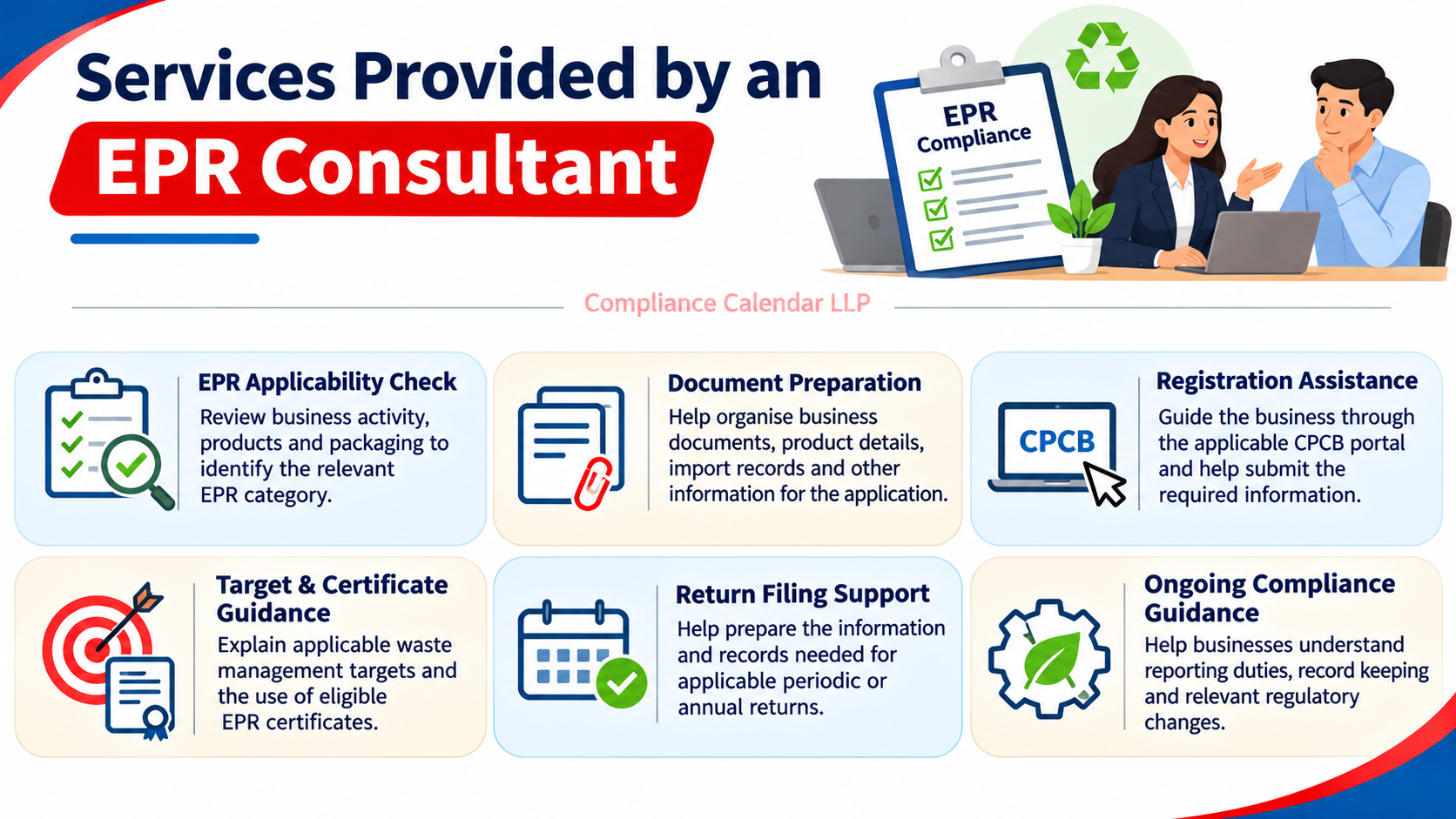
The work of an EPR Consultant does not end with submitting an online application. Businesses may need support at different stages, from checking whether registration is required to understanding their responsibilities after approval.
The main areas of assistance can include:
|
EPR Consultant Service |
How It Helps Your Business |
|---|---|
|
EPR Applicability Check |
Reviews business activities, products and packaging to identify the relevant EPR category. |
|
Document Preparation |
Helps organise business documents, product details, import records and other information required for the application. |
|
Registration Assistance |
Guides businesses through the applicable CPCB portal and helps submit the required information. |
|
Target and Certificate Guidance |
Explains applicable waste management targets and the use of eligible EPR certificates. |
|
Return Filing Support |
Helps prepare information and records required for periodic or annual EPR returns. |
|
Ongoing Compliance Guidance |
Helps businesses understand reporting duties, record keeping and relevant regulatory changes. |
The actual services required will depend on the business category. For example, a plastic packaging Brand Owner may have different reporting requirements from an electronic equipment producer or a battery importer.
Documents Required for EPR Registration
The documents required for EPR Registration depend on the waste category and the applicant's business activity. A plastic packaging Brand Owner may need to provide packaging and sales information, while an electronic equipment producer may need to provide product category and manufacturing or import details. Therefore, businesses should prepare documents according to the relevant portal requirements instead of relying on one common checklist.
Some commonly required documents and information include:
|
Document or information |
Why it may be required |
|
PAN card |
To verify the business identity |
|
To provide tax and business details, where applicable |
|
|
Certificate of Incorporation or business proof |
To verify the legal status of the business |
|
Authorised signatory details |
To identify the person handling the application |
|
Business address |
To provide registered or operational address details |
|
Product information |
To identify the products covered under EPR |
|
Import or sales details |
To understand the business activity and applicable obligations |
|
Brand or packaging details |
To identify relevant brand and packaging information, where applicable |
Additional documents, declarations, technical details or records may be required depending on the EPR category. Before applying, businesses should check that their company name, address, product details and other information match across their documents. Incorrect or incomplete information can lead to application queries.
How Does the EPR Registration Process Work?
The registration process depends on whether the business deals with plastic packaging, electronic equipment or batteries. Although the application requirements are different, the first step is always to understand the business activity and identify the correct category. The application must then be made through the applicable registration system.
Generally, the process involves checking EPR applicability, collecting the required documents, preparing product and business information, submitting the online application and responding to any queries raised by the concerned authority. Once registration is granted, the business must follow the applicable conditions and continue meeting its compliance responsibilities.
Businesses should remember that one EPR registration does not automatically cover every waste category. For example, a company dealing with both electronic equipment and plastic packaging may need to check separate registration requirements for each category. It should also plan for post-registration work, including target fulfilment and return filing wherever applicable.
Role of CPCB and DPCC in EPR Compliance in Delhi
The Central Pollution Control Board (CPCB) plays an important role in implementing EPR requirements through centralised registration and reporting systems for different waste categories. Businesses applying for producer registration under the relevant EPR rules should use the applicable CPCB system and follow the latest instructions.
The Delhi Pollution Control Committee (DPCC) is the pollution control authority for Delhi. It has responsibilities under different environmental rules and may handle matters such as permissions or registration for certain waste-processing activities, depending on the applicable rules. For example, waste processors may have separate registration requirements from producers.
It is important not to confuse these roles. Every EPR producer registration is not issued by DPCC. The correct authority and application process depend on the waste category and the activity being carried out. A business should check the applicable rules before submitting an application.
What Happens If a Business Does Not Follow EPR Rules?
Businesses covered under EPR rules must meet their applicable registration, reporting and waste management responsibilities. Failure to do so may result in regulatory action, including environmental compensation or directions from the concerned authority, depending on the nature of the violation and the provisions in force.
For example, an importer selling covered electronic products without meeting its EPR responsibilities may face compliance issues. Similarly, a brand owner that fails to meet its applicable plastic packaging obligations may have to address the non-compliance. Missing returns, incorrect information or failure to meet targets can also create problems.
The exact consequences depend on the relevant rules and the type of violation. Businesses should therefore review their requirements before starting operations or introducing covered products into the market. Taking professional guidance at an early stage can help them understand what needs to be done and avoid preventable mistakes.
Why Choose Compliance Calendar LLP as Your EPR Consultant in Delhi?
Choosing an EPR Consultant is not only about getting an application submitted. Businesses also need clear guidance on which rules apply to their products, what information they must provide and what responsibilities continue after registration.
Compliance Calendar LLP helps businesses understand applicable EPR requirements and provides assistance with registration, documentation and related compliance work. Our team can help identify the relevant category, organise the required information and guide businesses through the applicable process. We also help businesses understand post-registration responsibilities, such as applicable targets, certificates and return filing.
Whether you are a manufacturer, importer or brand owner in Delhi, the first step is to understand your EPR obligations. The documents and process will depend on your business activity, product category and applicable rules. Contact Compliance Calendar to discuss your requirements and understand the next steps.
Need help with EPR Registration in Delhi?
Contact Compliance Calendar at +91 9988424211 or info@ccoffice.in
Frequently Asked Questions (FAQs)
1. What does an EPR Consultant do?
An EPR Consultant helps businesses understand EPR rules, prepare documents, apply for registration and manage applicable compliance requirements.
2. Is EPR Registration compulsory in Delhi?
It is compulsory for businesses that fall under the applicable EPR rules. The requirement depends on the product, packaging and business activity.
3. Who needs EPR Registration in Delhi?
Applicable producers, importers, brand owners, manufacturers, recyclers and refurbishers may need registration depending on the relevant waste management rules.
4. What are the main types of EPR Registration?
The main categories include Plastic Waste EPR, E-Waste EPR and Battery Waste EPR.
5. Which authority handles EPR Registration in India?
CPCB operates centralised EPR systems for relevant categories. DPCC has local pollution-control responsibilities in Delhi, including certain waste-processing matters.
6. What documents are required for EPR Registration?
Common documents include PAN, GST details, business registration proof, authorised signatory details and product information. The exact list depends on the EPR category.
7. Can an importer apply for EPR Registration?
Yes. Importers dealing with products covered under the applicable EPR rules may have to obtain registration and fulfil related responsibilities.
8. Is EPR Registration required for plastic packaging?
Applicable Producers, Importers and Brand Owners dealing with covered plastic packaging must check and fulfil their EPR requirements under the Plastic Waste Management Rules.
9. What happens after receiving an EPR certificate?
Businesses must continue to meet applicable targets, maintain records and file required returns. Registration does not end their ongoing compliance responsibilities.
10. Can Compliance Calendar help with EPR Registration in Delhi?
Yes. Compliance Calendar provides assistance with EPR applicability checks, documentation, registration and related compliance requirements, depending on the business category.
Article last updated on : 05 Nov 2026.










_learn_crop10_thumb.jpg)