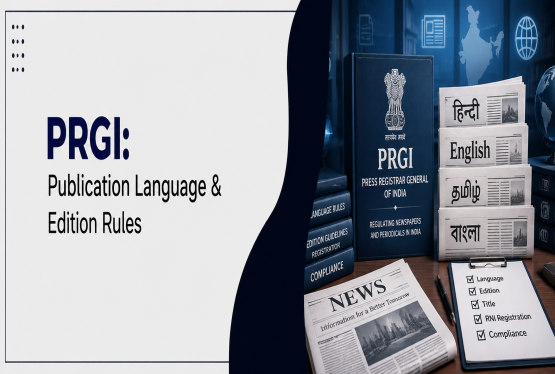
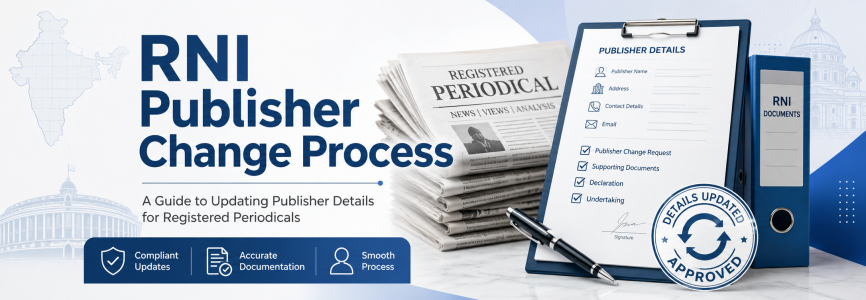



Changing the publisher of a newspaper or periodical is an important compliance process under the registration framework for publications in India. Earlier, most people commonly referred to this process as an “RNI publisher change.” Today, after the implementation of the Press and Registration of Periodicals Act, 2023 and the Press and Registration of Periodicals Rules, 2024, the Registrar of Newspapers for India has been renamed as the Press Registrar General of India, commonly known as PRGI. The new law has been effective from 1 March 2024, and registration-related matters for newspapers and periodicals are now governed under the PRP Act, 2023.
In simple words, the publisher is the person responsible for publishing the newspaper or periodical. If the owner wants to appoint a new publisher, remove the existing publisher, or update publisher details due to resignation, change in management, restructuring, death, retirement, business transfer, or operational reasons, the change must be properly updated with the concerned authority. This is not merely an internal business decision. Since the publisher’s name forms part of the registered publication record, the change should be made through the proper process on the official Press Sewa Portal.
Meaning of Publisher Change
Publisher change means replacing or updating the person who is officially responsible for publishing the newspaper or periodical. The publisher may be the owner himself, a director, partner, authorised representative, editor-publisher, or any person appointed by the owner to handle publication responsibility. A publisher is not just a name printed in the publication. The publisher is legally connected with the declaration, publication record, compliance filings and accountability of the periodical. Therefore, whenever there is a change in the publisher, the same should be updated in the registration records so that the publication remains legally compliant.
Legal Background of RNI/PRGI Registration
The registration of newspapers and periodicals in India was earlier governed mainly by the Press and Registration of Books Act, 1867. With the new PRP Act, 2023 and PRP Rules, 2024, the registration process has shifted to a more modern framework. Under the PRP Act, the office earlier known as RNI has been renamed as PRGI. The PRGI is an attached office under the Ministry of Information and Broadcasting. It handles title allotment, certificates of registration, annual statements and publication-related records for newspapers and periodicals. For practical purposes, many publishers still use the term “RNI publisher change,” but the updated official reference is “PRGI publisher change” or “revision of registration details through Press Sewa Portal.”
When Is Publisher Change Required?
Publisher change may be required in several situations. For example, if the existing publisher resigns or is no longer associated with the organisation, a new publisher must be appointed and the records must be updated. If a company, LLP, trust, society or partnership changes its authorised person for publication work, the publisher details should also be revised. In case of death, retirement, internal restructuring or transfer of control, publisher change becomes necessary to avoid mismatch between actual publication management and registered records. Publisher change may also be required when the owner wants to appoint a more suitable person to manage printing, publication, distribution and compliance responsibilities. The most important point is that the registered details should always match the actual publication position. If the newspaper or periodical continues under an old publisher’s name even after the person has left, it may create compliance, authentication and future renewal issues.
Difference Between Publisher Change and Ownership Change
Publisher change and ownership change are not the same. Publisher change only means changing the person responsible for publishing the periodical. Ownership change means transfer of ownership rights over the title or publication from one owner to another. If only the authorised publishing person is changing, the application should be handled as publisher change or revision of registration details. However, if the title or periodical is being transferred to a new owner, then it may fall under transfer of ownership. PRGI guidance states that transfer must be applied only through the Press Sewa Portal when the owner of a registered periodical wants to transfer ownership.
Step-by-Step RNI Publisher Change Process
1. Check Existing Registration Details
The first step is to check the current registration details of the publication. The owner should verify the title, registration number, language, periodicity, place of publication, printing press details, owner details and existing publisher details. This step helps identify what exactly needs to be changed. Sometimes, along with publisher change, other details such as printer, printing press, address or editor details may also need correction. In such cases, the application should be prepared carefully so that all required changes are included properly.
2. Obtain Owner Approval
The owner must authorise the change of publisher. If the publication is owned by an individual, the individual owner can issue the authorisation. If it is owned by a company, LLP, partnership, society or trust, a board resolution, partner consent, managing committee resolution or authorisation letter may be required. The authority document should clearly mention the name of the outgoing publisher, the name of the new publisher and the decision to update the publisher details with PRGI.
3. Collect KYC and Consent of New Publisher
The new publisher’s identity and address documents should be collected. The new publisher may also need to provide consent or declaration confirming willingness to act as publisher of the concerned newspaper or periodical. This is important because the publisher carries responsibility for publication-related compliance. The person should be legally capable, properly authorised and aware of the role.
4. File Application on Press Sewa Portal
The change is generally processed through the Press Sewa Portal. The official portal is used for registration-related services and further steps for registration are taken by the publisher through the portal. The applicant should log in, select the appropriate application type and fill the revision/change details. PRGI guidance indicates that revised registration is used when changes or revisions are required in registered details. Care should be taken while entering name, address, title code, registration number and publication details. Even small spelling mistakes may create mismatch or objection.
5. Upload Supporting Documents
The required documents should be uploaded in the prescribed format. The documents must be clear, readable and properly signed where required. If any document is incomplete, unsigned or mismatched, the department may raise a query. The application should ideally include authorisation from the owner, KYC of the new publisher, proof of existing registration, declaration or consent, and any other document required by the portal or authority.
6. Authentication or Verification
Depending on the nature of the change and applicable process, authentication or verification may be required from the concerned authority. Under the earlier framework, declarations were commonly authenticated by the local authority. Under the new system, the process has become more portal-driven, but the applicant must follow the specific requirement shown on the Press Sewa Portal.
7. Department Scrutiny
After filing, the application is reviewed by the concerned authority. They may check whether the registered title is valid, whether the applicant is authorised, whether the new publisher details are proper, and whether there is any mismatch in publication record. If clarification is required, the applicant must reply within the given time. Delay in responding to queries can delay the change process.
8. Approval and Updated Records
Once the application is accepted, the publisher details are updated in the official records. The applicant should download or preserve the updated acknowledgement, revised certificate or updated registration record, as applicable. After approval, the publication should ensure that future printed copies carry the updated publisher details correctly.
Documents Required for RNI Publisher Change
The exact list may vary depending on the publication type and portal requirement, but generally the following documents may be required: Authorisation letter or resolution from the owner approving the publisher change. This document should clearly authorise the new publisher and mention the publication title.
Identity proof and address proof of the new publisher. PAN, Aadhaar, voter ID, passport or driving licence may be used depending on the acceptable document list.
-
Consent letter or declaration from the new publisher confirming that he or she is willing to act as publisher.
-
Copy of existing registration certificate or registration details of the newspaper or periodical.
-
Proof of ownership or authority of the applicant filing the change request.
-
Resignation, NOC or relieving letter from the old publisher, if applicable.
-
Latest copy of the newspaper or periodical showing the current imprint line and publication details.
-
Any other declaration, affidavit or supporting document required by PRGI or the Press Sewa Portal.
Important Points to Remember
Publisher change should not be delayed after the actual change takes place. If the publication continues with outdated publisher details, it may create compliance issues in future filings. The name and address of the new publisher should be exactly as per KYC documents. Any mismatch between PAN, Aadhaar, portal profile and authorisation documents should be corrected before filing.
The owner and publisher roles should be clearly understood. If the owner is changing, do not file it as a simple publisher change. It may require transfer of ownership.
If the publication is not being printed or has become defunct, the status should be reviewed first. PRGI FAQs mention that where an edition is identified as defunct or not being published, the same should be ceased before initiating transfer of ownership of a title.
The applicant should also ensure that annual statements and other compliance filings are updated. Pending compliance may sometimes lead to queries or delays.
Common Mistakes in Publisher Change Application
One common mistake is selecting the wrong application type on the portal. Publisher change should be filed under the correct revision or change category, not as a new registration unless a new periodical is being registered.
Another mistake is uploading unclear or incomplete documents. Blurred documents, unsigned authorisation letters, missing resolutions or mismatched names can lead to objection.
Many applicants also confuse publisher change with printer change, editor change or ownership transfer. Each type of change has a different purpose and may require different documentation.
Some applicants continue printing the publication with new publisher details before proper update. It is safer to complete the official process and then use the updated details in the publication.
Why Professional Assistance Helps
The publisher change process may look simple, but it requires careful understanding of publication records, portal filing, authorisation documents and PRGI requirements. A small mismatch in title, registration number, owner details or publisher KYC can delay approval.
Professional assistance helps in checking the existing registration status, preparing correct documents, drafting authorisation letters, filing the application on the portal, responding to queries and ensuring that the publication remains compliant.
For newspaper and magazine owners, proper publisher change is important because it protects the legal continuity of the publication and avoids future issues in annual statement filing, title transfer, registration revision and publication records.
Conclusion
The RNI publisher change process is now handled under the updated PRGI framework through the Press Sewa Portal. Although people still commonly call it “RNI publisher change,” the official authority is now the Press Registrar General of India. The process is required whenever the person responsible for publishing a newspaper or periodical changes.
To complete the process smoothly, the owner should verify existing registration details, authorise the new publisher, collect KYC and consent documents, file the correct application on the Press Sewa Portal and respond to departmental queries on time. A properly completed publisher change keeps the publication legally compliant and ensures that official records match the actual publishing responsibility.
FAQs
Q1. What is RNI publisher change?
Ans. RNI publisher change means updating the name of the person responsible for publishing a registered newspaper or periodical. Under the new framework, it is handled through PRGI and the Press Sewa Portal.
Q2. Is RNI now called PRGI?
Ans. Yes. Under the PRP Act, 2023, the Registrar of Newspapers for India has been renamed as the Press Registrar General of India. However, many people still use the old term RNI in common language.
Q3. When is publisher change required?
Ans. Publisher change is required when the existing publisher resigns, retires, dies, leaves the organisation, or when the owner appoints a new authorised person for publication responsibility.
Q4. Is publisher change the same as ownership transfer?
Ans. No. Publisher change only updates the publishing person. Ownership transfer changes the owner of the publication or title and follows a different process.
Q5. Can publisher change be filed online?
Ans. Yes. Registration and revision-related steps are handled through the Press Sewa Portal, subject to the applicable category and document requirements.
Q6. What documents are required for publisher change?
Ans. Generally, authorisation letter or resolution, KYC of new publisher, consent letter, existing registration proof, latest publication copy and other supporting documents may be required.
Q7. Can the owner become the publisher?
Ans. Yes, the owner may also act as publisher, provided the details are properly updated and the required declarations or authorisations are completed.
Q8. What happens if publisher details are not updated?
Ans. If publisher details are not updated, the publication records may become incorrect. This may create issues in future compliance, revision applications and official communication.
Q9. How long does publisher change take?
Ans. The timeline depends on document accuracy, portal processing, departmental scrutiny and whether any clarification is raised. Complete and correct filing usually helps avoid delay.
Q10. Do I need professional help for RNI publisher change?
Ans. Professional help is not mandatory, but it is useful where the publication has old records, ownership issues, pending compliance, portal mismatch or multiple changes to be updated.


_crop10_thumb.jpg)





_for_FY_2025-26_crop10_thumb.jpg)




_learn_crop10_thumb.jpg)


_Filing_Due_Dates_for_FY_2024-25_learn_crop10_thumb.jpeg)





_of_GST_Act_learn_crop10_thumb.jpg)


_Under_GST_learn_crop10_thumb.jpg)


_crop10_thumb.jpg)


_crop10_thumb.jpg)


_learn_crop10_thumb.jpg)


_of_the_Income_Tax_Act_learn_crop10_thumb.jpg)


_learn_crop10_thumb.jpg)


_learn_crop10_thumb.jpg)


_crop10_thumb.jpg)





_in_The_Income_Tax_Act,_1961_learn_crop10_thumb.jpg)


_learn_crop10_thumb.jpg)


_of_the_Income_Tax_Act_learn_crop10_thumb.jpg)

_Of_Income_Tax_Act_learn_crop10_thumb.jpg)


_learn_crop10_thumb.jpg)


_learn_crop10_thumb.jpg)
_crop10_thumb.jpg)




_learn_crop10_thumb.jpg)
_for_Import_and_Export_learn_crop10_thumb.jpg)




















_crop10_thumb.jpg)