


Rope lights have become a popular choice for decorating homes, wedding venues, hotels, restaurants and commercial buildings. Their flexible design and attractive illumination make them suitable for festive decorations, architectural lighting and interior design. However, behind their decorative appearance lies an important responsibility: electrical safety.
Imagine a wedding decorator in Jaipur preparing for a large outdoor event. The decorator orders hundreds of metres of LED rope lights from an overseas supplier. The lights look attractive, the price is reasonable, and delivery is scheduled just before the wedding season. However, the importer discovers that the products fall under India's mandatory BIS registration requirements.
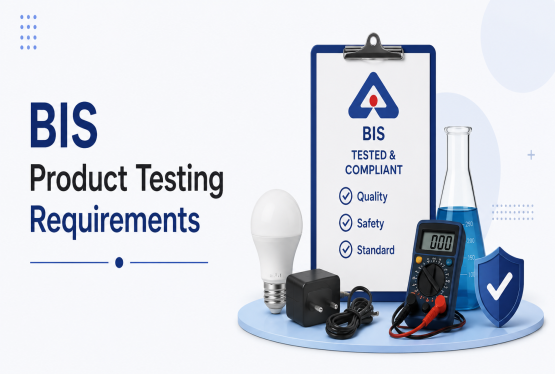
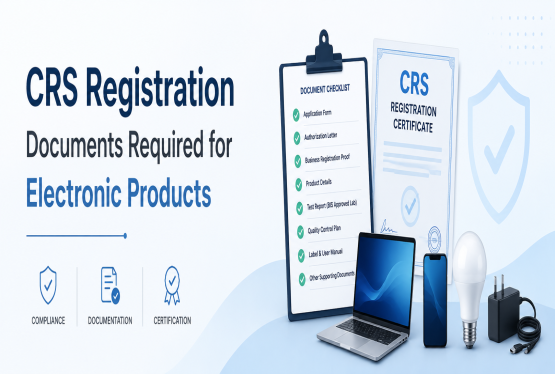
This fictional example shows why BIS Certification for Rope Lights (Lighting Chains) should be considered before manufacturing, importing or selling these products. In India, the Bureau of Indian Standards (BIS) regulates notified rope lights under the Compulsory Registration Scheme (CRS). Manufacturers must ensure that their products meet the applicable Indian Standard and obtain registration before supplying covered products commercially.
What Are Rope Lights (Lighting Chains)?
Rope lights are lighting products in which multiple light sources are enclosed within a transparent or translucent tube. The tube is generally made from flexible insulating materials such as PVC or silicone, allowing the lights to be installed along walls, ceilings, decorative structures and other suitable surfaces. Most modern rope lights use LED technology because it offers energy efficiency, long operating life and flexibility in decorative applications. These products may be designed for indoor or outdoor use depending on their construction and protection characteristics.
For example, a restaurant may install rope lights around its ceiling to create soft ambient lighting. Similarly, an event management company may use them to illuminate decorative structures during weddings and festivals. Although these products are mainly purchased for their appearance, they contain electrical connections and insulation materials that must operate safely.
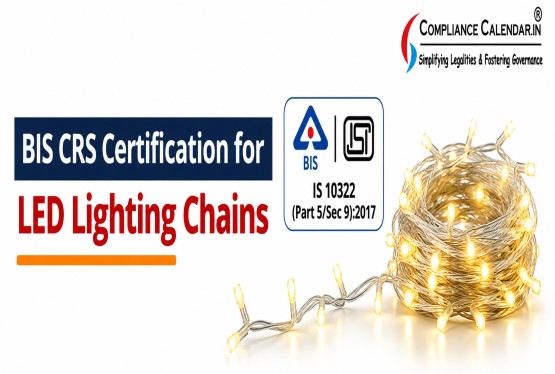
To understand these differences, read our BIS CRS Certification for LED Lighting Chains article.
Is BIS Certification Mandatory for Rope Lights in India?
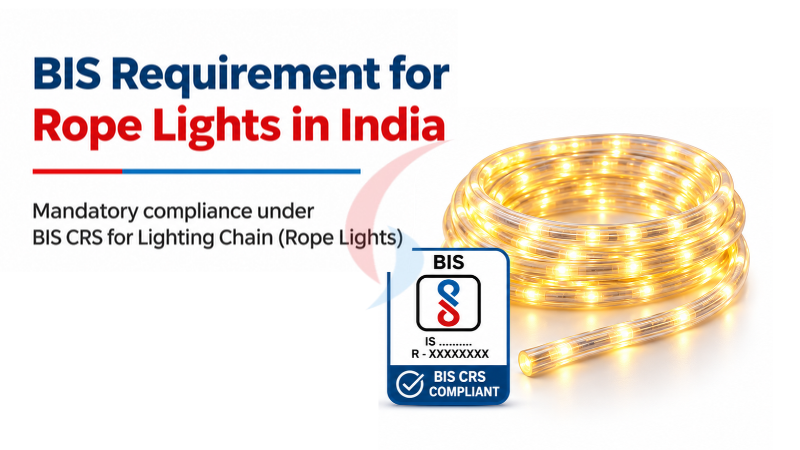
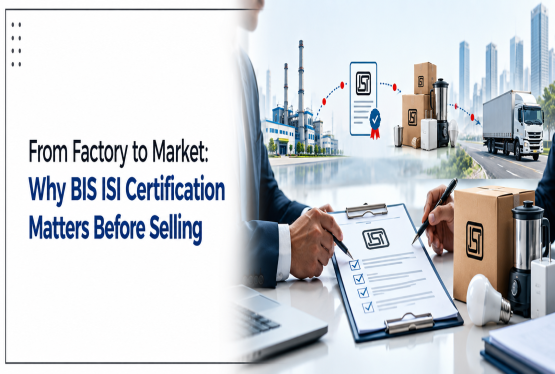
Yes. Lighting Chain (Rope Lights) is a notified product category under the BIS Compulsory Registration Scheme. Mandatory registration for this category came into effect on 1 April 2021.
The requirement applies to rope lights falling within the notified product scope, whether manufactured in India or imported for the Indian market. Under the compulsory registration system, the actual manufacturer must obtain BIS registration supported by satisfactory testing from a BIS-recognised laboratory. Official Government Reference: Lighting Chain (Rope Lights) is listed under the BIS Compulsory Registration Product List with mandatory implementation from 1 April 2021.
Businesses planning to manufacture or import such products can also explore the BIS CRS Registration service page for information about certification requirements.
Applicable BIS Standard for Rope Lights
The applicable Indian Standard for this product category is IS 10322 (Part 5/Sec 9):2017, which deals with particular safety requirements for rope lights. The standard addresses electrical and mechanical safety, construction, insulation, temperature-related performance and other relevant requirements.
|
Particulars |
Details |
|
Product category |
Lighting Chain (Rope Lights) |
|
Applicable Indian Standard |
IS 10322 (Part 5/Sec 9):2017 |
|
Certification scheme |
BIS Compulsory Registration Scheme |
|
Mandatory registration date |
1 April 2021 |
|
Regulating authority |
Bureau of Indian Standards |
|
Responsible ministry |
The BIS product list continued to identify IS 10322 (Part 5/Sec 9):2017 for rope lights as of November 2026. Manufacturers should not confuse it with IS 10322 (Part 5/Sec 7), which applies to the separately notified LED Lighting Chains category. The official BIS Technical Information on Rope Lights explains the construction and safety requirements of rope lights under IS 10322 (Part 5/Sec 9):2017.
Who Needs BIS Registration for Rope Lights?
BIS Registration is primarily obtained by manufacturers. An Indian company manufacturing rope lights must ensure that its products comply with the notified Indian Standard and that the relevant manufacturing facility is appropriately registered. Foreign manufacturers exporting rope lights to India must also comply. Where required, they must appoint an Authorised Indian Representative (AIR) to communicate with BIS and fulfil prescribed responsibilities.
Importers and private-label businesses should verify that the actual manufacturer's registration covers the relevant factory, product and brand. A certificate issued for a different manufacturer or brand cannot automatically be used for their products. For instance, if a business imports rope lights from China under its own brand, it should check the overseas factory's registration and brand coverage before placing a bulk order.
For more information, explore our guide on Process to Get BIS Certification for LED Lights
Documents Required for BIS Certification for Rope Lights
To apply for BIS CRS registration, manufacturers must prepare accurate legal, factory and product documents. Incomplete or inconsistent details can lead to delays even when product testing is successful.
Commonly required documents include:
|
Document |
Purpose |
|
Business registration documents |
Establish the manufacturer's identity |
|
Factory address proof |
Confirms the manufacturing location |
|
Product specifications |
Provides technical information |
|
Circuit diagrams |
Explains electrical construction |
|
Brand authorisation |
Establishes the right to use the brand |
|
Product photographs |
Identifies the relevant models |
|
Laboratory test report |
Demonstrates conformity with the Indian Standard |
|
Authorised signatory details |
Identifies the application representative |
|
AIR documents, if applicable |
Supports foreign manufacturer applications |
|
Prescribed declarations |
Confirms compliance with BIS requirements |
The precise checklist should be verified against current BIS instructions.
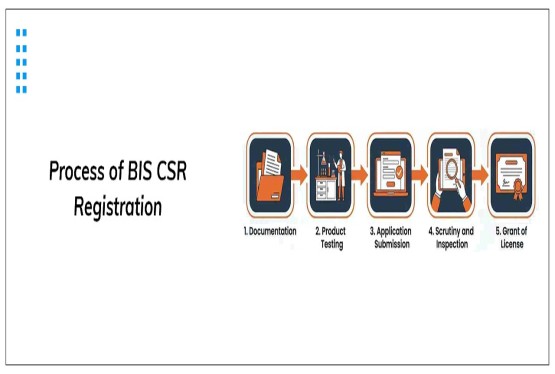
BIS Certification Process for Rope Lights in India
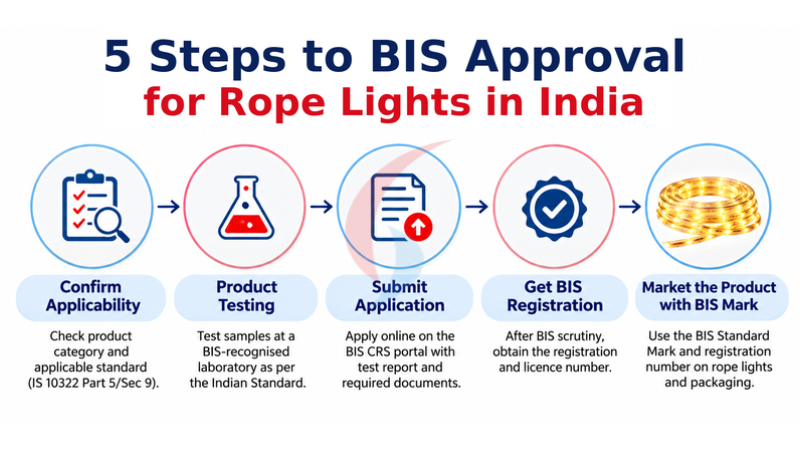
The BIS registration process involves product testing, documentation and formal application approval. Manufacturers should begin the process before planning large-scale sales or imports.
-
Identify the Applicable Standard: Confirm that the product falls under IS 10322 (Part 5/Sec 9):2017 and not another lighting product category.
-
Select a BIS-Recognised Laboratory: Choose a laboratory recognised for testing rope lights under the relevant standard.
-
Submit Product Samples: Send representative rope lights for electrical, mechanical and thermal safety testing.
-
Prepare the Application: Collect the test report, factory information, brand documents and required declarations.
-
Apply Online: Submit the application and applicable fees through the official BIS CRS portal.
-
Receive BIS Registration: After satisfactory scrutiny, BIS grants registration covering the relevant manufacturing unit, product and brand.
The manufacturer must then follow the prescribed product marking and ongoing compliance requirements.
What Safety Tests Are Required for Rope Lights?
Rope lights are frequently bent, installed around structures and operated for extended periods. Their insulation and wiring must therefore withstand the relevant safety conditions. The testing requirements under IS 10322 (Part 5/Sec 9):2017 cover important areas such as electrical insulation, protection against electric shock, mechanical strength, temperature and endurance, resistance to heat and fire, and moisture protection where applicable.
For example, a rope light designed for outdoor decorations may be exposed to rain and changing temperatures. Its construction must satisfy the applicable requirements for its intended environment rather than relying only on the manufacturer's claim that it is waterproof. The BIS technical information on rope lights identifies electrical safety, mechanical strength, heat resistance and cyclic heating and cooling among the relevant testing considerations.
BIS Certification Fees for Rope Lights
The total cost depends on BIS government fees, laboratory testing charges and the number of models submitted for registration.
|
Fee component |
Details |
|
Application and processing |
As per the current BIS fee schedule |
|
Laboratory testing |
Depends on laboratory and testing scope |
|
Additional model testing |
Depends on technical differences |
|
Registration and annual charges |
As applicable under current BIS provisions |
|
Consultancy assistance |
Separate, if engaged |
The official BIS laboratory system lists laboratory-specific testing charges for IS 10322 (Part 5/Sec 9):2017, including published examples ranging from approximately Rs 27,500 to Rs 45,000. These are laboratory quotations, not a universal government certification fee, and may change. LIMS (Laboratory Information Management System)
Important BIS Compliance Requirements in 2026
As of November 2026, the BIS notified product list continues to specify IS 10322 (Part 5/Sec 9):2017 for Lighting Chain (Rope Lights). Manufacturers should remember that the 2026 revisions affecting certain other LED luminaire categories do not automatically change the applicable standard for rope lights. Businesses should also regularly check their registration status, approved models and marking requirements. Introducing different product models, changing the manufacturing location or using another brand may require additional BIS formalities.
Manufacturers can monitor the official BIS circulars for new regulatory developments.
Why Choose Compliance Calendar LLP?
BIS Certification for Rope Lights requires proper product classification, technical testing and accurate documentation. Mistakes during any of these stages can affect registration timelines and commercial supply. Compliance Calendar LLP provides professional assistance with BIS CRS Registration, documentation, laboratory coordination and regulatory compliance for manufacturers and importers.
For assistance with BIS Certification for Rope Lights (Lighting Chains), contact Compliance Calendar LLP at +91 9988424211 or info@ccoffice.in
Frequently Asked Questions (FAQs)
Q1. Is BIS Certification mandatory for rope lights in India?
Ans. Yes, BIS Certification is mandatory for rope lights covered under the notified category of the BIS Compulsory Registration Scheme (CRS). The requirement became effective on 1 April 2021.
Q2. Which Indian Standard applies to BIS Certification for Rope Lights?
Ans. The applicable Indian Standard for Lighting Chain (Rope Lights) is IS 10322 (Part 5/Sec 9):2017. It specifies safety requirements relating to product construction, electrical insulation, wiring, mechanical strength and other relevant characteristics.
Q3. What is the difference between LED lighting chains and rope lights?
Ans. LED lighting chains and rope lights are separately listed product categories under BIS CRS. LED lighting chains are covered under IS 10322 (Part 5/Sec 7), while Lighting Chain (Rope Lights) falls under IS 10322 (Part 5/Sec 9).
Q4. Can foreign manufacturers apply for BIS Registration for Rope Lights?
Ans. Yes, foreign manufacturers exporting rope lights to India can apply for BIS CRS Registration. They must comply with the prescribed testing, documentation and application requirements.
Q5. What documents are required for BIS Certification for Rope Lights?
Ans. Manufacturers generally need business registration documents, factory address proof, product specifications, circuit diagrams, brand authorisation, product photographs and a satisfactory test report issued by a BIS-recognised laboratory.
Q6. What safety tests are required for BIS Certification for Rope Lights?
Ans. Rope lights must undergo testing for relevant safety requirements, including electrical insulation, protection against electric shock, mechanical strength, temperature resistance and resistance to heat and fire.
Q7. Can multiple rope light models be covered under one BIS registration?
Ans. Yes, multiple eligible rope light models may be included under one BIS registration, subject to applicable product-grouping guidelines. However, differences in voltage, construction, materials or other safety-related characteristics may require additional testing.
Q8. How much does BIS Certification for Rope Lights cost in India?
Ans. The total cost depends on BIS application and registration charges, laboratory testing fees, the number of product models and documentation requirements. Foreign manufacturers may also incur expenses related to their Authorised Indian Representative.
Q9. How long is BIS CRS Registration for Rope Lights valid?
Ans. BIS registration validity depends on the applicable Scheme II provisions and the period granted by BIS. The registration holder must comply with the current annual fee, renewal and ongoing conformity requirements.
Q10. Can rope lights be imported into India without BIS Certification?
Ans. Rope lights covered under the compulsory registration order generally cannot be imported for ordinary commercial sale without complying with the applicable BIS requirements.
Article last updated on : 20 Nov 2026.