


Air purifiers have become increasingly popular in India as households, offices, hospitals and commercial establishments look for reliable ways to improve indoor air quality. Rising pollution levels, dust, smoke and concerns about airborne particles have increased demand for products that promise cleaner indoor environments. As a result, many Indian businesses are importing air purifiers from international manufacturers, particularly from countries with established electronics and home appliance manufacturing industries. However, importing air purifiers into India involves more than selecting a supplier, negotiating prices and arranging international shipping. Importers must understand the applicable Indian Standards, Bureau of Indian Standards (BIS) certification requirements, product testing procedures, customs documentation and government Quality Control Orders (QCOs).
BIS Compliance for Imported Air Purifiers in India has become particularly important following the introduction of the Safety of Household, Commercial and Similar Electrical Appliances (Quality Control) Order, 2026. This order covers specified electrical appliances, including air-cleaning appliances and DC-supplied or battery-operated air purifiers, and requires compliance with IS 302 (Part 1):2024 under the BIS Scheme I certification system.
The government has also proposed a separate product-specific requirement through the draft Portable Electric Indoor Air Purifier (Quality Control) Order, 2025, which refers to IS 17531:2021. Importers should distinguish this proposed product-performance requirement from the final electrical safety rules applicable in 2026.
What Is BIS Compliance for Imported Air Purifiers in India?
BIS compliance refers to meeting the applicable Indian Standards and certification requirements before importing, distributing or selling products covered by mandatory conformity assessment rules. The Bureau of Indian Standards is India's national standards body. It administers certification schemes intended to verify whether products satisfy the relevant Indian Standards. Depending on the applicable scheme, certification may involve product testing, examination of manufacturing facilities, technical documentation and ongoing quality control.
For imported air purifiers, the foreign manufacturer's identity, production location and product specifications are particularly important. A product may be manufactured overseas and sold in India under an Indian brand, but that arrangement does not automatically remove the applicable BIS requirements. Where a Quality Control Order makes certification compulsory, the overseas manufacturer generally needs the appropriate BIS licence for the covered products. Indian importers must verify that the imported models fall within the relevant certification scope.
For example, a Delhi-based electronics distributor importing room air purifiers from a Chinese manufacturer should examine whether the overseas factory holds an appropriate BIS licence, whether the exact model is covered and whether the applicable certification requirements have been satisfied before arranging commercial shipments. BIS certification requirements should be reviewed alongside customs, labelling and other applicable import obligations.
For more information, read BIS Certification for Electric Indoor Air Purifiers.
Is BIS Certification Mandatory for Imported Air Purifiers in India?
Yes, BIS certification is mandatory for imported air purifiers falling within the scope of the final 2026 electrical appliance safety QCO, subject to applicable exemptions, exclusions and implementation provisions. DPIIT issued the Safety of Household, Commercial and Similar Electrical Appliances (Quality Control) Order, 2026, through Notification S.O. 1739(E), dated 6 April 2026.
The notification applies to covered household, commercial and similar electrical appliances with rated voltages not exceeding 250 V for single-phase appliances and 480 V for other appliances. It expressly includes DC-supplied and battery-operated appliances.
The notified list specifically identifies:
- Entry 64: Air-Cleaning Appliances
- Entry 90: DC-Supplied/Battery-Operated Air Purifiers
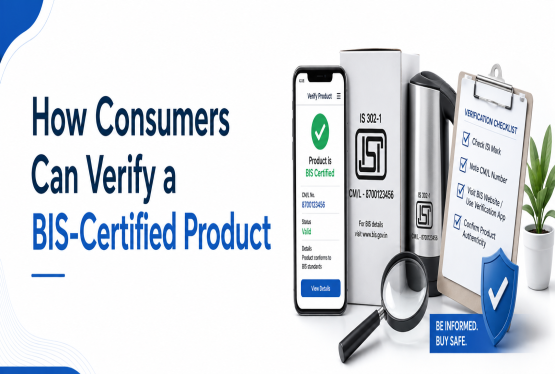
Covered products must conform to the applicable Indian Standard and bear the prescribed Standard Mark under a valid BIS licence according to Scheme I of Schedule II to the BIS (Conformity Assessment) Regulations, 2018. The fact that an imported air purifier has been tested overseas does not automatically establish compliance with mandatory Indian certification requirements.
BIS Certification Implementation Dates
|
Manufacturer category |
Implementation date |
|
General manufacturers, including foreign manufacturers under the general category |
1 October 2026 |
|
Qualifying small enterprises |
1 January 2027 |
|
Qualifying micro enterprises |
1 April 2027 |
As of 21 November 2026, the general implementation date has passed. The later implementation dates apply to qualifying small and micro enterprises under the notification. Importers should not assume that a foreign manufacturer automatically qualifies for the small or micro enterprise timelines merely because it operates a relatively small factory overseas.
Official notification: Electrical Appliances Safety QCO, 2026.
Applicable BIS Standards for Imported Air Purifiers
Importers should examine two important Indian Standards when evaluating the compliance requirements of portable electric indoor air purifiers. The first relates to electrical appliance safety, while the second addresses portable air purifier product specifications.
|
Particular |
IS 302 (Part 1):2024 |
IS 17531:2021 |
|
Standard title |
Household and Similar Electrical Appliances – Safety, Part 1 |
Portable Electric Indoor Air Purifier – Specification |
|
Main purpose |
Electrical safety |
Product specifications and performance |
|
International reference |
IEC 60335-1:2020 |
Refer to the current BIS standard |
|
Relevant requirements |
Insulation, protection against electric shock, heating and other safety parameters |
Relevant air purifier performance and product characteristics |
|
Regulatory position |
Referenced in the final 2026 electrical safety QCO |
Referenced in a proposed 2025 product-specific QCO |
|
Certification relevance |
Mandatory for covered products under the final QCO |
Separate compulsory implementation not independently verified |
IS 302 (Part 1):2024 – Electrical Safety
IS 302 (Part 1):2024 establishes general safety requirements for household and similar electrical appliances. An imported air purifier may contain electric motors, fan assemblies, sensors, circuit boards and power supply components. These parts must be appropriately designed and assessed against the applicable safety requirements.
The standard addresses risks involving electric shock, overheating, insulation failure, mechanical hazards and other prescribed conditions. Manufacturers should also examine any relevant appliance-specific safety requirements and the current BIS product manual.
IS 17531:2021 – Portable Electric Indoor Air Purifier Specification
IS 17531:2021 provides the Indian product specification for portable electric indoor air purifiers. It is relevant to product performance and the technical characteristics of portable air-cleaning appliances.
The draft Portable Electric Indoor Air Purifier (Quality Control) Order, 2025 proposes compulsory certification under this standard. However, the official draft contains an incomplete notification date and does not itself establish a final commencement date. Importers should verify whether any final product-specific notification or amendment has subsequently been issued before treating the proposed requirements as enforceable.
For additional information, read IS 17531:2021 for Portable Electric Indoor Air Purifiers.
Which Imported Air Purifiers Require BIS Compliance?
Imported air purifiers are available in different designs, filtration technologies and power supply arrangements. Common products that may fall within the scope of the electrical safety QCO include portable household air purifiers, floor-standing room air purifiers, smart air purifiers, electrically powered office air cleaners, rechargeable air purifiers and battery-operated air-cleaning appliances.
|
Imported product category |
Important compliance consideration |
|
Household room air purifiers |
Electrical safety requirements under the applicable QCO |
|
Commercial air-cleaning appliances |
Product classification and voltage applicability |
|
Smart air purifiers |
Electrical safety and any additional requirements for connected features |
|
Battery-operated air purifiers |
Expressly included in the 2026 QCO list |
|
DC-powered air purifiers |
Included where the product falls within the notified scope |
|
Portable electric indoor air purifiers |
IS 17531 product specification and applicable safety requirements |
|
Separate replacement filters |
Require separate classification; not automatically treated as complete electrical appliances |
|
Industrial air-treatment equipment |
Depends on intended use and applicable regulations |
An important point is that air purifier certification and certification of replacement filter cartridges are not necessarily the same.
For instance, importing a complete electrical air purifier may trigger the relevant electrical safety requirements, while importing a standalone filter element may require a different product classification and regulatory assessment. Businesses should confirm product scope before placing purchase orders.
Foreign Manufacturers Certification Scheme (FMCS) for Imported Air Purifiers
The Foreign Manufacturers Certification Scheme is an important route for overseas businesses seeking BIS certification for products manufactured outside India. Under FMCS, BIS may grant a licence to an eligible foreign manufacturer after assessing the relevant manufacturing facility, product conformity, quality control arrangements and other applicable certification requirements. The licence is granted for products manufactured at the approved factory location. It is not simply a general permission for an Indian importer to purchase products from any factory.
For example, if an Indian company imports air purifiers from two different manufacturing units operated by the same overseas supplier, the certification position of each factory must be examined separately. BIS states that separate applications are required for each product or Indian Standard and each manufacturing location.
Official reference: BIS Foreign Manufacturers Certification Scheme.
Role of Authorised Indian Representative (AIR) in BIS Certification
Foreign manufacturers applying for BIS certification under FMCS are required to nominate an Authorised Indian Representative according to the applicable BIS requirements. An AIR acts as the foreign manufacturer's representative in India for matters relating to BIS certification and the operation of the licence.
The AIR may help coordinate communication with BIS, submit required information, respond to certification-related matters and fulfil responsibilities under the applicable nomination arrangements.
|
AIR responsibility |
Purpose |
|
BIS communication |
Coordinates with BIS on behalf of the overseas manufacturer |
|
Application support |
Assists with required information and documentation |
|
Factory assessment coordination |
Supports communication concerning inspection arrangements |
|
Regulatory correspondence |
Helps respond to BIS queries and notices |
|
Licence-related obligations |
Performs responsibilities assigned under BIS requirements |
|
Record coordination |
Supports submission of relevant certification records |
The AIR should not be confused with the Indian importer in every case. An importer may be nominated as AIR where permitted, but the arrangement must satisfy BIS eligibility and nomination requirements. BIS also places restrictions on representing multiple unrelated foreign manufacturers, subject to specified exceptions.
For more information, read BIS FMCS Certification Process in India for Foreign Manufacturers.
Documents Required for BIS Certification of Imported Air Purifiers
Documentation is one of the most important parts of the FMCS application. Foreign manufacturers must establish their legal identity, factory details, product specifications and capability to manufacture products conforming to the applicable Indian Standard. Indian importers should also maintain the documents necessary to establish the identity and certification status of the products being imported.
|
Document |
Purpose |
|
Foreign company registration certificate |
Establishes overseas manufacturer identity |
|
Manufacturing unit address proof |
Confirms the overseas production facility |
|
Factory layout |
Identifies manufacturing and testing facilities |
|
Manufacturing process flow chart |
Explains production arrangements |
|
Product technical specifications |
Identifies model, construction and electrical ratings |
|
Electrical circuit diagram |
Supports technical safety assessment |
|
Bill of materials |
Identifies relevant electrical and mechanical components |
|
Product photographs |
Supports model identification |
|
Product labels and marking details |
Supports BIS marking verification |
|
Machinery list |
Establishes production capability |
|
Testing equipment list |
Identifies quality control facilities |
|
Calibration certificates |
Provides evidence of measurement control |
|
Laboratory test reports |
Supports conformity assessment where required |
|
AIR nomination documents |
Establishes the authorised representative |
|
Manufacturer's authorisation documents |
Supports application authority |
|
Quality control records |
Demonstrates production monitoring arrangements |
BIS may require additional documents depending on the product category, certification procedure and observations raised during application assessment. The manufacturer should verify the current checklist before submitting the application.
Step-by-Step BIS Certification Process for Imported Air Purifiers
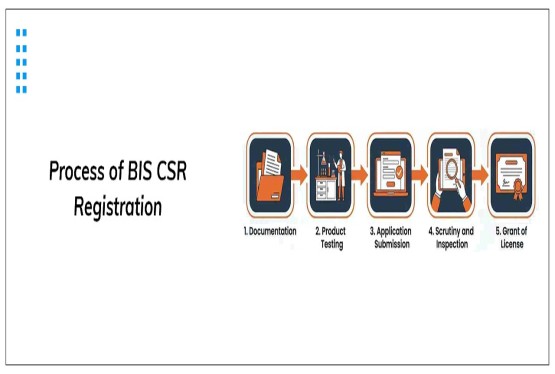
Step 1: Identify the Applicable Product Standard
The foreign manufacturer should begin by identifying the relevant Indian Standard for the air purifier. The assessment should consider the appliance's voltage, power supply, construction, intended use, technical characteristics and applicable QCO. For covered air-cleaning appliances, IS 302 (Part 1):2024 is relevant to electrical safety certification. IS 17531:2021 should be separately reviewed for portable air purifier product specifications.
Step 2: Verify the Regulatory Requirements
Before beginning certification, the manufacturer and Indian importer should review the current BIS compulsory certification list and applicable notifications. This helps establish whether the product requires mandatory certification, whether an exemption is available and whether any additional product-specific requirements apply.
Step 3: Appoint an Authorised Indian Representative
The overseas manufacturer should nominate an eligible AIR according to BIS requirements. The nomination should be supported by the prescribed documents and relevant authorisations.
Step 4: Prepare Technical and Factory Documents
The manufacturer should compile product specifications, production records, equipment details, quality control documents and other required information. Correct model identification is particularly important when the manufacturer produces several air purifiers with different electrical specifications.
Step 5: Submit the BIS Application
Foreign manufacturers can apply through the BIS Manak Online Portal. A significant procedural update took effect on 1 June 2026: BIS states that FMCS applications are accepted only through the online portal from this date, with the previous offline submission arrangement ending on 31 May 2026.
Step 6: Complete Factory Inspection and Testing
BIS examines the application and may undertake an inspection of the overseas factory. The assessment may include verification of manufacturing facilities, testing arrangements, quality controls and product conformity. Samples may be drawn for independent testing under the relevant BIS procedure.
Step 7: Address BIS Observations
If BIS identifies deficiencies, the manufacturer must respond with the required clarification, documents or corrective actions. Incomplete documentation, testing failures or delays in arranging factory inspections can affect the certification timeline.
Step 8: Obtain the BIS Licence
After satisfactory completion of the applicable process, BIS may grant the relevant licence. The manufacturer can use the prescribed Standard Mark only for products covered by the approved licence and in accordance with the applicable marking requirements.
Step 9: Verify Certification Before Importing
The Indian importer should check the licence status, manufacturing location, applicable Indian Standard and product scope before arranging commercial shipments. The importer should also verify the applicable customs classification, documentation and labelling obligations.
Step 10: Maintain Ongoing Compliance
Foreign manufacturers must continue meeting the applicable Indian Standard and BIS licence conditions. BIS may carry out surveillance or require relevant records and testing. Changes to product design, manufacturing location or approved varieties should be assessed before the modified products are supplied to India.
BIS explains its factory assessment and licence-grant procedure on the FMCS Grant of Licence page.
Electrical Safety Testing Requirements for Imported Air Purifiers
Imported air purifiers falling within the relevant 2026 QCO must satisfy the applicable electrical safety requirements. IS 302 (Part 1):2024 establishes general safety provisions for household and similar electrical appliances. The relevant BIS product manual provides additional certification guidance.
|
Testing parameter |
Purpose |
|
Protection against electric shock |
Evaluates protection against contact with hazardous live components |
|
Leakage current |
Checks unwanted current flow under prescribed conditions |
|
Electric strength |
Assesses the performance of electrical insulation |
|
Heating |
Evaluates temperature rise during operation |
|
Abnormal operation |
Checks safety under specified abnormal operating conditions |
|
Mechanical strength |
Evaluates resistance to prescribed mechanical stresses |
|
Stability |
Assesses applicable risks of overturning or unsafe positioning |
|
Moisture resistance |
Evaluates protection against specified moisture-related conditions |
|
Internal wiring |
Checks wiring construction and protection |
|
Power input and current |
Evaluates declared electrical characteristics |
|
Resistance to heat and fire |
Assesses relevant construction materials and components |
|
Marking and instructions |
Verifies the prescribed safety information |
The exact tests and acceptance criteria depend on the air purifier's electrical design and applicable standards. Importers should not treat this summary as a complete laboratory testing schedule.
For more information, read Electrical Safety Requirements for Air Purifiers.
Customs Clearance and Import Documentation for Air Purifiers
Apart from BIS certification, Indian importers must comply with applicable customs and foreign trade requirements. The Importer Exporter Code (IEC), issued through the Directorate General of Foreign Trade (DGFT), is generally required for commercial import activities unless an applicable exemption exists.
The importer must also determine the correct customs tariff classification and prepare the documents required for clearance.
|
Import document |
Purpose |
|
Importer Exporter Code (IEC) |
Identifies the importer for foreign trade purposes |
|
Commercial invoice |
Records transaction and product details |
|
Packing list |
Identifies packages, models and quantities |
|
Bill of Lading or Air Waybill |
Provides transport documentation |
|
Bill of Entry |
Used for customs assessment and clearance |
|
BIS licence information |
Supports verification of mandatory product certification |
|
Product model specifications |
Establishes product identity and technical characteristics |
|
Country-of-origin documentation |
Supports origin-related requirements where applicable |
|
Product labelling details |
Supports applicable marking and declaration obligations |
|
Other applicable regulatory documents |
Addresses product-specific requirements where relevant |
Importers should determine the correct customs classification using the product's actual characteristics. The presence of an air filtration system does not, by itself, establish a universal tariff heading for every product marketed as an air purifier. Similarly, BIS certification does not replace other applicable customs or import requirements.
The relevant portals include the DGFT Portal and Indian Customs ICEGATE Portal.
Exemptions for Imported Air Purifiers Under the 2026 QCO
The 2026 electrical appliance safety QCO contains limited exemptions and transitional provisions that businesses should examine carefully.
Research and Development Imports
The notification provides an exemption for up to 200 imported goods or articles per year for research and development purposes by manufacturers of household and similar electrical appliances. The exemption is conditional. Such goods cannot be sold commercially, disposal is restricted as prescribed, and manufacturers must maintain year-wise records. Importers should not treat this provision as a general exemption for ordinary commercial shipments.
Pre-Implementation Stock
The order also provides a conditional arrangement for certain stock manufactured domestically or imported before the relevant implementation date. The provision applies to stock meeting the prescribed conditions relating to the manufacturer's BIS certification or pending certification application. It permits qualifying stock to be sold or offered for sale for up to six months from the applicable implementation date, subject to declaration to BIS.
Products Covered by Another QCO
The 2026 order excludes electrical appliances covered by another applicable QCO under the BIS Act or notified for mandatory BIS certification under another Act. This provision makes correct product classification essential. Businesses should not assume that multiple overlapping QCOs always apply simultaneously. These exemptions and transitional provisions come from the final 2026 notification and must be interpreted according to their precise wording.
BIS Certification Cost for Imported Air Purifiers
The cost of BIS certification under FMCS varies according to product characteristics, overseas factory location, laboratory testing, inspection arrangements and approved model scope.
There is no single fixed total certification cost for every imported air purifier.
|
Cost component |
Description |
|
BIS application fee |
According to the applicable FMCS fee schedule |
|
Product testing charges |
Depends on the laboratory and testing scope |
|
Overseas factory inspection |
Includes applicable inspection-related expenses |
|
Licence fee |
As prescribed by BIS |
|
Marking fee |
Based on applicable product and licence requirements |
|
AIR-related expenses |
Depends on representative arrangements |
|
Additional model testing |
May apply to new products or varieties |
|
Professional assistance |
Depends on documentation and coordination services |
Foreign manufacturers should obtain an itemised estimate before starting certification. The total budget may also need to account for inspection travel, testing failures, product modifications and continuing licence obligations.
For more information, read ISI Certification Cost in India Explained.
Can a Single BIS Licence Cover Multiple Imported Air Purifier Models?
The coverage of multiple air purifier models depends on the applicable standard, BIS grouping guidelines and approved licence scope. A foreign manufacturer may produce different models using similar technology, but variations in voltage, motor construction, power supply, electrical components or other critical characteristics may affect testing and certification requirements.
For example, a company might manufacture a 230 V room purifier, a battery-operated portable purifier and a larger commercial model. These products should not automatically be treated as one approved variety. The manufacturer must examine the applicable grouping criteria and seek scope extension or additional assessment when required. An importer should verify the relevant model information rather than relying only on the existence of a BIS licence issued to the brand.
Common BIS Compliance Mistakes Made by Air Purifier Importers
One common mistake is relying entirely on foreign test certificates. Overseas compliance documentation may support technical evaluation, but it does not automatically replace a BIS licence where Indian compulsory certification applies.
Another mistake is assuming that the Indian importing company can obtain a manufacturer licence without involving the actual overseas factory. Under FMCS, certification is tied to the foreign manufacturer and the relevant manufacturing premises.
Businesses may also overlook model-wise certification scope. A foreign manufacturer may hold a BIS licence for one product while exporting another model that is not covered. Importers should also check the applicable implementation dates and exemption conditions instead of assuming that products manufactured before a particular date automatically qualify for unrestricted import or sale. Finally, customs clearance should not be treated as a substitute for regulatory conformity. Importers should confirm the relevant product approvals before dispatching commercial shipments.
Legal Consequences of Importing Non-Compliant Air Purifiers
The BIS Act, 2016 provides the statutory foundation for compulsory certification and enforcement.
Section 16 authorises the Central Government to require specified goods to conform to Indian Standards and carry the prescribed Standard Mark.
Section 17 provides restrictions on specified activities involving products covered by compulsory certification requirements, while Section 29 establishes penalties for relevant contraventions.
Where compulsory certification applies, importing or selling products without satisfying the prescribed conditions may result in regulatory enforcement, penalties and shipment-related complications. Importers may also face commercial losses arising from delayed clearance, storage charges, rejected shipments, product recalls or disruption of distribution arrangements. The actual legal consequences depend on the relevant notification, nature of the contravention and applicable statutory provisions.
Why Choose Compliance Calendar LLP for BIS Certification of Imported Air Purifiers?
Importing air purifiers into India requires a proper understanding of BIS certification rules, applicable Indian Standards, foreign manufacturer documentation and customs-related compliance. Compliance Calendar LLP provides professional assistance to Indian importers, overseas manufacturers and businesses seeking BIS certification in India.
Our team helps with product classification, applicable QCO identification, FMCS documentation, Authorised Indian Representative arrangements, BIS application filing, laboratory testing coordination and factory inspection preparation. We also assist businesses in understanding the requirements of IS 302 (Part 1):2024 and IS 17531:2021, evaluating licence scope and responding to BIS-related queries. Whether you are planning to import household air purifiers, commercial air-cleaning appliances or battery-operated models, Compliance Calendar LLP can guide you through the relevant certification process and help reduce avoidable documentation errors and regulatory delays.
For professional assistance with BIS Certification for Imported Air Purifiers in India, contact us at +91 9988424211 or info@ccoffice.in
Frequently Asked Questions (FAQs)
Q1. Is BIS Certification mandatory for imported air purifiers in India?
Ans. Yes. Imported air purifiers falling within the scope of the final Electrical Appliances Safety QCO, 2026 require the applicable BIS certification, subject to exemptions and exclusions. The general implementation date is 1 October 2026. Importers should verify the manufacturer's licence before commercial shipment.
Q2. Which BIS standard applies to imported air purifiers?
Ans. IS 302 (Part 1):2024 is the general electrical safety standard referenced in the 2026 QCO. IS 17531:2021 provides product specifications for portable electric indoor air purifiers. The certification position of each standard should be evaluated separately according to the applicable notifications.
Q3. Can an Indian importer obtain BIS Certification on behalf of a foreign manufacturer?
Ans. The relevant Scheme I manufacturer licence under FMCS is granted to the eligible foreign manufacturer for the approved production facility and product scope. An Indian importer may assist with coordination or act as AIR when permitted, but it does not replace the manufacturer's certification responsibilities.
Q4. What is the role of an Authorised Indian Representative in BIS FMCS?
Ans. An AIR acts as the overseas manufacturer's representative in India for prescribed BIS certification matters. Responsibilities may include coordinating applications, responding to BIS communications and assisting with licence-related requirements. The nomination must satisfy the applicable BIS eligibility and authorisation rules.
Q5. Are foreign testing certificates sufficient for importing air purifiers into India?
Ans. Not automatically. Foreign laboratory reports or certifications may provide useful technical information, but they do not replace mandatory BIS approval where an Indian QCO requires certification. Importers should verify the relevant Indian Standard, certification scheme and approved manufacturing location before importing.
Q6. What documents are required for BIS Certification of imported air purifiers?
Ans. Documents generally include foreign manufacturer registration details, factory information, product specifications, electrical circuit diagrams, manufacturing process records, testing equipment details, calibration certificates and AIR nomination documents. Additional requirements may apply depending on the product and certification procedure.
Q7. How much does BIS Certification for imported air purifiers cost?
Ans. The cost depends on the applicable BIS fees, product testing, overseas factory inspection, licence requirements and number of approved models. AIR-related and professional coordination expenses may also arise. Manufacturers should obtain an itemised estimate based on the current BIS fee schedule.
Q8. Can multiple imported air purifier models be covered under one BIS licence?
Ans. Multiple models may be included where permitted by the applicable grouping guidelines and approved licence scope. However, different electrical ratings, constructions or critical components may require additional assessment. Importers should verify that the exact models being shipped are covered.
Q9. What happens if an air purifier is imported without mandatory BIS Certification?
Ans. Where compulsory certification applies and no exemption is available, non-compliant imports may face customs-related complications and regulatory enforcement. The importer or other responsible parties may also face penalties under applicable laws. Compliance should therefore be checked before commercial shipment.
Q10. Where can foreign manufacturers apply for BIS Certification of air purifiers?
Ans. Eligible foreign manufacturers can apply through the official BIS Manak Online Portal under the applicable FMCS procedure. The process may involve AIR nomination, technical documentation, factory inspection and product testing. From 1 June 2026, BIS accepts FMCS applications through the online portal rather than the previous offline submission route.
Article last updated on : 21 Nov 2026.