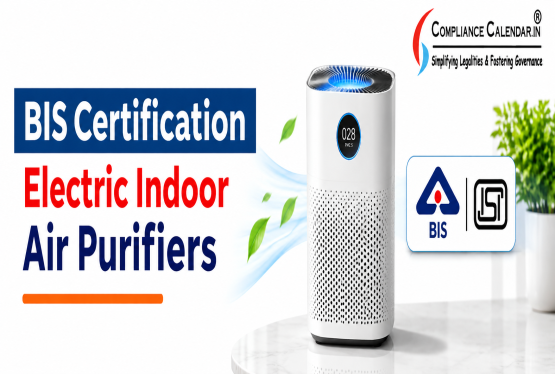



Air purifiers have become increasingly popular in India as households, offices, schools and commercial establishments look for ways to improve indoor air quality. With rising concerns about dust, smoke and airborne pollutants, consumers are paying greater attention to air purification technology, filtration performance and product reliability. However, while purchasing an air purifier, many people focus mainly on the brand, filter type and Clean Air Delivery Rate (CADR), without understanding the importance of product standards and regulatory compliance.
For manufacturers and importers, meeting quality and safety requirements is an important responsibility. An air purifier may contain electrical components, motors, fans, filters and electronic control systems. If its performance claims are not properly tested or its electrical construction is unsafe, the product may create risks for consumers. To strengthen product quality, the Department for Promotion of Industry and Internal Trade (DPIIT) published the Portable Electric Indoor Air Purifier (Quality Control) Order, 2025. The proposed order refers to IS 17531:2021, the Indian Standard for portable electric indoor air purifiers, and proposes compulsory BIS certification under the Scheme I ISI Mark system.
What Is the Air Purifier Quality Control Order 2025?
The Portable Electric Indoor Air Purifier (Quality Control) Order, 2025 is a proposed regulatory measure prepared by DPIIT under the Bureau of Indian Standards Act, 2016. Its objective is to establish a compulsory product conformity requirement for portable electric indoor air purifiers manufactured or supplied in India. The proposal identifies IS 17531:2021 as the relevant Indian Standard and envisages that covered products would bear the BIS Standard Mark under a valid licence.
A Quality Control Order, commonly called a QCO, is a government instrument through which specified products can be required to comply with Indian Standards. Once a valid QCO becomes enforceable, manufacturers and other regulated businesses must satisfy its provisions, subject to the applicable scope, implementation dates and exemptions. However, the publication of an Indian Standard or a draft QCO does not automatically make certification compulsory. The final notified order must be examined to determine the legal requirement.
Official government document: Draft Portable Electric Indoor Air Purifier (Quality Control) Order, 2025.
Applicable BIS Standard Under the Air Purifier QCO: IS 17531:2021
The proposed Air Purifier Quality Control Order 2025 identifies IS 17531:2021 – Portable Electric Indoor Air Purifier – Specification.
This Indian Standard provides technical specifications for portable electric indoor air purifiers and supports the assessment of relevant product characteristics and air-cleaning performance. The standard is published by the Bureau of Indian Standards and falls under the Chemical Department's CHD 35 Air Quality technical committee. BIS records show that the standard was reaffirmed in June 2025.
|
Particular |
Details |
|
Product |
|
|
Indian Standard |
IS 17531:2021 |
|
Standard title |
Portable Electric Indoor Air Purifier – Specification |
|
Issuing authority |
Bureau of Indian Standards |
|
Department |
Chemical Department |
|
Technical committee |
CHD 35 – Air Quality |
|
Reaffirmation |
June 2025 |
|
Proposed certification scheme |
Scheme I – ISI Mark |
|
Proposed QCO |
Portable Electric Indoor Air Purifier (Quality Control) Order, 2025 |
|
2025 product-specific QCO status |
Draft; final enforcement not independently verified |
Manufacturers should obtain the current standard and evaluate the relevant performance, construction, testing and marking provisions before making product conformity claims.
For additional information, read IS 17531:2021 for Portable Electric Indoor Air Purifiers.
Is the Air Purifier Quality Control Order 2025 Mandatory?
The available Portable Electric Indoor Air Purifier (Quality Control) Order, 2025 is a draft. Its proposed compulsory certification provisions cannot be treated as legally enforceable merely because the document appears on the DPIIT website. Therefore, businesses should verify whether a final air purifier-specific QCO has been published before treating IS 17531:2021 as compulsory under that particular notification.
At the same time, manufacturers should not conclude that air purifiers have no mandatory BIS obligations. The final Electrical Appliances Safety QCO, 2026 covers air-cleaning appliances and DC-supplied or battery-operated air purifiers under the relevant electrical safety standard. The distinction is particularly important for businesses importing products or preparing new manufacturing lines.
For more information, read Home Appliance Safety in India: BIS Certification and Manufacturer Accountability.
Proposed Implementation Dates Under the 2025 Draft QCO
The draft provides different implementation periods based on enterprise classification.
|
Manufacturer category |
Proposed implementation period |
|
General manufacturers |
6 months from Gazette notification |
|
Small enterprises |
9 months from Gazette notification |
|
Micro enterprises |
12 months from Gazette notification |
These periods are measured from the relevant notification date, not from the year 2025 itself.
For example, if a final notification were issued on a particular date, the implementation periods would need to be calculated from that date, subject to the actual wording of the final order and any subsequent amendments.
No specific calendar enforcement date should be stated for the draft 2025 air purifier-specific QCO without a verified final Gazette notification.
Latest Update in 2026: Electrical Safety QCO for Air Purifiers
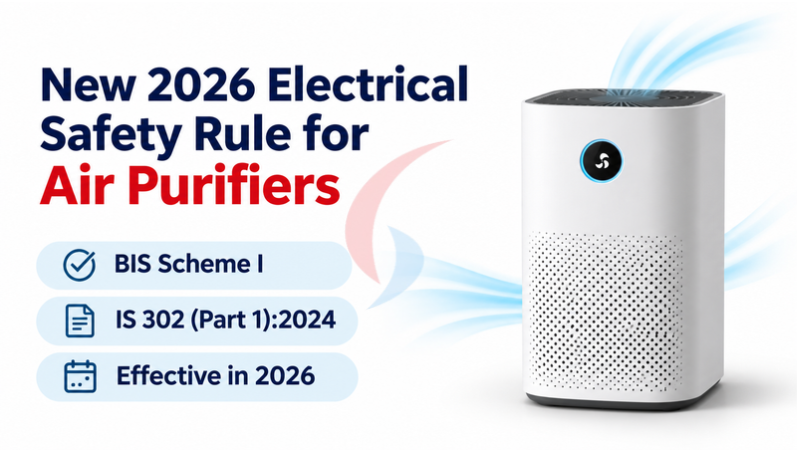
A significant regulatory development occurred on 6 April 2026 when DPIIT issued the Safety of Household, Commercial and Similar Electrical Appliances (Quality Control) Order, 2026 through Notification S.O. 1739(E). The notification superseded the general electrical appliance safety QCO issued in 2025 and introduced compulsory certification requirements for covered electrical appliances.
Its scope includes household, commercial and similar electrical appliances with rated voltages not exceeding 250 V for single-phase appliances and 480 V for other appliances, including direct-current-supplied and battery-operated appliances. The notification specifically lists air-cleaning appliances at entry 64 and DC-supplied or battery-operated air purifiers at entry 90. The applicable general safety standard is IS 302 (Part 1):2024 / IEC 60335-1:2020, and certification is prescribed under BIS Scheme I.
Implementation Dates Under the 2026 Safety QCO
|
Manufacturer category |
Implementation date |
|
General manufacturers |
1 October 2026 |
|
Small enterprises |
1 January 2027 |
|
Micro enterprises |
1 April 2027 |
As of 21 November 2026, the general implementation date has passed. Qualifying small and micro enterprises have later dates under the notification. Businesses should also review any applicable transitional provisions and product-specific exclusions.
Official notification: Electrical Appliances Safety QCO, 2026 – Official Gazette.
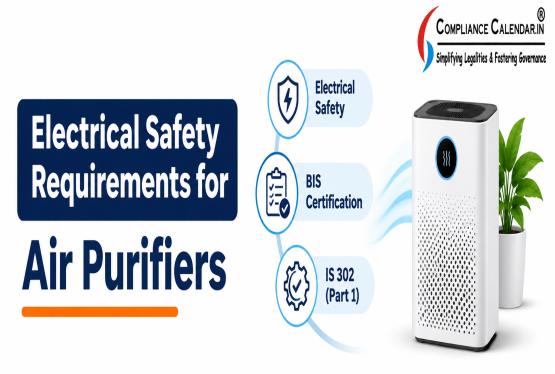
Difference Between IS 17531 and IS 302 for Air Purifiers
Manufacturers often assume that a single air purifier certification covers every safety and performance requirement. However, the two standards address different aspects of the appliance.
|
Basis |
IS 17531:2021 |
IS 302 (Part 1):2024 |
|
Main purpose |
Portable air purifier product specification |
General electrical safety |
|
Primary focus |
Product performance and technical requirements |
Electrical, thermal and mechanical safety |
|
Relevant notification |
Proposed 2025 product-specific QCO |
Final 2026 electrical appliance safety QCO |
|
Certification status |
Specific compulsory QCO not verified as final |
Mandatory for covered products under the final QCO |
|
Certification scheme |
Scheme I proposed |
Scheme I prescribed |
|
Important assessments |
Relevant air-cleaning performance and specification tests |
Insulation, heating, leakage current, construction and safety testing |
An air purifier may demonstrate satisfactory filtration performance yet fail an electrical safety test. Similarly, an electrically safe appliance should not automatically be described as meeting every air-cleaning performance requirement. Manufacturers must examine each applicable standard and the relevant regulatory notification.
For a detailed explanation, read BIS Certification for Electric Indoor Air Purifiers.
Which Air Purifiers May Be Covered Under the Proposed 2025 QCO?
The draft QCO specifically refers to portable electric indoor air purifiers. These are generally standalone electrical appliances designed to clean air in enclosed indoor environments. Common examples include portable household air purifiers, desktop air purifiers, floor-standing room purifiers, HEPA-based air purifiers and smart air purifiers with sensors or automatic operating modes. However, whether a particular model falls within IS 17531:2021 depends on the standard's defined scope, product construction and intended use.
For example, an air filter supplied separately for a central HVAC system should not automatically be classified as a portable electric indoor air purifier. Similarly, specialised industrial air treatment equipment may require a different regulatory assessment. Manufacturers should prepare a model-wise classification of their products before selecting the relevant standard or certification procedure.
Important Testing Requirements for Portable Electric Indoor Air Purifiers
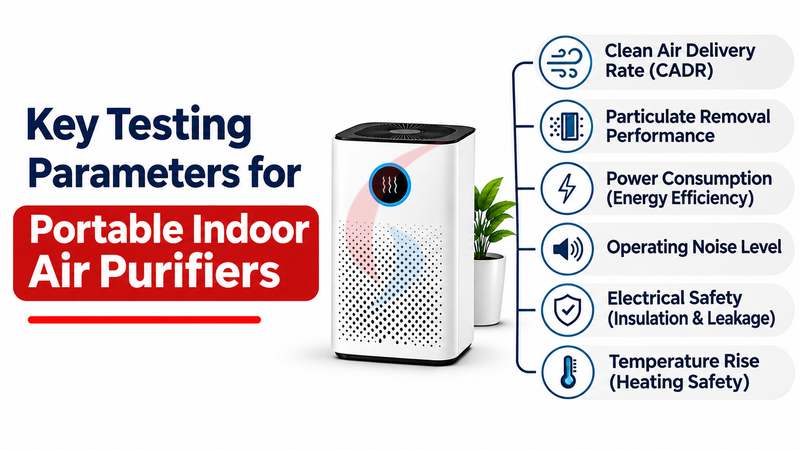
Product testing helps manufacturers establish whether air purifiers satisfy the requirements of the relevant Indian Standard. IS 17531:2021 provides the product specification for portable electric indoor air purifiers. The exact prescribed test methods, limits and acceptance criteria must be obtained from the standard.
The following parameters are important when evaluating air purifier performance and safety.
|
Testing parameter |
Purpose |
|
Clean Air Delivery Rate (CADR) |
Evaluates the delivery of cleaned air under defined conditions |
|
Particulate removal performance |
Assesses the removal of relevant airborne particles |
|
Airflow performance |
Evaluates air movement through the appliance |
|
Power consumption |
Measures energy use under prescribed conditions |
|
Operating noise |
Assesses acoustic performance where applicable |
|
Electrical insulation |
Evaluates protection against electrical hazards |
|
Leakage current |
Checks unwanted electrical current paths |
|
Heating |
Assesses temperature rise during operation |
|
Mechanical construction |
Evaluates relevant construction and stability requirements |
|
Marking and instructions |
Verifies required product information and safety guidance |
This is a combined overview of performance and safety considerations, not a claim that every listed test is prescribed by IS 17531 itself. Electrical safety tests must be assessed under the applicable IS 302 requirements and any relevant particular standards.
Why Testing Matters
Consider a manufacturer developing an air purifier for bedrooms. The appliance may contain an efficient filter, but if the fan creates excessive noise, customers may avoid using it overnight. Similarly, a purifier with a high airflow rating may not provide adequate particulate removal performance. An appliance may also achieve its desired CADR but require design changes because of electrical overheating. Proper testing helps manufacturers identify these problems before products enter the market and supports accurate technical declarations.
Documents Required for BIS Certification of Air Purifiers
Manufacturers preparing for BIS certification should maintain legal, technical and quality control documentation.
|
Document |
Purpose |
|
Business incorporation or registration certificate |
Establishes manufacturer identity |
|
Factory address proof |
Confirms manufacturing premises |
|
Manufacturing process flow chart |
Describes production activities |
|
Product specifications |
Identifies model characteristics and ratings |
|
Electrical circuit diagram |
Explains the electrical design |
|
Bill of materials |
Identifies important components |
|
Product photographs |
Supports model identification |
|
Manufacturing machinery list |
Establishes production capability |
|
Testing equipment details |
Supports quality control assessment |
|
Calibration certificates |
Provides measurement traceability |
|
Laboratory test reports |
Demonstrates applicable conformity assessment results |
|
Product marking and label artwork |
Supports marking verification |
|
Quality control records |
Demonstrates ongoing production monitoring |
|
Authorised signatory documents |
Supports application submission |
|
AIR documentation, where required |
Supports foreign manufacturer certification |
The final checklist depends on the applicable BIS scheme, product standard, manufacturing location and current application requirements.
Manufacturers can read ISI Certification in India: Process, Documents and Fees for broader guidance.
Step-by-Step BIS Certification Process for Air Purifiers
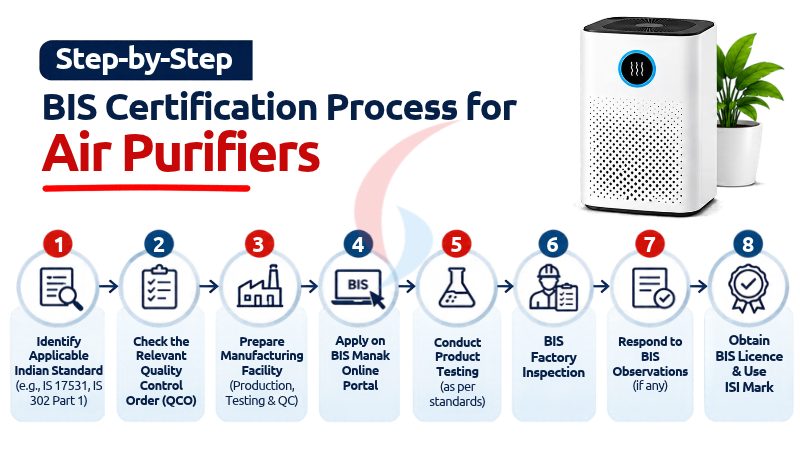
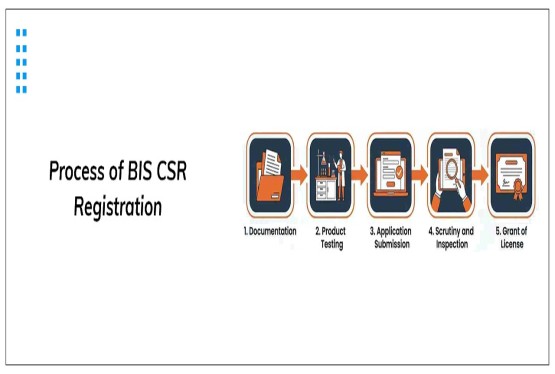
The following procedure explains the usual Scheme I certification approach where an applicable final notification or voluntary certification arrangement permits an application.
Step 1: Identify the Correct Indian Standard
Manufacturers should identify all applicable standards for their products. This includes determining whether the model falls within IS 17531:2021, IS 302 (Part 1):2024 or other relevant requirements. The assessment should consider product specifications, filtration technology, power supply, electrical ratings and intended use.
Step 2: Check the Applicable Quality Control Order
Before applying, the manufacturer must establish which certification requirements are legally applicable. A proposed QCO should not be treated as final legislation. At the same time, an existing electrical safety QCO must not be overlooked simply because a separate product-performance QCO remains in draft form.
Step 3: Prepare the Manufacturing Facility
Manufacturers should evaluate the availability of production equipment, technical personnel, quality control arrangements and appropriate testing facilities. The applicable BIS product manual should be reviewed to determine testing requirements, equipment needs, sampling provisions and permissible subcontracting arrangements.
Step 4: Register on the BIS Manak Online Portal
The applicant can use the official BIS Manak Online Portal to access the applicable certification process. Manufacturer details, factory information, product specifications and required documents must be submitted according to the current portal requirements.
Step 5: Arrange Product Testing
Product samples must be tested according to the relevant Indian Standard and the certification scheme's requirements. Manufacturers should ensure that the testing laboratory is eligible for the relevant tests and that reports accurately identify the product models.
Step 6: Complete Factory Inspection
BIS may inspect the manufacturing unit to examine production equipment, quality control procedures, testing facilities and related records. Inspecting officers may also verify product samples and applicable manufacturing arrangements.
For more information, read BIS Certification: What Happens During a BIS Factory Visit?.
Step 7: Respond to BIS Observations
BIS may request clarifications, additional documents, corrective actions or further testing. Manufacturers should address these observations accurately. Certification cannot be assumed merely because the application has been filed or testing has been completed.
Step 8: Obtain the BIS Licence
Where certification is available and the application satisfies the relevant requirements, BIS may grant the appropriate licence. The Standard Mark may be used only as authorised and only for products covered by the approved licence scope.
Step 9: Maintain Post-Certification Compliance
Manufacturers must continue to comply with the applicable standard and licence conditions. Important changes to electrical components, filtration systems, manufacturing locations or product models may require reassessment or a licence-scope amendment.
For further information, read BIS ISI: Understanding Licence Scope Expansion.
BIS Certification for Imported Air Purifiers in India
Foreign manufacturers and Indian importers must consider BIS requirements before importing air purifiers for commercial sale. Where an applicable QCO makes certification compulsory, the required conformity assessment must be completed unless an exemption is available. The fact that a product has foreign laboratory reports or overseas certifications does not automatically satisfy an Indian compulsory BIS requirement.
Eligible foreign manufacturers may apply under the Foreign Manufacturers Certification Scheme (FMCS). The process may involve appointment of an Authorised Indian Representative, technical documentation, factory inspection, product testing and compliance with BIS licence conditions. Importers should verify that the manufacturer's licence covers the exact models being imported.
The official BIS Foreign Manufacturers Certification Scheme Portal provides further information.
Exemptions Under the Relevant Air Purifier Quality Control Orders
Exemptions must be evaluated separately for the draft 2025 product-specific QCO and the final 2026 electrical safety QCO.
The 2025 draft proposes an exemption for goods manufactured domestically for export. It also includes staggered implementation periods for small and micro enterprises. These draft provisions do not independently create enforceable rights.
The final 2026 electrical safety order includes specified provisions dealing with domestic products manufactured for export, limited imported R&D products and qualifying pre-implementation stock.
For example, the 2026 QCO provides a conditional exemption for up to 200 imported goods or articles per year intended for research and development by manufacturers, subject to restrictions on commercial sale and prescribed record maintenance.
The order also contains a conditional six-month arrangement for qualifying pre-implementation stock, requiring the prescribed declaration to BIS. These provisions should not be interpreted as unrestricted exemptions for all manufacturers or importers. Businesses should examine the exact notification and applicable amendments.
BIS Certification Cost for Air Purifiers
The total cost depends on the applicable certification scheme, testing scope, number of product models, manufacturing location and inspection requirements.
|
Cost component |
Description |
|
Application fee |
As prescribed by BIS |
|
Product testing |
Based on the relevant testing requirements |
|
Factory inspection |
According to applicable BIS assessment provisions |
|
Licence fee |
As specified in the current fee schedule |
|
Marking fee |
Depends on the relevant product and licence requirements |
|
Additional model testing |
May apply for new or modified models |
|
Foreign manufacturer expenses |
May include overseas inspection and related costs |
|
Professional consultancy |
Depends on the services required |
Manufacturers should avoid assuming that a quotation for another electrical appliance also applies to air purifiers.
For related information, read BIS Scheme-I Marking Fees Update 2026.
Common Mistakes Manufacturers Should Avoid
One common mistake is assuming that a government draft becomes enforceable immediately upon publication. A draft QCO may indicate the government's policy intention, but businesses must verify the final Gazette notification and its legal commencement provisions.
Another mistake is believing that all BIS certification requirements for air purifiers concern filtration efficiency. Electrical safety requirements may apply independently and should be evaluated separately.
Manufacturers may also overlook product classification. A portable room purifier, an HVAC filtration component and an industrial air-cleaning installation do not necessarily have identical regulatory requirements. Businesses should additionally avoid using the BIS Standard Mark without a valid licence or claiming that an application under review amounts to certification. Finally, manufacturers should remember that certification obligations may change through amendments, new standards or revised QCOs. Compliance planning should therefore include regular monitoring of official government updates.
Legal Provisions Applicable to the Air Purifier Quality Control Order
The proposed 2025 air purifier-specific QCO refers to the BIS Act, 2016 as its statutory basis.
The following provisions are relevant:
|
Legal provision |
Relevance |
|
BIS Act, 2016 – Section 16 |
Government power to notify compulsory use of the Standard Mark |
|
BIS Act, 2016 – Section 17 |
Restrictions concerning specified products under compulsory certification |
|
BIS Act, 2016 – Section 25 |
Regulatory provisions relevant to QCO implementation |
|
BIS Act, 2016 – Section 29 |
Penalties for prescribed contraventions |
|
BIS (Conformity Assessment) Regulations, 2018 |
Certification schemes and conformity assessment procedures |
|
IS 17531:2021 |
Portable electric indoor air purifier specification |
|
IS 302 (Part 1):2024 |
General electrical safety requirements for covered appliances |
Penalties under the BIS Act become relevant where there is an enforceable statutory obligation or another applicable legal contravention. A draft QCO alone should not be used as the basis for claiming that a particular product is already subject to a new compulsory certification deadline.
Why Choose Compliance Calendar LLP for Air Purifier BIS Certification?
Understanding the Air Purifier Quality Control Order 2025 and the latest BIS safety requirements can be challenging for manufacturers and importers. Compliance Calendar LLP provides professional assistance with BIS certification, product classification, technical documentation, application filing, laboratory testing coordination and regulatory compliance. Our team helps businesses understand the differences between proposed and enforceable Quality Control Orders, identify applicable Indian Standards and prepare for the relevant certification procedures. Whether you manufacture portable electric indoor air purifiers or plan to import air-cleaning appliances into India, Compliance Calendar LLP can help you navigate the applicable requirements and reduce avoidable documentation errors.
For professional assistance with BIS Certification for Air Purifiers and electrical safety compliance, contact Compliance Calendar LLP at +91 9988424211 or info@ccoffice.in
Frequently Asked Questions (FAQs)
Q1. What is the Air Purifier Quality Control Order 2025?
Ans. The Portable Electric Indoor Air Purifier (Quality Control) Order, 2025 is a proposed government notification referring to IS 17531:2021. It proposes compulsory BIS certification for covered portable electric indoor air purifiers under Scheme I.
Q2. Is the Air Purifier Quality Control Order 2025 mandatory?
Ans. The available product-specific 2025 document is a draft. Its final enforcement could not be verified from the official records reviewed. However, covered air-cleaning appliances are subject to the separate final Electrical Appliances Safety QCO, 2026.
Q3. Which BIS standard is mentioned in the proposed Air Purifier QCO 2025?
Ans. The proposed order refers to IS 17531:2021, titled Portable Electric Indoor Air Purifier – Specification. It provides technical requirements relevant to portable indoor air purifiers.
Q4. What are the proposed implementation periods under the 2025 draft?
Ans. The draft proposes implementation after 6 months for general manufacturers, 9 months for small enterprises and 12 months for micro enterprises, measured from the date of the relevant Gazette notification.
Q5. Is BIS certification mandatory for air purifiers under the 2026 safety rules?
Ans. Yes, covered air-cleaning appliances and DC-supplied or battery-operated air purifiers fall within the scope of the final 2026 electrical appliance safety QCO, subject to its conditions and exclusions.
Q6. What is the difference between IS 17531 and IS 302?
Ans. IS 17531:2021 is a product specification for portable electric indoor air purifiers. IS 302 (Part 1):2024 establishes general electrical safety requirements for household and similar appliances.
Q7. Which certification scheme applies to air purifiers?
Ans. The draft product-specific QCO proposes Scheme I certification. The final 2026 electrical safety QCO also prescribes Scheme I certification for products within its scope.
Q8. Can foreign manufacturers obtain BIS certification for air purifiers?
Ans. Eligible foreign manufacturers may apply through the applicable BIS certification route, including FMCS. The process can require technical documents, testing, factory assessment and an Authorised Indian Representative.
Q9. What are the main documents required for BIS certification?
Ans. Documents generally include business registration records, factory details, product specifications, electrical diagrams, manufacturing process information, quality control records, testing reports and applicable authorisation documents.
Q10. Where can manufacturers verify the latest Air Purifier QCO notification?
Ans. Manufacturers should check the official DPIIT website, BIS compulsory certification list and Government of India e-Gazette for final notifications, amendments and current implementation requirements.
Article last updated on : 21 Nov 2026.