


Intellectual Property (IP) refers to a broad category of property that includes creations of the human mind. Traditionally, Intellectual Property is classified into two main branches -Industrial Property and Copyright. Industrial Property covers rights such as patents, trademarks, industrial designs, and geographical indications of source.
A trademark is a form of intellectual property that may consist of a word, name, symbol, device, or any combination thereof. It is used by a business or institution to distinguish its goods or services from those of others. A trademark represents the brand identity of a business and plays a vital role in building customer trust and market recognition. Trademarks can be owned by individuals, companies, organizations, or any recognized legal entity.
In India, trademarks are governed by the Trade Marks Act, 1999, along with the Trade Marks Rules, 2002, and the Trade Marks (Amendment) Rules, 2017. Trademark registration is administered by the Controller General of Patents, Designs and Trade Marks, functioning under the Ministry of Commerce and Industry, Government of India. Once a trademark is registered, the owner is granted exclusive legal rights over the mark and is entitled to take legal action against infringement or misuse.
Types of trademarks
-
Product Mark-A product mark is a type of trademark used for goods or physical products, not services. It helps customers know which company made the product and protects the company’s reputation. Example: Brands like Nestle and Amul when consumers see these names on food products, they instantly recognize the company behind them.
-
Service Mark- A service mark is like a product mark, but it is used for services instead of goods. It helps people identify who is providing the service and separates them from other service providers. It is usually registered under trademark class 35–45 which covers service-related businesses. Example: Apple, Google.
-
Collective Mark- A collective mark is used by a group, organization, or association, not by one single person or company. It shows that certain products or services come from members of that group and follow specific standards. Example-CA (Chartered Accountant symbol), Reliance Group, Tata Sons all members of the group use the mark collectively.
-
Certification Mark- A certification mark is a symbol placed on a product to show that it meets certain quality standards or safety rules. It does not indicate who made the product, but it confirms that the product is tested and certified. we see certification marks mostly on packaged food, toys, electronic items, etc. Example: ISI mark, ISO certification.
Trademark Registration in India
A brand represents far more than just a company name or logo. it reflects the goodwill, credibility, and trust that a company builds with its consumers. The legal mechanism that protects this identity is known as a trademark. When a trademark is registered, the owner receives an exclusive legal right to use the mark in connection with specific goods or services.
It also empowers the proprietor to restrain others from using identical or confusingly similar marks.
This legal protection plays a crucial role in strengthening brand recognition, fostering customer loyalty, and establishing a distinct position in the marketplace.
Legal framework : Trade Marks Act, 1999 & Trade Marks Rules, 2017
The process of registering trademarks in India is regulated by two primary legal legislations- The Trade Marks Act, 1999 and the Trade Marks Rules, 2017. The Act lays down the substantive law regarding trademark protection, rights and obligations of trademark owners, remedies for infringement, and the overall legal framework governing trademarks. The Trade Marks Rules 2017, on the other hand, prescribe the detailed procedural framework relating to forms, filing methods, fee structure, and compliance requirements. Every step involved in trademark registration from filing the initial application to its renewal after validity expires must adhere strictly to these statutory guidelines.
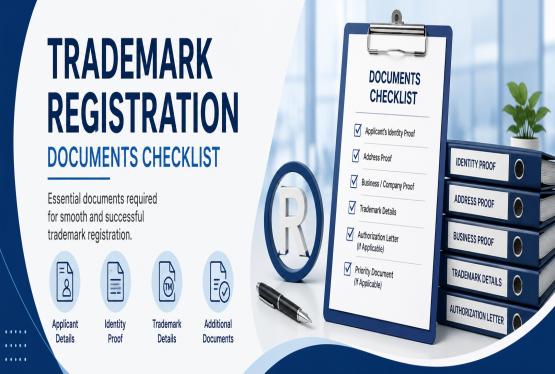
Documents Required for Trademark Registration in India
Individual & Sole Proprietorship
-
Logo (Optional): Copy of the proposed logo (black & white preferred). If absent, the application can be filed for the word mark.
-
Form-TM-48: Signed authorization for a Trademark Attorney to file on the applicant’s behalf.
-
Identity Proof: Valid ID such as passport, Aadhaar, or PAN card.
-
Address Proof: Recent utility bill or other valid address proof.
Partnership, LLP, or Company – Small Enterprises / Start-ups
-
Scanned copy of the logo (optional)
-
Duly signed Form-TM-48
-
Udyam Registration Certificate
-
Partnership Deed (for a partnership) or Incorporation Certificate (for an LLP/company)
-
Identity proof of the signatory/applicant
-
Address proof of the signatory/applicant
Other Applicants
Companies or entities that do not hold Udyam registration must submit the following documents for trademark registration:
-
Scanned copy of the logo (optional)
-
Duly signed Form-TM-48
-
Partnership Deed or Incorporation Certificate
-
Identity proof of the signatory/applicant
-
Address proof of the signatory/applicant
Validity for Trademark
Once a trademark is registered, the owner is entitled to use the ® or ™ symbol. The registration remains valid for 10 years from the date of grant. Prior to expiry, the trademark can be renewed by filing a renewal application, extending its validity for an additional 10 years.
Government Fees
In India, trademark registration fees range from Rs.4,500 to Rs.9,000. The lower fee of Rs.4,500 applies to individuals, proprietorships, start-ups, and small enterprises, while Rs.9,000 is applicable for all other business entities, as prescribed by the government.
Stages of Trademark Registration
Stage 1: Initial Stage of Trademark Application
Trademark search - The trademark registration process formally begins when an individual or entity claiming to be the proprietor of a trademark submits an application for registration. In accordance with Section 18(1) of the Trade Marks Act, 1999, any person who is either currently using the trademark or has a bona fide intention to use it may apply for registration before the Registrar of Trade Marks. For the purposes of trademark law, the term “person” is interpreted broadly and includes:
-
Individuals
-
Companies and startups
-
Partnerships and Limited Liability Partnerships (LLPs)
-
Trusts and societies
-
Government bodies
Further, more than one person may apply as joint proprietors of a trademark subject to the conditions stated in Section 24 of the Act.
Methods of Filing an application
Trademark applications may be submitted in hybrid mode. However, the online filing system is widely preferred due to its efficiency, accessibility, and faster processing.
-
Online Filing- Applications are submitted electronically through the official IP India portal (Form TM-A). The e-filing system operates round-the-clock (24×7), allowing applicants to file and track their applications conveniently from any location.
-
Offline Filing- Applications may also be submitted manually at the appropriate Trade Marks Registry office or sent by post. After submission, they are digitized for processing through the electronic system.
Classification of Goods and Services
Each trademark application must clearly specify the exact goods or services in respect of which the mark is sought to be registered. This ensures precise legal protection and helps prevent future conflicts or overlapping claims. As per Rule 20(1) of the Trade Marks Rules, 2017, the classification of goods/services must strictly follow the International NICE Classification system published by the World Intellectual Property Organization (WIPO). Under this system, goods and services are divided into 45 distinct classes, as follows:
-
Classes 1–34 → Goods
-
Classes 35–45 → Services
Applicants must select the correct class or combination of classes based on the nature of their business activities. A single application may also be filed as multiple classes (multi-class application) when the trademark is intended to be used across different types of goods or services.
Stage 2: Post-Filing Steps (Registry Workflow)
Vienna Codification (for logos)
Where a trademark application contains any visual or graphical element such as a logo, symbol, or device. it is required to undergo Vienna Codification after filing. Vienna Codification is an internationally recognized system of classifying figurative elements in trademarks through specific numerical codes, based on the Vienna Agreement. The primary purpose of this codification is to enable the Trademark Registry to Conduct accurate and structured searches, identify similar or conflicting device marks, Assess potential similarities during the examination stage. It is important to note that only device or logo marks are subject to Vienna Codification. Pure word marks, which do not contain any graphical or visual elements, are exempt from this process and proceed directly to examination.
Stage 3: Examination of the Trademark Application
Once a trademark application is successfully filed and Vienna Codification is completed wherever applicable, it enters the examination stage. At this point, the application is reviewed by a designated Trademark Examiner, who evaluates whether the mark qualifies for registration under the Trade Marks Act, 1999. After filing, the application is assigned to a Learned Examiner for scrutiny. The Examiner carefully reviews the application to ensure that, all procedural and legal requirements under the Act and the Rules are fulfilled, the trademark is legally eligible for registration, The mark does not violate any absolute or relative grounds for refusal. This examination forms the backbone of the registration process and determines whether the mark can legally proceed further.
Absolute Grounds for Refusal (Section 9)-At the first level of examination, the Examiner determines whether the trademark is inherently capable of being registered. Section 9 of the Trade Marks Act, 1999 lists the absolute grounds for refusal, which relate to the intrinsic nature of the mark itself.
Under Section 9(1), a trademark shall not be registered if it:
-
Lacks distinctive character, meaning it cannot distinguish one person’s goods or services from another.
-
Consists exclusively of descriptive indications, such as those relating to the nature, quality, quantity, intended purpose, value, geographical origin, or time of production of the goods or services.
-
Comprises words or signs that have become customary in common language or in established trade practice.
In practical terms, trademarks that are purely descriptive, based on common surnames, or otherwise non-distinctive are likely to face objections under this provision. However, the proviso to Section 9(1) offers an important exception. Even if a mark is originally non-distinctive, it may still qualify for registration if the applicant is able to establish that the mark has acquired a distinctive character through continuous and extensive prior use before the date of application.
Relative Grounds for Refusal (Section 11)- After examining inherent registrability, the Examiner conducts a comparative search for earlier registered or pending trademarks that may conflict with the applied-for mark. Under Section 11 of the Act, a trademark may be refused if:
-
It is identical to an earlier trademark and relates to the same or similar goods or services.
-
It is similar to an earlier trademark, and such similarity is likely to cause confusion among the public, including the likelihood of association with the existing mark.
This provision is meant to protect prior trademark owners and prevent deceptive similarity and consumer confusion in the marketplace.
Issuance of the Examination Report- Once the examination is completed, the Examiner prepares a comprehensive examination report based on their finding. If the trademark meets all legal requirements, the Examiner communicates acceptance, and the applications proceeds to the publication stage.
However, if any objections are raised under Section 9 or Section 11, a formal Examination Report listing all objections is issued to the applicant. The applicant is then required to submit a written reply within the prescribed time limit, along with supporting documents and justifications, if necessary.
Stage 4: Reply to the Examination Report
Once the Trademark Registry issues an Examination Report, the applicant is required to file a written response within one month from the date of receiving it. This response must comprehensively address each objection raised by the Examiner, supported by appropriate legal reasoning, relevant documents, and evidentiary proof, wherever necessary. Failure to file the reply within the prescribed time period results in the application being deemed abandoned by the Trademark Registry, and the registration process comes to an end unless restored through prescribed legal remedies.
Show Cause Hearing
If the Registrar is not convinced by the applicant’s written reply, a Show Cause Hearing is scheduled. This hearing allows the applicant, or their authorised representative to appear before the Hearing Officer and present arguments in supports of the trademark applications. After reviewing the written submissions, oral arguments and overall merits of the case, the Hearing Officer will issue an order either accepting or rejecting the trademark application.
Stage 5: Advertisement and Oppositions
-
Publication in the Trade Marks Journal – After a trademark is accepted by the Examiner, it is published in the Official Trade Marks Journal, which is released weekly on the website of the Trade Marks Registry. This publication serves as a public notice, informing members of the public and other stakeholders that the trademark is proposed for registration.
-
Opposition Proceedings - From the date of advertisement, a statutory period of four months is available for any third party to oppose the registration by filing a formal Notice of Opposition on legally sustainable grounds.
Where an opposition is filed, a separate legal proceeding is initiated. Both the applicant and the opposing party are required to submit their respective evidence and legal submissions within the prescribed timelines. After considering the pleadings, evidence, and arguments of both sides, the Registrar decides whether the trademark should be allowed to proceed to registration or be refused.
If no opposition is filed within the prescribed period, the trademark becomes eligible for registration.
Stage 6: Registration
-
Entry into the Register of Trade Marks- If the application remains unopposed, or if the opposition proceedings are decided in favour of the applicant, the trademark is formally entered in the Register of Trade Marks. The date of registration is deemed to be the original date of filing of the trademark application, even though that the certificate of registration is issued at a later stage.
-
Issuance of Registration Certificate (Form RG-2)- After the mark is entered into the Register, the Registrar issues the Certificate of Registration in Form RG-2. This certificate bears the official seal of the Trade Marks Registry and serves as conclusive legal evidence of the registration of the trademark in India.
-
Duration of Registration (10 Years)- Under Section 25(1) of the Trade Marks Act, 1999, a registered trademark remains valid for a period of ten years from the date of application. The Act further provides that a trademark may be protected indefinitely, provided it is renewed in accordance with the prescribed procedure at successive intervals of ten years.
Stage 7: Post-Registration – Renewal and Restoration
A registered trademark can be renewed for successive 10 years terms as long as the proprietor follows the renewal requirements. An application for renewal may be filed at any time within one year prior to the expiry of the existing registration term. The Trade Marks Registry must issue a formal reminder to the registered owner in Form RG-3, not later than six months prior to the expiry date. This notice alerts the proprietor that renewal is due. To renew the trademark, the proprietor must file Form TM-R along with the prescribed government fee within stipulated time period.
Conclusion
Trademark registration is an important legal tool for safeguarding a brand’s identity, reputation, and commercial goodwill in India. Beyond a simple name or logo, a trademark represents consumer trust, credibility, and market recognition, making it an essential asset for individuals, start-ups, small enterprises, and established companies alike. Governed by the Trade Marks Act, 1999 and the Trade Marks Rules, 2017, the registration process ensures systematic examination, opposition, and renewal procedures to protect proprietary rights. Proper compliance with statutory requirements, including accurate documentation, timely responses to examination reports, and adherence to classification rules, is vital to securing and maintaining enforceable rights. Once registered, a trademark provides exclusive legal protection for ten years and can be renewed indefinitely, enabling sustained brand security. By investing in trademark registration, businesses can prevent infringement, strengthen market positioning, foster consumer loyalty, and reinforce credibility, ultimately ensuring long-term growth and legal certainty in a competitive commercial environment.
FAQ (Frequently ask question)
Q1. Who owns a trademark?
Ans. A trademark is owned by the person or legal entity that applies for and obtains its registration. This may include an individual, sole proprietorship, partnership firm, LLP, private or public limited company, trust, or society. Once registered, the proprietor gets exclusive legal rights to use the mark in relation to the goods or services for which it is registered.
Q2. What can be taken as a trademark?
Ans. A trademark can be a word, name, logo, symbol, slogan, brand name, letters, numerals, shape of goods, packaging, or even a combination of colors, as long as it is capable of distinguishing your goods or services from others and is not prohibited under the law.
Q3. Which edition of the NICE Classification system is followed in India?
Ans. India follows the current edition of the NICE Classification system, and the 13th edition is set to take effect from January 1, 2026.
Q4. How can I check whether a trademark or brand name is registered in India?
Ans. You can conduct a trademark search on the official IP India website by entering the brand name under the relevant class.
Q5. How long does it take to register a trademark in India?
Ans. On average, a trademark registration takes 12 to 18 months, provided there is no objection or opposition. If disputes arise, the timeline may extend depending on legal proceedings.
Q6. When can the ® symbol be used?
Ans. The ® symbol can only be used after the trademark is officially registered and a registration certificate is issued. Using this symbol without registration is illegal and may attract penalties.
Q7. What is the symbol for an unregistered trademark?
Ans. The symbol ™ (TM) is used for unregistered trademarks related to goods. It indicates that the brand owner claims rights over the mark, even though it is not yet registered.
Q8. What is the symbol for a service mark?
Ans. The symbol ? (SM) is used for unregistered service marks. It is similar to TM but specifically represents services instead of goods.
Q9. What does the trademark status “Sent to Vienna Codification” indicate?
Ans. Sent to Vienna Codification” simply means your logo is being classified for examination purposes. It is a normal and positive step in the trademark registration process.
Q10. What are the advantages of obtaining trademark registration?
Ans. Trademark registration gives you exclusive legal rights over your brand and protects it from unauthorized use. It helps you take legal action against infringement and enhances your brand credibility and customer trust.


_(b)_of_the_Trademark_Act,_1999_(1)_crop10_thumb.jpg)


_crop10_thumb.jpg)


_crop10_thumb.jpg)
_crop10_thumb.jpg)


_crop10_thumb.jpg)


_crop10_thumb.jpg)


_crop10_thumb.jpg)


_crop10_thumb.jpg)


_crop10_thumb.jpg)


_crop10_thumb.jpg)


_crop10_thumb.jpg)


_crop10_thumb.jpg)


_crop10_thumb.jpg)









_crop10_thumb.jpg)





















































































_crop10_thumb.jpeg)