


Trademark is a word, symbol, logo, or phrase that distinguishes a company's goods or services from those of its competitors, indicating the source of the product. It is a form of intellectual property that protects a brand's identity and helps consumers identify and trust products. It is a graphical representation which distinguishes Goods and services. It entails shape of goods, size, packaging or combination of colours. Under the Trade Marks Act, 1999, a trademark can be a word (like Amul), a logo (like Apple), a slogan (Just Do It), a shape (Coca-Cola bottle shape), a sound (Nokia tune), colour combination (Cadbury purple), or even the packaging of goods. As long as it helps consumers identify the source of goods or services, it can qualify as a trademark. In India trademark is governed by the Trade Marks Act,1999, along with the Trade Marks Rules,2002, and the Trade Marks (Amendment) Rules,2017.
Functions of Trademark
-
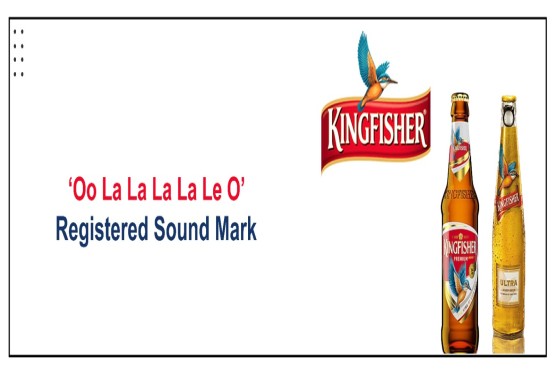
It helps in Identification of products for example Kingfisher has a logo of Bird so whenever someone will see a beverage having logo of Kingfisher bird they will automatically remember the Kingfisher company.
-
It helps in maintaining Goodwill The Tata company has much high goodwill then many other companies in market they off course get a profit from there logo.
-
It helps in advertisement of the product By showing your logo in advertisement will highlight customers that the product is of which company.
-
It provides legal protection to the identity and It creates a dedicated consumer base.
Types of Trademark
-
Good/Product Trademark: A good trademark is distinctive, unique, memorable, and not descriptive of the goods or services it represents. It should be easy to pronounce and spell, and avoid generic words, surnames, or confusingly similar names to avoid legal issues. The purpose is to show origin of goods and prevent misuse of brand identity. For example -Tata Steel and Amul Butter.
-
Service Trademark: A good trademark is distinctive, unique, memorable, and not descriptive of the goods or services it represents. It should be easy to pronounce and spell, and avoid generic words, surnames, or confusingly similar names to avoid legal issues. The purpose is to show that a particular company or provider is the source of a service. For example: ICICI Bank (Banking services) and Airtel (Telecommunications).
-
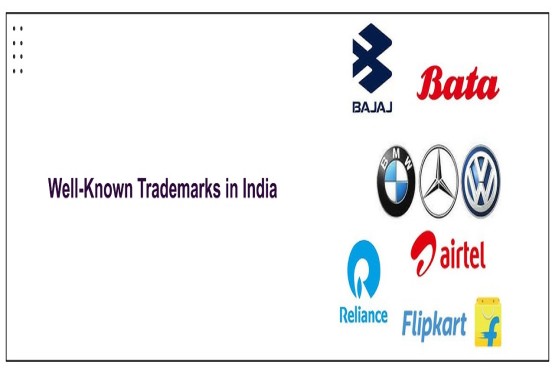
Well known Trademark: A well-known trademark is a mark that has achieved significant public recognition and is protected with broader legal rights than ordinary trademarks. The purpose is to protect famous brands from being misused or diluted. For example: Reliance, Amul etc.
-
Certification Trademark: A mark that certifies the quality, origin, material, or manufacturing process of goods or services. It is not used by the owner of the mark but by authorized users. Certification marks indicate that the goods have passed certain tests or meet specific quality standards. The owner of the mark cannot use the certification mark for their own goods. For example: ISI Mark (quality certification for products) and Hallmark (purity of Gold).
Trademark Objection Under Trademarks Act
An examiner examines the trademark registration application when an applicant applies for it. The examiner may object to the trademark application if it violates the Act and rules. The objection raised by the examiner is known as trademark objection. When the examiner find issues in a trademark application, they raise a trademark objection and issue an examination report. This report is then sent to the applicant, who must submit a reply within the prescribed time. Through this reply, the applicant gets an opportunity to clarify or justify why the trademark deserves to be registered. The examiner raises trademark objection only to seek clarification or explanation from the applicant regarding the trademark and when there is a strong reason to believe that the proposed trademark lacks certain traits for its registration. It can be said as temporary barrier, but if you didn’t give clarification on time then your application becomes abandoned.
Grounds for Trademark Objection
The grounds for Objection of Trademark are mentioned in Section 9 and Section 11 of the Trade Marks Act 1999. According to these sections grounds are divided into two parts either they are Absolute ground or the are Relative ground.
-
Absolute ground: These grounds deal with Inherent nature of Mark it means that something is wrong with mark itself not because of conflict with others (Section 9).
-
Relative ground: These grounds deal with relative comparison between two marks not the trademark alone (Section 11).
Section 9 (Absolute grounds for refusal of registration)
Section 9 of the Trademark Act 1999 outlines the absolute grounds for refusal of trademark registration. Section 9(1). The Trademark shall not be registered are -
Section9(1)(a): Marks that are devoid of distinctiveness must be capable of distinguishing the goods or services of one person from those of another. If a mark fails to demonstrate this ability, it will be refused trademark registration.
For example, common shapes used in the market, simple numbers like 123, generic words such as super or premium choice, and ordinary expressions like fast delivery or quality product are not considered distinctive.
Exception: If mark as acquired distinctiveness through continuous use, advertising and goodwill it can be registered. For example – “Reliance” and “Himalaya”.
Case: Cadila Healthcare Ltd. v. Gujrat Co-operative Milk Marketing Federation Ltd (2009)
In this case, the word “Bharat” written in style, along with the figure of a slanted paintbrush want to be registered in reference to paintbrushes, artistic brushes, and roller brushes. Because the particular trademark is quite descriptive in nature and would designate the quality and purpose of the goods, the Registrar of Trademarks denied registration due to lack of distinctiveness. The court held that the mark must be considered in its entirety. After examining it as a whole the court found the device mark is distinctive and therefore eligible for registration. It further observed that the word “Bharat” functions as a distinctive element and can be registered.
Section 9(1)(b): Descriptive marks
Marks describe the quality, quantity, intended purpose, value, geographical origin, or nature of the goods cannot be registered. For example: Sweetness for sweet, Spicy for Packet foods, for Slippers use of Kolhapuri.
Exception: Again, if it has acquired distinctiveness through long use before registration (like fair & lovely) it may be registered.
Case: T.V. Venugopal v. Ushodaya Enterprises Ltd.:
In this case, the plaintiff's newspaper and TV channel "Eenadu" (which means "today" in Telugu) was a descriptive term that had acquired a high degree of distinctiveness and goodwill in Andhra Pradesh. When the defendant tried to use a similar mark for a different product, the court granted an injunction, emphasizing that a descriptive term can gain exclusive rights if it acquires sufficient secondary meaning and distinctiveness through use and reputation.
Section9(1)(c): Customary marks
Marks that have become customary in the current language or in the established practices of trade cannot be registered. That includes:
-
Words common in Industry
-
Everyday generic terms
-
Standard trade words
Example: Fresh (for bakery goods), Natural (for juice, food, cosmetics) etc.
Exception: Acquired distinction through long use become well known trademark. for example: Fair & lovely- Descriptive, but accepted because of secondary meaning.
Case: Hindustan Development Corporation vs. The Deputy Register of Trademarks (1954):
The Calcutta High Court held that the mark "Rasoi" for edible oils cannot be registered because it describes the nature of the product, which would unfairly restrict other businesses in the category.
Section9(2): Mark shall not be considered trademark if:
-
Deceives public or cause confusion for Customers. For example - “Sugar free” for Sugar products and “Ayurvedic: for Non-Ayurvedic products
-
Hurt religious sentiments of Public – Marks that insults on misuse sacred symbols are barred. For example: Images of Gods for Alcohol or Marks like Allah Wine etc.
-
Contains scandalous or obscene matter - There should be no vulgar words, or offensive phrases or offensive images.
-
Is prohibited under the Emblems and Names Act, 1980- National Emblem, National Symbol, National flag, Name of UN, WHO etc.
Case laws: Suresh Jindal v. Registrar of Trademarks (2007) :
The Delhi High Court refused registration of a trademark involving a national symbol, emphasizing the need to protect such symbols from commercial exploitation. This falls under Section 9(2)(d).
Section9(3): Trade mark shall not be registered if it consists exclusively the shape of-
(a)Shape resulting from nature of goods themselves.
For example (1) Shape of Eggs for Egg products like Egg qualities shampoo
(2) Shape of Banana for Banana products like Banana flavoured Ice-cream.
The reason behind this is to prevent someone from blocking others from selling naturally shaped products.
(b) Shape necessary to obtain a technical result. For example- Key, lock, Screwdriver, USB head, any shape that perform technical connection etc. Case-
(c) Shape which gives sustainable value to the goods. for example - The artistic shape of a designer vase or luxury perfumes.
Case law: Whirlpool of India Ltd. and Videocon Industries Ltd (2012) –
In this case Videocon Industries copied the design of Washing machine which was already registered by Whirlpool. The court granted injunction against Videocon to prevent them from manufacturing and marketing the infringing washing machine design. This decision protected Whirlpool's registered design rights and its brand's goodwill.
Section 11(Relative grounds for refusal of registration.)
Section 11 deals with relative grounds for refusal of trademark registration. It rejects a trademark only when its registration may confuse the public or harm the rights of an existing trademark owner.
Section11(1): Likelihood of Confusion – If your mark look, sounds or means the same as an existing mark and if both are used for similar goods/services, so the mark will be refused to register.
-
The proposal made is identical to an earlier trademark and used for identical goods/services.
-
Similar to earlier mark and goods/services are similar or identical.
There must exists a livelihood of confusion on the party of public including the likelihood of association with earlier mark.
Case: Mankind Pharma Limited v. Arvind Kumar Trading and Another(2023)
In this case the question before the court was that whether the trademark “NIKIND” registered in the name of respondent Arvind Kumar should be expunged or not with popular “KIND” family of trademarks which had already registered with more than 150 suffix. The court held that “NIKIND” was likely to cause confusion with “MANKIND”.
Section11(2): Protection to well-known Trademarks – It ensures extra protection for trademarks that have a strong reputation, either in India or International. The main purpose is to prevent people from taking unfair advantage of famous brands even when the goods or services are different. It says that a Trademark which is similar to an earlier trademark and want to register for goods/services which are not similar to earlier trademarks, shall not be registered if it is well-known because use off similar trademark would take an unfair advantage of the earlier mark or use will be detrimental to the distinctive character or the reputation of earlier mark.
Case: Whirlpool Co & Anr v. N R Dongre
Whirlpool Corporation sued N.R. Dongre and others for using the "WHIRLPOOL" trademark on washing machines The court granted an injunction because it found that the plaintiff had an established "transborder reputation" in India through its international advertisements, and the defendant's use was likely to cause confusion and dilute the plaintiff's brand.
Section11(3): Protection of earlier rights (passing off and copyright)
(a)Trademark cannot be registered if it is prevented by the law of passing off. It occurs when name/logo is similar to another business or it misleads to customers believing it is connected to earlier business. “First in the market get superior rights” Even an unregistered trademark owner can stop a later applicant.
(b)A trademark cannot be registered if using it would infringe someone’s copyright
a legal right that protects original works of authorship, such as books, music, and software, giving creators exclusive control over how their work is copied, distributed, and displayed). For example any cartoon like Ben10 or Mickey mouse.
Case: Cartier International ag v. Gaurav Bhatia(2016)
In this case Gaurav Bhatia and others who operated e-commerce websites were selling counterfeit products bearing the plaintiffs' registered trademarks on their websites. The court held that defendants are liable of Trademark infringement and permanent injunction was granted also INR 10 Million in Punitive damages.
Section11(4): Mark can be registered under section under special circumstances under Section12 of the Act if the proprietor of the earlier trade mark or other earlier right consents to the registration. For the purpose of this section earlier trademark it means any registered mark or earlier-filed application under section 18, application bearing earlier date of filling under section 18, international registration mentioned under Section 36E, conventional application under Section 154(which is earlier then the trademark in question), if trademark is well known before the date of application for registration of the trademark in question.
Section11(5) – If the owner of registered trademark does not rise objection during the opposition process then the application must not be refused.
Section11(6): While deciding the Trademark is well-known, the registrar must consider –
-
The knowledge or recognition of the trademark among the relevant public that how widely it is recognized by the people and how well do people known this mark. For example Reliance, Boat, Google etc.
-
Duration, Extent and Geographical area of use of the trademark. As how long in use or how widely it is used like in local, India or International. Like Coca-Cola is used for decades in whole world.
-
Duration and extent of promotion of the mark includes how much spent on advertisement and has the mark been promoted to Television, Online, Newspapers, International events etc. for example brands like BMW extensively spent on advertisement globally.
-
Duration and extent of registrations and applications by considering how widely and actively the trademark is protected. It includes examining how long the mark has been registered, the number of countries where registration exists, and whether multiple applications are pending or granted. The broader and more extensive the trademark’s international registration, the stronger its recognition and claim as a “well-known” mark
-
The record of successful enforcement of rights in the mark - This factor examines how effectively the trademark owner has defended the mark against misuse or imitation. It includes past instances where the owner has taken legal action such as infringement suits, oppositions, or cease-and-desist notices and succeeded in stopping others from using a confusingly similar mark. When courts or authorities have recognized the strength or reputation of the mark in these cases, it further strengthens its claim to being well known. For example “Amul” has successfully restrained several small companies from copying its packaging and brand name, proving strong enforcement.
Section11(7): Registrar shall consider these points to know whether a Trademark as known or recognized I a relevant section of Public for section11(6), following points are –
-
Number of actual or potential customers of goods/services.
-
Number of person involved in channels of distribution of the goods/services.
-
People who operate in same industry or business sector.
Section11(8): If any court or the Registrar has already decided that a trademark is well-known among a specific group of people in India, then the Registrar must treat that trademark as a well-known trademark for all future registrations under the Act. For example If a court declares Bajaj as a well-known trademark, then no one can register names like Bajaj Electronics, Bajaj Fashion, or Bajaj Soap because the law protects well-known marks across all classes.
Section11(9): The Registrar does not need to check certain conditions while deciding whether a trademark is a well-known trademark. This means a trademark can still be considered well-known even if:
-
It has not been used in India.
-
It is not registered anywhere.
-
No application for its registration has been filed in India.
-
It is not well-known, registered, or applied for in any foreign country.
-
It is not known to the general public across India.
For example: Microsoft was not registered in some classes, many Indians did not personally use the product and it was not used for specific categories. Still its global reputation makes it well known under this section. The purpose is to ensure that global and reputed marks receive protection without fulfilling unnecessary formal requirement.
Section 11(10): When someone applies for a trademark and another person files an objection (opposition), the Registrar has two important duties:
-
the Registrar must protect well-known trademarks. This means no one is allowed to register a mark that looks or sounds exactly the same or very similar to a famous brand. For example: If someone applies for “Nike” to sell shoes, the Registrar will reject it because it is clearly copying “Nike”.
-
the Registrar will also check if either party is acting dishonestly (in bad faith).
Section 11 (11): Protection for honest and genuine trademark users
If a person has honestly registered a trademark by giving all correct information, or if they were already using a trademark honestly before this law started, then their rights will stay protected even if the trademark later turns out to be similar to a well-known one.
For example- A local shop has been using “Royal Cafe” genuinely for years. Even if a big brand later uses a similar name, the local shop will still have its right protected.
Final Word
Trademark registration is not just a legal formality but one of the best ways to safeguard a brand’s identity and business interests. However, for successful registration, it is equally important to be aware of the grounds on which a trademark can be refused, as this helps avoid mistakes and delays. There is also no strict rule that a non-distinctive mark can never be registered, in some cases continuous use and public recognition can still make it eligible for protection. The absolute and relative grounds of refusal play a key role in protecting existing trademarks and their goodwill while preventing fraud and public confusion. The law mainly focuses on the distinctive nature of the mark, and the responsibility lies on the applicant to prove that their mark is different from others and will not mislead consumers.
Frequently Asked Questions
Q1. What is a trademark?
Ans. A trademark is a word, logo, symbol, design, colour, sound, or any unique sign that helps people identify the source of goods or services offered by a business
Q2. What is a trademark objection?
Ans. A trademark objection is a preliminary refusal issued by the Trademark Examiner when they find an issue in the application. It is not a final rejection only a request for clarification or justification.
Q3. What are Absolute Grounds for refusal?
Ans. These grounds relate to the inherent nature of the trademark itself. Marks are refused if they lack distinctiveness, are descriptive or commonly used in trade, or if they can mislead the public or offend religious sentiments. Only marks that uniquely identify a source are allowed to register.
Q4. What happens if I do not file the reply on time?
Ans. Your application will be marked abandoned and you will have to file a new application and pay government fees again.
Q5. What are Relative Grounds for refusal?
Ans. These grounds involve comparing your trademark with those already registered. A mark will be refused if it is identical or deceptively similar to an earlier one or if it is likely to mislead consumers about the true source of the goods or services.
Q6. Can descriptive or common words ever be registered?
Ans. Yes, but only if the mark has acquired distinctiveness or secondary meaning through long use, heavy advertisement, and public recognition. Example: “Fair & Lovely”.
Q7. Can someone register a famous brand name for different goods?
Ans. No. Under Section 11(2), even unrelated products cannot use a similar mark. Example: You cannot register “Patanjali Watches” or “MDH Shoes”.
Q8. What is the difference between trademark objection and trademark opposition?
Ans. An objection is raised by the Trademark Registrar during the initial examination of the application whereas an opposition is filed by third parties or the public after the trademark is published in the Trademark Journal.
Q9. Can honest users still be protected even if a similar big brand comes later?
Ans. Yes. Under Section 11(11) genuine early users of a trademark are protected even if a later, well-known brand uses a similar name.
Q10. What should I do after receiving a trademark objection?
Ans. You must file a reply to the examination report within the given time (usually 30 days), explaining why your mark deserves registration. If required, proof of use, sales records, advertisements, etc., can be submitted.


_(b)_of_the_Trademark_Act,_1999_(1)_crop10_thumb.jpg)


_crop10_thumb.jpg)


_crop10_thumb.jpg)
_crop10_thumb.jpg)


_crop10_thumb.jpg)


_crop10_thumb.jpg)


_crop10_thumb.jpg)


_crop10_thumb.jpg)


_crop10_thumb.jpg)


_crop10_thumb.jpg)


_crop10_thumb.jpg)


_crop10_thumb.jpg)


_crop10_thumb.jpg)








_crop10_thumb.jpg)





























_crop10_thumb.jpeg)