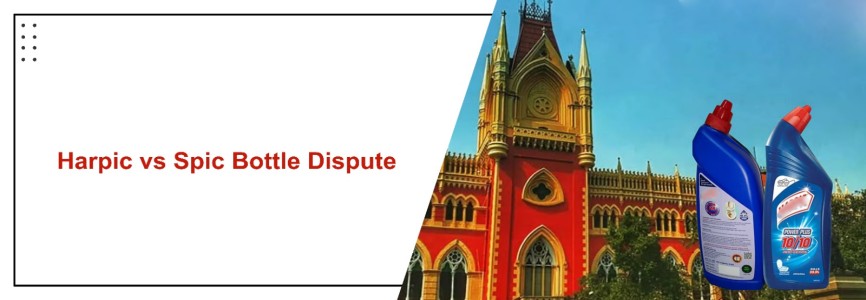



In a significant development in the field of trademark and trade dress protection in India, the Calcutta High Court recently restrained Godrej Consumer Products Limited from using a toilet cleaner bottle design that was allegedly similar to the well-known Harpic bottle. The case highlights the importance of protecting product packaging and design under intellectual property laws and demonstrates how courts address issues related to trade dress imitation and unfair competition. The dispute arose between Reckitt Benckiser (India) Pvt. Ltd., the manufacturer of the well-known toilet cleaner brand Harpic, and Godrej Consumer Products Ltd., which launched a toilet cleaner product under the brand “Spic”. Reckitt Benckiser approached the Calcutta High Court alleging that the packaging and bottle design used by Godrej for the Spic product closely resembled the distinctive Harpic bottle and could mislead consumers in the market.
Background of the Dispute
Reckitt Benckiser has been manufacturing and marketing Harpic, one of India’s most popular toilet cleaning liquids, for many years. Over time, the brand has built a strong reputation and consumer recognition. Apart from the trademark “Harpic,” the product is widely recognized for its distinctive curved bottle design with an angled neck, which allows the liquid cleaner to be applied under toilet rims. According to Reckitt Benckiser, the bottle design is not only functional but also serves as a distinctive trade dress that consumers associate with the Harpic brand. The company argued that the shape, color combination, and packaging of the bottle had acquired significant goodwill and market recognition. When Godrej launched its toilet cleaner “Spic,” Reckitt alleged that the bottle design used by Godrej was deceptively similar to the Harpic bottle, which could lead to consumer confusion and amount to passing off.
Legal Claims Raised by Reckitt Benckiser
Reckitt Benckiser filed a case before the Calcutta High Court seeking an injunction against Godrej. The company raised several legal arguments based on intellectual property and unfair competition laws.
The main allegations included:
Passing Off: Reckitt argued that Godrej’s Spic bottle design was similar enough to Harpic’s trade dress that consumers could mistakenly assume that the product was associated with Harpic or Reckitt Benckiser. Passing off occurs when a business misrepresents its goods or services as being connected with another brand.
Trade Dress Infringement: Trade dress refers to the overall visual appearance of a product or it’s packaging that identifies the source of the product. Reckitt claimed that the Harpic bottle design had become distinctive in the market and that the Spic bottle imitated this distinctive appearance.
Consumer Confusion: The company further argued that the similarity in the design and appearance of the bottle could mislead consumers, especially in retail environments where purchasing decisions are often made quickly.
Legal Provisions under the Trade Marks Act, 1999
The case involves several important provisions of the Trade Marks Act, 1999, which governs trademark protection in India.
Section 2(1)(zb) – Definition of Trademark
Section 2(1)(zb) of the Trade Marks Act defines a trademark as a mark capable of being represented graphically and capable of distinguishing the goods or services of one person from those of others.
The definition includes:
-
Shape of goods
-
Packaging
-
Combination of colours
This means that product shapes and packaging designs can also qualify as trademarks if they distinguish a product in the market. In the Harpic case, Reckitt argued that the distinctive bottle design functions as a source identifier, making it protectable under trademark law.
Section 29 – Trademark Infringement
Section 29 of the Trade Marks Act deals with trademark infringement. It states that a registered trademark is infringed when a mark that is identical or deceptively similar is used in relation to goods or services covered by the trademark registration.
Although the dispute primarily focuses on packaging similarity, Reckitt argued that the use of a similar bottle could still amount to infringement if it creates confusion about the origin of the product.
The court typically examines:
-
Similarity between the marks or trade dress
-
Likelihood of confusion among consumers
-
Nature of goods and purchasing conditions
Section 27 – Passing Off
Section 27 of the Trade Marks Act recognizes the common law remedy of passing off. Even if a trademark or design is not registered, the owner can still seek protection if another party misrepresents its goods as being associated with the original brand.
Passing off protects goodwill and reputation built by a business over time.
To establish passing off, the plaintiff must prove three elements:
-
Goodwill – The brand has reputation in the market.
-
Misrepresentation – The defendant’s product creates confusion.
-
Damage – The plaintiff may suffer financial or reputational harm.
Reckitt Benckiser argued that the Harpic bottle design has acquired goodwill and that Godrej’s similar packaging could mislead consumers.
Section 135 – Relief in Trademark Infringement and Passing Off
Section 135 of the Trade Marks Act allows courts to grant remedies in cases of trademark infringement or passing off.
The remedies include:
-
Temporary or permanent injunctions
-
Damages or account of profits
-
Delivery-up of infringing goods
-
Destruction of infringing materials
In this case, the Calcutta High Court granted an interim injunction, restraining Godrej from using the disputed bottle design while the case is being examined.
Observations of the Calcutta High Court
After examining the claims and evidence presented by both parties, the Calcutta High Court granted an interim order restraining Godrej from using the allegedly similar bottle design for its Spic toilet cleaner product.
The court observed that:
-
The Harpic bottle design has been widely used and recognized in the Indian market for many years.
-
The design has become closely associated with Reckitt Benckiser’s Harpic product.
-
The similarity between the Harpic and Spic bottles could potentially create confusion among consumers.
The court noted that in cases involving fast-moving consumer goods (FMCG) such as household cleaning products, packaging and product shape play a crucial role in influencing consumer perception. Even slight similarities in bottle design can lead to confusion, particularly among customers who rely on visual cues while shopping.
As a result, the court granted an interim injunction, temporarily preventing Godrej from selling its product in the disputed bottle design until the case is fully resolved.
Importance of Trade Dress Protection
This case highlights the growing importance of trade dress protection in India’s intellectual property landscape. Trade dress includes elements such as:
-
Product shape
-
Packaging design
-
Color combinations
-
Label arrangement
-
Overall visual appearance of a product
Even if a design is not registered as a trademark, courts may still protect it if the design has acquired distinctiveness and goodwill in the market. For well-established products like Harpic, consumers often identify the brand through visual packaging cues, making trade dress an important aspect of brand identity.
Implications for the FMCG Industry
The Calcutta High Court’s decision in the dispute concerning the bottle design of Spic toilet cleaner and Harpic carries significant implications for companies operating in the Fast-Moving Consumer Goods (FMCG) sector, where product packaging plays a vital role in attracting consumers and establishing brand recognition. In industries where products are often displayed together on retail shelves and purchased quickly by consumers, the visual identity of a product such as its bottle shape, packaging style, and colour combination—becomes an important indicator of brand origin. As a result, the court’s ruling reinforces the need for businesses to exercise caution while designing product packaging and marketing strategies. One of the key implications of the decision is the stronger protection for brand identity. The ruling reiterates the legal principle that companies cannot imitate or replicate the distinctive packaging or trade dress of a well-known product simply by using a different brand name or logo. Even if the trademark itself is different, the overall appearance of a product can still create confusion among consumers. The court’s intervention demonstrates that trade dress such as bottle shape, packaging design, and overall product presentation can serve as a protectable element of a brand’s intellectual property. For well-established FMCG brands that have invested heavily in building consumer recognition through unique packaging, the decision provides reassurance that the law will protect their market identity from unfair imitation. Another important implication is the encouragement for companies to develop original and innovative packaging designs. In highly competitive consumer markets, businesses often attempt to replicate the visual appeal of successful products to gain market advantage. However, the court’s ruling sends a clear message that adopting packaging that closely resembles an existing popular product may lead to legal consequences. As a result, companies are likely to place greater emphasis on creating distinctive packaging and product shapes that clearly differentiate their goods from those of competitors. This not only helps avoid legal disputes but also encourages creativity and innovation in product design. The decision also reflects the trend of increased judicial scrutiny in cases involving imitation of product design or packaging. Courts in India are increasingly recognizing that similarities in packaging can mislead consumers and dilute the goodwill associated with established brands. Therefore, judges are more willing to examine the overall visual impression of competing products, rather than focusing only on minor differences in brand names or labels. If a court finds that a product’s design appears to intentionally mimic the appearance of a well-known brand, it may grant injunctions or other remedies to prevent unfair competition.
Consumer Protection Aspect
Beyond the intellectual property issues raised in the case, the dispute between Reckitt Benckiser and Godrej also highlights important consumer protection principles. Courts in India have consistently recognized that trademark law and trade dress protection are not only meant to safeguard the rights of brand owners but also to protect consumers from deception and confusion in the marketplace. In the fast-moving consumer goods (FMCG) sector, consumers often rely heavily on visual cues such as product shape, colour, packaging, and label design when making purchasing decisions. Many products are purchased quickly in supermarkets or local stores without detailed examination. In such situations, a consumer may identify a product based on its familiar packaging or bottle design rather than carefully reading the brand name. If another company introduces a product with packaging that closely resembles a well-known brand, consumers may unintentionally buy the product assuming that it belongs to the original manufacturer or is associated with it. In the case involving Harpic and Spic, Reckitt Benckiser argued that Harpic’s distinctive curved bottle with an angled neck has become widely recognized by consumers over many years. When a competing product appears in a bottle with a similar shape and appearance, it increases the possibility that consumers may mistakenly believe that the product is Harpic or a product connected to the same company. Such confusion can undermine consumer trust and distort fair competition in the market. Indian courts have repeatedly emphasized that preventing consumer deception is a key objective of trademark and passing off laws. The Supreme Court of India in Cadila Healthcare Ltd. v. Cadila Pharmaceuticals Ltd. (2001) highlighted that the primary purpose of trademark protection is to prevent confusion among consumers and ensure that buyers are not misled about the origin of goods. The court also noted that even small similarities in packaging or product presentation may be sufficient to create confusion, particularly when the goods are purchased by a wide range of consumers. From a consumer protection perspective, misleading packaging can lead to several problems. Consumers may end up purchasing a product that they did not intend to buy, believing it to be a trusted brand. This may affect their health, safety, and satisfaction, especially in products such as cleaning agents, medicines, or food items. Additionally, deceptive packaging can erode confidence in the marketplace and weaken the reliability of brand identifiers. Trade dress protection therefore serves an important public interest. By preventing companies from imitating the packaging or design of well-known products, courts help maintain transparency and fairness in commercial transactions.
Previous Cases Involving Product Design Similarity
Indian courts have previously dealt with similar cases involving imitation of product packaging and design. Several landmark decisions have emphasized that the overall visual impression of a product matters more than minor differences.
Courts typically consider factors such as:
-
Similarity of shape and packaging
-
Market reputation of the original product
-
Consumer perception
-
Intent of the competing company
These principles have been consistently applied to protect well-known brands from imitation.
What Happens Next in the Case
The current order issued by the Calcutta High Court is an interim injunction, which means the restriction is temporary while the court continues to examine the case in detail.
The final decision will depend on further arguments and evidence presented by both parties, including:
-
Whether the Harpic bottle design qualifies as distinctive trade dress
-
Whether Godrej intentionally copied the design
-
Whether the similarity is likely to cause consumer confusion
Until the court reaches a final verdict, Godrej will be required to avoid using the disputed bottle design for its Spic product.
Conclusion
The Calcutta High Court’s decision to restrain Godrej from using a bottle design allegedly similar to Harpic highlights the importance of protecting trade dress and product design in India’s competitive FMCG market. As brands invest heavily in building distinctive product identities, courts continue to play a crucial role in preventing unfair imitation and safeguarding consumer trust.
This case serves as a reminder that intellectual property protection extends beyond logos and trademarks to include the overall look and feel of a product, which can be equally valuable in establishing brand recognition in the marketplace.
FAQs
Q1. Why did the Calcutta High Court restrain Godrej from using the Spic bottle design?
Ans. The Calcutta High Court restrained Godrej because the bottle used for its Spic toilet cleaner was allegedly similar to the distinctive bottle used by Harpic, manufactured by Reckitt Benckiser. The court observed that such similarity could mislead consumers and may amount to passing off and trade dress infringement under the Trade Marks Act, 1999.
Q2. What is trade dress in trademark law?
Ans. Trade dress refers to the overall visual appearance of a product or its packaging, which helps consumers identify the source of the product. It may include elements such as the shape of the container, color combination, packaging style, label arrangement, and overall product design. Trade dress can be protected under trademark law if it has acquired distinctiveness in the market.
Q3. Which provisions of the Trade Marks Act, 1999 are relevant in this case?
Ans. The dispute involves several provisions of the Trade Marks Act, 1999, including:
-
Section 2(1)(zb): Defines trademark and includes shape of goods, packaging, and colour combinations.
-
Section 27: Provides protection against passing off even if the mark is not registered.
-
Section 29: Deals with trademark infringement where a similar mark creates confusion among consumers.
-
Section 135: Allows courts to grant remedies such as injunctions, damages, and destruction of infringing goods.
Q4. What is passing off under trademark law?
Ans. Passing off is a legal concept that prevents a business from misrepresenting its goods or services as those of another brand. Even if a trademark is not registered, the original brand owner can take legal action if another company’s product creates confusion and damages its goodwill.
Q5. What is an interim injunction in trademark disputes?
Ans. An interim injunction is a temporary order issued by the court to prevent a party from continuing certain activities until the case is fully decided. In this case, the Calcutta High Court issued an interim injunction restraining Godrej from using the disputed bottle design while the court examines the matter further.
Q6. Why is packaging design important in trademark protection?
Ans. Packaging design plays a crucial role in brand recognition and consumer decision-making. In industries such as FMCG, consumers often identify products based on their packaging and shape. If another company uses a similar design, it may cause confusion and dilute the brand value of the original product.
Q7. Can the shape of a product be protected as a trademark in India?
Ans. Yes, under Section 2(1)(zb) of the Trade Marks Act, 1999, the shape of goods can be protected as a trademark if it is capable of distinguishing the goods of one person from those of others and has acquired distinctiveness in the market.
Q8. What happens if a company violates a trademark injunction?
Ans. If a company violates a court-issued injunction in a trademark dispute, it may face contempt of court proceedings, financial penalties, and further legal consequences, including damages and seizure of infringing goods.
Q9. What is the significance of this case for the FMCG industry?
Ans. The case highlights the importance of unique product packaging and trade dress protection. FMCG companies must ensure that their product designs do not resemble existing brands, as such similarities may lead to legal disputes related to passing off and trademark infringement.
Q10. What will happen next in the Harpic vs Spic case?
Ans. The current order issued by the Calcutta High Court is an interim injunction. The court will continue hearing arguments from both parties and examine evidence before delivering a final judgment on whether the Spic bottle design infringes Harpic’s trade dress rights.


_(b)_of_the_Trademark_Act,_1999_(1)_crop10_thumb.jpg)


_crop10_thumb.jpg)


_crop10_thumb.jpg)
_crop10_thumb.jpg)


_crop10_thumb.jpg)


_crop10_thumb.jpg)


_crop10_thumb.jpg)


_crop10_thumb.jpg)


_crop10_thumb.jpg)


_crop10_thumb.jpg)


_crop10_thumb.jpg)


_crop10_thumb.jpg)


_crop10_thumb.jpg)









_crop10_thumb.jpg)











































































_crop10_thumb.jpeg)