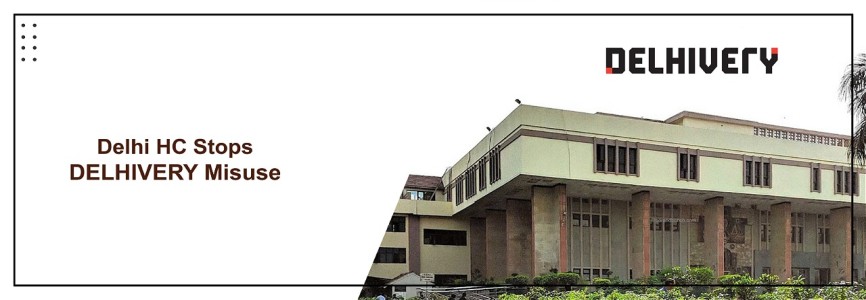



In a landmark ruling dated January 22, 2026, the Delhi High Court awarded ex-parte ad-interim relief to Delhivery Limited, the most integrated logistics service provider in India, in a case involving widespread copyright violations, online impersonation schemes, and trademark infringement. The case supports the judiciary's proactive approach to defending intellectual property rights in the digital ecosystem and draws attention to the increasing exploitation of well-known brands through fraudulent franchise schemes, false domain names, and digital fraud.
Background of the Case
Delhivery Limited, incorporated in 2011 and listed on the National Stock Exchange in 2022, has established a strong nationwide presence, servicing over 18,700 pin codes and catering to more than 30,000 active customers across multiple sectors. Over the years, Delhivery has secured numerous trademark registrations for the mark “DELHIVERY” and its variants across Classes 35, 39, and 42, and has consistently used the mark in an open, continuous, and extensive manner
The dispute arose when Delhivery discovered that unknown individuals, operating under a John Doe identity, were fraudulently impersonating the company and its employees. These individuals were allegedly offering fake franchise and distributorship opportunities, collecting registration fees and security deposits, and using deceptively similar trademarks and domain names to mislead the public.
Allegations of Trademark Misuse and Online Impersonation
According to the plaint, the defendants adopted marks such as “DELHEVERY”, which are visually and phonetically similar to Delhivery’s registered trademarks. The infringing activities included:
-
Use of deceptively similar domain names, including:
-
delhevery.com
-
delhiverycourierfranchise.com
-
delhiverydistibutars.com
-
delhiverypartner.com
-
Sending fraudulent emails and communications impersonating Delhivery officials.
-
Circulating a fake “Delhivery Franchise Prospectus”, which substantially copied Delhivery’s original literary content, thereby violating copyright.
-
Misrepresenting logistics and delivery services as being officially associated with Delhivery.
The plaintiff also placed on record multiple consumer complaints, evidencing actual confusion and financial harm caused to innocent individuals
Trademark Rights and Statutory Protection
The Court noted that Delhivery is the registered proprietor of the “DELHIVERY” trademarks and enjoys exclusive rights under Section 28 of the Trade Marks Act, 1999. The use of identical or deceptively similar marks for identical services constituted infringement under Section 29 of the Act.
Given the similarity of marks, overlapping consumer base, and identical trade channels, the Court observed that likelihood of confusion was inevitable, especially in an online environment where consumers rely heavily on brand recognition and domain authenticity
Copyright Infringement
Apart from trademark infringement, Delhivery alleged copyright violation under the Copyright Act, 1957. The Court examined the comparative material and found that the defendants had reproduced substantial portions of Delhivery’s original literary work from its official franchise prospectus without authorization.
Such unauthorised reproduction amounted to infringement of Delhivery’s rights under Section 14, enforceable through Section 51 of the Act. The Court accepted that Delhivery had made out a prima facie case of copyright infringement as well
Grant of Ex-Parte Ad-Interim Injunction
After assessing the pleadings and documents, the Court held that Delhivery satisfied all three essential requirements for grant of interim relief:
-
Prima facie case: established through valid trademark registrations, evidence of infringement, and documented consumer confusion.
-
Balance of convenience: clearly in favour of Delhivery, as continued misuse would erode brand goodwill and public trust.
-
Irreparable harm: monetary compensation alone would not remedy reputational damage and consumer deception.
Accordingly, the Court restrained the defendants from using the “DELHIVERY” mark or any deceptively similar variant in any manner, including emails, domain names, franchise communications, or business representations
Directions Issued by the Court
In a strong enforcement-oriented approach, the Court issued detailed directions to multiple intermediaries:
-
Domain Name Registrars were ordered to suspend and lock infringing domain names.
-
Banks were directed to disclose KYC details and freeze accounts linked to the fraudulent activities.
-
Telecom Service Providers were instructed to provide subscriber information of mobile numbers used in the scam.
-
Payment and regulatory authorities were asked to assist in identifying and tracing the perpetrators.
These directions reflect the Court’s recognition that effective IP enforcement in digital fraud cases requires coordinated action by intermediaries
Relevant Legal Provisions
The legal issues arising in the present case are governed by the following statutory provisions:
-
Section 28 of the Trade Marks Act, 1999: This provision grants exclusive rights to the registered proprietor of a trademark. In the present case, Delhivery relied on this section to assert its exclusive right over the “DELHIVERY” mark and to restrain unauthorised use by third parties.
-
Section 29 of the Trade Marks Act, 1999: Section 29 defines trademark infringement where an identical or deceptively similar mark is used in relation to identical services. The defendants’ use of similar marks and domain names for logistics and franchise services attracted infringement under this provision due to the likelihood of consumer confusion.
-
Section 14 of the Copyright Act, 1957: This section recognises the exclusive rights of a copyright owner over literary works. Delhivery’s franchise prospectus and related materials qualified as protected literary works under this provision.
-
Section 51 of the Copyright Act, 1957: The unauthorised reproduction and circulation of Delhivery’s copyrighted content by the defendants amounted to infringement as defined under this section.
-
Order XXXIX Rules 1 and 2 of the Code of Civil Procedure, 1908: These rules empower courts to grant temporary and ad-interim injunctions to prevent ongoing infringement and to protect the plaintiff from irreparable harm.
-
Order XXXIX Rule 3 of the Code of Civil Procedure, 1908: Since the injunction was granted ex-parte, the Court directed compliance with this provision, which mandates post-injunction procedural safeguards.
-
Section 12A of the Commercial Courts Act, 2015: Considering the urgency of the matter, the Court exempted the plaintiff from pre-institution mediation under this provision.
Relevant Case Laws
The interim relief granted by the Delhi High Court in Delhivery Limited v. John Doe & Ors. is firmly supported by recent and authoritative judicial precedent dealing with trademark infringement, domain-name abuse, online impersonation, and intermediary liability.
-
In Under Armour Inc. v. Anish Agarwal & Anr. (Delhi High Court, 2025), the Court reaffirmed that trademark infringement is established not merely by prolonged confusion but even by initial or momentary confusion in the minds of consumers. The Division Bench emphasised that the assessment must focus on the overall impression of the mark rather than minute differences. This principle directly supports the finding in the Delhivery case that deceptively similar marks and domains are sufficient to warrant urgent injunctive relief.
-
The Delhi High Court’s recent batch of domain-name misuse cases involving Dabur India Ltd. (2025) marked a significant development in digital trademark enforcement. The Court directed domain name registrars to suspend and lock domains used for fraudulent activities, mandated disclosure of verified registrant details, and emphasised that domains used for illegal purposes should not be recycled. These directions closely mirror the remedial framework adopted in the Delhivery order, particularly the suspension of infringing domain names and disclosure of KYC details.
-
In Suez International v. Unknown Defendants (Delhi High Court, December 2025), the Court dealt with fraudulent schemes operating under the guise of a reputed multinational brand. Granting ex-parte interim relief, the Court restrained unidentified defendants, ordered domain takedowns, and directed cooperation from intermediaries, including digital platforms and service providers. This judgment reinforces the legitimacy of John Doe actions and multi-layered enforcement mechanisms adopted in the Delhivery case.
-
The Delhi High Court in CS (COMM) 524/2021 and connected matters (2025) further strengthened judicial control over cybersquatting and brand impersonation by ordering permanent blocking of domain names found to be used for unlawful commercial deception. The Court observed that allowing such domains to re-enter the public pool would facilitate repeat fraud. This reasoning supports the preventive and consumer-centric approach reflected in the Delhivery directions.
Legal and Practical Significance
This order is significant for several reasons:
-
It reaffirms that well-known trademarks receive robust protection, especially where misuse targets public trust.
-
It demonstrates the Court’s willingness to grant swift ex-parte relief in cases involving online fraud and impersonation.
-
It highlights that copyright protection extends to business documents, such as franchise prospectuses.
-
It underscores the accountability of banks, telecom operators, and domain registrars in curbing digital IP violations.
Conclusion
The Delhi High Court’s order in Delhivery Limited v. John Doe & Ors. serves as a strong reminder that intellectual property rights are not limited to conventional infringement disputes but extend decisively into the digital and online fraud space. By granting comprehensive interim relief and issuing multi-layered directions, the Court has sent a clear message that misuse of established brands through deceptive online practices will be dealt with strictly and swiftly.
For businesses operating in the digital economy, the decision underscores the importance of robust IP portfolios, vigilant brand monitoring, and prompt legal action to protect consumer trust and commercial goodwill
Frequently Asked Questions (FAQs)
Q1. What was the dispute in the Delhivery trademark case?
Ans. The dispute involved unauthorized use of Delhivery’s registered trademarks and copyrighted material by unknown individuals who impersonated the company to offer fake franchise and delivery services.
Q2. Why did Delhivery approach the Delhi High Court?
Ans. Delhivery approached the Court after discovering large-scale misuse of its brand through deceptive domain names, fake emails, and copied franchise documents that were misleading the public and causing reputational harm.
Q3. What trademarks were infringed in this case?
Ans. The defendants used marks identical or deceptively similar to “DELHIVERY,” including variants such as “DELHEVERY,” along with similar logos and branding elements for identical logistics services.
Q4. Which provisions of the Trade Marks Act were relied upon?
Ans. The Court relied on Section 28 of the Trade Marks Act, 1999 for exclusive rights of the registered proprietor and Section 29 for infringement due to use of identical or deceptively similar marks.
Q5. Did the case also involve copyright infringement?
Ans. Yes. The defendants copied substantial portions of Delhivery’s original franchise prospectus, which constituted copyright infringement under Sections 14 and 51 of the Copyright Act, 1957.
Q6. What is a John Doe defendant and why was it used here?
Ans. A John Doe defendant is used when the actual identity of infringers is unknown. In this case, it allowed Delhivery to take immediate action against unidentified individuals running the fraudulent operations.
Q7. Why did the Court grant an ex-parte ad-interim injunction?
Ans. The Court found a strong prima facie case, clear likelihood of consumer confusion, and risk of irreparable harm to Delhivery’s goodwill, justifying urgent relief without hearing the defendants first.
Q8. What directions were issued against domain names?
Ans. The Court ordered domain registrars to suspend and lock multiple infringing domain names that were being used to impersonate Delhivery and deceive the public.
Q9. Were banks and telecom companies involved in the order?
Ans. Yes. Banks were directed to provide KYC details and freeze suspicious accounts, while telecom service providers were ordered to disclose subscriber details linked to the fraudulent activities.
Q10. How does this judgment help brand owners?
Ans. The order reinforces that courts will actively protect brands against online impersonation, domain misuse, and digital fraud, especially where public interest and consumer trust are at stake.
Q11. Can trademark law be used to stop online scams?
Ans. Yes. Trademark law can be effectively used to restrain online scams where infringers misuse registered marks to mislead consumers and exploit a brand’s goodwill.
Q12. What lessons does this case offer to businesses?
Ans. Businesses should maintain strong trademark registrations, monitor online misuse, act swiftly against infringements, and not hesitate to seek urgent court intervention when brand integrity is threatened.


_(b)_of_the_Trademark_Act,_1999_(1)_crop10_thumb.jpg)


_crop10_thumb.jpg)


_crop10_thumb.jpg)
_crop10_thumb.jpg)


_crop10_thumb.jpg)


_crop10_thumb.jpg)


_crop10_thumb.jpg)


_crop10_thumb.jpg)


_crop10_thumb.jpg)


_crop10_thumb.jpg)


_crop10_thumb.jpg)


_crop10_thumb.jpg)


_crop10_thumb.jpg)








_crop10_thumb.jpg)































































_crop10_thumb.jpeg)