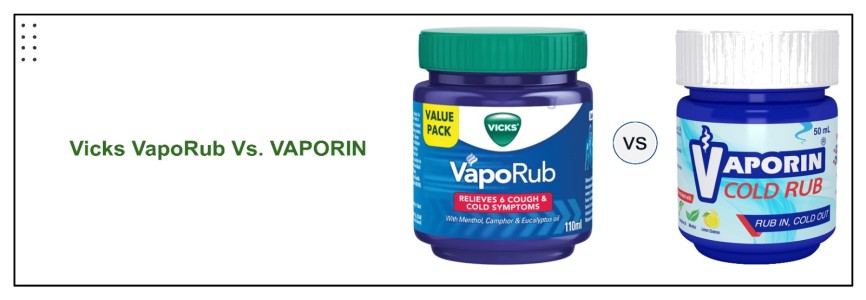



The iconic blue jar of Vicks VapoRub has been a trusted household companion for decades. Its strong menthol aroma and warming sensation provide quick relief from coughs, colds, and nasal congestion, making it a go-to remedy across generations. Yet, even a brand as beloved and globally recognised as Vicks has limits under trademark law. In a landmark decision delivered on January 6, 2026, the Madras High Court ruled that the term "Vapo", central to "Vicks VapoRub", is descriptive and belongs to the public domain (publici juris). No single company, not even Procter & Gamble (P&G), the owner of Vicks, can monopolise it.
This ruling came in the case of The Procter & Gamble Company v. IPI India Private Limited (O.P.(TM) Nos. 48, 49, and 50 of 2024), heard by Justice N. Senthilkumar. P&G sought to cancel the trademark registration of "VAPORIN" and "VAPORIN COLD RUB," owned by IPI India Pvt. Ltd., a company based in Telangana. The dispute underscores a fundamental principle of trademark law: while brands deserve protection for their distinctive identity, everyday descriptive words must remain free for fair use by competitors to promote healthy competition and consumer choice.
The Background of the Dispute
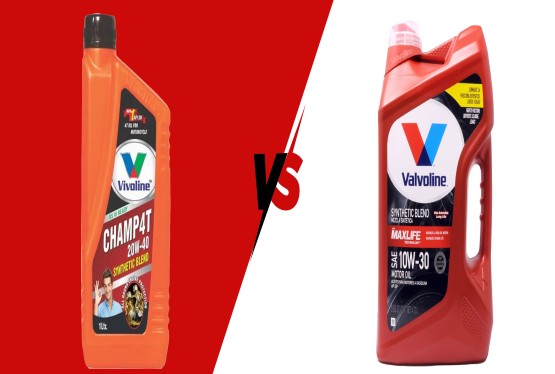
Procter & Gamble, a multinational giant founded in 1837, has built "Vicks" into one of the world's most recognised names in over-the-counter healthcare. The brand traces its roots to the early 20th century, with registrations worldwide starting as far back as 1928. In India, "VICKS" was registered in 1954, followed by "VAPORUB" in 1977. Over the years, P&G expanded its lineup with various "VAPO"-formative marks, including Vicks VapoCool, VapoPatch, VapoEase, and others, all emphasising vapour-based relief for respiratory issues.
P&G argued that "Vapo" had become an integral, distinctive part of its brand identity through massive advertising, consistent long-term use, and enormous consumer goodwill. They claimed that IPI's marks "VAPORIN" and "VAPORIN COLD RUB" registered for similar vapour-releasing cold rubs and balms were deceptively similar, likely to confuse consumers and ride on Vicks' reputation. Invoking Sections 47, 57, and 125 of the Trade Marks Act, 1999, P&G filed rectification petitions to remove IPI's marks from the register, alleging wrongful registration and potential infringement.
IPI countered strongly. They described "Vapo" as a simple abbreviation of "vapour," directly referring to the product's mechanism: releasing soothing vapours to ease congestion. IPI presented evidence of widespread third-party use of "Vapo" or similar prefixes in the pharmaceutical and balm industry, proving the term was common to the trade and publici juris. They emphasised that their marks differed holistically from "VICKS VAPORUB" in sound, appearance, structure, packaging, colour schemes, and overall commercial impression. IPI also highlighted bona fide, extensive use of their marks without any reported consumer confusion or dishonest intent.
The case was reserved for judgment after hearings concluded on November 28, 2025, and the decision was pronounced early in 2026.
Key Legal Principles
Indian trademark law, governed by the Trade Marks Act, 1999, carefully balances private rights with public interest. Section 9 outlines absolute grounds for refusal, barring registration of marks that are descriptive of the goods' nature, quality, intended purpose, or value, unless they have acquired distinctiveness through prolonged use (the proviso to Section 9 recognizes "secondary meaning").
Section 11 covers relative grounds, refusing marks that are identical or deceptively similar to earlier marks, especially for similar goods. Courts assess similarity holistically, from the viewpoint of an average consumer with imperfect memory not by dissecting components.
Rectification proceedings under Sections 47 and 57 presume the register's validity, placing the burden on the petitioner (here, P&G) to prove wrongful entry or continued improper presence. The law protects goodwill and prevents confusion but keeps descriptive terms in the public domain to avoid monopolies over functional language.
The Court applied these principles, drawing from Supreme Court precedents like Parle Products v. J.P. & Co. and J.R. Kapoor v. Micronix India, which warn against granting exclusive rights over common or descriptive elements without compelling evidence of independent secondary meaning.
The Court's Reasoning
Justice Senthilkumar first examined "Vapo" itself. He concluded it is merely an abbreviation of "vapour", an ordinary English word describing the vapour action of such balms. Evidence of numerous third-party products using "Vapo" confirmed its commonality in the trade, rendering it publici juris. No one can claim a monopoly over such a term absent strong proof that it has acquired distinctiveness in isolation, separate from the full composite mark.
The Court rejected the dissection of marks. Trademarks must be compared as wholes, not broken into parts. While both products serve similar purposes (cold relief via vapours), "VICKS VAPORUB" and "VAPORIN" differ significantly. Phonetically, "Vicks VapoRub" has a distinct rhythm dominated by "Vicks," while "Vaporin" flows differently with the "-Rin" ending. The prominent "VICKS" element, trade dress, colors, lettering, packaging sizes, and overall get-up set them apart. An average consumer, even with average intelligence and faulty recollection, would not likely confuse the two, especially given no evidence of actual confusion despite coexistence.
P&G failed to prove "Vapo" had standalone secondary meaning or that IPI adopted it dishonestly. The Court noted peaceful coexistence and third-party usage, finding no deceptive similarity or likelihood of confusion.
The Final Decision and Its Broader Implications
The Madras High Court dismissed all three rectification petitions, upholding IPI's registrations for "VAPORIN" and "VAPORIN COLD RUB." No costs were awarded. The ruling explicitly stated that "Vapo" is descriptive, common to trade, and publici juris, so its use in IPI's marks does not make them deceptively similar to "VICKS VAPORUB." The products remain distinct in name, presentation, and consumer perception.
This decision reinforces several enduring principles in Indian trademark jurisprudence:
-
Courts assess marks in their entirety, not selectively isolating shared elements.
-
Absent proven acquired distinctiveness, functional or common words cannot be monopolized.
-
Even globally famous brands like Vicks enjoy protection for their composite identity, not for generic components.
-
By keeping descriptive language free, the law encourages innovation and prevents large players from shutting out smaller competitors.
-
Heavy investment in advertising does not automatically confer exclusivity over descriptive parts. It highlights the need to build distinctiveness around unique elements (like "Vicks") rather than relying on common descriptors.
-
For smaller businesses, it offers reassurance against "trademark bullying", aggressive challenges from giants that might otherwise stifle legitimate trade.
Conclusion
In an era of global brands dominating markets, this judgment upholds doctrinal balance. Trademark law protects source identification and goodwill, but it also safeguards the public domain. "Vapo" remains open for anyone crafting vapour-based products, a small but significant win for fair play in commerce. Vicks VapoRub retains its iconic status, but the term "Vapo" belongs to everyone dealing with stuffy noses and congestion.


_(b)_of_the_Trademark_Act,_1999_(1)_crop10_thumb.jpg)


_crop10_thumb.jpg)


_crop10_thumb.jpg)
_crop10_thumb.jpg)


_crop10_thumb.jpg)


_crop10_thumb.jpg)


_crop10_thumb.jpg)


_crop10_thumb.jpg)


_crop10_thumb.jpg)


_crop10_thumb.jpg)


_crop10_thumb.jpg)


_crop10_thumb.jpg)


_crop10_thumb.jpg)








_crop10_thumb.jpg)










































_crop10_thumb.jpeg)
































_crop10_thumb.jpg)