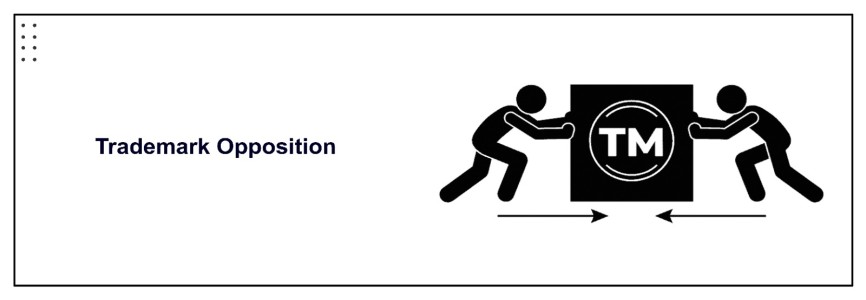



Protecting your brand isn’t just about obtaining the registration; it’s about ensuring no one else infringes on your mark with something too similar. That’s exactly why trademark opposition matters so much in India. If you run a business (or are planning to launch one), understanding how opposition works can save you months of stress, thousands in rebranding costs, and a lot of customer confusion down the road.
In this guide, I’ve laid out the whole process step by step: from the moment someone files a notice of opposition, all the way through evidence rounds, hearings, and the Registrar’s final call. We’ll also look closely at the most common grounds people actually win on under the Trade Marks Act, 1999, both the absolute reasons and relative ones (it clashes with someone else’s earlier rights). Whether you're challenging a bad application or defending your own, you'll know exactly what to expect and how to handle it effectively.
Trademark Opposition
Trademark opposition in India is a formal challenge anyone can file against a trademark application after it appears in the official Trade Marks Journal, but before registration is granted. It acts as an important safeguard, helping keep the trademark register accurate and reliable. Third parties whether brand owners, competitors, or concerned individuals get the chance to object if a mark seems non-distinctive, misleading, or too similar to existing ones. A successful opposition stops the mark from being registered, which protects established brands and prevents consumer confusion in the market. In Section 21 of the Trade Marks Act, 1999, this process ensures that trademarks truly serve as clear source identifiers without causing deception or unfair advantage.
Who can file an Opposition?
Any Person
The Trade Marks Act, 1999, gives a very wide scope for who can start an opposition. Section 21(1) plainly says that "any person" is allowed to file a notice of opposition. In practice, this means the opponent doesn’t need to show any direct business interest, personal connection, or ownership of an earlier registered trademark. There’s no requirement to prove some specific stake in the matter.
Who Usually Opposes
While the law allows literally “any person” to file an opposition, in real-world cases, opponents usually belong to a handful of common categories tied to their connection with the challenged mark.
Owners of Prior Trademarks
This is by far the most frequent type of opponent. Anyone who already holds a registration (or has a pending application) for a very similar or identical mark covering the same or related goods/services has a strong reason to block the new one. Their main argument usually rests on the risk of consumer confusion, covered under Section 11 of the Act.
Licensees and Permitted Users
A licensee who isn’t officially recorded as a registered user can still oppose if they’ve been permitted to do so. Registered users also enjoy the right to act against infringement and can participate directly in opposition proceedings.
Successors in Title
Someone who has taken over ownership of a registered trademark (through assignment, inheritance, etc.) but hasn’t yet been entered as the new proprietor on the register can file an opposition. They simply need to mention their successor status and include proof of their pending request to update the register.
Members of the Public
Because the law opens the door to “any person,” an ordinary individual can oppose if they believe the mark harms the public good. For example, if it’s deceptive, scandalous, obscene, or likely to offend religious feelings.
Key Grounds for Filing an Opposition
The Act doesn’t provide an exhaustive list of grounds for opposition, but they are typically drawn from the very provisions that bar certain marks from being registered in the first place.
Absolute Grounds (Section 9)
These grounds focus on the basic qualities of the mark itself. An opponent can claim the mark shouldn’t be registered because:
Marks Lacking Distinctive Character
Section 9(1) (a) blocks marks "devoid of any distinctive character", meaning they can’t tell one person’s goods or services apart from another’s. This covers everyday surnames, personal names, or basic geometric shapes that don’t naturally act as unique brand identifiers.
Marks Describing Quality, Type, or Origin
Under Section 9(1) (b), registration is refused for marks made up only of terms that describe the kind, quality, quantity, purpose, value, geographical origin, or production time of the goods or services. Opponents argue these should stay available for everyone in the trade to use fairly.
Marks That Have Become Customary in the Trade
Section 9(1) (c) stops marks consisting solely of signs or words that are now standard language or normal practice in a particular industry. These are terms or symbols that everyone in that field already uses regularly.
Marks That Could Deceive or Confuse People
Section 9(2) (a) forbids marks "of such nature as to deceive the public or cause confusion". This applies when the mark itself (or how it’s used) misleads about the real nature, quality, or source of the goods or services.
Marks Offending Religious Feelings
Section 9(2) (b) prohibits marks containing anything "likely to hurt the religious susceptibilities of any class or section of the citizens of India". For instance, putting names or images of deities on everyday items like shoes would usually be rejected.
Scandalous or Obscene Content
Section 9(2) (c) bars marks that include "scandalous or obscene matter". This covers vulgar, racially insulting, or morally offensive content that goes against widely accepted standards of decency.
Marks Banned Under the Emblems and Names Act, 1950
Section 9(2) (d) prevents registration if the mark’s use violates the Emblems and Names (Prevention of Improper Use) Act, 1950. This includes national emblems, UN symbols, or anything implying official government backing without permission.
Relative Grounds (Section 11)
These grounds deal with clashes between the new mark and an “earlier trademark.”
Identity or Similarity to an Earlier Trademark
Section 11(1) is one of the most used grounds in oppositions. It says a trademark can’t be registered if, due to its identity or similarity with an earlier trademark and the similarity of the goods or services covered, “there exists a likelihood of confusion on the part of the public, which includes the likelihood of association with the earlier trademark”.
Protection for Well-Known Trademarks
Section 11(2) gives extra protection to well-known trademarks, even when the goods or services are different. A mark won’t be registered if it’s identical or similar to an earlier well-known trademark in India, and using it “without due cause would take unfair advantage of or be detrimental to the distinctive character or repute of the earlier trade mark”.
Other Statutory Grounds for Opposition
Prohibited Marks (Section 13 – Chemical Names)
An opposition can be filed if the mark violates Section 13, which forbids registering words that are the common names of chemical elements or international non-proprietary names (INN) officially declared by the World Health Organisation.
Use of Names of Living or Recently Deceased Persons (Section 14)
Opposition is possible when the mark falsely suggests a link with any living person or someone who died within the last twenty years before the application date unless the applicant provides the necessary written consent from that person or their legal representative.
Issues with Claim of Proprietorship (Section 18)
An opponent can contest the applicant’s claim to be the rightful proprietor under Section 18(1). This ground is frequently used by arguing that the opponent is actually the true owner or the first person to use the mark.
Trademark Opposition in India: Step-by-Step
Step-1: Filing the Notice of Opposition
The notice must be filed within a strict four-month window from the date the trademark application is published (or re-published) in the Trade Marks Journal no extensions are allowed, so timely monitoring is essential.
Use Form TM-O as required, with the current fee of Rs.2,700 per class for e-filing, as per the Trade Marks Rules, 2017.
Once filed, the Registrar typically serves a copy on the applicant within three months. However, if the applicant has already accessed the notice online via the official website and filed their counter-statement early, this service step can sometimes be skipped to speed things up.
Step 2: Defending the Application - Filing the Counter-Statement
The applicant must file a counter-statement on Form TM-O within two months of receiving the notice of opposition from the Registrar. The counter statement must specify which facts in the notice are admitted, and it must be verified in the same way as the notice of opposition.
If no counter-statement is filed within the two months, under Section 21(2) of the Act, the application is deemed abandoned.
Step 3: The Evidence Stage
Evidence is primarily submitted through affidavits, with specific timelines for each party.
Opponent’s Evidence in Support of Opposition
Rule 45(1) of the Trade Marks Rules, 2017, explains that within two months after receiving a copy of the counter-statement, the opponent must either submit evidence by way of affidavit to the Registrar to back up their opposition, or send written notice to both the Registrar and the applicant stating they do not wish to file any evidence and will instead rely only on the facts already mentioned in their notice of opposition. If the opponent skips this step entirely, the opposition is treated as abandoned.
Applicant’s Evidence in Support of Application
Rule 46(1) of the Trade Marks Rules, 2017, says that within two months after the applicant receives the opponent’s evidence affidavits (or the opponent’s written notice that they won’t submit any evidence), the applicant must file their own evidence by way of affidavit with the Registrar to support their trademark application. If the applicant does nothing at this stage, the application is treated as abandoned.
Opponent’s Evidence in Reply
The opponent gets one last chance to respond with evidence. According to Rule 47 of the Trade Marks Rules, 2017, within one month after receiving copies of the applicant’s affidavit, the opponent can file reply evidence by affidavit with the Registrar.
This reply evidence must stick strictly to countering or rebutting what the applicant has submitted it cannot bring new facts, arguments, or issues that weren’t already raised earlier in the opposition. This keeps the process fair and focused, preventing either side from surprising the other at the end.
Rules for Filing Affidavits and Documents
All affidavits need to be properly written, stamped if required, and verified with a clear sworn statement. If any supporting document is in a language other than Hindi or English, you must attach a certified translation. This ensures the Registrar can read and understand everything without confusion.
Step-4: Hearing Before the Registrar
Intimation of Hearing and Attendance
After all evidence is filed, the Registrar sends both parties a notice fixing the hearing date, at least one month from the first intimation. If you want to appear and argue your case in person (or through your agent), you must inform the registry beforehand.
Adjournments and What Happens If You Don’t Show Up
You can ask for a short postponement only if you have a genuine reason, file Form TM-M with the fee at least three days before the scheduled date. Each side gets a maximum of two adjournments, and none can be longer than 30 days. If the applicant doesn’t appear, the application is usually treated as abandoned. If the opponent skips the hearing, the opposition can be dismissed in favour of the applicant. This keeps the process moving and fair for everyone.
Step-5: The Final Decision and Appeal
The Registrar’s Decision
After listening to both sides at the hearing and reviewing all the evidence, plus any written submissions, the Registrar makes a final decision. It clearly states whether the trademark application is accepted as is, refused completely, or accepted only with specific conditions or limitations. This decision is sent in writing to both the applicant and the opponent.
Security for Costs
Under Section 21(6) of the Trade Marks Act, if the opponent filing the notice or the applicant filing the counter-statement does not live or carry on business in India, the Registrar can ask them to deposit security for the costs of the proceedings. If they fail to provide this security, the opposition or the application may be treated as abandoned.
Conclusion
Trademark opposition is the final safety check that keeps India’s trademark system fair. It lets people and businesses step in to stop confusing or copycat marks before they get registered protecting real brands and everyday shoppers. Whether you’re defending your own trademark or challenging someone else’s, knowing the main grounds, tight deadlines, and basic steps puts you in a strong position. In the end, this process ensures trademarks stay clear, honest, and truly valuable for everyone.
FAQs
Q1. What is trademark opposition in India?
Ans. Trademark opposition is a formal process where any person challenges a trademark application after it is published in the Trade Marks Journal but before registration. It helps prevent registration of marks that are non-distinctive, deceptive, or conflicting with earlier rights, ensuring the register remains accurate, and consumer confusion is avoided (as per Section 21 of the Trade Marks Act, 1999).
Q2. What is the time limit for filing a notice of opposition?
Ans. The notice must be filed within 4 months from the date of publication (or re-publication) of the trademark application in the Trade Marks Journal. No extensions are allowed beyond this strict deadline timely monitoring of the Journal is crucial.
Q3. What is the fee for filing a notice of opposition?
Ans. The official fee is Rs.2,700 per class (for e-filing, as per Trade Marks Rules, 2017). This applies to Form TM-O.
Q4. What happens after the notice of opposition is filed?
Ans. The Registrar serves a copy on the applicant (usually within 3 months). The applicant must file a counter-statement (on Form TM-O) within 2 months of receipt. If no counter-statement is filed, the application is deemed abandoned (Section 21(2)).


_(b)_of_the_Trademark_Act,_1999_(1)_crop10_thumb.jpg)


_crop10_thumb.jpg)


_crop10_thumb.jpg)
_crop10_thumb.jpg)


_crop10_thumb.jpg)


_crop10_thumb.jpg)


_crop10_thumb.jpg)


_crop10_thumb.jpg)


_crop10_thumb.jpg)


_crop10_thumb.jpg)


_crop10_thumb.jpg)


_crop10_thumb.jpg)


_crop10_thumb.jpg)









_crop10_thumb.jpg)



















































































_crop10_thumb.jpeg)