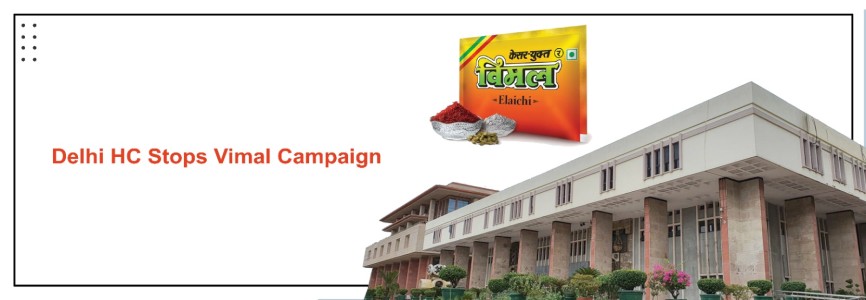



In a recent order addressing trademark disparagement and misleading digital advertising, the Delhi High Court in Vishnu and Company Trademarks Pvt. Ltd. v. Smotect Pvt. Ltd. & Ors. granted an ex parte interim injunction restraining the defendants from publishing videos that allegedly misrepresented and disparaged the plaintiff’s product “Vimal Elaichi.”
The case arose from social media promotional content where the defendants allegedly portrayed the plaintiff’s product as harmful and associated it with tobacco consumption. The Court found that the defendants had prima facie misused the plaintiff’s product label and created misleading associations that could harm the plaintiff’s reputation and goodwill. As a result, the Court ordered the immediate removal of the impugned videos and restrained further use of the plaintiff’s label in promotional content.
The decision highlights the growing importance of protecting brand reputation in the digital age, particularly against disparaging advertisements and misleading online campaigns.
Background of the Dispute
The plaintiff, Vishnu and Company Trademarks Pvt. Ltd., is engaged in the business of manufacturing and marketing products such as pan masala, mouth fresheners, supari, and other related products through an extensive network of franchises across India.
The company is the proprietor of the well-known trademark “VIMAL,” which was adopted in 1986 and has since become widely recognised in the Indian market. Over the years, the brand has gained substantial reputation due to large-scale marketing, extensive distribution networks, and advertising campaigns featuring prominent celebrities.
According to the plaintiff, its products are sold not only in India but are also exported to several countries around the world. The company and its licensees reportedly incur over Rs.200 crore annually on advertising and promotional activities, reflecting the scale and reach of the brand.
The dispute began when the plaintiff discovered that the defendants Smotect Pvt. Ltd. and its directors had published promotional videos on social media platforms, particularly Instagram, that allegedly targeted the plaintiff’s product “Vimal Elaichi.”
The defendants were promoting products marketed as smoking cessation aids and alternatives under the brand “Smotect Azaadi.” In the course of promoting these products, the defendants released videos that allegedly depicted the plaintiff’s product in a negative light.
Allegations by the Plaintiff
The plaintiff contended that the defendants had published an advertisement video on their Instagram page in which the plaintiff’s product label “Vimal Elaichi” was prominently displayed. In the video, a conversation reportedly takes place about the harmful effects of tobacco consumption. During this exchange, the label of “Vimal Elaichi” appears on the screen, creating the impression that the plaintiff’s product is associated with tobacco-related health risks.
The plaintiff argued that this representation was misleading because “Vimal Elaichi” is a mouth freshener product and does not contain tobacco. According to the plaintiff, the defendants’ videos falsely portrayed the product as a harmful tobacco item.
The plaintiff further alleged that:
-
The defendants repeatedly displayed the plaintiff’s product label in their promotional videos.
-
The videos suggested that the plaintiff’s product caused harmful side effects.
-
The defendants attempted to promote their own product as a safer alternative.
According to the plaintiff, this conduct amounted to disparagement of its product, infringement of copyright in its product label, and damage to its reputation and goodwill.
Targeted Advertising and Brand Exploitation
The plaintiff argued that the defendants had deliberately targeted its product in their advertising campaign.
Despite the presence of multiple competing brands in the market, the defendants specifically chose to highlight “Vimal Elaichi” in their promotional videos. The plaintiff claimed that this was done with the intention of leveraging the brand’s popularity and goodwill to attract attention to the defendants’ products. The plaintiff also contended that such conduct amounted to unfair competition, as the defendants were allegedly attempting to gain publicity by associating their product with a well-known brand.
Furthermore, the plaintiff argued that by displaying the plaintiff’s label in promotional content without authorization, the defendants had also infringed the copyright in the artistic work contained in the product label.
Proceedings Before the Court
The plaintiff approached the Delhi High Court seeking multiple forms of relief, including:
-
A permanent injunction restraining the defendants from using the plaintiff’s trademarks and labels in advertisements.
-
An order directing the defendants to remove the impugned videos from their social media platforms.
-
Relief against further disparagement and damage to the plaintiff’s reputation.
The plaintiff also sought urgent interim relief, arguing that the continued circulation of the videos would cause significant harm to its brand reputation.
Court’s Observations
After Trademark Hearing the plaintiff’s submissions and reviewing the materials placed on record, the Court made several important observations.
First, the Court noted that the defendants had displayed the plaintiff’s product label in the impugned videos while discussing harmful effects of tobacco consumption. This created the impression that the plaintiff’s product was a tobacco-based product associated with health risks.
The Court observed that the plaintiff had asserted that “Vimal Elaichi” is not a tobacco product and is not injurious to health. Therefore, portraying it as a harmful tobacco product in promotional content could mislead consumers and damage the brand’s reputation.
Misuse of Product Label
The Court further held that the defendants had prima facie misused the plaintiff’s product label in their promotional videos. Since the label constituted an artistic work protected under copyright law, the unauthorized use of the label in promotional content could amount to copyright infringement.
Additionally, the Court observed that the defendants’ actions appeared to be aimed at creating misleading associations between the plaintiff’s product and tobacco consumption.
Such conduct, the Court noted, could harm the plaintiff’s goodwill and reputation in the marketplace.
Balance of Convenience
While deciding whether to grant interim relief, the Court considered the principles governing injunctions.
The Court held that the balance of convenience lay in favour of the plaintiff because:
-
The plaintiff had established a prima facie case of misuse of its product label.
-
The defendants’ advertisements could cause irreparable harm to the plaintiff’s brand reputation.
-
Allowing the videos to remain online could continue misleading consumers.
Accordingly, the Court concluded that an interim injunction was necessary to prevent further damage.
Interim Relief Granted
The Delhi High Court granted ex parte ad interim relief in favour of the plaintiff.
The Court ordered that the defendants:
-
Refrain from using the plaintiff’s product label or any deceptively similar label in advertisements or promotional content.
-
Avoid creating any association between the plaintiff’s product and their advertising campaigns.
In addition, the Court directed the defendants to remove the impugned videos within 72 hours of receiving the order.
The Court also stated that if the defendants failed to remove the videos, the plaintiff would be entitled to approach the social media platform (Meta Inc.) for compliance with the order.
Significance of the Judgment
The order is significant for several reasons, particularly in the context of modern advertising practices and the protection of intellectual property rights in the digital marketplace. The decision reflects the judiciary’s increasing willingness to intervene where commercial speech crosses the line into misleading representation or brand disparagement.
Protection Against Product Disparagement
The judgment reinforces the long-standing legal principle that while comparative advertising is permitted under Indian law, such comparisons must remain truthful, fair, and non-disparaging. Businesses are free to highlight the advantages of their own products over those of competitors; however, they cannot do so by making false, misleading, or defamatory statements about competing brands.
In the present case, the Court’s intervention underscores that advertising campaigns must avoid portraying rival products in a negative or harmful light unless such claims are factually substantiated. By granting interim relief, the Court reaffirmed that commercial speech cannot be used as a shield for spreading misleading narratives that may damage the goodwill and reputation of established brands.
Safeguarding Brand Reputation in the Digital Era
The decision also highlights the growing importance of protecting brand reputation in the digital age. With the rapid expansion of social media platforms and digital marketing strategies, businesses increasingly rely on viral content and online advertisements to promote their products. While these platforms offer vast reach and visibility, they also amplify the potential for reputational harm when misleading or disparaging content is circulated online.
The case demonstrates how even a short promotional video shared on social media can significantly influence consumer perception. Judicial intervention in such cases helps ensure that digital marketing remains fair and that brand owners are protected from misleading online campaigns that could otherwise cause irreparable damage to their goodwill.
Recognition of Copyright in Product Labels
Another important aspect of the decision is the Court’s recognition that product labels and packaging designs may qualify as artistic works protected under copyright law. Product labels often contain distinctive visual elements, such as unique layouts, color schemes, typography, and graphical designs, which collectively function as identifiers of the brand.
The unauthorized use or reproduction of such labels in advertisements or promotional material may therefore constitute copyright infringement, particularly when such use is intended to exploit the reputation of the brand owner. By acknowledging this principle, the Court reinforced the broader framework of intellectual property protection that extends beyond trademarks to include copyright in artistic works used in commercial packaging.
Responsibility in Social Media Advertising
The ruling also underscores the responsibility of businesses and advertisers to exercise caution when creating promotional content for digital platforms. In the era of influencer marketing, targeted advertising, and viral campaigns, promotional strategies often involve referencing or comparing competing products.
However, this decision makes it clear that businesses must ensure that their marketing communications do not create false or misleading associations with competitors’ products. Advertisers must be particularly careful when referencing well-known brands, as any implication that a competitor’s product is harmful or inferior without credible evidence may expose them to legal liability.
Strengthening Consumer Protection and Fair Competition
Beyond protecting the interests of the brand owner, the judgment also contributes to the broader objective of maintaining fairness in the marketplace. Misleading advertisements not only harm competitors but also misinform consumers, who rely on accurate information when making purchasing decisions.
By intervening in cases of product disparagement, courts help maintain a level playing field in the market and ensure that competition is based on innovation, quality, and truthful communication rather than deceptive marketing tactics.
Conclusion
The Delhi High Court’s decision in Vishnu and Company Trademarks Pvt. Ltd. v. Smotect Pvt. Ltd. serves as an important reminder that brand reputation and intellectual property rights must be respected even in aggressive marketing campaigns.
By restraining the defendants from circulating misleading promotional videos and directing the removal of the impugned content, the Court reaffirmed that disparaging advertisements and unauthorized use of a competitor’s branding will not be tolerated under Indian law.
The ruling is particularly relevant in today’s digital landscape, where viral social media content can rapidly influence consumer perception and potentially damage established brands. Businesses engaging in comparative advertising must therefore exercise caution to ensure that their promotional strategies remain within the boundaries of law.
Frequently Asked Questions (FAQs)
Q1. What was the dispute in Vishnu and Company Trademarks Pvt. Ltd. v. Smotect Pvt. Ltd.?
Ans. The dispute arose from promotional videos published by the defendants on social media that allegedly portrayed the plaintiff’s product “Vimal Elaichi” as harmful and associated it with tobacco consumption. The plaintiff argued that this representation was misleading and amounted to product disparagement and misuse of its trademark.
Q2. What relief did the Delhi High Court grant in this case?
Ans. The Delhi High Court granted ex parte ad interim relief, restraining the defendants from using the plaintiff’s product label or creating any misleading association with their advertising campaign. The Court also directed the defendants to remove the impugned videos within 72 hours.
Q3. Why did the Court consider the advertisement misleading?
Ans. The Court noted that the defendants displayed the “Vimal Elaichi” label while discussing harmful effects of tobacco consumption. Since the plaintiff claimed that the product is a mouth freshener and does not contain tobacco, the advertisement could create a misleading impression among consumers.
Q4. What is product disparagement in trademark law?
Ans. Product disparagement occurs when a business makes false or misleading statements about a competitor’s product that harm its reputation or goodwill. While comparative advertising is permitted, it must not be deceptive or defamatory.
Q5. Can product labels be protected under copyright law?
Ans. Yes. Product labels and packaging designs often qualify as artistic works under copyright law. Unauthorized use of such labels in advertisements or promotional material may amount to copyright infringement.
Q6. Why was the balance of convenience in favour of the plaintiff?
Ans. The Court found that the plaintiff had established a prima facie case of misuse of its product label, and the continued circulation of the videos could cause irreparable damage to the brand’s reputation. Therefore, interim relief was necessary.
Q7. Does this case restrict comparative advertising in India?
Ans. No. Comparative advertising is permitted under Indian law, but it must be truthful, fair, and non-disparaging. Businesses cannot falsely portray competitors’ products in a way that damages their reputation.
Q8. What is the broader significance of this judgment?
Ans. The case highlights the legal risks of misleading social media advertising and reinforces that businesses must avoid using competitors’ trademarks, product labels, or brand identities in a manner that causes confusion or reputational harm.
Q9. What role do courts play in protecting brand reputation online?
Ans. Courts play an important role in addressing online trademark misuse, misleading advertisements, and digital disparagement, ensuring that brand owners can protect their intellectual property rights in the digital marketplace.
Q10. What lesson does this case offer to businesses using social media marketing?
Ans. The judgment emphasizes that companies must exercise caution in digital marketing campaigns, ensuring that advertisements do not misrepresent competitors’ products or misuse their trademarks and branding.


_(b)_of_the_Trademark_Act,_1999_(1)_crop10_thumb.jpg)


_crop10_thumb.jpg)


_crop10_thumb.jpg)
_crop10_thumb.jpg)


_crop10_thumb.jpg)


_crop10_thumb.jpg)


_crop10_thumb.jpg)


_crop10_thumb.jpg)


_crop10_thumb.jpg)


_crop10_thumb.jpg)


_crop10_thumb.jpg)


_crop10_thumb.jpg)


_crop10_thumb.jpg)








_crop10_thumb.jpg)




























































_crop10_thumb.jpeg)