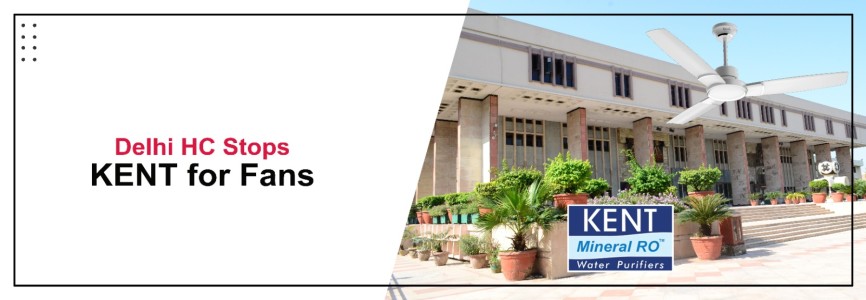



In a significant interim relief order, the Delhi High Court has restrained Kent RO Systems Limited from selling fans under the trademark “KENT,” marking an important development in Indian trademark jurisprudence. The dispute arose when Kent Cables asserted its prior use of the mark “KENT” in relation to fans, contending that such use entitled it to legal protection against subsequent adopters, even if they are well-established brands in other sectors. After examining the facts, the Court found that Kent Cables had made out a prima facie case based on prior and continuous use of the mark in the relevant product segment. This ruling reinforces a fundamental principle under the Trade Marks Act, 1999 that trademark rights are not solely dependent on registration or brand reputation but are significantly influenced by actual use in the market. The concept of “prior use” operates as a powerful legal right, often prevailing over later adoption, irrespective of the scale or recognition of the competing party.
In this case, despite Kent RO Systems Limited being a widely recognized brand in the water purification industry, the Court made it clear that such reputation does not automatically grant exclusive rights over unrelated or distinct product categories like electric fans. Furthermore, the order highlights the class-specific nature of trademark protection, where rights are generally confined to the goods or services for which the mark is used and registered, unless the mark qualifies as a well-known trademark with broader protection. It serves as a cautionary precedent for businesses seeking to diversify or expand into new product lines without conducting comprehensive trademark searches or obtaining appropriate legal clearances. The decision underscores that expansion without due diligence may expose even established companies to litigation risks, injunctions, and potential reputational harm. Overall, this interim order is a strong reminder that in trademark law, use prevails over reputation, and strategic brand expansion must always be aligned with legal compliance and intellectual property protection.
Background of the Case
The dispute in this case arose between Kent RO Systems Limited, a widely recognized brand known for its dominance in the water purifier and home appliance segment, and Kent Cables, a business entity that asserted its independent and prior use of the trademark “KENT” specifically in relation to electric fans. While Kent RO had built a strong reputation over the years in its core product categories, the conflict emerged when it sought to extend the use of the “KENT” mark into the fan segment—an area where Kent Cables claimed to have already established a market presence. Kent Cables approached the Delhi High Court seeking injunctive relief to restrain Kent RO Systems Limited from using the mark “KENT” for fans. The plaintiff contended that it had been using the mark in connection with fans prior to Kent RO’s entry into this particular segment and had, over time, developed significant goodwill and brand recognition among consumers in that market. According to Kent Cables, this prior and continuous use gave it superior rights under trademark law, even if Kent RO enjoyed broader recognition in other product categories. The plaintiff further argued that the use of an identical trademark by Kent RO in the same product category was likely to create confusion and deception among consumers. Given that both parties were dealing in similar goods fans the average consumer could easily assume a connection, association, or common source of origin between the two brands.
This likelihood of confusion, the plaintiff emphasized, not only diluted its brand identity but also posed a risk of unfair advantage being taken by a larger and more established player entering the same market space. On the other hand, the case also brought into focus the growing trend of brand extension, where established companies attempt to leverage their existing brand equity to expand into new product lines. However, Kent Cables challenged this expansion by asserting that such strategies cannot override existing rights of prior users in a specific segment. The dispute, therefore, centered on the core issue of whether a well-known brand can extend its trademark into a new category when another entity has already built rights and goodwill in that very category under the same mark. Overall, the background of the case sets the stage for a critical examination of the balance between brand reputation and prior use, while highlighting the risks involved in entering a new market without conducting thorough trademark due diligence.
Delhi High Court’s Interim Order
After carefully examining the pleadings, documents, and arguments presented by both parties, the Delhi High Court concluded that Kent Cables had successfully established a prima facie case of prior use of the trademark “KENT” in relation to electric fans. The Court took into account the evidence of continuous and commercial use by the plaintiff, along with the likelihood of consumer confusion arising from the defendant’s use of an identical mark for the same category of goods. At the interim stage, the Court does not conduct a full trial but assesses whether there is a strong initial case, balance of convenience, and risk of irreparable harm—criteria that were found to be satisfied in favor of Kent Cables. Consequently, the Court granted an interim injunction, restraining Kent RO Systems Limited from manufacturing, marketing, advertising, or selling fans under the trademark “KENT” until the final adjudication of the dispute. This relief is significant because interim injunctions aim to preserve the status quo and prevent further harm while the case is pending.
In practical terms, this order temporarily halts Kent RO’s expansion into the fan segment under the disputed mark, thereby protecting the plaintiff’s asserted rights from potential dilution or infringement during the course of the proceedings. The immediate implication of this order is that Kent RO Systems Limited cannot, at this stage, claim exclusive or even concurrent rights over the trademark “KENT” in the fan category. The Court’s approach clearly indicates that trademark rights are not automatically transferable across product lines, particularly where another party has already established prior use in that specific segment. The decision underscores that even large and reputed companies must respect existing rights and cannot rely solely on their brand recognition to justify entry into a new market under the same mark.
Legal Principle: Prior Use vs. Brand Reputation
One of the most significant legal takeaways from this case is the reaffirmation of the prior use doctrine under Indian trademark law. The Delhi High Court’s reasoning clearly emphasizes that trademark rights in India are fundamentally grounded in actual use in the market, rather than merely on registration or brand recognition. This principle plays a crucial role in maintaining fairness and protecting the interests of businesses that have genuinely established their presence over time.
Prior Use Takes Precedence
Under Indian trademark law, particularly Section 34 of the Trade Marks Act, 1999, the rights of a prior user are given paramount importance. This provision explicitly protects a party that has been using a trademark earlier in the course of trade against any subsequent user, even if the latter has obtained registration for the same or similar mark. In essence, use creates rights, and such rights can override statutory registration.
In the present case, Kent Cables relied on this principle by demonstrating that it had been using the mark “KENT” for fans before Kent RO Systems Limited entered the same segment. The Court acknowledged that prior and continuous use establishes goodwill, consumer association, and market identity all of which are legally protectable interests.
This doctrine ensures fairness in commercial dealings by safeguarding smaller or earlier businesses from being overshadowed by larger corporations that may later adopt identical or similar marks. It prevents misuse of market power and reinforces the idea that intellectual property rights are earned through consistent use and reputation-building, not merely through registration.
Well-Known Brand Does Not Mean Universal Rights
Another important clarification provided by the Court is that being a well-known or established brand in one product category does not automatically grant blanket rights across all other categories. Kent RO Systems Limited is undoubtedly a recognized name in the water purification and home appliance industry. However, the Court made it clear that such reputation is not universal or unlimited in its legal scope.
Trademark protection in India is generally class-specific and use-based, meaning that rights are confined to the goods or services for which the mark is actually used or registered. Unless a trademark qualifies as a “well-known trademark” under the law and even then, subject to certain limitations its protection does not automatically extend to entirely different product segments.
This observation is particularly important in today’s business environment, where companies frequently engage in brand extension strategies to diversify their offerings. The judgment serves as a caution that businesses cannot rely solely on their brand strength to enter new markets without conducting proper trademark searches and due diligence. Failure to do so may result in legal disputes, injunctions, and potential loss of business opportunities.
Likelihood of Confusion Matters
A central objective of trademark law is to prevent confusion or deception among consumers. When two businesses use identical or deceptively similar marks for similar or related goods, there is a strong possibility that consumers may mistakenly believe that the products originate from the same source or are somehow connected.
In this case, both parties were dealing in the same product category electric fans under the identical mark “KENT.” The Court observed that such use creates a high likelihood of confusion among consumers, especially in a market where purchasing decisions are often influenced by brand recognition. An average consumer may assume that the fans sold under the “KENT” mark by Kent RO are associated with or manufactured by Kent Cables, or vice versa.
This likelihood of confusion not only affects consumer choice but also harms the goodwill and distinct identity of the prior user. It may lead to brand dilution, loss of market share, and reputational damage. Recognizing these risks, the Court found that preventing such confusion was necessary at the interim stage, thereby strengthening the plaintiff’s claim for injunctive relief.
Key Legal Provisions Involved
The Delhi High Court’s interim order in this case is rooted in well-established provisions of the Trade Marks Act, 1999, along with common law principles. These legal provisions collectively determine how rights are recognized, enforced, and protected in situations involving competing claims over a trademark.
Section 34 – Saving for Prior Use
Section 34 of the Trade Marks Act, 1999 is one of the most critical provisions in Indian trademark law, as it safeguards the rights of a prior user. It expressly provides that the owner of a registered trademark cannot interfere with or restrain the use of an identical or similar mark by a person who has been using that mark earlier in the course of trade.
In simple terms, this means that prior use overrides later registration. Even if a party has obtained formal registration of a trademark, it cannot claim exclusive rights against someone who can prove that they were using the mark before the registered proprietor. This provision reflects the fundamental principle that trademark rights are primarily based on use rather than mere registration.
In the present case, Kent Cables relied on Section 34 to assert that its earlier and continuous use of the mark “KENT” for fans entitled it to protection, despite Kent RO Systems Limited’s established brand presence in other product categories. The Court’s acceptance of this argument highlights the strength of prior user rights in India and reinforces that registration does not create absolute ownership.
Section 29 – Trademark Infringement
Section 29 of the Trade Marks Act, 1999 deals with the concept of trademark infringement. It provides that infringement occurs when a registered trademark is used by another party in a manner that is identical or deceptively similar, and such use is likely to cause confusion, deception, or association in the minds of the public.
This provision is particularly relevant when:
-
The marks are identical or similar, and
-
The goods or services are identical or closely related
In such situations, the law presumes a likelihood of confusion, especially where the average consumer may not exercise a high degree of caution while making purchasing decisions.
In this case, the use of the identical mark “KENT” by both parties for the same product category fans raises a clear issue under Section 29. Even though the final determination of infringement will be made during the trial, the Court, at the interim stage, found that the similarity of marks and goods could mislead consumers regarding the source or origin of the products. This formed an important basis for granting the injunction.
Passing Off Principle (Common Law Remedy)
Apart from statutory protection, Indian trademark law also recognizes the common law remedy of passing off. This principle protects the goodwill and reputation that a business has built over time, even if its trademark is not formally registered.
To succeed in a passing off action, the plaintiff must generally establish three key elements:
-
Goodwill – The existence of reputation or recognition in the market
-
Misrepresentation – Use of a similar mark by another party that is likely to deceive the public
-
Damage – Actual or potential harm to the plaintiff’s business or goodwill
The doctrine of passing off ensures that businesses cannot unfairly benefit from the reputation of another by creating confusion in the marketplace. It acts as an equitable remedy to prevent dishonest or misleading trade practices.
In the present dispute, Kent Cables could rely not only on statutory provisions but also on the passing off principle to argue that its established goodwill in the fan segment was being threatened by Kent RO’s use of the same mark. Even in the absence of registration, such goodwill is legally protectable and can be enforced through courts.
Overall, these provisions Section 34 (prior use), Section 29 (infringement), and the doctrine of passing off together form the backbone of trademark protection in India. The case clearly demonstrates how these legal principles operate in practice to balance competing rights, prevent consumer confusion, and uphold fairness in the marketplace.
Key Takeaways for Businesses & Founders
Trademark Rights Are Not Absolute
One of the most important lessons from this case is that trademark rights are not unlimited or universal in nature. They are subject to specific legal boundaries, which every business must understand:
-
Territorial Nature: Trademark rights are enforceable only within the jurisdiction where they are registered or used. A brand recognized in one country does not automatically enjoy protection in another without proper registration or use.
-
Class-Specific Protection: Trademarks are registered under specific classes of goods and services. Protection is generally confined to those categories unless the mark qualifies as well-known.
-
Use-Based Rights: In India, trademark rights are heavily dependent on actual use in the market. Continuous and bona fide use strengthens legal protection.
This means that businesses cannot assume blanket ownership over a mark across all products, markets, or industries. Each expansion must be evaluated independently from a legal standpoint.
Prior Use Can Defeat Big Brands
A striking takeaway from this case is that even a large, well-established company can be restrained if another party proves prior use of the same mark in a particular category. The law does not favor size, financial strength, or brand popularity—it prioritizes who used the mark first.
This ensures a level playing field where smaller businesses or early adopters are protected from being overshadowed by larger players. In the present case, despite Kent RO Systems Limited’s strong brand recognition, it could not override the earlier rights claimed by Kent Cables in the fan segment.
For founders, this serves as a reminder that:
-
Legal priority matters more than market dominance
-
Early adoption and consistent use of a mark can become a strong legal asset
-
Ignoring existing users can lead to serious consequences, regardless of brand stature
Always Conduct a Trademark Search Before Expansion
Before launching a new product line or entering a different market segment, it is essential to conduct a thorough trademark search. This is not just a procedural step but a critical risk management exercise.
A comprehensive search should include:
-
Existing registered trademarks in the relevant class
-
Unregistered but commercially used marks (common law users)
-
Similar or deceptively similar marks that may cause conflict
Additionally, businesses should analyze the likelihood of objections, oppositions, or infringement claims. Skipping this step can lead to unexpected legal disputes, delays in product launches, and potential rebranding costs.
This case clearly demonstrates that failure to conduct proper due diligence can result in injunctions, halted operations, and reputational damage, even at an early stage.
Brand Expansion Requires Legal Due Diligence
In today’s competitive environment, brand extension is a common growth strategy. Companies often leverage their existing reputation to enter new product categories. However, this strategy must be supported by proper legal checks.
Expanding a brand without due diligence can expose a business to:
-
Injunctions: Court orders restraining the use of the brand in a particular segment
-
Financial Losses: Costs associated with litigation, marketing withdrawal, and potential rebranding
-
Brand Dilution: Loss of distinct identity and consumer trust due to conflicting usage
Legal due diligence should involve trademark clearance searches, risk assessments, and, where necessary, obtaining registrations in relevant classes before launching new products.
Why This Case Matters
This interim order reinforces a core principle of trademark law:
Reputation alone cannot override established prior use.
For startups and growing businesses, this serves as a powerful reminder that intellectual property strategy must be aligned with business growth plans. A strong brand is not just built through marketing and visibility it is secured through timely legal protection and compliance.
Moreover, the decision highlights the consistent approach of Indian courts in protecting genuine prior users and maintaining fairness in the marketplace. It sends a clear message that trademark law is designed not only to protect established brands but also to safeguard honest commercial practices and prevent misuse of brand dominance.
Conclusion
The Delhi High Court’s decision in the “KENT” trademark dispute serves as a powerful and timely reminder that trademark law in India is fundamentally built on the principles of fairness, actual usage, and consumer protection. It reinforces the idea that intellectual property rights are not merely legal formalities but are closely tied to real-world market practices and honest commercial conduct. One of the key lessons emerging from this case is that a strong and well-recognized brand does not automatically grant rights across all product categories. Even the most established businesses must respect the boundaries of trademark law, which are defined by use, classification, and existing rights of others. Brand reputation, while valuable, cannot override the legitimate claims of a prior user who has already built goodwill in a specific segment. The judgment also highlights the critical importance of legal due diligence before brand expansion. In today’s fast-moving business environment, companies often seek to diversify their offerings and enter new markets. However, this case demonstrates that expansion without conducting proper trademark searches, risk assessments, and legal clearances can lead to serious consequences, including injunctions, financial setbacks, and disruption of business plans. A proactive legal approach is therefore not optional it is essential for sustainable growth.
Further, the case strongly reaffirms that prior use remains one of the most powerful defenses in trademark disputes. Indian courts consistently uphold the rights of the first user, recognizing the effort, investment, and goodwill built over time. This principle ensures that smaller or earlier businesses are protected from being displaced by later entrants, regardless of their size or market dominance. In a broader sense, this decision underscores that trademark protection is not just about registration it is about strategy, awareness, and timely legal action. Businesses must adopt a holistic approach to brand protection, which includes early adoption, consistent use, proper documentation, and vigilant enforcement of rights. In today’s highly competitive and brand-driven marketplace, safeguarding your trademark is as important as building it. Companies that align their business strategies with sound legal practices are better positioned to avoid disputes, maintain their brand identity, and achieve long-term success.
FAQs
Q1. Can a well-known brand use its trademark in any product category?
Ans. No, a well-known brand cannot automatically use its trademark across all product categories without legal backing. Trademark rights in India are generally class-specific, meaning they are limited to the particular goods or services for which the mark is registered or used. While some exceptionally famous marks may qualify as “well-known trademarks” and enjoy broader protection, even such protection is not absolute. The brand must still ensure that its use does not conflict with existing rights of prior users in a specific category. This case clearly demonstrates that reputation in one industry (like water purifiers) does not grant unrestricted rights in another (like fans), especially when another business has already established prior use in that segment.
Q2. What is the importance of prior use in trademark law?
Ans. Prior use is one of the strongest foundations of trademark rights in India. It refers to the party that first adopts and uses a trademark in the course of trade. Under Section 34 of the Trade Marks Act, 1999, a prior user enjoys superior rights over any subsequent user, even if the latter has obtained formal registration. The importance of prior use lies in the fact that it protects businesses that have genuinely built their brand identity, goodwill, and customer recognition over time. Courts give significant weight to evidence such as invoices, advertisements, sales records, and market presence to establish prior use. In simple terms, “first in the market” often prevails over “first to register.”
Q3. What is an interim injunction in trademark cases?
Ans. An interim injunction is a temporary order issued by a court at the early stage of a legal dispute. It restrains a party from using a particular trademark or engaging in certain activities until the final decision of the case is made.
Courts grant interim injunctions based on three key factors:
-
Existence of a prima facie case
-
Balance of convenience in favor of the applicant
-
Risk of irreparable harm if relief is not granted
In trademark disputes, interim injunctions are crucial because they help prevent ongoing damage, such as consumer confusion, brand dilution, or unfair market advantage, while the case is still pending.
Q4. Can trademark rights exist without registration?
Ans. Yes, trademark rights can exist even without formal registration. Indian law recognizes common law rights through the doctrine of passing off. This means that if a business has been using a mark and has built goodwill and reputation in the market, it can seek legal protection against misuse by others.
To succeed in a passing off claim, the business must prove:
-
Established goodwill in the mark
-
Misrepresentation by another party
-
Likelihood of damage to its reputation or business
Therefore, while registration provides stronger and easier enforceability, unregistered trademarks are also legally protectable if supported by sufficient evidence of use and goodwill.
Q5. How can businesses avoid trademark disputes?
Ans. Businesses can significantly reduce the risk of trademark disputes by adopting a proactive and strategic approach to intellectual property management. Key steps include:
-
Conducting comprehensive trademark searches before adopting or expanding a brand
-
Registering trademarks in relevant classes and jurisdictions
-
Monitoring the market for potential infringements or similar marks
-
Seeking professional legal advice before entering new product categories
-
Maintaining proper records of use, such as invoices and marketing materials
Taking these precautions helps businesses avoid costly litigation, rebranding efforts, and operational disruptions. It also ensures that brand expansion is legally secure and aligned with long-term business goals.


_(b)_of_the_Trademark_Act,_1999_(1)_crop10_thumb.jpg)


_crop10_thumb.jpg)


_crop10_thumb.jpg)
_crop10_thumb.jpg)


_crop10_thumb.jpg)


_crop10_thumb.jpg)


_crop10_thumb.jpg)


_crop10_thumb.jpg)


_crop10_thumb.jpg)


_crop10_thumb.jpg)


_crop10_thumb.jpg)


_crop10_thumb.jpg)


_crop10_thumb.jpg)








_crop10_thumb.jpg)
















































_crop10_thumb.jpeg)