


In the modern marketplace, especially in industries like skincare and cosmetics, the visual appearance of a product has become extremely important. Companies do not compete only on quality but also on how their products look. The design, packaging, color combinations, and layout together form what is known as trade dress. Trade dress helps consumers identify the source of a product and creates brand recognition.
The case of Honasa Consumer Ltd. v. Cloud Wellness Pvt. Ltd. (2025) decided by the Delhi High Court deals with the protection of trade dress under Indian law. It raises important questions about whether packaging can be protected as an artistic work under the Copyright Act, 1957, and whether similarity in packaging can amount to passing off.
Facts of the Case
The plaintiff, Honasa Consumer Limited, sells skincare and cosmetic products under the brand name “The Derma Co.”. The company adopted a particular style of packaging, which includes a two-color format. Typically, the upper portion of the packaging is in a bright color like orange, blue, or purple, while the lower portion is white. The brand name is printed in the white portion, and product details are displayed in the colored section.
The plaintiff claimed that this packaging was designed in 2019 and has been used since 2020. Over time, due to heavy advertising and sales, this packaging has become closely associated with its brand.
The defendant, Cloud Wellness Private Limited, sells similar skincare products under the brand name “Dermatouch.” The plaintiff alleged that the defendant copied its packaging style, including the color combinations and layout, and was trying to benefit from its reputation.
On this basis, the plaintiff filed a suit claiming:
-
Copyright infringement under the Copyright Act, 1957
-
Passing off under common law
-
A request for interim injunction under Order 39 Rules 1 and 2 of CPC
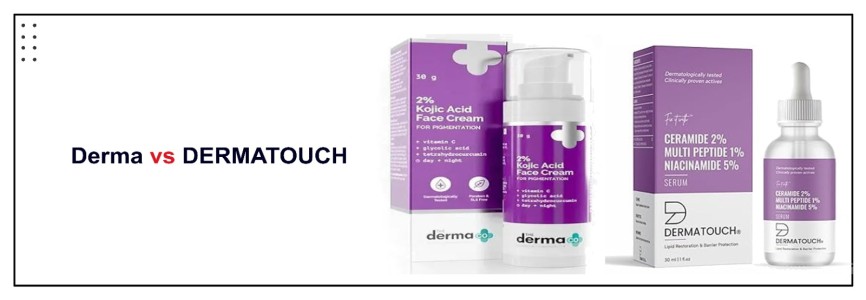
Comparative Product Packaging (Visual Representation)
|
The Derma Co. (Plaintiff)Image Source- Extracted from the Delhi High Court judgment in the case of Honasa Consumer Ltd. v. Cloud Wellness Pvt. Ltd. (2025). |
Dermatouch (Defendant)Image Source- Extracted from the Delhi High Court judgment in the case of Honasa Consumer Ltd. v. Cloud Wellness Pvt. Ltd. (2025). |
|
|
|
|
|
|
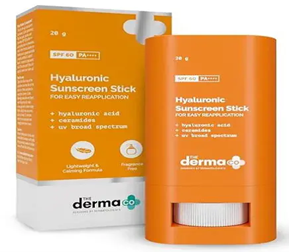
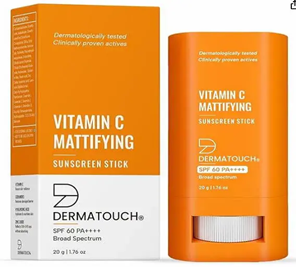
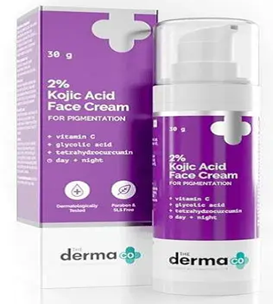

The above images show the packaging of the plaintiff’s product under “The Derma Co.” and the defendant’s product under “Dermatouch.” A visual comparison indicates that both products use a two-color scheme, where the upper portion consists of a bright color and the lower portion is white. The placement of the brand name and product details also appears structurally similar.
However, despite these similarities, the brand names are clearly distinct and prominently displayed. The court, therefore, examined whether such similarities in trade dress were sufficient to cause confusion among consumers and whether the plaintiff could claim exclusive rights over such packaging.
Relevant Legal Provisions
Copyright Protection – Section 13 and Section 2(c)
The plaintiff relied on Section 13 of the Copyright Act, 1957, which provides that copyright subsists in original artistic works. To support this, the plaintiff argued that its packaging design qualifies as an artistic work.
Under Section 2(c) of the Act, “artistic work” includes paintings, drawings, engravings, and other works involving visual creativity. The plaintiff claimed that its trade dress, including color arrangement and layout, involves sufficient creativity to fall within this definition.
However, the key requirement under Section 13 is originality. The defendant argued that the design was not original because similar two-color packaging had already been used by other companies. Therefore, the court had to consider whether the plaintiff’s design involved enough creativity and originality to deserve protection.
Copyright Infringement – Section 51
The plaintiff also relied on Section 51, which states that copyright is infringed when a person copies a protected work without permission.
The plaintiff argued that the defendant had substantially reproduced its packaging design, which amounts to infringement. It emphasized that even if exact copying is not present, substantial similarity is enough to prove infringement.
However, the defendant argued that since the design itself is not original, there can be no infringement under Section 51. The court accepted that the issue of originality is disputed and cannot be decided without a full trial.
Passing Off – Common Law Principle
The plaintiff also brought a claim of passing off. Passing off is not defined in a statute but is based on common law principles. To succeed in a passing off action, the plaintiff must prove the classical trinity:
-
Goodwill
-
Misrepresentation
-
Damage
The plaintiff argued that it had built strong goodwill in its packaging and that the defendant’s similar packaging would mislead consumers into believing that the products are connected.
However, the court found that the plaintiff failed to establish that the packaging alone had acquired goodwill independent of the brand name. The court emphasized that goodwill must be attached specifically to the trade dress, not just the brand.
Interim Injunction – Order 39 Rules 1 & 2 CPC
The plaintiff requested an interim injunction under Order 39 Rule 1 and Rule 2 of the Civil Procedure Code, 1908.
To grant an injunction, the court must be satisfied with three conditions:
-
Prima facie
-
case – The plaintiff must show a strong initial case
-
Balance of convenience – The court must see which party will suffer more harm
-
Irreparable injury – The harm must be such that it cannot be compensated by money
The court applied these principles carefully in this case.
Court’s Analysis
Consumer Behavior and Market Reality
The court examined how consumers actually behave in the skincare market. It noted that buyers of such products are usually careful and informed. They check ingredients like niacinamide, hyaluronic acid, and other active components before making a purchase.
Because of this, the court concluded that consumers are unlikely to rely only on packaging. Their decisions are mainly based on the composition and effectiveness of the product.
Importance of Brand Names
The court gave significant importance to the difference in brand names. The plaintiff uses “The Derma Co.” while the defendant uses “Dermatouch.”
According to the court, brand names are the primary identifiers of products. Since the names are clearly different and prominently displayed, consumers can easily distinguish between them. This reduces the likelihood of confusion.
Similarity in Trade Dress
The court acknowledged that both parties use two-color packaging. However, it emphasized that colors cannot be monopolized unless they have acquired a special meaning.
The court referred to the principle that allowing monopoly over colors would restrict competition. Therefore, the plaintiff must prove that its color combination has become uniquely associated with its brand, which it failed to do.
Secondary Meaning
An important concept discussed in the case is secondary meaning. This means that even if a design is simple, it can be protected if consumers associate it exclusively with one brand.
The court held that the plaintiff failed to provide sufficient evidence to show that its packaging has acquired such a secondary meaning.
Lack of Evidence of Confusion
Another important factor was the absence of actual confusion. Both companies had been operating in the market for several years, yet the plaintiff could not show any instance where consumers were misled.
The court considered this as strong evidence against the likelihood of confusion.
Balance of Convenience
While applying Order 39 CPC, the court observed that the defendant had already established its business and invested heavily in marketing.
Granting an injunction would disrupt its business significantly. On the other hand, any loss suffered by the plaintiff could be compensated by damages. Therefore, the balance of convenience favored the defendant.
Court’s Decision
The Delhi High Court refused to grant the interim injunction. It held that:
-
The plaintiff failed to establish a prima facie case
-
There was no strong likelihood of confusion
-
The trade dress lacked proven distinctiveness and originality
-
The balance of convenience was in favor of the defendant
The court also stated that issues like originality and prior use require detailed examination during trial.
Key Takeaways from the Case
This case highlights that Section 13 of the Copyright Act requires originality, and not every packaging design qualifies as an artistic work. It also shows that Section 51 applies only when there is valid copyright protection.
In terms of passing off, the case reinforces the importance of proving all three elements goodwill, misrepresentation, and damage. Simply showing similarity is not enough.
The application of Order 39 Rules 1 and 2 CPC demonstrates that courts do not grant injunctions lightly, especially when the defendant has been in business for a long time.
Conclusion
The judgment in Honasa Consumer Ltd. v. Cloud Wellness Pvt. Ltd. is an important decision in Indian intellectual property law. It clearly explains the limits of trade dress protection and the importance of originality and distinctiveness.
The case also highlights that courts consider real-world factors such as consumer behavior, brand identity, and market conditions. It ensures that intellectual property rights are not used to unfairly restrict competition.
Overall, the case teaches that businesses should focus on building strong and distinctive brand identities rather than relying only on packaging for legal protection.
Frequently Asked Questions (FAQs)
Q1. What is trade dress in intellectual property law?
Ans. Trade dress refers to the overall visual appearance of a product, including its packaging, color combination, layout, and design, which helps consumers identify the source of the product.
Q2. Can product packaging be protected under copyright law?
Ans. Yes, packaging can be protected under the Copyright Act, 1957 if it qualifies as an original artistic work. However, it must show sufficient creativity and originality.
Q3. What was the main issue in Honasa Consumer Ltd. v. Cloud Wellness Pvt. Ltd. (2025)?
Ans. The main issue was whether similarity in packaging (trade dress) between “The Derma Co.” and “Dermatouch” amounted to copyright infringement and passing off.
Q4. What is passing off in simple terms?
Ans. Passing off is a legal concept where one business tries to mislead consumers into believing that its products are associated with another established brand.
Q5. What are the essential elements of passing off?
Ans. The three key elements are:
-
Goodwill
-
Misrepresentation
-
Damage
All three must be proved for a successful claim.
Q6. Did the court find copyright infringement in this case?
Ans. No, the court did not grant relief at the interim stage because the originality of the packaging was not clearly established.
Q7. Why did the court refuse to grant an injunction?
Ans. The court refused the injunction because:
-
No strong prima facie case was established
-
No evidence of consumer confusion was shown
-
The balance of convenience favored the defendant
Q8. Can a company claim exclusive rights over colors in packaging?
Ans. Generally, no. Colors cannot be monopolized unless they have acquired a strong secondary meaning associated with a specific brand.
Q9. What is “secondary meaning” in trade dress law?
Ans. Secondary meaning occurs when consumers associate a particular design or packaging exclusively with one brand, even if the design is simple.
Q10. What lesson does this case provide to businesses?
Ans. Businesses should focus on creating distinctive and unique branding, especially strong brand names, rather than relying only on packaging for legal protection.


_(b)_of_the_Trademark_Act,_1999_(1)_crop10_thumb.jpg)


_crop10_thumb.jpg)


_crop10_thumb.jpg)
_crop10_thumb.jpg)


_crop10_thumb.jpg)


_crop10_thumb.jpg)


_crop10_thumb.jpg)


_crop10_thumb.jpg)


_crop10_thumb.jpg)


_crop10_thumb.jpg)


_crop10_thumb.jpg)


_crop10_thumb.jpg)


_crop10_thumb.jpg)









_crop10_thumb.jpg)





















































































_crop10_thumb.jpeg)