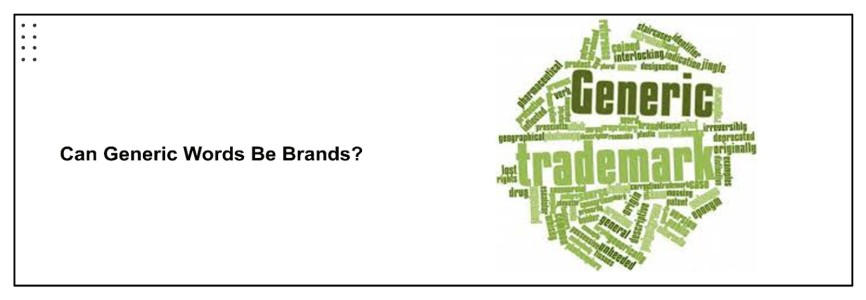



Trademark law is designed to protect distinctive brand identifiers that help consumers distinguish the goods or services of one business from another. However, a recurring concern within trademark jurisprudence is the growing attempt by businesses to claim exclusive rights over words that are generic or commonly used in everyday language.
The issue has recently attracted renewed attention as scholars and practitioners question whether the current trademark system adequately protects the public domain. While the Trade Marks Act, 1999 clearly states that generic terms cannot be monopolised, in practice businesses sometimes succeed in securing registrations over words that should remain available for all market participants.
This phenomenon raises an important question: Are generic terms slowly being captured by private trademark rights? The debate reflects a deeper tension within intellectual property law balancing the protection of brand identity with the need to preserve common language for public use.
Understanding Generic Terms in Trademark Law
At the core of trademark law lies the principle of distinctiveness. A trademark must identify the source of goods or services and distinguish them from competing products. Marks that fail to perform this function are generally not eligible for protection.
Generic terms represent the lowest level of the trademark distinctiveness spectrum. They refer directly to the class or category of goods or services themselves, rather than indicating a specific commercial source. Because they merely describe what the product is, generic terms cannot serve as trademarks.
For example, a company cannot claim exclusive rights over words like “milk” for dairy products or “computer” for electronic devices. Such terms are considered part of the public domain, meaning they must remain available for all businesses to use.
Indian trademark law reinforces this principle through Section 9 of the Trade Marks Act, 1999, which bars the registration of marks that lack distinctiveness or consist exclusively of descriptive or generic indications.
The reasoning is simple: allowing one company to monopolise a generic term would unfairly restrict competitors from describing their own products.
The Gradual Capture of Generic Words
Despite this clear legal framework, concerns have been raised that resource-rich companies are increasingly capturing generic or descriptive terms through trademark registration and enforcement strategies.
This trend often begins when businesses adopt a common word as part of their branding. Over time, extensive advertising and commercial use may create an association between the word and the company’s products. When this happens, companies may attempt to argue that the term has acquired secondary meaning—a concept that allows descriptive terms to receive trademark protection if consumers associate them primarily with a specific source.
However, the problem arises when such protection extends beyond the specific mark to effectively grant control over the underlying generic term itself.
In many cases, competitors are forced to defend themselves against trademark claims simply for using words that are necessary to describe their own goods or services. This can create a chilling effect on competition and innovation within the marketplace.
The Doctrine of Acquired Distinctiveness
One of the key legal mechanisms that allows certain descriptive words to receive protection is the doctrine of acquired distinctiveness, also known as secondary meaning.
Under this principle, a term that was originally descriptive may become distinctive through extensive and continuous use. If consumers begin to associate that term with a specific company rather than the product category, courts may grant trademark protection.
For example, courts have occasionally recognised that words initially considered descriptive may acquire distinctiveness due to long-term use and commercial reputation.
However, this doctrine must be applied carefully. If courts extend it too broadly, there is a risk that generic language could gradually be converted into private property, undermining the very purpose of trademark law.
The Problem of “Genericide”
Another challenge arises when a trademark becomes so widely used that it eventually turns into a generic term itself, a phenomenon known as “genericide.”
Genericide occurs when a brand name becomes the common name for a type of product rather than an indicator of a specific manufacturer. Classic examples include words like “aspirin,” which originally functioned as trademarks but eventually became generic terms through widespread public usage. When this happens, the trademark owner may lose exclusive rights over the term because it no longer serves as a source identifier.
This illustrates the delicate balance that trademark law must maintain. On one hand, businesses need protection for their brands. On the other hand, language must remain accessible to the public.
The Hierarchy of Trademark Distinctiveness
Trademark law often categorises marks according to their level of distinctiveness. This hierarchy helps determine whether a mark is eligible for protection.
The categories generally include:
-
Generic marks – Terms that describe the product itself. These are never protectable.
-
Descriptive marks – Words that describe characteristics or qualities of the product. These may become protectable through acquired distinctiveness.
-
Suggestive marks – Terms that hint at the nature of the product but require imagination to connect with it.
-
Arbitrary or fanciful marks – Completely invented or unrelated words that function strongly as trademarks.
Generic terms lie at the bottom of this hierarchy because they cannot identify the commercial origin of goods or services. Therefore, they are considered incompatible with trademark protection.
Judicial Approach to Generic Terms
Indian courts have repeatedly emphasised that generic words cannot be monopolised by a single entity. For instance, courts have refused to grant exclusive rights over words that merely describe the nature of the service or product. In such cases, judges have recognised that granting trademark protection over generic terms would harm competition and limit the ability of other businesses to communicate with consumers.
A recent example can be seen in decisions where courts have held that common words used in everyday language cannot be exclusively claimed as trademarks if they directly relate to the services offered.
This judicial approach reflects the broader principle that trademark law must protect both brand owners and the public interest.
The Public Domain and Fair Competition
The concept of the public domain plays a crucial role in intellectual property law. It refers to words, expressions, and ideas that are not subject to exclusive ownership and therefore remain available for use by everyone. In trademark law, this principle ensures that commonly used or generic terms remain accessible to all businesses operating in the market.
Generic words belong to the public domain because they describe the category or nature of a product rather than identifying a specific source. Businesses rely on such words to accurately communicate the type and characteristics of their goods or services. If companies were allowed to monopolise these terms through trademark protection, competitors would face serious difficulties in describing their own products.
For instance, if a company were granted exclusive rights over the word “tea,” other businesses selling tea products would struggle to market their goods using the most natural and widely understood term. They would be forced to rely on indirect or confusing descriptions, which could hinder effective communication with consumers.
Preserving the public domain therefore plays an important role in maintaining fair competition in the marketplace. It ensures that businesses can freely use generic language to describe their products while also encouraging them to develop distinctive and creative trademarks that truly identify the source of their goods. At the same time, it protects consumer interests by ensuring that product descriptions remain clear, accurate, and easily understandable.
The Role of the Trademark Registry
Another important dimension of this debate concerns the role of the Trademark Registry in evaluating applications.
The Registry is responsible for examining trademark applications and determining whether the proposed mark satisfies the requirements of the Trade Marks Act. This includes assessing whether the mark is:
-
Distinctive
-
Descriptive
-
Generic
However, critics argue that in some cases registrations may be granted too easily, allowing businesses to secure rights over terms that should arguably remain in the public domain.
Once such registrations are granted, competitors may face significant legal hurdles in challenging them.
International Perspectives
The issue of generic trademarks is not limited to India. Courts across different jurisdictions have grappled with similar questions regarding the extent to which common or descriptive terms can receive trademark protection. As global commerce and digital branding continue to evolve, legal systems around the world are increasingly confronted with disputes involving the use of generic or descriptive words as brand identifiers.
A notable example is the decision of the United States Supreme Court in the Booking.com case. In this case, the Court examined whether a term formed by combining a generic word with a domain name suffix—such as “.com”—could qualify for trademark protection. The Court ultimately held that a term like “Booking.com” may be eligible for trademark protection if consumers perceive it as identifying a specific business rather than merely describing a category of services.
Importantly, the Court clarified that the determining factor in such cases is consumer perception. If the relevant public understands the term as a brand that identifies the source of services, it may acquire distinctiveness and become eligible for trademark protection. However, if the term continues to be perceived as generic, it cannot be monopolised.
This decision reflects a broader international debate about how trademark law should adapt to the realities of the digital marketplace. As businesses increasingly rely on domain names, online platforms, and search engine visibility to build their brands, courts must carefully balance the need to protect brand identity with the need to preserve generic language within the public domain.
Challenges in the Digital Marketplace
The growth of the digital economy has further complicated the debate surrounding generic terms in trademark law. Modern businesses rely heavily on online visibility, domain names, and search engine optimisation to attract consumers. As a result, domain names have become powerful commercial identifiers that often function similarly to trademarks.
In this digital environment, companies sometimes attempt to secure trademark protection over commonly used words combined with internet identifiers, such as “.com,” “.in,” or other domain suffixes. The idea behind this strategy is that even though the underlying word may be generic, the addition of a domain suffix may create a unique identifier associated with a particular online service or platform.
Such practices can provide businesses with a significant competitive advantage, particularly in terms of brand recognition, search engine rankings, and online marketing visibility. A domain name that closely matches a commonly searched word can naturally attract a large amount of internet traffic.
However, this approach also raises important concerns. Granting trademark protection to such combinations could gradually restrict the ability of other businesses to use ordinary language when promoting their services online. As digital commerce continues to grow, courts and trademark authorities must therefore carefully balance the protection of brand identity with the need to preserve access to generic terms within the public domain.
The Need for Balanced Trademark Enforcement
The ongoing debate around generic terms highlights the need for a balanced approach to trademark enforcement. On one hand, strong trademark protection is essential for encouraging investment in branding, marketing, and product development. On the other hand, overly broad protection can stifle competition and undermine the public domain.
Courts and regulators must therefore carefully examine whether a particular mark truly functions as a source identifier or merely describes the goods themselves.
Significance of the Debate
The issue of generic terms in trademark law carries important implications for businesses, consumers, and the legal system.
Preserving the Public Domain
One of the most important goals of trademark law is to ensure that basic language remains available for everyone. Protecting the public domain helps maintain fairness and prevents the monopolisation of everyday words.
Promoting Fair Competition
If companies were allowed to claim exclusive rights over generic terms, competitors would struggle to describe their own products. Preventing such monopolies helps maintain a healthy competitive marketplace.
Encouraging Distinctive Branding
By refusing protection for generic terms, the law encourages businesses to create unique and distinctive brand identities rather than relying on common language.
Adapting to Modern Commerce
As digital marketing and online branding continue to evolve, courts must ensure that trademark principles remain relevant while still protecting consumer interests.
Conclusion
The debate over generic terms in trademark law highlights the delicate balance between protecting intellectual property and preserving the public domain.
While businesses understandably seek strong protection for their brands, the fundamental purpose of trademark law is not to grant ownership over language itself. Generic words must remain accessible to everyone, ensuring that businesses can communicate freely, and consumers can clearly understand the products they purchase.
As courts continue to confront disputes involving generic or descriptive terms, the guiding principle should remain clear: trademark protection must serve both private enterprise and the broader public interest. In a marketplace increasingly driven by branding and digital visibility, safeguarding this balance will be essential to maintaining a fair and competitive economic environment.
Frequently Asked Questions (FAQs)
Q1. What is a generic term in trademark law?
Ans. A generic term refers to a word that describes the general category or nature of a product or service rather than identifying a specific commercial source. Such terms cannot normally be protected as trademarks because they belong to the public domain.
Q2. Why are generic terms not eligible for trademark protection?
Ans. Generic terms must remain available for all businesses to use when describing their products. Granting exclusive rights over such words would restrict fair competition and prevent other companies from accurately communicating the nature of their goods or services.
Q3. What does the Trade Marks Act, 1999 say about generic terms?
Ans. Under Section 9 of the Trade Marks Act, 1999, marks that lack distinctiveness or consist exclusively of descriptive or generic indications cannot be registered as trademarks unless they have acquired distinctiveness through long and continuous use.
Q4. Can a descriptive term ever become a trademark?
Ans. Yes. A descriptive term may become eligible for trademark protection if it acquires secondary meaning, meaning consumers begin to associate the term primarily with a particular business rather than the product category.
Q5. What is meant by “genericide” in trademark law?
Ans. Genericide occurs when a trademark becomes so widely used that it turns into a generic name for a type of product. When this happens, the trademark owner may lose exclusive rights over the mark because it no longer identifies a specific commercial source.
Q6. Why is the public domain important in trademark law?
Ans. The public domain ensures that common words and expressions remain freely available for use by everyone. This prevents businesses from monopolising ordinary language and helps maintain fair competition in the marketplace.
Q7. How has the digital economy affected the debate on generic trademarks?
Ans. The rise of online commerce has intensified the issue because businesses often rely on domain names and search engine visibility. Companies sometimes seek trademark protection for generic words combined with domain suffixes like “.com,” raising concerns about restricting access to common language.
Q8. What was the significance of the Booking.com case?
Ans. In the Booking.com case, the United States Supreme Court held that a term combining a generic word with “.com” could be eligible for trademark protection if consumers perceive it as identifying a particular brand rather than a generic service category.
Q9. How do courts determine whether a term is generic or distinctive?
Ans. Courts typically examine consumer perception, market usage, advertising evidence, and the context in which the term is used to determine whether it functions as a brand identifier or merely describes the product.
Q10. Why is it important to balance trademark protection and public interest?
Ans. Trademark law must protect brand identity while also ensuring that common language remains available for all businesses and consumers. Striking this balance is essential to maintain fair competition and prevent monopolisation of everyday words.


_(b)_of_the_Trademark_Act,_1999_(1)_crop10_thumb.jpg)


_crop10_thumb.jpg)


_crop10_thumb.jpg)
_crop10_thumb.jpg)


_crop10_thumb.jpg)


_crop10_thumb.jpg)


_crop10_thumb.jpg)


_crop10_thumb.jpg)


_crop10_thumb.jpg)


_crop10_thumb.jpg)


_crop10_thumb.jpg)


_crop10_thumb.jpg)


_crop10_thumb.jpg)








_crop10_thumb.jpg)




























































_crop10_thumb.jpeg)