
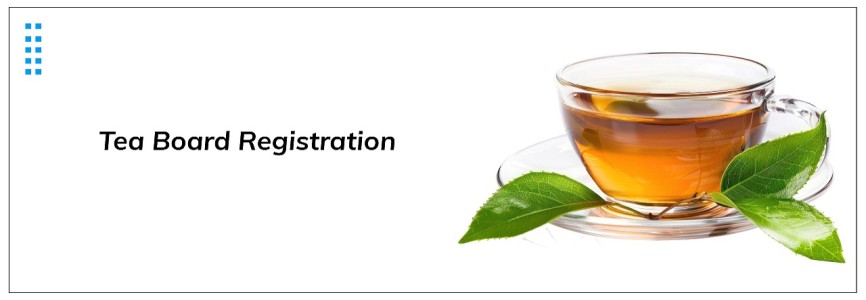



Tea Board Registration is an important requirement for businesses involved in tea manufacturing, trading, warehousing, blending, exporting, importing, and other tea-related commercial activities in India. India is one of the most recognized tea-producing countries in the world, with famous tea varieties such as Assam, Darjeeling, Nilgiri, Kangra, Dooars-Terai, Sikkim, Tripura and other regional teas.
The Tea Board of India works under the Department of Commerce, Ministry of Commerce and Industry, Government of India, and plays an important role in regulating, promoting and developing the Indian tea sector. The Tea Board itself states that tea is an industry controlled by an Act of Parliament, and the present Tea Board was set up under Section 4 of the Tea Act, 1953 on 1 April 1954.
For businesses planning to enter global tea trade, Tea Board Registration gives legal recognition and helps in export promotion, quality control, licensing, traceability, use of tea logos, participation in international trade events, and compliance with Indian tea regulations. Whether a business is exporting bulk tea, packet tea, value-added tea, flavoured tea, blended tea, orthodox tea, green tea, Darjeeling tea, Assam tea, Nilgiri tea or specialty tea, proper Tea Board compliance is necessary for smooth trade operations.
Meaning of Tea Board Registration
Tea Board Registration means registration, license, permission, certificate or recognition obtained from the Tea Board of India for carrying out tea-related business activities in a lawful manner. The type of registration depends on the nature of the business. A tea exporter may require exporter registration or Registration-Cum-Membership Certificate, while a tea warehouse may need a warehouse license. A business dealing with tea waste may have to comply with the Tea Waste Control Order. Similarly, businesses using regional tea logos such as India Tea Logo, Assam Logo, Nilgiri Logo, Dooars-Terai Logo or other notified tea marks may need separate permission from the Tea Board.
The Tea Board website provides online services for license applications, e-returns, certificate of origin, e-auction, tea waste portal, Tea Council portal, ServicePlus portal, and online payment facilities. This shows that Tea Board compliance is now largely digital and businesses can manage many regulatory requirements through online systems.
Importance of Tea Board Registration in Global Tea Trade
Tea Board Registration is important because global buyers prefer dealing with legally recognized and compliant tea businesses. In international trade, buyers, banks, customs authorities, importers, distributors and food safety agencies often verify the exporter’s registration, product origin, quality standards and documentation. A registered tea exporter is in a better position to prove business credibility and product authenticity.
Tea Board Registration also helps in export promotion. The Tea Board website has a dedicated export section and shares information related to tea exports, top exporters, notices, circulars and official trade updates. The Board also provides access to international events, domestic events and promotional support for Indian tea.
For Indian tea businesses, registration is not only a legal formality. It is also a brand-building tool. Indian tea has strong global recognition, especially Darjeeling, Assam and Nilgiri teas. Proper registration helps businesses present themselves as reliable exporters and also supports better access to international markets, trade fairs, buyer-seller meets and government-backed promotion programmes.
Legal Rules and Regulatory Base for Tea Board Registration
The main law governing the tea industry in India is the Tea Act, 1953. The Tea Board website separately lists the Tea Act, 1953 under its official “Act & Rules” section. This Act provides the legal foundation for the Tea Board, its constitution, functions, regulatory powers and control over the tea industry.
The Tea Board was established under Section 4 of the Tea Act, 1953. The objective is to regulate and develop the tea industry in India. The Tea Act and related control orders cover areas such as production, licensing, export, distribution, marketing, tea waste, warehousing, quality, promotion and data collection.
Apart from the Tea Act, the tea business may also be governed by several control orders and related regulations. The Tea Board’s Control Order page lists important regulatory instruments such as the Tea Marketing Control Order, 2003, Tea Distribution and Export Control Order, 2005, Tea Waste Control Order, 1959, Tea Warehouse Licensing Order, 1989, and various amendments. These control orders are important because different activities in tea trade may require different approvals, reporting obligations or operating conditions.
Main Legal Provisions and Control Orders
The Tea Act, 1953 provides the basic statutory structure for the Tea Board and gives it authority to regulate the tea industry. It covers matters related to the constitution of the Board, development of the tea industry, export promotion, collection of statistics, licensing, control over cultivation and other industry-related matters.
The Tea Marketing Control Order, 2003 regulates marketing-related activities in the tea sector. It is relevant for manufacturers, buyers, brokers, auction organizers and other participants in the tea marketing chain. The Tea Board’s official website lists the updated Tea Marketing Control Order, 2003 up to 2024. The Tea Distribution and Export Control Order, 2005 is relevant for tea distribution and export-related activities. Exporters should understand this order because global tea trade requires proper documentation, quality compliance and regulatory recognition.
The Tea Waste Control Order, 1959 deals with tea waste. Tea waste is a regulated item because misuse or improper disposal can affect tea quality and consumer safety. Businesses dealing with tea waste must follow the specific conditions applicable under the order. The Tea Warehouse Licensing Order, 1989 is relevant for businesses operating tea warehouses. Warehousing is important in tea trade because quality, storage conditions, traceability and auction-related movement of tea depend on proper warehouse compliance.
Who Needs Tea Board Registration?
Tea Board Registration may be required by different categories of businesses depending on their activity. Tea exporters need registration or recognition for exporting tea from India. Tea manufacturers may require factory-related compliance and licensing. Tea buyers, brokers, packers, blenders, auction participants, warehouse operators, importers and businesses dealing in tea waste may require different permissions or registration under applicable rules.
A business exporting Indian tea to countries such as UAE, Iran, Iraq, Russia, United States, United Kingdom, Germany, Japan, Australia or other markets should ensure that it has proper Tea Board registration, IEC, GST, FSSAI registration or license where applicable, export documentation and product quality compliance.
Tea startups selling premium tea online or exporting packet tea should also check whether they require Tea Board registration, FSSAI license, trademark registration, packaging compliance and export documentation. For global trade, only having a brand name is not enough. The business must also have proper legal backing and export readiness.
Types of Tea Board Registration and Permissions
Tea Board Registration is not a single uniform certificate for all tea businesses. The requirement depends on the business model. Exporters generally need registration with the Tea Board for export recognition and may also need RCMC for export benefits. Warehouses require warehouse-related licensing. Businesses using specific tea logos need logo permissions. Businesses dealing with Darjeeling tea may need additional protection and certificate of origin-related compliance because Darjeeling tea is a geographically protected product.
The Tea Board website lists regulatory activities such as license to use Nilgiri Orthodox, license to use Assam Orthodox, Darjeeling GI protection, permission to use Assam Logo, permission to use Dooars-Terai Logo, permission to use Nilgiri Logo and permission to use India Tea Logo. This shows that tea businesses must carefully identify the exact approval needed instead of assuming that one registration covers all activities.
Tea Board RCMC for Exporters
For exporters, Tea Board Registration-Cum-Membership Certificate, commonly called RCMC, is important because it recognizes the exporter for tea export activity. RCMC is generally required by exporters for availing export promotion benefits under India’s foreign trade system. It also helps in establishing that the exporter is connected with the relevant export promotion body for tea.
A tea exporter should have a valid Import Export Code issued by DGFT before applying for export-related registration. The business should also maintain correct PAN, GST, bank details, business constitution documents and product details. Exporters should ensure that the product category, business address and authorized person details are consistent across all documents.
Documents Required for Tea Board Registration
For Tea Board Registration, the applicant has to submit basic business, identity, bank, and product-related documents. The exact document list may change depending on whether the applicant is a tea exporter, manufacturer, warehouse operator, broker, blender, packer, or trader.
1. Basic Business Documents
The applicant should provide business registration documents such as Certificate of Incorporation, Partnership Deed, LLP Agreement, proprietorship proof, or any other legal business document. These documents help the Tea Board verify the legal status of the business and confirm whether the applicant is eligible to apply for registration.
2. PAN and GST Details
A copy of the PAN card of the business or applicant is required for identity and tax verification. The applicant should also provide a GST Registration Certificate, if applicable. These documents help match the business details with government records.
3. Import Export Code
For businesses involved in global tea trade, a valid Import Export Code (IEC) issued by DGFT is required. IEC is important because tea export activity cannot be carried out properly without export recognition under DGFT records.
4. Bank Details
The applicant must submit a cancelled cheque or bank certificate showing the business name, account number, IFSC code, and bank branch details. This helps verify the financial identity of the business and supports export-related transactions.
5. Address Proof
The applicant should provide proof of the registered office or business premises. This may include an electricity bill, rent agreement, ownership proof, property tax receipt, or NOC from the owner, depending on the nature of premises.
6. Identity Proof of Authorized Person
The Tea Board may require identity and address proof of the proprietor, partner, director, or authorized signatory. Documents such as Aadhaar card, PAN card, passport, voter ID, or driving license may be submitted for this purpose.
7. Authorization Letter or Board Resolution
If the application is filed by an authorized person on behalf of a company, LLP, or partnership firm, an authorization letter or board resolution should be submitted. This confirms that the person signing and submitting the application is legally permitted to act for the business.
8. Product and Business Activity Details
The applicant should provide details of the tea products and business activity. This may include whether the business deals in bulk tea, packet tea, blended tea, flavoured tea, green tea, orthodox tea, tea bags, instant tea, or tea waste. These details help the Tea Board identify the correct registration category.
9. Additional Documents, If Applicable
Depending on the business model, additional documents may be required, such as FSSAI License, factory license, warehouse details, pollution control approval, product testing report, source details, packaging details, or logo usage permission documents. Manufacturer exporters and branded tea businesses may need more supporting documents than simple merchant exporters.
The Tea Board Registration process is generally completed online through the Tea Board portal. The applicant must first identify the correct registration category because the process may differ for exporters, manufacturers, warehouse operators, brokers, blenders, packers, logo users, and businesses dealing in tea waste. The first step is to understand the exact nature of the tea business. A tea exporter may need Tea Board RCMC, while a warehouse operator may need a warehouse license. Similarly, businesses using India Tea Logo, Assam Logo, Nilgiri Logo, or Darjeeling origin claims may need separate permission. Choosing the correct registration type helps avoid delays and wrong filing. After selecting the registration category, the applicant should collect all required documents such as IEC, PAN, GST certificate, business registration proof, bank details, address proof, authorization letter, identity proof of the authorized person, and tea product details. If the applicant is a manufacturer or processor, additional documents like FSSAI License, factory details, warehouse details, product testing reports, and source details may also be required. The applicant has to visit the official Tea Board portal and create login credentials for online filing. Basic details such as business name, mobile number, email ID, IEC details, and authorized person information may be required during login or registration. Once login is created, the applicant must fill the online application form carefully. Details such as business constitution, registered office address, product category, nature of tea activity, export details, bank information, and contact details should be entered correctly. The details should match with PAN, GST, IEC, and business registration records. The applicant has to upload scanned copies of the required documents in the prescribed format. All documents should be clear, valid, and properly readable. Any mismatch in name, address, IEC, GST, or authorized signatory details may lead to query or delay in approval. After completing the form and uploading documents, the applicant has to pay the applicable government fee online. The fee may differ depending on the type of registration, license, permission, or certificate applied for. After submission, the Tea Board reviews the application and uploaded documents. If the department finds any missing detail, incorrect information, or document mismatch, it may raise a query. The applicant must reply to the query within the prescribed time and submit the corrected details or documents. Once the Tea Board is satisfied with the application and documents, it approves the registration and issues the certificate, license, permission, or RCMC, depending on the type of application filed. The applicant can download the certificate from the portal and use it for tea business, export documentation, buyer verification, and compliance purposes. After registration, the business should maintain proper records of tea purchase, sale, export, storage, blending, source details, invoices, testing reports, and other compliance documents. If the registration or license requires renewal, the business should renew it before expiry to avoid interruption in tea trade activities.Step-by-Step Process for Tea Board Registration
Step 1: Identify the Correct Registration Type
Step 2: Collect Required Documents
Step 3: Create Login on the Tea Board Portal
Step 4: Fill the Online Application Form
Step 5: Upload Documents
Step 6: Pay the Government Fee
Step 7: Application Verification by Tea Board
Step 8: Approval and Certificate Issuance
Step 9: Maintain Records and Renew on Time
Tea Board Registration Fees
The fee for Tea Board Registration depends on the type of registration, license or permission required. Exporter registration, warehouse license, logo permission, certificate of origin, flavoured tea registration and other services may have different fee structures. Since fees and portal charges may change through circulars or official updates, businesses should verify the applicable fee on the Tea Board portal before filing the application.
Professional charges may also apply if the exporter takes assistance for document preparation, application filing, reply to queries, renewal, modification or compliance advisory. Businesses should also consider indirect compliance costs such as FSSAI license, product testing, packaging compliance, trademark registration, export documentation and logistics-related certifications.
Validity and Renewal of Tea Board Registration
The validity of Tea Board Registration depends on the category of registration or license. Some registrations may require annual renewal, while some permissions may be valid for a specific period. Exporters should not treat registration as a one-time activity. Renewal, modification and update of business details are equally important.
If there is any change in business address, constitution, ownership, authorized signatory, warehouse, product category, brand name or manufacturing unit, the exporter should update the records with the Tea Board as required. The Tea Board’s latest news section also shows regular updates, revised guidelines and office orders, which businesses should monitor for compliance.
Quality Compliance in Global Tea Trade
Quality is one of the most important factors in global tea trade. International buyers check tea quality, moisture level, pesticide residue, origin, grade, packaging, labelling and food safety compliance. Indian tea exporters should ensure that their products meet the standards required by the importing country.
Recent updates show increased regulatory attention on quality testing of imported and exported tea. Reports in 2026 stated that the Tea Board was moving toward quality testing and empanelment of agencies to check tea quality, especially due to concerns around imported tea being blended and re-exported. Another recent report stated that mandatory quality testing for imported tea consignments was planned from 1 May 2026 to control substandard tea and protect the image of Indian tea.
For exporters, this means quality documentation, source declaration, testing and traceability will become more important. Businesses should maintain purchase records, garden or supplier details, blending records, packing records, lab reports and export documents properly.
Tea Mark and Recent Quality Update
A recent development in the tea sector is the introduction of “Tea Mark” as a quality assurance identifier. Reports in March 2026 stated that Tea Board introduced Tea Mark as a voluntary quality certification and assurance identifier, showing that tea has been tested and verified as per FSSAI parameters.
For exporters and premium tea brands, Tea Mark may become useful for building buyer confidence. Since it is voluntary, it may not restrict trade, but businesses focusing on high-quality retail tea, premium tea, e-commerce tea exports or branded packet tea may benefit from such quality recognition.
Certificate of Origin and Darjeeling Tea Compliance
Certificate of Origin is important when the buyer or importing country wants proof of origin. It becomes especially important for regional and GI-tagged teas. The Tea Board website provides a separate eService for Certificate of Origin related to Darjeeling tea.
Darjeeling tea is one of India’s most valuable tea identities and is protected as a geographical indication. Businesses dealing with Darjeeling tea must be careful about sourcing, labelling, origin claims and export documents. Misuse of regional names can lead to legal risk, buyer disputes and regulatory action. Similarly, businesses using Assam, Nilgiri, Kangra, Dooars-Terai or India Tea identity should ensure that they have proper permission and supporting records.
Packaging and Labelling Compliance
Tea exporters must follow packaging and labelling requirements under Indian law as well as the law of the destination country. For domestic compliance, FSSAI labelling standards, Legal Metrology Packaged Commodities Rules, batch number, net quantity, manufacturer details, importer details, best before date, ingredients, nutritional information, allergen declaration and other applicable requirements should be checked.
For export markets, labelling may require country-specific details such as importer name, country of origin, product grade, organic certification, pesticide residue declaration, language translation, barcode, health warnings or nutrition format. If the tea is flavoured, herbal blended, wellness tea or infused tea, product composition and permitted ingredient compliance becomes even more important.
Role of FSSAI in Tea Export Business
Tea is a food product. Therefore, FSSAI compliance is relevant for tea manufacturers, packers, relabellers, marketers and exporters. A tea business may need FSSAI registration or license depending on turnover, scale and nature of activity. Exporters should ensure that the product meets food safety standards before export.
FSSAI compliance becomes very important in case of flavoured tea, instant tea, tea premix, masala tea, herbal blends and value-added tea products. If the product includes additional ingredients, the business must check whether those ingredients are permitted and whether the label correctly declares them.
Other Licenses Required with Tea Board Registration
Tea Board Registration alone may not be enough for global tea trade. A tea exporter may also need Import Export Code from DGFT, GST registration, FSSAI license, trademark registration for brand protection, Legal Metrology registration for packaged goods, shop and establishment registration, factory license if manufacturing is involved, pollution control approval if applicable, organic certification if exporting organic tea, and certificate of origin where required. If the business exports through e-commerce platforms or international marketplaces, it may also need marketplace compliance, payment gateway compliance, product listing compliance and international packaging standards.
Common Reasons for Delay or Rejection
Tea Board Registration may get delayed if the applicant selects the wrong registration category, uploads unclear documents, provides mismatched business details, submits incorrect IEC or GST details, fails to provide proper authorization, or does not respond to departmental queries on time.
Another common issue is incomplete product information. Tea exporters must clearly mention whether they deal in bulk tea, packet tea, blended tea, orthodox tea, green tea, flavoured tea, instant tea, tea bags, tea waste or specialty tea. If the product category is not clear, the department may ask for clarification. Businesses using regional tea names without proper sourcing or permission may also face compliance issues. For example, using “Darjeeling” on a product without proper origin support can create serious legal risk.
Penalties and Consequences of Non-Compliance
Non-compliance with Tea Board rules can lead to cancellation, suspension, refusal of renewal, penalties, restriction on business activity, loss of export benefits and reputational damage. If a business misuses a registration certificate, submits false information, violates control orders, mislabels tea origin, deals in tea waste unlawfully or fails to maintain required records, the Tea Board may take action under applicable law.
Apart from regulatory action, non-compliance can also affect export orders. Foreign buyers may cancel contracts if they find issues in quality, origin, documentation or legal status. Banks, shipping companies and customs agents may also raise concerns where export documents are incomplete.
Recent Updates for Tea Exporters
Tea exporters should regularly monitor Tea Board notices, circulars, office orders and guidelines. The Tea Board’s official website shows recent updates such as estimated production, office orders, monthly auction prices, tenders and revised guidelines. The Control Order page also shows that the Tea Marketing Control Order, 2003 has an updated version up to 2024 and several amendments are available for reference.
Recent industry updates also show a stronger focus on quality testing, import monitoring, re-export control and voluntary quality certification through Tea Mark. For exporters, the message is clear: documentation, traceability, product testing and truthful origin claims are becoming more important in global tea trade.
Why Tea Board Registration is Important for Export Growth
Tea Board Registration helps Indian exporters enter global trade with better confidence. It gives recognition, supports export promotion, improves buyer trust and helps businesses participate in government-backed tea development activities. For small tea brands and startups, registration also creates a professional identity.
Global tea trade is competitive. Countries like Sri Lanka, Kenya, China, Vietnam and Japan have strong tea export systems. Indian exporters need to compete not only on price but also on quality, origin, branding and compliance. Tea Board Registration helps businesses align with this professional export ecosystem.
Conclusion
Tea Board Registration is a key legal requirement for businesses involved in tea export and related tea trade activities in India. It supports legal recognition, export promotion, quality assurance, origin protection and regulatory compliance. The Tea Act, 1953, Tea Marketing Control Order, Tea Distribution and Export Control Order, Tea Waste Control Order and Tea Warehouse Licensing Order create the legal base for tea business regulation in India.
For global tea trade, businesses should not look at Tea Board Registration as only a certificate. It is part of a larger compliance system that includes IEC, GST, FSSAI, packaging rules, quality testing, certificate of origin, trademark protection and destination-country requirements. A well-compliant tea exporter can build stronger buyer confidence, avoid legal risk and grow smoothly in international markets.
Frequently Asked Questions (FAQs)
1. What is Tea Board Registration?
Ans: Tea Board Registration is the legal registration or permission obtained from the Tea Board of India for carrying out tea-related business activities such as export, warehousing, marketing, logo use, flavoured tea registration or other regulated activities.
2. Is Tea Board Registration mandatory for tea export?
Ans: Yes, tea exporters should obtain proper Tea Board registration or RCMC for export-related recognition and compliance. It helps in export documentation, buyer confidence and access to export promotion support.
3. Which law governs Tea Board Registration?
Ans: The main law is the Tea Act, 1953. The Tea Board was established under Section 4 of the Tea Act, 1953. Other control orders also apply depending on the activity.
4. What documents are required for Tea Board Registration?
Ans: Common documents include IEC, PAN, GST certificate, business registration proof, bank details, address proof, identity proof of authorized signatory, authorization letter, product details and other activity-specific documents.
5. Do tea exporters need FSSAI license?
Ans: Yes, tea is a food product, so FSSAI registration or license may be required depending on the nature and scale of business. It is especially important for packed tea, flavoured tea and blended tea.
6. What is Tea Board RCMC?
Ans: Tea Board RCMC means Registration-Cum-Membership Certificate issued for exporters dealing in tea. It helps exporters get recognized under the relevant export promotion body and avail export-related benefits.
7. Can a tea startup apply for Tea Board Registration?
Ans: Yes, tea startups dealing in tea export, packet tea, premium tea, flavoured tea or global tea trade can apply for relevant Tea Board registration after obtaining basic business registrations such as IEC, GST and FSSAI where applicable.
8. Is permission required to use India Tea Logo or Assam Tea Logo?
Ans: Yes, permission may be required to use specific tea logos or regional tea marks. The Tea Board website lists separate permissions for India Tea Logo, Assam Logo, Nilgiri Logo and Dooars-Terai Logo.
9. What happens if a business exports tea without proper compliance?
Ans: The business may face regulatory action, cancellation of registration, export documentation issues, buyer disputes, loss of benefits and reputational damage.
10. What is the latest update in tea quality compliance?
Ans: Recent updates show increased focus on tea quality testing, import monitoring and voluntary Tea Mark certification for quality assurance. Exporters should maintain proper testing, sourcing and traceability records.


_crop10_thumb.jpg)


_Rules,_2025_learn_crop10_thumb.jpg)











_crop10_thumb.jpg)


 in BIS FMCS_learn_crop10_thumb.jpg)


_crop10_thumb.jpg)



_crop10_thumb.jpg)


_Code C-888_learn_crop10_thumb.jpeg)
_learn_crop10_thumb.jpg)





_Certificate_learn_crop10_thumb.jpg)

_Certificate_(1)_crop10_thumb.jpg)





_learn_crop10_thumb.jpg)

_crop10_thumb.jpg)


_Scheme_learn_crop10_thumb.jpg)


_learn_crop10_thumb.jpg)