


Intellectual Property Rights are valuable business assets. A trademark protects brand identity, copyright protects creative work, patents protect inventions, designs protect visual appearance of products, and trade secrets protect confidential business information. When these rights are copied or misused, the owner may immediately think of filing a suit for infringement. Litigation is an important remedy because courts can grant injunctions, damages, accounts of profits and other legal reliefs. However, litigation is not always the best first step. In many IP infringement matters, mediation can provide a faster, more confidential and business-friendly solution.
Meaning of Mediation in IP Disputes
Mediation is a process where the parties try to settle their dispute with the help of a neutral mediator. The mediator does not decide the case like a judge. The mediator helps the parties discuss the issue, understand each other’s position and arrive at a settlement. In IP disputes, this method is useful because many disputes are commercial in nature. The parties may agree on licensing, royalty, rebranding, restricted use, withdrawal of opposition, modification of packaging, transfer of domain name, removal of infringing content or payment of settlement amount. These solutions may not always be available in the same flexible manner through litigation. The legal framework in India now gives strong support to mediation. The Mediation Act, 2023 recognizes mediation as a formal dispute resolution process. Section 3 of the Act contains important definitions. Section 4 deals with mediation agreements. Section 5 provides for pre-litigation mediation.
Section 15 explains the conduct of mediation and states that the mediator must act in an independent, neutral and impartial manner. Section 16 explains the role of the mediator in helping parties reach voluntary resolution. Section 18 provides the time limit for completion of mediation. Section 19 deals with mediated settlement agreements. Section 22 protects confidentiality, and Section 23 deals with privilege and admissibility of mediation communications. Section 27 provides that a mediated settlement agreement is final and binding and can be enforced like a judgment or decree of the court. Section 28 provides limited grounds for challenging such settlement agreement, including fraud, corruption and impersonation. Section 30 also recognizes online mediation.
Relevant Trademark Act 1999 Sections
Section 89 of CPC and Court-Referred Mediation
Apart from the Mediation Act, Section 89 of the Code of Civil Procedure, 1908 is also important. It allows the court to refer disputes to alternative dispute resolution methods such as arbitration, conciliation, judicial settlement, Lok Adalat and mediation, where the court finds that there are elements of settlement. In IP disputes pending before courts, Section 89 CPC may be used where the court feels that the dispute can be resolved through settlement.
Section 12A of Commercial Courts Act, 2015
Section 12A of the Commercial Courts Act, 2015 is very important in commercial IP disputes. Many IP infringement suits are treated as commercial suits because they involve business rights, market goodwill and commercial value. Section 12A says that a commercial suit which does not seek urgent interim relief shall not be instituted unless the plaintiff first exhausts the remedy of pre-institution mediation. This means that where there is no urgent need for immediate court protection, the party should first attempt mediation before filing a commercial suit.
Urgent Interim Relief in IP Matters
Section 12A does not completely stop IP owners from approaching the court. If the IP owner needs urgent interim relief, such as an immediate injunction against ongoing infringement, the suit may be filed without first going through pre-institution mediation. This is important in IP cases because delay may cause serious damage to goodwill, brand value, market share and consumer trust. For example, if counterfeit goods are already being sold in the market or a copyrighted work is being widely copied online, waiting for mediation may harm the rights holder further.
Important Case Laws on Mediation and IP Infringement
Patil Automation Pvt. Ltd. v. Rakheja Engineers Pvt. Ltd.
The Supreme Court in Patil Automation Pvt. Ltd. v. Rakheja Engineers Pvt. Ltd. held that Section 12A of the Commercial Courts Act is mandatory. The Court observed that where a commercial suit is filed without complying with Section 12A and no urgent interim relief is sought, the plaint can be rejected under Order VII Rule 11 of the CPC. This case made it clear that pre-institution mediation is not a mere formality. It is a statutory requirement in suitable commercial disputes.
Yamini Manohar v. T.K.D. Keerthi
The Supreme Court later examined the issue of urgent interim relief in Yamini Manohar v. T.K.D. Keerthi. The Court explained that the expression “contemplate any urgent interim relief” must be examined from the facts of the case, the plaint and the documents filed by the plaintiff. The urgent relief should not be used as a false excuse to bypass Section 12A. At the same time, if real urgency is shown, the plaintiff cannot be forced into mediation before approaching the court.
Novenco Building and Industry A/S v. Xero Energy Engineering Solutions Pvt. Ltd.
In Novenco Building and Industry A/S v. Xero Energy Engineering Solutions Pvt. Ltd., the Supreme Court considered Section 12A in the context of intellectual property infringement. The dispute involved allegations of patent and design infringement. The Court recognized that continuing infringement may create urgency because every act of unauthorized manufacture or sale may cause fresh harm to the IP owner. The Court clarified that delay alone may not defeat urgency if infringement is continuing. This judgment is important for IP owners because it shows that urgent court action may be justified where infringement is ongoing and the plaintiff seeks immediate protection.
Afcons Infrastructure Ltd. v. Cherian Varkey Construction Co. Pvt. Ltd.
Another important case is Afcons Infrastructure Ltd. v. Cherian Varkey Construction Co. Pvt. Ltd., where the Supreme Court explained the scope of Section 89 CPC and the manner in which courts may refer disputes to alternative dispute resolution. The judgment helped in giving practical meaning to court-referred mediation. Though the case was not an IP infringement matter, it is important for understanding how mediation works within the court system.
Salem Advocate Bar Association v. Union of India
In Salem Advocate Bar Association v. Union of India, the Supreme Court supported the use of alternative dispute resolution under Section 89 CPC. The Court recognized that ADR mechanisms help reduce the burden on courts and encourage settlement. This case is often referred to while discussing mediation and court-referred settlement in India.
Mediation in Trademark Infringement
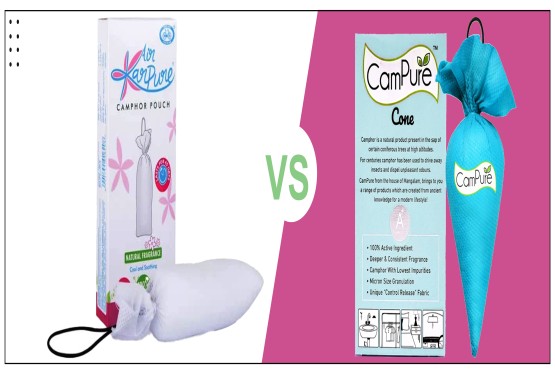
In the area of trademark law, mediation can be especially effective. Under the Trade Marks Act, 1999, Section 28 gives the registered proprietor the exclusive right to use the trademark registration. Section 29 deals with infringement of a registered trademark. Section 27 preserves the common law remedy of passing off. Section 134 deals with jurisdiction for trademark suits, and Section 135 provides reliefs such as injunction, damages, accounts of profits, delivery-up and destruction of infringing labels and marks. Although these sections provide strong litigation remedies, mediation may still help parties resolve the dispute through coexistence agreements, change in logo, restricted use, undertaking not to use the mark, or phased withdrawal from the market.
For example, where two businesses use similar brand names but operate in different territories or different product categories, mediation may help them settle the matter without long litigation. One party may agree to change its packaging or add a disclaimer. Another party may agree to stop using the disputed mark after clearing existing stock. Such practical arrangements are easier to achieve through mediation than through a court judgment.
Mediation in Copyright Infringement
In copyright disputes, the Copyright Act, 1957 provides several remedies. Section 51 defines when copyright is infringed. Section 55 gives civil remedies for infringement, including injunction and damages. Section 62 provides jurisdiction for copyright suits. Section 63 provides criminal punishment for certain copyright offences. Copyright disputes involving photographs, videos, software, website content, music, artistic work, literary content and digital posts can often be settled through mediation. The infringer may agree to remove the content, pay licence fees, give credit, stop further use or enter into a future licensing arrangement.
Mediation in Patent Infringement
In patent matters, the Patents Act, 1970 gives the patentee exclusive rights under Section 48. Section 104 deals with suits for infringement, and Section 108 provides reliefs in patent infringement suits, including injunction, damages or accounts of profits. Patent litigation can be expensive and technical. It may require expert evidence, claim construction and detailed examination of prior art. Mediation may help parties settle by way of licensing, cross-licensing, royalty payment, technology transfer or restricted use. However, if the infringement is continuing and urgent relief is required, the patentee may directly approach the court.
Mediation in Design Infringement
In design disputes, Section 22 of the Designs Act, 2000 deals with piracy of registered design. Design disputes are common in industries such as fashion, furniture, packaging, jewellery, consumer goods and lifestyle products. Mediation can help parties agree on stopping use of the copied design, changing the appearance of the product, destroying infringing stock or paying compensation. This saves time and allows businesses to move forward.
Advantages of Mediation over Litigation in IP Disputes
Mediation has several advantages over litigation in IP infringement matters. The first advantage is speed. IP rights often lose value if enforcement is delayed. A court case may take months or years, while mediation can be completed in a shorter time. The second advantage is cost. Litigation involves court fees, lawyer fees, evidence, documentation and repeated hearings. Mediation is generally less costly. The third advantage is confidentiality. IP disputes may involve trade secrets, technical know-how, business plans, licensing terms, customer data and market strategy. Mediation protects privacy and reduces the risk of sensitive information becoming public.
Preservation of Business Relationships
Another advantage is preservation of business relationships. IP disputes may arise between licensees, distributors, franchisees, former employees, vendors, collaborators or business partners. Litigation can damage relationships permanently. Mediation gives the parties a chance to settle the dispute while preserving future commercial possibilities. This is very useful where both sides operate in the same industry and may still benefit from future cooperation.
Flexible and Creative Settlement Options
Mediation also gives space for creative settlement. A court generally grants legal relief based on the statute and facts. Mediation allows parties to design their own terms. For example, parties may agree on brand modification, use of a different colour scheme, transfer of social media handles, removal of e-commerce listings, domain name transfer, public clarification, apology, future licensing or quality control terms. This flexibility makes mediation very suitable for IP disputes.
When Litigation May Be Better than Mediation
Mediation is not suitable in every case. If the infringement is deliberate, large-scale or repeated, litigation may be necessary. If counterfeit goods are being sold, piracy is widespread, evidence may be destroyed, or the infringer is acting in bad faith, the rights holder may need immediate court protection. In such cases, injunction, search and seizure, appointment of local commissioner, blocking orders or other urgent reliefs may be required. Mediation may also not work if the infringer is not willing to cooperate.
Choosing the Right Strategy
The correct approach is not to choose mediation blindly or litigation blindly. The rights holder should first examine the nature of the infringement, urgency, evidence, commercial impact and chances of settlement. If the dispute can be resolved through business terms, mediation should be preferred. If urgent protection is needed, litigation may be the better remedy. In many cases, both methods can work together. A party may file a suit for urgent relief and later explore mediation during the proceedings. A good mediated settlement in an IP infringement matter should be carefully drafted. It should clearly mention the intellectual property involved, rights of the owner, conduct complained of, undertakings by the alleged infringer, payment terms, timelines, future restrictions, confidentiality clause and consequences of breach. If the matter is already before a court, the settlement may be recorded before the court. This makes the settlement stronger and reduces future disputes.
Conclusion
Mediation is a practical alternative to litigation in IP infringement matters. It saves time, reduces cost, protects confidentiality and allows flexible settlement. Indian law now supports mediation through the Mediation Act, 2023, Section 89 CPC and Section 12A of the Commercial Courts Act. At the same time, courts have made it clear that urgent IP matters, especially cases of continuing infringement, may require immediate judicial relief.
The best strategy is to use mediation where settlement is possible and litigation where urgent protection is necessary. For businesses, creators and IP owners, mediation is not a weak option; it is a smart legal and commercial tool for protecting rights with less conflict.
FAQs
Q1. What is mediation in IP infringement disputes?
Ans. Mediation in IP infringement disputes is a settlement process where both parties try to resolve the issue with the help of a neutral mediator. The mediator does not pass a judgment but helps the parties reach a practical solution such as licensing, compensation, rebranding, withdrawal of use or removal of infringing material.
Q2. Is mediation legally recognized in India?
Ans. Yes, mediation is legally recognized in India. The Mediation Act, 2023 gives statutory recognition to mediation and mediated settlement agreements. Section 89 of the CPC also allows courts to refer disputes to mediation, and Section 12A of the Commercial Courts Act, 2015 provides for pre-institution mediation in commercial disputes where urgent interim relief is not required.
Q3. Is pre-institution mediation mandatory in IP infringement cases?
Ans. Pre-institution mediation may be mandatory in IP infringement cases if the dispute is treated as a commercial dispute and the plaintiff is not seeking urgent interim relief. Section 12A of the Commercial Courts Act requires such mediation before filing the suit. However, if urgent injunction or immediate protection is needed, the plaintiff may directly approach the court.
Q4. Can an IP owner directly file a suit without mediation?
Ans. Yes, an IP owner can directly file a suit if there is urgency, such as ongoing infringement, sale of counterfeit goods, misuse of a trademark, online piracy or risk of serious loss. Courts may allow direct filing where urgent interim relief is required to protect the intellectual property rights.
Q5. Which case law made Section 12A mandatory?
Ans. In Patil Automation Pvt. Ltd. v. Rakheja Engineers Pvt. Ltd., the Supreme Court held that Section 12A of the Commercial Courts Act is mandatory. If a commercial suit is filed without following Section 12A and no urgent interim relief is sought, the plaint may be rejected.
Q6. Why is mediation useful in trademark disputes?
Ans. Mediation is useful in trademark disputes because parties can settle issues through coexistence agreements, change in logo, restricted use, rebranding, undertaking not to use the mark or phased removal of infringing products from the market. These solutions are often quicker and more practical than long litigation.
Q7. Can copyright infringement disputes be settled through mediation?
Ans. Yes, copyright infringement disputes can be settled through mediation. The parties may agree on removal of copied content, payment of licence fees, giving proper credit, stopping future use or entering into a licensing agreement. This is common in disputes involving photos, videos, music, software, website content and digital material.
Q8. Is mediation suitable for patent infringement cases?
Ans. Mediation can be suitable for patent infringement cases where parties are open to commercial settlement. The settlement may include licensing, royalty payments, cross-licensing, technology transfer or restricted use. However, if infringement is continuing and urgent protection is needed, litigation may be more suitable.
Q9. What are the main benefits of mediation over litigation in IP matters?
Ans. The main benefits of mediation are faster resolution, lower cost, confidentiality, flexible settlement terms and preservation of business relationships. Mediation also gives parties more control over the outcome compared to litigation.
Q10. When is litigation better than mediation in IP infringement?
Ans. Litigation is better where infringement is deliberate, large-scale or repeated, or where counterfeit goods, piracy, evidence destruction or bad faith conduct is involved. In such cases, the IP owner may need urgent injunction, search and seizure, blocking orders or other court directions.
Q11. Is a mediated settlement agreement enforceable?
Ans. Yes, under the Mediation Act, 2023, a mediated settlement agreement is binding on the parties and can be enforced in the same manner as a judgment or decree of the court, subject to the provisions of the Act.
Q12. Can mediation protect confidentiality in IP disputes?
Ans. Yes, confidentiality is one of the major advantages of mediation. IP disputes often involve trade secrets, technical details, business plans, licensing terms and market strategies. Mediation allows parties to discuss these matters privately without making sensitive information public.
Q13. Can courts refer IP disputes to mediation?
Ans. Yes, courts can refer IP disputes to mediation under Section 89 of the CPC if the court finds that there is a possibility of settlement. Courts may encourage parties to mediate, especially where the dispute is commercial and can be resolved through mutually agreed terms.
Q14. What should be included in an IP mediation settlement agreement?
Ans. An IP mediation settlement agreement should include details of the intellectual property involved, rights of the owner, settlement terms, undertakings, payment details, timelines, future restrictions, confidentiality clause and consequences of breach.
Q15. Is mediation a weak option in IP infringement cases?
Ans. No, mediation is not a weak option. It is a smart legal and commercial strategy where the dispute can be settled without long litigation. It helps protect rights while saving time, cost and business relationships.


_(b)_of_the_Trademark_Act,_1999_(1)_crop10_thumb.jpg)


_crop10_thumb.jpg)


_crop10_thumb.jpg)
_crop10_thumb.jpg)


_crop10_thumb.jpg)


_crop10_thumb.jpg)


_crop10_thumb.jpg)


_crop10_thumb.jpg)


_crop10_thumb.jpg)


_crop10_thumb.jpg)


_crop10_thumb.jpg)


_crop10_thumb.jpg)


_crop10_thumb.jpg)









_crop10_thumb.jpg)






















































_crop10_thumb.jpeg)