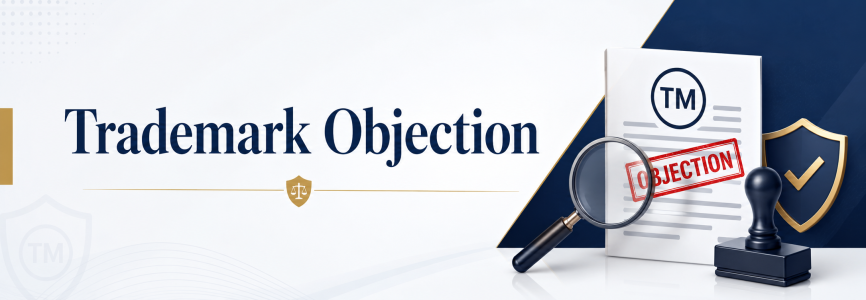



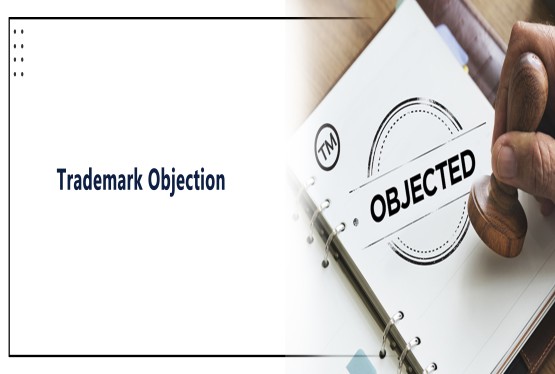
A trademark is one of the most valuable assets of a business. It protects the brand name, logo, slogan, label, tagline, packaging style or any other mark that helps customers identify the goods or services of one business from another. When a business files a trademark application in India, the application is examined by the Trademark Registry. If the Examiner finds any issue in the application, an Examination Report is issued. This issue is commonly known as a trademark objection.
A trademark objection does not mean that the trademark application is rejected. It simply means that the Registry has raised certain concerns and the applicant must submit a proper reply with legal arguments and supporting documents. If the reply is strong and satisfactory, the application may move forward for acceptance and advertisement in the Trademark Journal. If the reply is weak, incomplete or not filed on time, the application may be refused or treated as abandoned. Trademark objection handling is an important legal step because it decides whether the brand can move ahead towards registration or not. A well-drafted reply can save the application, protect the brand and avoid the need for fresh filing. This guide explains the meaning, eligibility, legal grounds, process, documents, common mistakes and FAQs related to trademark objection handling in India.
Meaning of Trademark Objection
A trademark objection is an official objection raised by the Trademark Examiner after examining a trademark application. The objection is communicated through an Examination Report. The Examiner checks whether the applied mark is legally registrable, whether it is distinctive, whether it is similar to any earlier mark, whether the goods or services are properly described and whether the application complies with the Trade Marks Act, 1999 and Trade Marks Rules, 2017.
The objection may be based on legal grounds, procedural grounds or documentary defects. For example, the Examiner may object because the mark is descriptive, generic, similar to an earlier registered mark, wrongly classified, lacking distinctiveness or filed without proper documents such as Power of Attorney.
The applicant must carefully read the Examination Report and respond to each objection with facts, legal reasoning, documents and evidence of brand use, wherever applicable.
Eligibility for Trademark Objection Reply
The following persons or entities can file a reply to a trademark objection:
- Individual applicant who has filed a trademark application in personal name.
- Proprietorship firm applying through the proprietor.
- Partnership firm applying through authorised partner.
- Limited Liability Partnership applying through authorised partner or representative.
- Private limited company or public limited company applying through authorised signatory.
- Startup or MSME applicant whose trademark application is under objection.
- Trust, society, NGO or Section 8 company using a brand name.
- Foreign applicant who has filed trademark application in India.
- Legal representative or attorney authorised by the applicant.
- Trademark agent or advocate appointed through Power of Attorney.
A trademark objection reply can be filed only when the application has received an Examination Report or the application status shows that an objection has been raised. The reply should be filed within the prescribed time and must be supported by proper documents.
Legal Grounds for Trademark Objection
Trademark objections are generally raised under the Trade Marks Act, 1999. The most common objections are under Section 9 and Section 11.
Objection under Section 9 – Absolute Grounds for Refusal
Section 9 deals with absolute grounds for refusal. These objections are related to the nature of the mark itself. The Examiner may object if the mark is not capable of distinguishing the goods or services of one person from another.
A Section 9 objection may arise when:
- The mark is descriptive of the goods or services.
- The mark directly indicates quality, quantity, purpose, value or nature of goods or services.
- The mark is generic or commonly used in trade.
- The mark lacks distinctive character.
- The mark has become customary in the market.
- The mark may deceive the public.
- The mark contains prohibited or offensive matter.
For example, if a person applies for the mark “SWEET” for sweets or “FAST DELIVERY” for courier services, the Registry may object because the mark describes the nature or quality of the service. Such marks are usually weak unless the applicant can show that the mark has acquired distinctiveness through long and continuous use.
To reply to a Section 9 objection, the applicant must show that the mark is unique, coined, suggestive or capable of distinguishing the business. If the mark is already in use, the applicant may provide invoices, advertisements, website screenshots, social media pages, packaging, customer proof and other evidence to show that the public associates the mark with the applicant.
Objection under Section 11 – Relative Grounds for Refusal
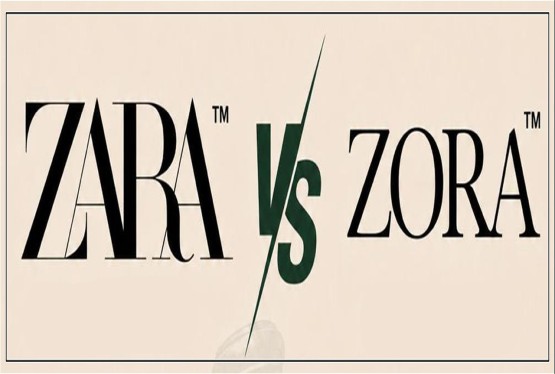
Section 11 deals with relative grounds for refusal. This objection is raised when the applied mark is identical or similar to an earlier trademark and there may be a likelihood of confusion among the public.
A Section 11 objection may arise when:
- A similar trademark is already registered.
- A similar trademark application is already pending.
- The goods or services are same or related.
- The mark looks, sounds or means similar to an earlier mark.
- The public may believe that both brands are connected.
- The earlier mark is well-known or has market reputation.
For example, if an applicant files “STARBUCK” for café services, it may be objected due to similarity with an earlier well-known brand. Similarly, marks that are phonetically similar may also face objection even if spelling is different. To reply to a Section 11 objection, the applicant must compare the applied mark with the cited marks. The reply should explain the difference in name, pronunciation, visual appearance, meaning, logo style, goods, services, trade channel, customer base and overall commercial impression. If the cited mark is not actually similar, inactive, abandoned or related to different goods or services, this should be clearly explained.
Other Common Trademark Objections
Apart from Section 9 and Section 11, the Registry may raise other objections such as:
1. Wrong Classification
Trademark applications must be filed in the correct class according to the Nice Classification. If goods or services are filed under the wrong class, the Examiner may raise an objection. For example, clothing falls under Class 25, restaurant services under Class 43 and legal services under Class 45.
2. Vague Goods or Services Description
If the description of goods or services is too broad, unclear or wrongly written, the Examiner may ask for clarification. The applicant should provide a proper and specific description.
3. Missing Power of Attorney
If the application is filed through an attorney or trademark agent, Power of Attorney may be required. If it is not filed or is not properly signed, the Examiner may raise an objection.
4. User Affidavit Not Filed
If the applicant claims prior use of the trademark, the Registry may require a user affidavit with evidence. If the applicant fails to support the claimed user date, the objection may continue.
5. Mark Contains Restricted Words
Some words such as government-related terms, national symbols, official emblems or misleading words may attract objection. Such words must be used carefully and may require permission or modification.
6. Name of Living Person
If the trademark contains the name or image of a living person, consent may be required. Without consent, the Registry may raise an objection.
Trademark Objection Reply Process
Step 1: Check the Examination Report
The first step is to download and read the Examination Report from the Trademark Registry portal. The applicant should identify the exact objection, legal section, cited marks and documents required.
Step 2: Understand the Ground of Objection
The reply strategy depends on the ground of objection. A Section 9 objection requires arguments on distinctiveness. A Section 11 objection requires comparison with earlier marks. A procedural objection requires correction or document submission.
Step 3: Conduct Trademark Search
Before drafting the reply, a detailed trademark search should be conducted. This helps in understanding the cited marks, their status, class, proprietor name, goods or services and actual similarity. It also helps in preparing stronger arguments.
Step 4: Collect Supporting Documents
The applicant should collect all relevant documents such as invoices, website screenshots, packaging, brochures, advertisements, social media proof, GST certificate, MSME certificate, incorporation certificate, product images and user affidavit, wherever needed.
Step 5: Draft the Reply
The reply should be professional, clear and legally strong. It should answer each objection separately. The reply should not be emotional or casual. It must explain why the trademark deserves acceptance.
A good reply generally includes:
- Details of the trademark application.
- Summary of the objection.
- Legal reply to each ground.
- Difference between applied mark and cited marks.
- Distinctiveness of the mark.
- Evidence of use, if applicable.
- Documents attached.
- Prayer for acceptance and advertisement.
Step 6: File the Reply Online
The reply must be filed online within the prescribed time. The applicant must ensure that the reply and supporting documents are uploaded correctly.
Step 7: Attend Show Cause Hearing, If Required
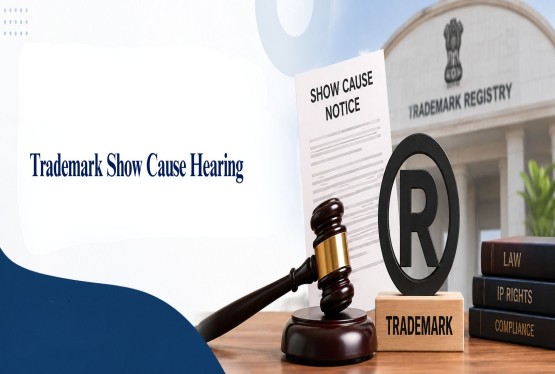
If the Examiner is not satisfied with the written reply, the matter may be fixed for show cause hearing. During the hearing, the applicant or authorised representative must explain the case before the Hearing Officer. Written submissions and documents may also be filed.
Step 8: Acceptance, Refusal or Further Action
After reviewing the reply or hearing submissions, the Registry may accept the application, advertise it in the Trademark Journal, impose conditions or refuse the application. If refused, the applicant may consider appeal or fresh filing depending on the case.
Documents Required for Trademark Objection Reply
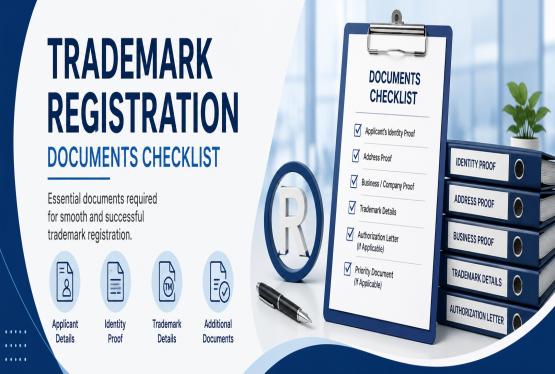
The documents depend on the nature of objection. Common documents include:
- Copy of Examination Report.
- Trademark application details.
- Power of Attorney, if filed through attorney or agent.
- Authorisation letter, if required.
- User affidavit, if prior use is claimed.
- Invoices showing sale of goods or services.
- Product packaging or label images.
- Website screenshots.
- Social media page screenshots.
- Advertisement and marketing material.
- Business registration proof.
- GST certificate or MSME certificate.
- Incorporation certificate, partnership deed or LLP agreement.
- Any agreement, consent or NOC, if applicable.
- Proof of domain name or online presence.
- Evidence showing brand recognition.
How to Handle Section 9 Objection
For a Section 9 objection, the main focus should be on distinctiveness. The applicant should explain that the mark is not generic or descriptive. If the mark is coined or invented, this should be clearly stated. If the mark is suggestive, the reply should explain that it does not directly describe the goods or services.
If the mark has been used in the market for a long time, evidence of acquired distinctiveness should be filed. This evidence may include sales invoices, advertisements, website traffic, customer recognition, media coverage and social media presence.
If the cited marks are abandoned, refused, withdrawn or unrelated, this should be highlighted. If the applied mark is a composite mark with a unique logo, colour scheme and design, that should also be explained.
Difference Between Trademark Objection and Trademark Opposition
Many applicants confuse objection with opposition. Both are different stages.
-
A trademark objection is raised by the Trademark Examiner during examination of the application. It is between the applicant and the Trademark Registry.
-
Trademark opposition is filed by a third party after the trademark is advertised in the Trademark Journal. It is a legal dispute between the applicant and the opponent.
In simple words, objection comes before advertisement, while opposition comes after advertisement. Objection is handled by filing an examination reply, while opposition is handled by filing counter statement, evidence and hearing submissions.
Common Mistakes in Trademark Objection Handling
Many trademark applications fail because of avoidable mistakes. Common mistakes include:
- Ignoring the Examination Report.
- Filing reply after the deadline.
- Giving a general reply without legal reasoning.
- Not replying to each objection separately.
- Not comparing cited marks properly.
- Not attaching evidence of use.
- Claiming prior use without user affidavit.
- Filing wrong or incomplete documents.
- Using emotional language instead of legal arguments.
- Not attending the show cause hearing.
- Not checking the status after filing reply.
A trademark objection reply should be case-specific. Copy-paste replies may weaken the application. Every objection must be studied properly before filing the response.
Importance of Professional Assistance
Trademark objection handling requires legal understanding, trademark search skills and drafting experience. A professional can identify the exact reason for objection, prepare proper legal arguments, collect relevant evidence and represent the applicant at the hearing.
For businesses, a trademark is not just a legal filing. It is a brand protection tool. If the objection is not handled properly, the business may lose time, money and brand security. Professional assistance becomes especially important where the objection is under Section 11, where multiple similar marks are cited, or where the brand is already in commercial use.
What Happens After Filing Trademark Objection Reply?
After the reply is filed, the Registry examines the response. If the reply is satisfactory, the application may be accepted and advertised in the Trademark Journal. After advertisement, the mark remains open for opposition by third parties for the prescribed period. If no opposition is filed, the trademark proceeds towards registration.
If the reply is not satisfactory, the Registry may issue a hearing notice. The applicant must attend the hearing and present oral submissions. If the Hearing Officer is satisfied, the application may be accepted. If not, the application may be refused. If the applicant does not respond or does not attend the hearing, the application may be abandoned or refused, depending on the case.
Conclusion
Trademark objection is a normal stage in the trademark registration process, but it must be handled carefully. An objection does not mean that the brand cannot be registered. It only means that the applicant must justify the mark through proper legal reply, documents and evidence. The key to successful objection handling is timely action, correct legal understanding, proper comparison of marks and strong supporting documents. Whether the objection is based on distinctiveness, similarity, classification, user claim or documentation, the reply should be specific and well-drafted.
For businesses, startups, manufacturers, service providers and brand owners, trademark protection is an important part of long-term brand building. A properly handled objection can save the application and move the brand closer to registration.
FAQs
Q1. What is a trademark objection?
Ans. A trademark objection is an issue raised by the Trademark Examiner after examining a trademark application. It means the applicant must submit a reply explaining why the mark should be accepted.
Q2. Does trademark objection mean rejection?
Ans. No. Trademark objection does not mean rejection. It is only an opportunity given to the applicant to clarify, correct or justify the trademark application.
Q3. What are the common grounds for trademark objection?
Ans. Common grounds include lack of distinctiveness, descriptive mark, similarity with earlier marks, wrong classification, missing documents, improper user claim and vague goods or services description.
Q4. What is Section 9 objection?
Ans. Section 9 objection is raised when the mark is generic, descriptive, non-distinctive or not capable of identifying the goods or services of one business from another.
Q5. What is Section 11 objection?
Ans. Section 11 objection is raised when the applied mark is similar or identical to an earlier trademark and may create confusion among customers.
Q6. What documents are required for objection reply?
Ans. Documents may include Examination Report, Power of Attorney, user affidavit, invoices, packaging, website screenshots, advertisements, business proof and other evidence of brand use.
Q7. Can a trademark objection be removed?
Ans. Yes. If a proper reply is filed with strong legal arguments and supporting documents, the Registry may accept the application and move it forward.
Q8. What happens if objection reply is not filed?
Ans. If the reply is not filed within the prescribed time, the application may be treated as abandoned. This means the applicant may lose the application and may need to file a fresh one.
Q9. Is hearing compulsory after trademark objection?
Ans. Hearing is not compulsory in every case. If the written reply is satisfactory, the application may be accepted. If the Examiner is not satisfied, a show cause hearing may be scheduled.
Q10. Can I file a fresh trademark application instead of replying?
Ans. Yes, a fresh application can be filed, but it does not automatically solve the problem. If the same objection exists, the fresh application may also face objection. It is better to first evaluate the objection and then decide the correct strategy.


_(b)_of_the_Trademark_Act,_1999_(1)_crop10_thumb.jpg)


_crop10_thumb.jpg)


_crop10_thumb.jpg)
_crop10_thumb.jpg)


_crop10_thumb.jpg)


_crop10_thumb.jpg)


_crop10_thumb.jpg)


_crop10_thumb.jpg)


_crop10_thumb.jpg)


_crop10_thumb.jpg)


_crop10_thumb.jpg)


_crop10_thumb.jpg)


_crop10_thumb.jpg)









_crop10_thumb.jpg)
































































_crop10_thumb.jpeg)